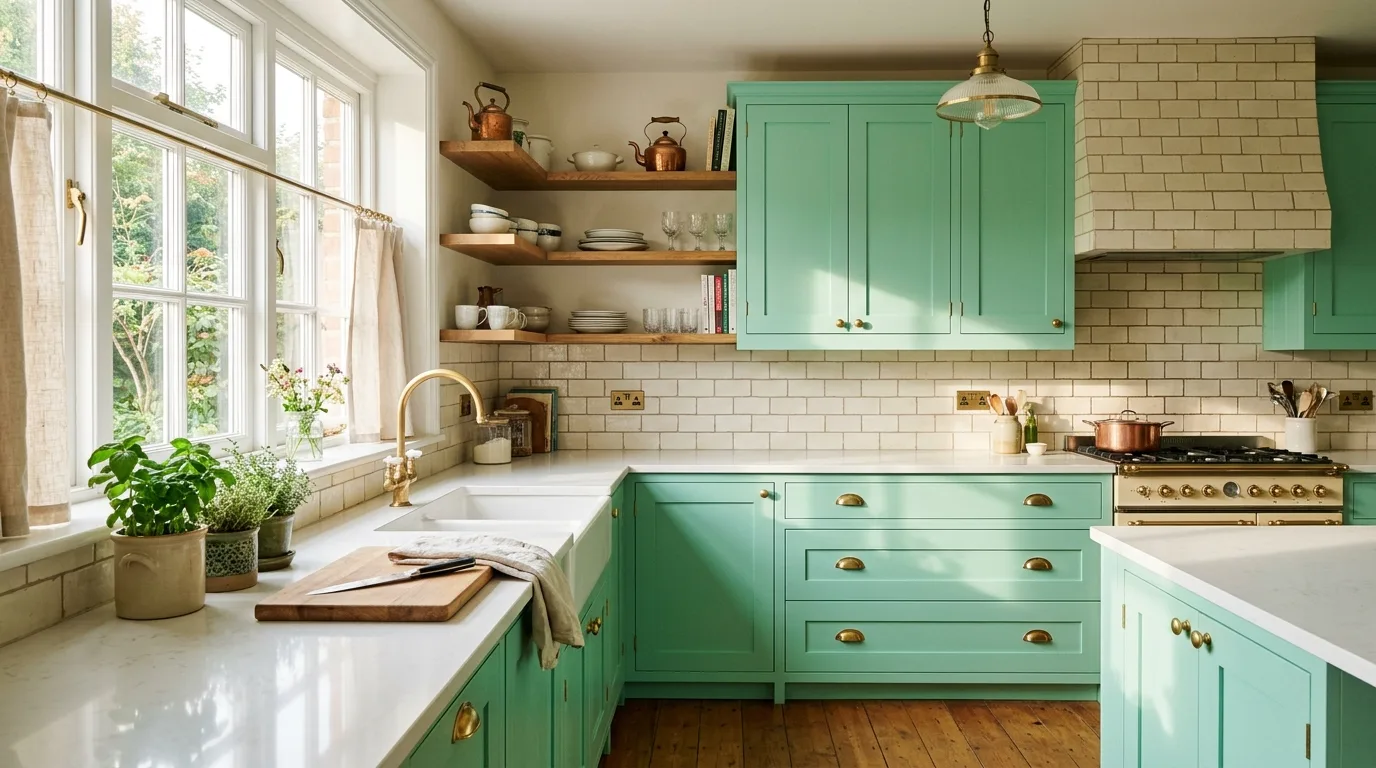
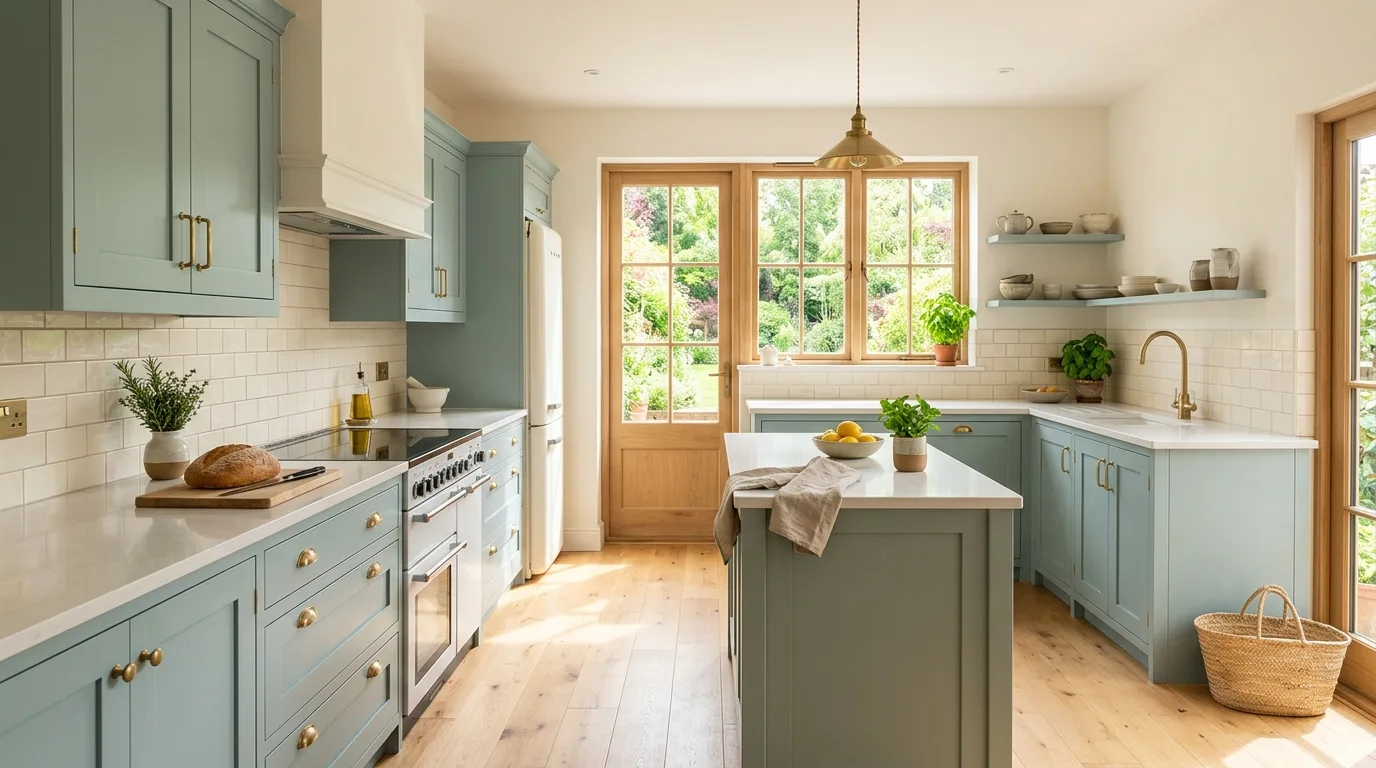
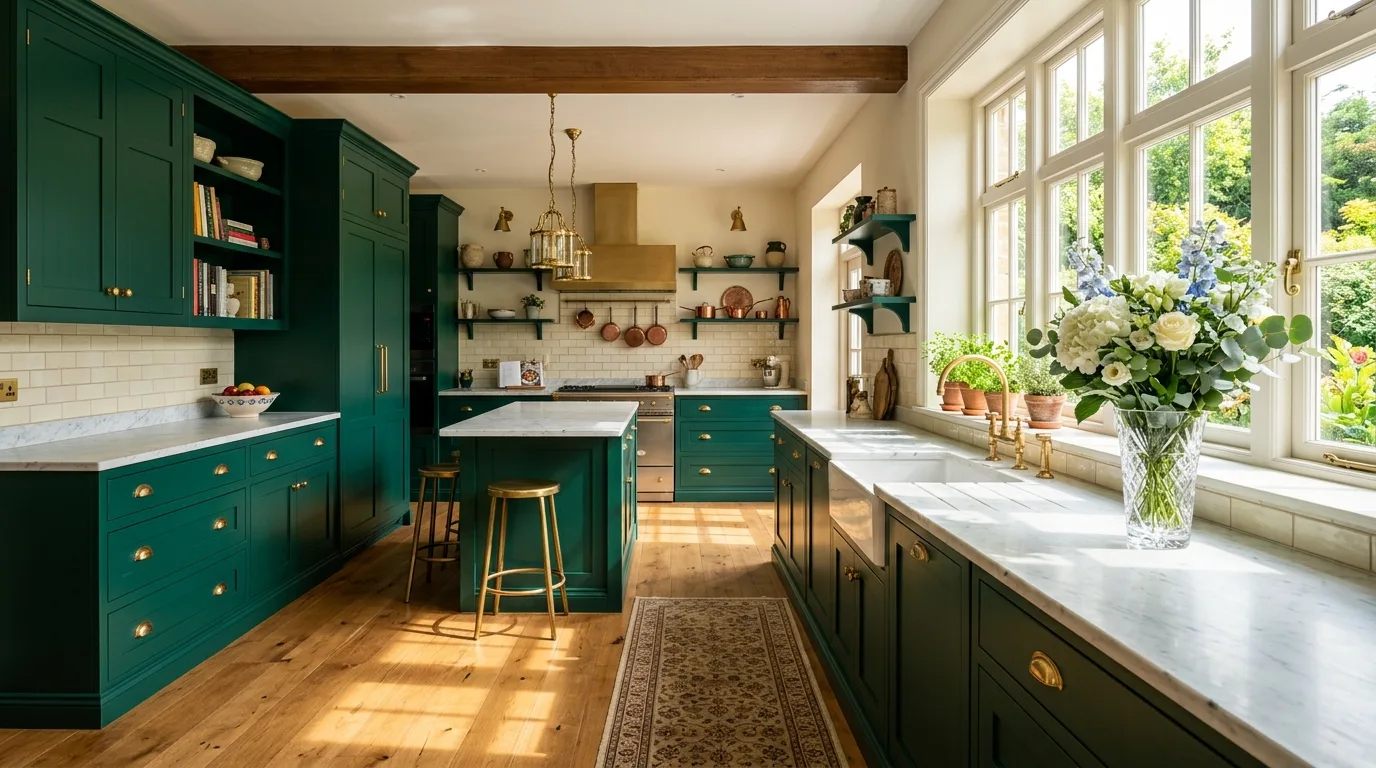
Sage green and wood work so well together because both feel connected to nature without needing to be loud. The softness of the green and the grain of the wood create a kitchen atmosphere that feels quieter, warmer, and more grounded all at once.
These ideas focus on giving that palette a more organic modern edge instead of a purely rustic or cottage feel. If you want a kitchen that feels fresh but deeply calm, this combination has a lot to offer.
Design ideas to borrow from this palette
Use the ideas below to compare hardware, countertop, flooring, and styling combinations that change how the cabinet color reads in a finished kitchen.
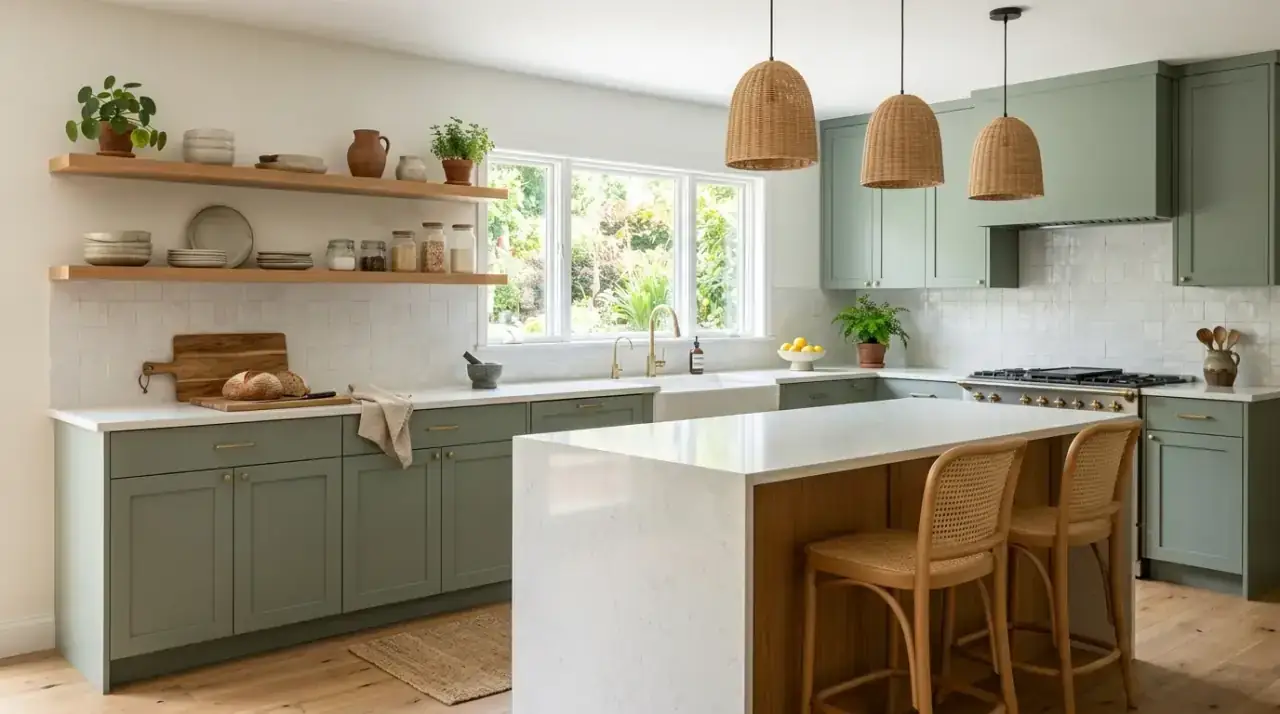
Use Flat Panel Sage Cabinets with Warm Oak
Flat-panel sage cabinetry paired with warm oak creates an especially modern interpretation of this palette because the lines stay simple while the materials bring softness. The kitchen feels more architectural without losing comfort.
Rooted in simplicity and guided by natural warmth, flat sage cabinets and oak can help a kitchen feel more serene and more welcoming one thoughtful detail at a time. The pairing works because sleek forms are softened by earthy material character.
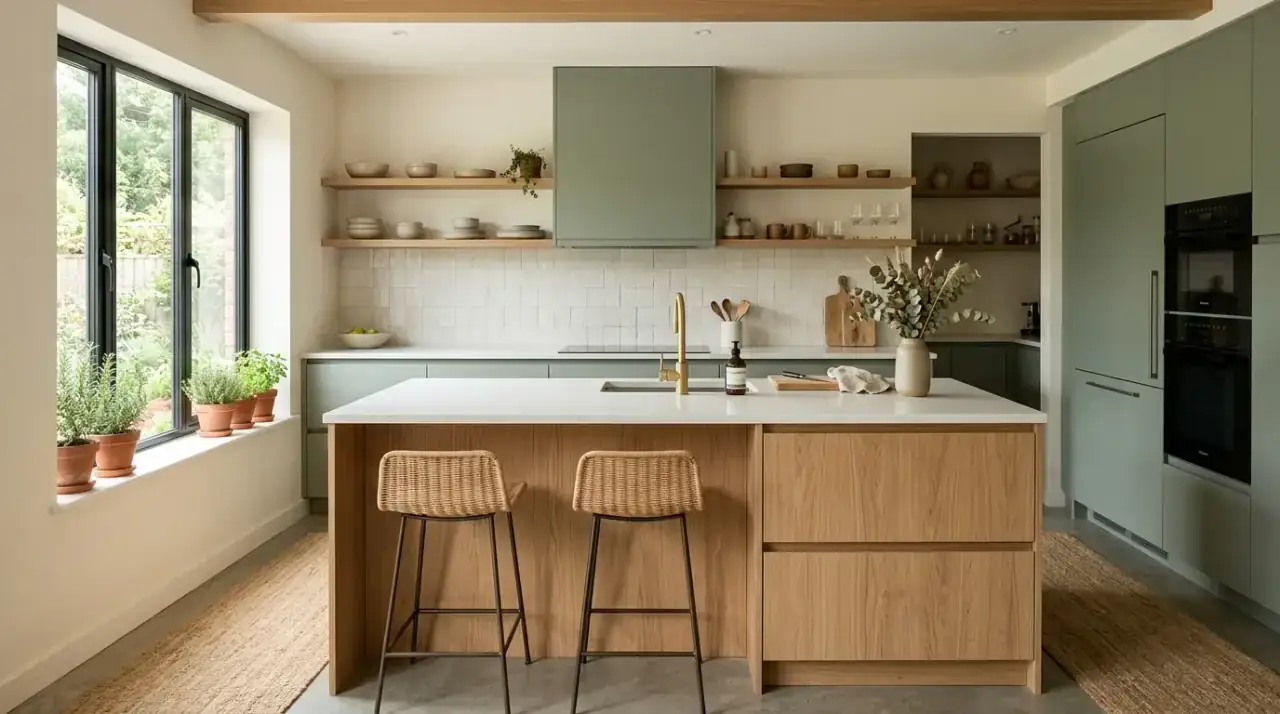
Let Wood Open Shelves Balance Painted Cabinetry
Wood shelving can keep a sage kitchen from feeling too uniformly painted by introducing another natural note at eye level. The shelves also help the room feel lighter if the walls would otherwise be covered by cabinetry.
Rooted in balance and guided by open layering, wood shelves can help a sage kitchen feel more breathable and more welcoming one thoughtful detail at a time. A little visible grain often gives painted kitchens their warmth.
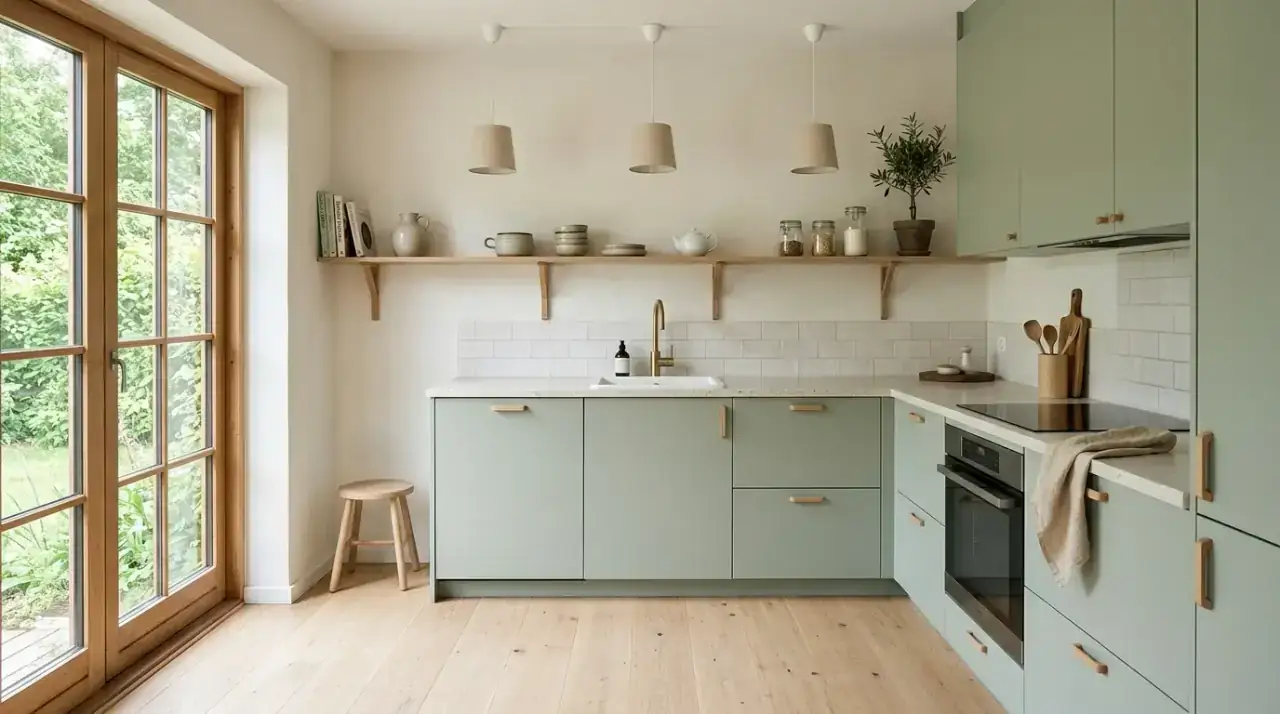
Use Sage on Lower Cabinets and Wood Above
Splitting the palette by placing sage on the lower cabinets and wood above can create a strong organic rhythm while keeping the room visually open. The darker visual weight stays lower, and the upper half feels lighter and more tactile.
Rooted in proportion and guided by visual calm, a split sage and wood palette can help a kitchen feel more balanced and more welcoming one thoughtful detail at a time. The room gains contrast without needing sharper colors.
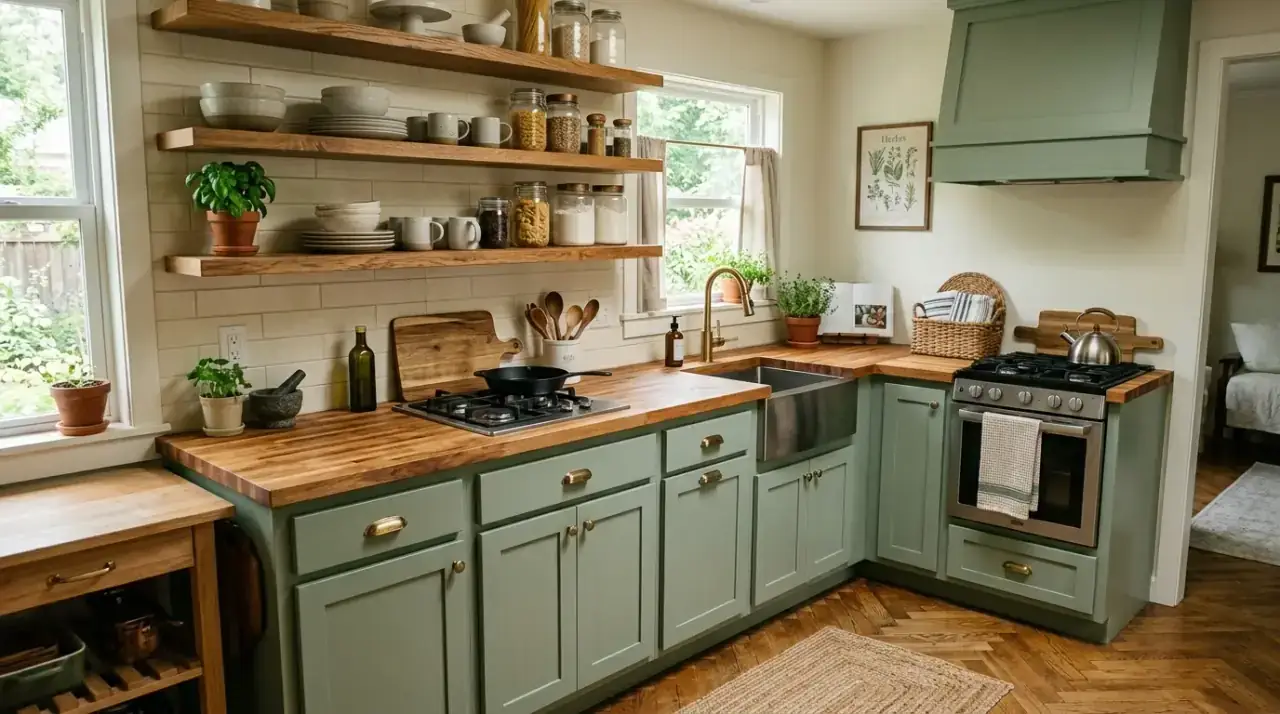
Keep the Counters Light and Stone Like
Pale stone counters help sage and wood kitchens stay fresh by reflecting light and offering a smoother, quieter surface between the two richer materials. This keeps the room from feeling too visually dense.
Rooted in brightness and guided by natural material contrast, light stone can help a sage and wood kitchen feel more open and more welcoming one thoughtful detail at a time. Softer surfaces often help earthy palettes breathe more easily.
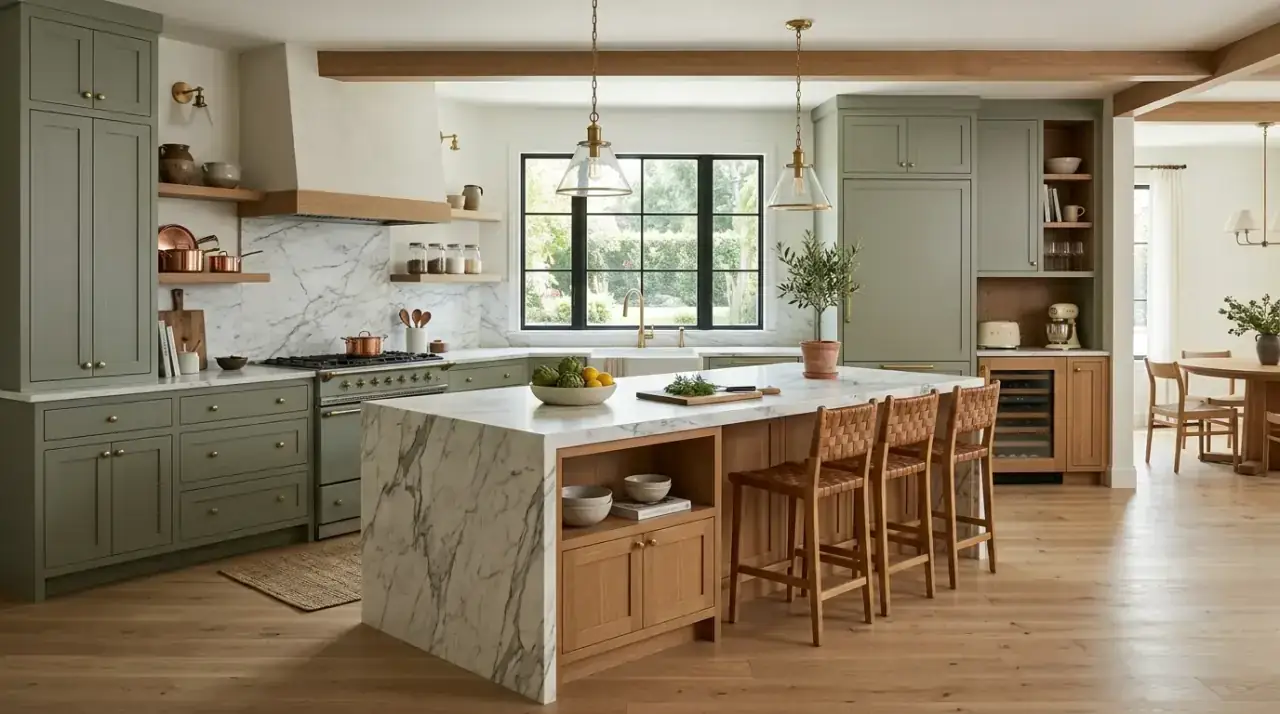
Add Black Details Sparingly for Structure
A few black details through stools, faucets, or pendants can sharpen a sage and wood kitchen without disturbing its calmness. These accents help define the room and keep the organic softness from feeling vague.
Rooted in definition and guided by restrained contrast, black notes can help a kitchen feel more polished and more welcoming one thoughtful detail at a time. A little structure often makes a gentle palette feel more complete.
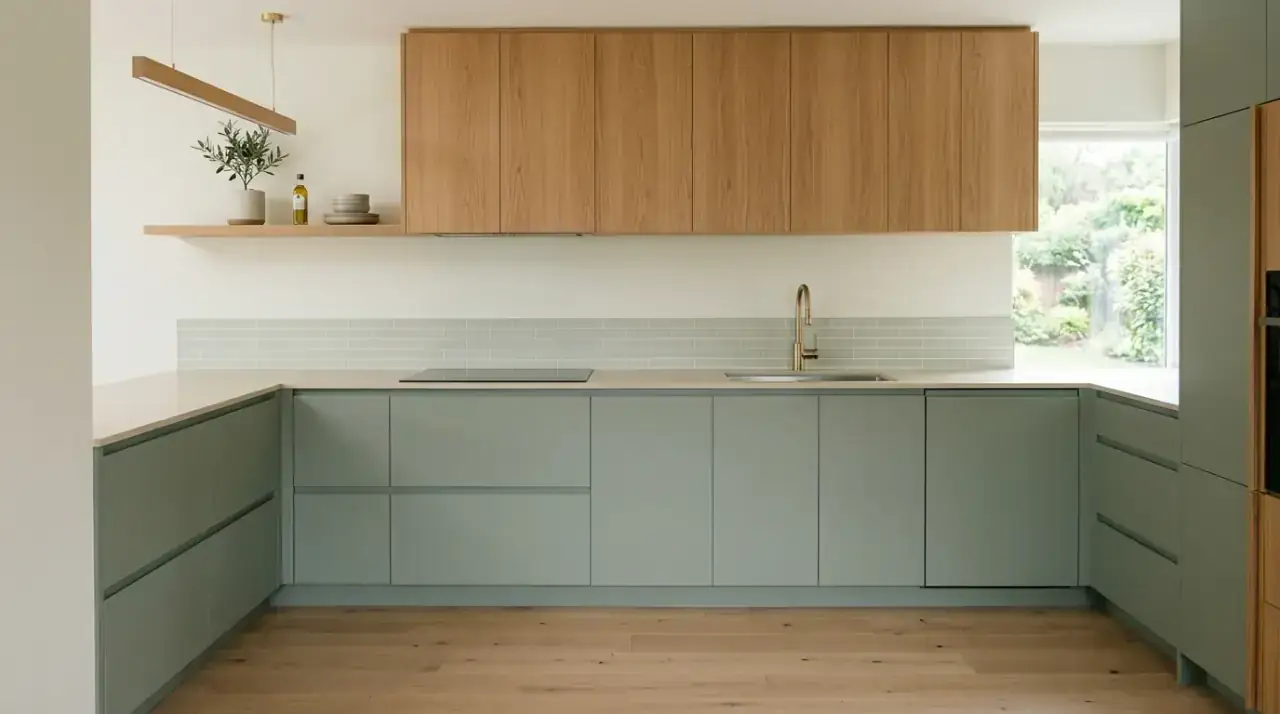
Use Soft Matte Finishes for a More Natural Mood
Matte cabinetry and lower-sheen wood finishes often support the organic modern look better than glossy surfaces because they feel quieter and more tactile. The room stays modern, but in a much more relaxed way.
Rooted in softness and guided by tactile restraint, matte finishes can help a sage and wood kitchen feel more grounded and more welcoming one thoughtful detail at a time. Finish matters when the goal is calm rather than polish.
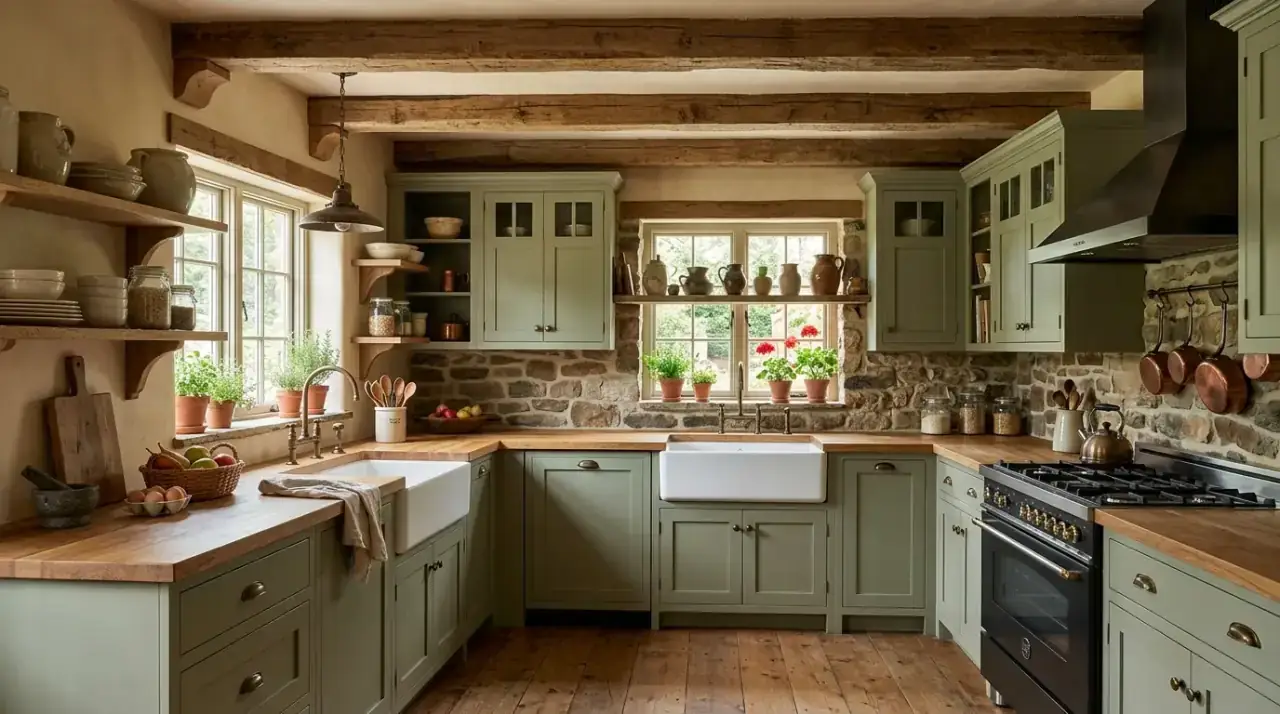
Bring in Linen and Ceramic for More Earthy Texture
Textiles and accessories in linen, clay, and handmade ceramic can deepen the organic side of the kitchen without adding more visual busyness. These materials help the space feel warmer and more lived in.
Rooted in texture and guided by natural styling, tactile accents can help a kitchen feel more soulful and more welcoming one thoughtful detail at a time. Quiet materials often complete a calm palette better than decorative color does.
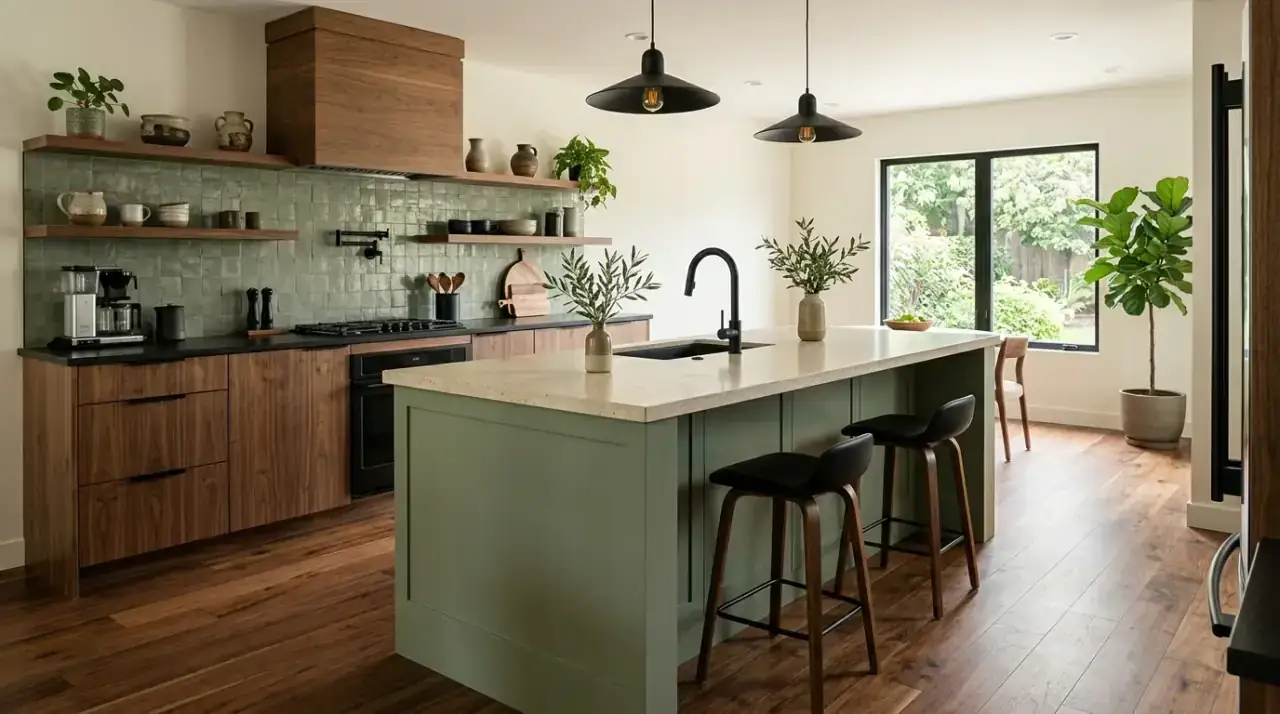
Let the Backsplash Stay Quiet and Subtle
A simple backsplash in warm white, pale stone, or handmade neutral tile often works best with sage and wood because it supports the materials without trying to compete. This helps the kitchen hold onto its easy calm.
Rooted in continuity and guided by visual restraint, a quieter backsplash can help a sage kitchen feel more composed and more welcoming one thoughtful detail at a time. Supportive surfaces often matter more than statement surfaces in calmer rooms.
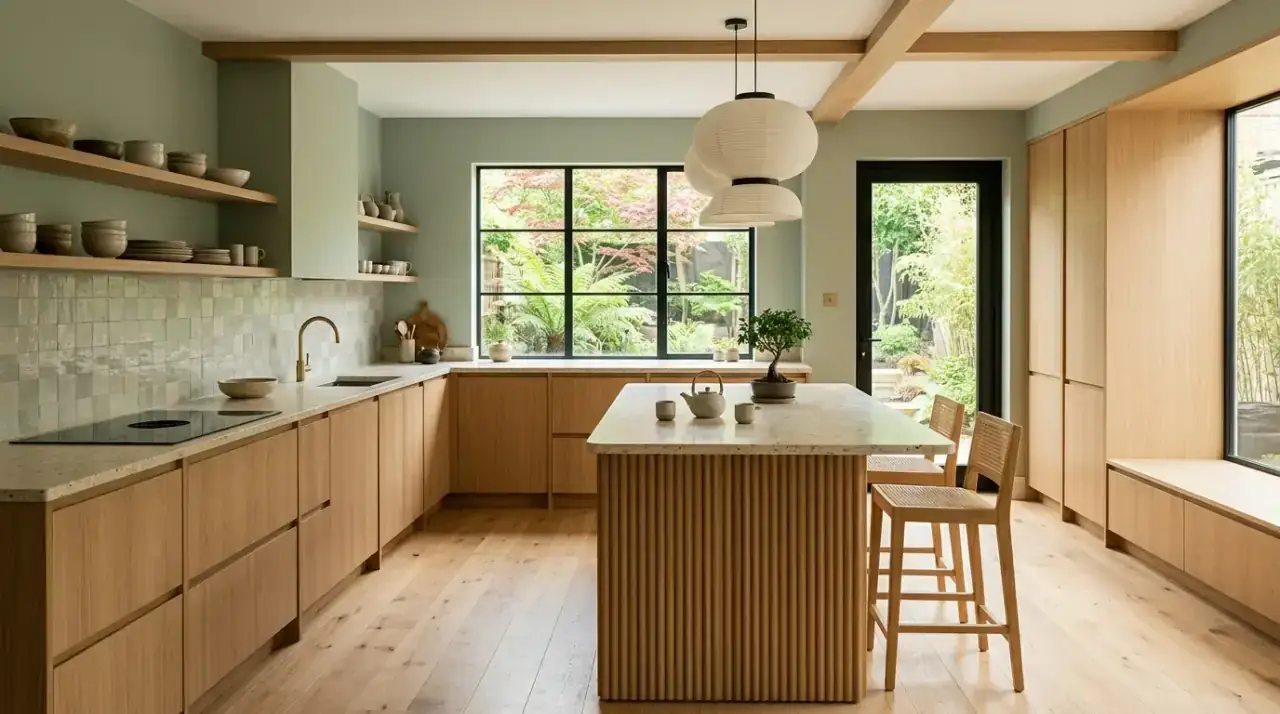
Use Wood on the Island for a Softer Focal Point
A wood island within a sage kitchen can create a warm centerpiece that feels more natural and furniture-like than another painted block. It also adds visual variation without leaving the palette.
Rooted in warmth and guided by gentle emphasis, a wood island can help a kitchen feel more layered and more welcoming one thoughtful detail at a time. A natural centerpiece often anchors the room beautifully.
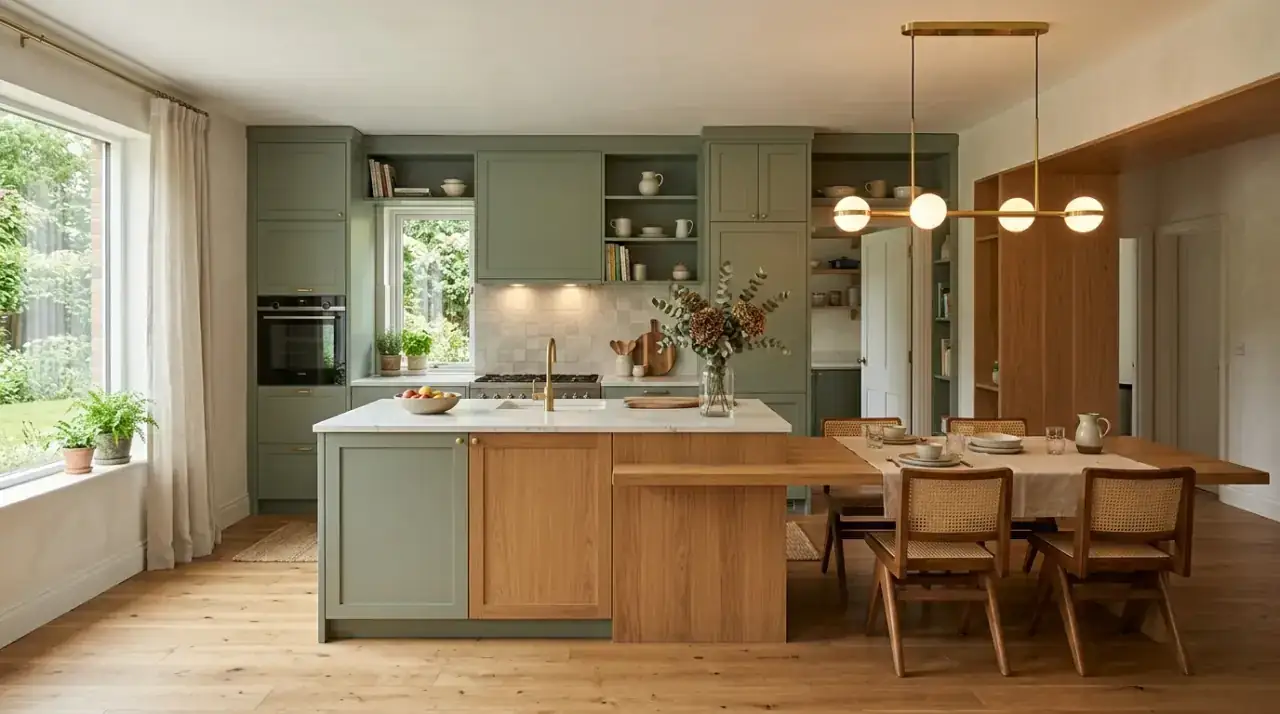
Choose a Dustier Sage for More Modern Sophistication
A more muted dusty sage often feels especially elegant in modern kitchens because it stays soft while carrying a little more depth than a brighter green. It reads as calm rather than decorative.
Rooted in nuance and guided by thoughtful color choice, dustier sage can help a kitchen feel more refined and more welcoming one thoughtful detail at a time. Subtle undertones often decide whether green feels timeless or trendy.
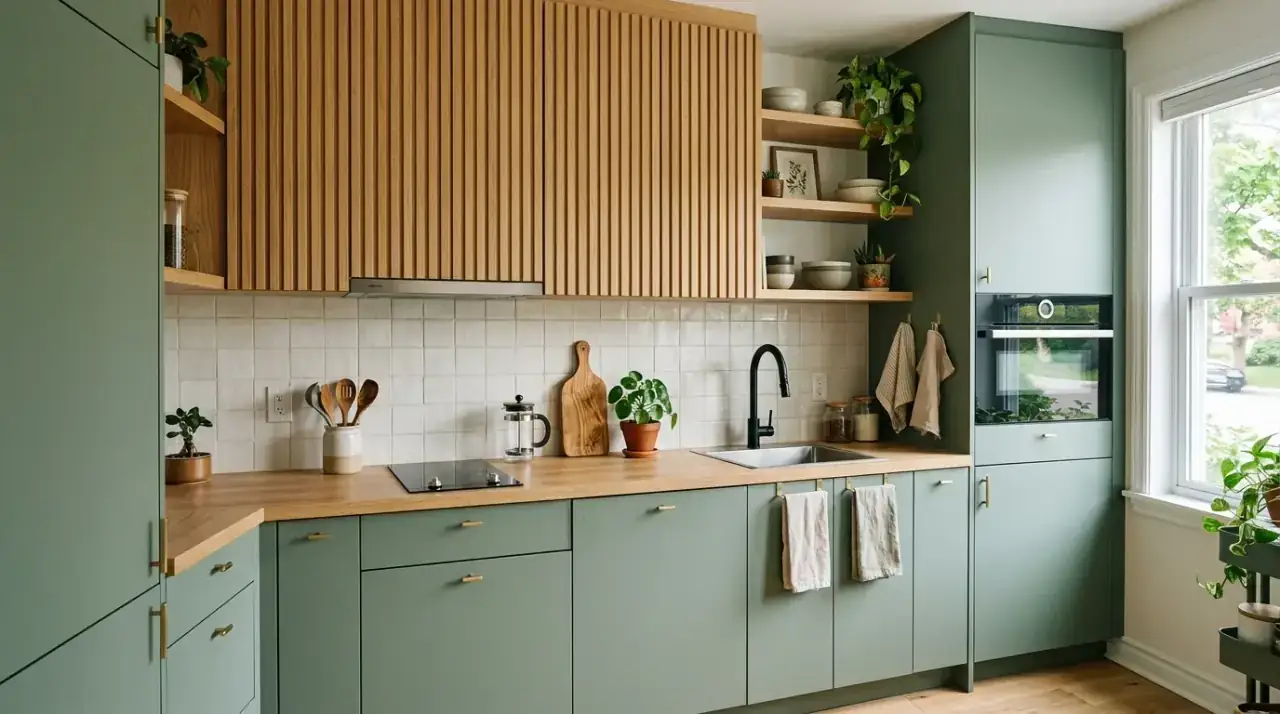
Use Natural Light to Keep the Palette Open
Because both sage and wood are softer and slightly richer than plain white, natural light helps prevent the room from feeling too shaded. Open windows and bright daylight make the palette look fresher and more spacious.
Rooted in daylight and guided by atmospheric calm, good natural light can help a sage and wood kitchen feel more airy and more welcoming one thoughtful detail at a time. Light is what keeps earthy palettes from becoming too enclosed.
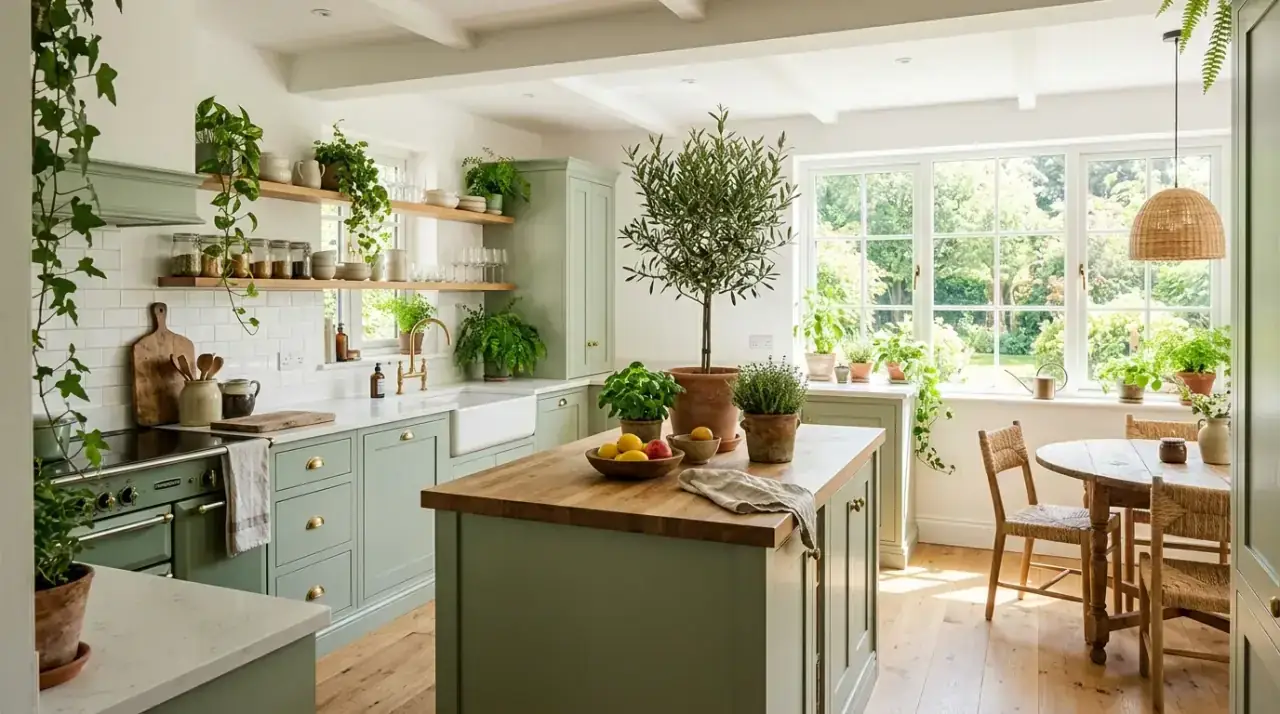
Use the Palette in a Small Kitchen for Soft Character
Sage and wood can work beautifully in smaller kitchens because the colors feel gentle and natural rather than visually aggressive. The room gains personality while still holding onto a restful quality.
Rooted in softness and guided by small-space balance, sage and wood can help a compact kitchen feel more special and more welcoming one thoughtful detail at a time. The palette gives color without crowding the room emotionally.
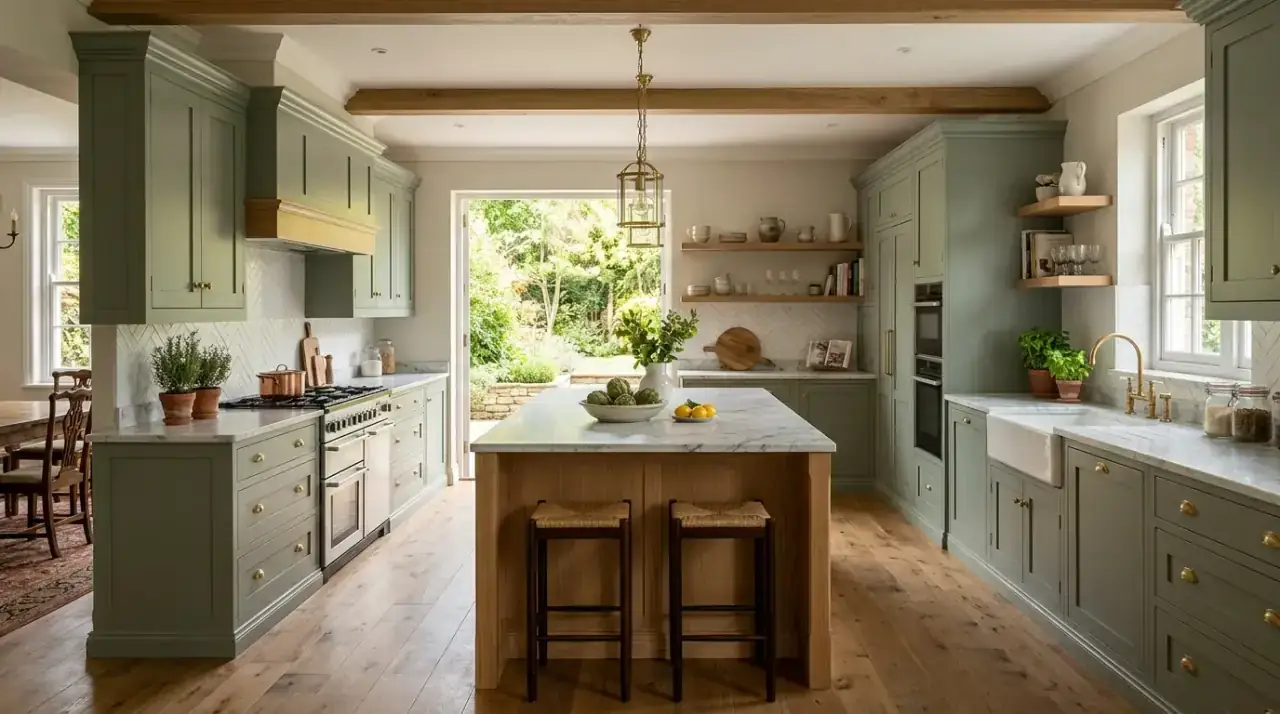
Add Greenery to Echo the Cabinet Color Naturally
Plants can quietly reinforce the sage palette while making the kitchen feel more alive and connected to the outdoors. Greenery works especially well here because it deepens the organic mood without adding noise.
Rooted in nature and guided by living beauty, greenery can help a sage kitchen feel more vibrant and more welcoming one thoughtful detail at a time. A few living accents often make the color feel even more believable.
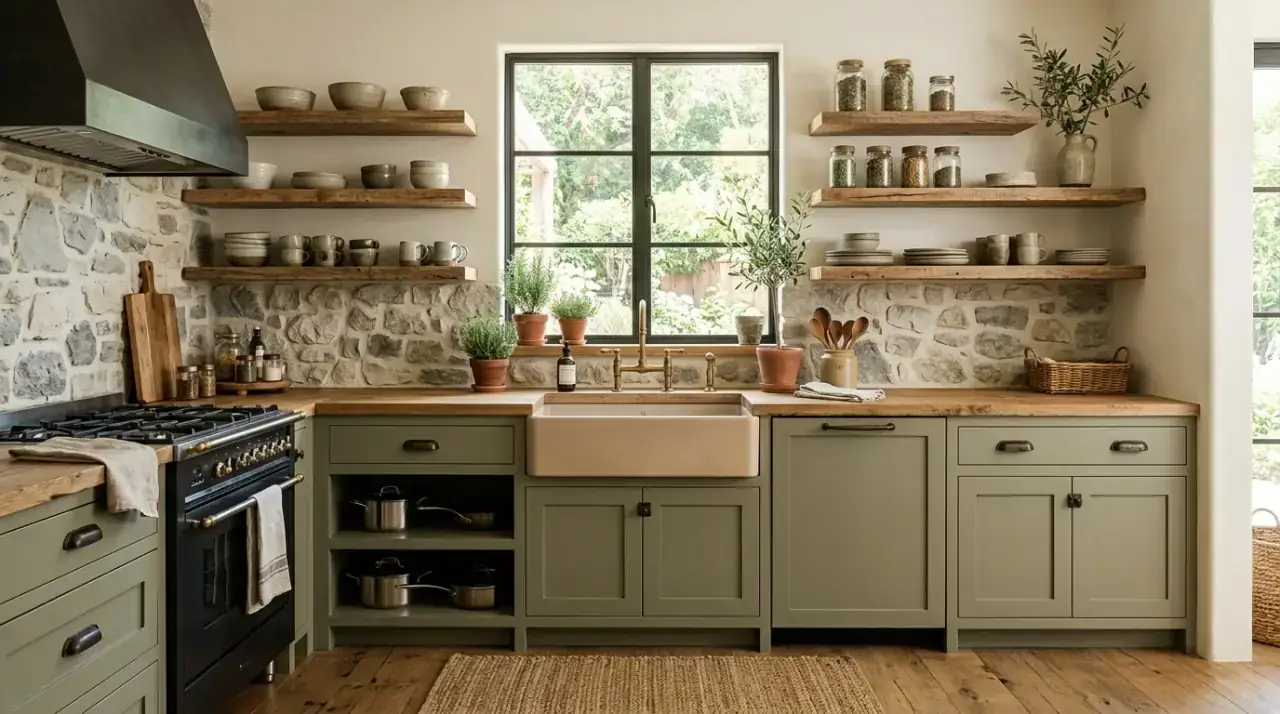
Keep Styling Edited So the Organic Calm Can Show
The room will feel calmer when counters and shelves stay thoughtfully edited, allowing the materials and color palette to lead. Too many visible objects can quickly compete with the quiet strength of sage and wood.
Rooted in restraint and guided by simple styling, edited surfaces can help a kitchen feel more peaceful and more welcoming one thoughtful detail at a time. Organic modern design nearly always looks best when clutter steps back.
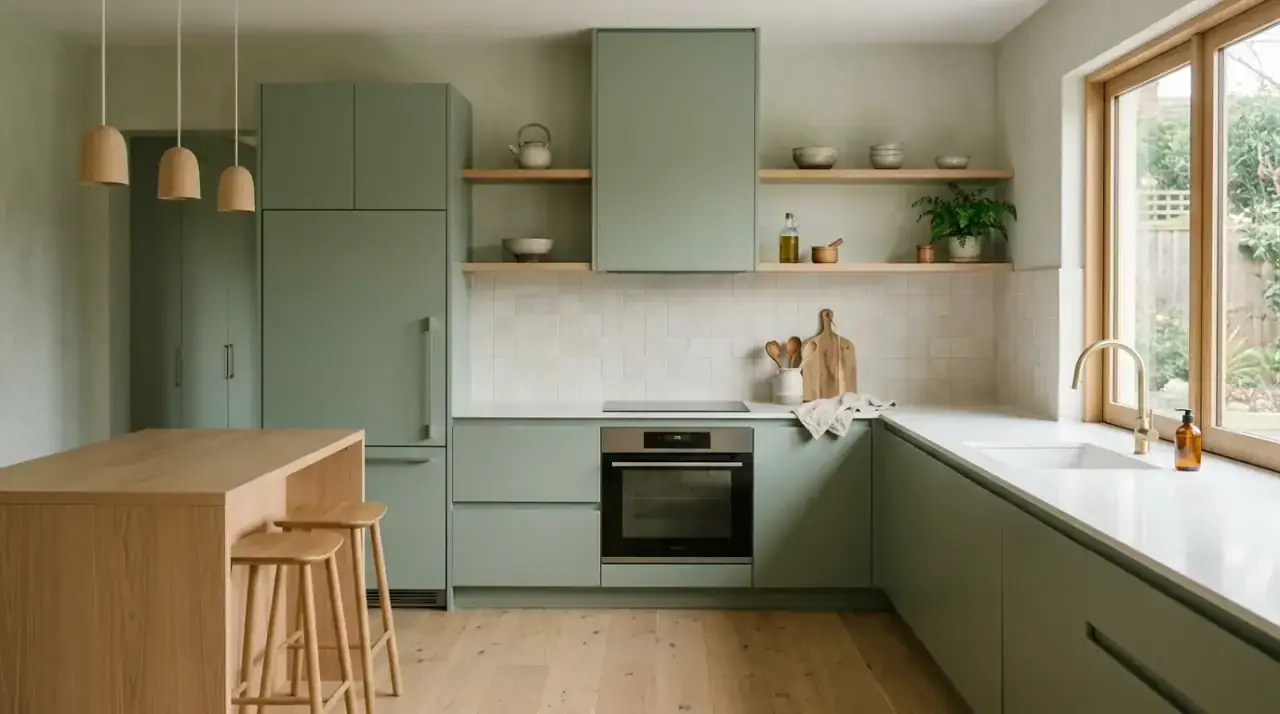
An Organic Modern Vibe Feels Strongest When Color Texture and Light All Stay in Balance
The best sage and wood kitchens succeed because none of their elements try to dominate alone. Paint, grain, stone, and daylight all support one another until the room feels calm almost without effort.
Rooted in creativity and guided by style, sage green and wood can turn a kitchen into a warm and welcoming organic modern retreat one thoughtful detail at a time. Their beauty lasts because they make softness feel intentional and complete.