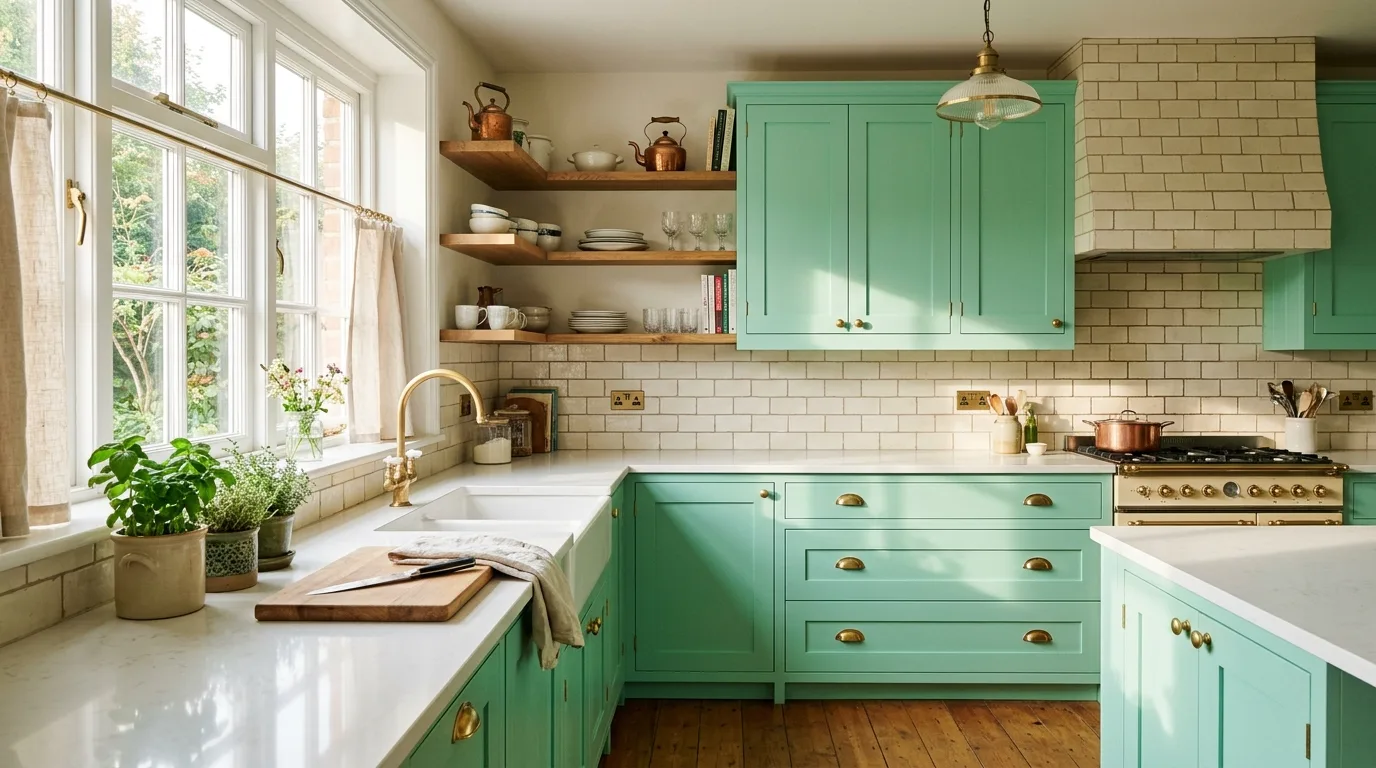
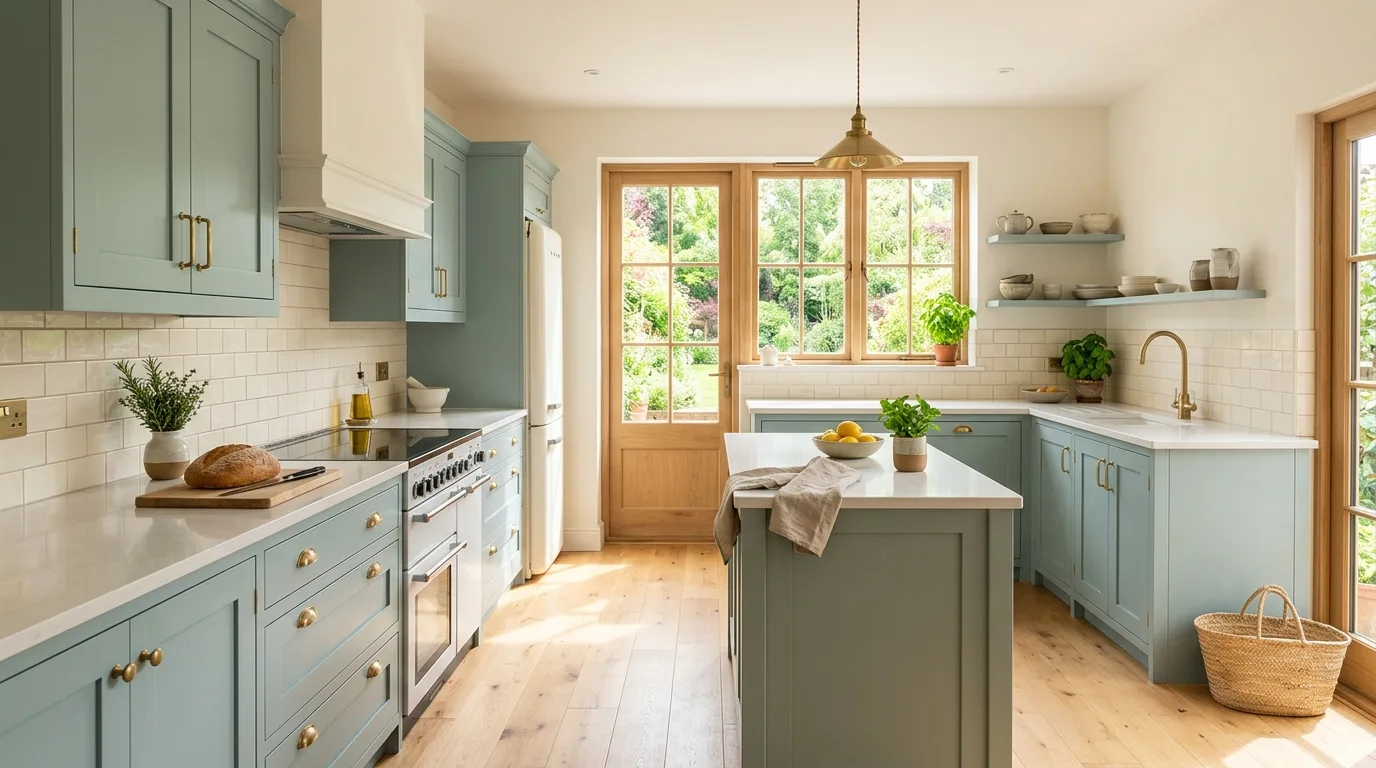
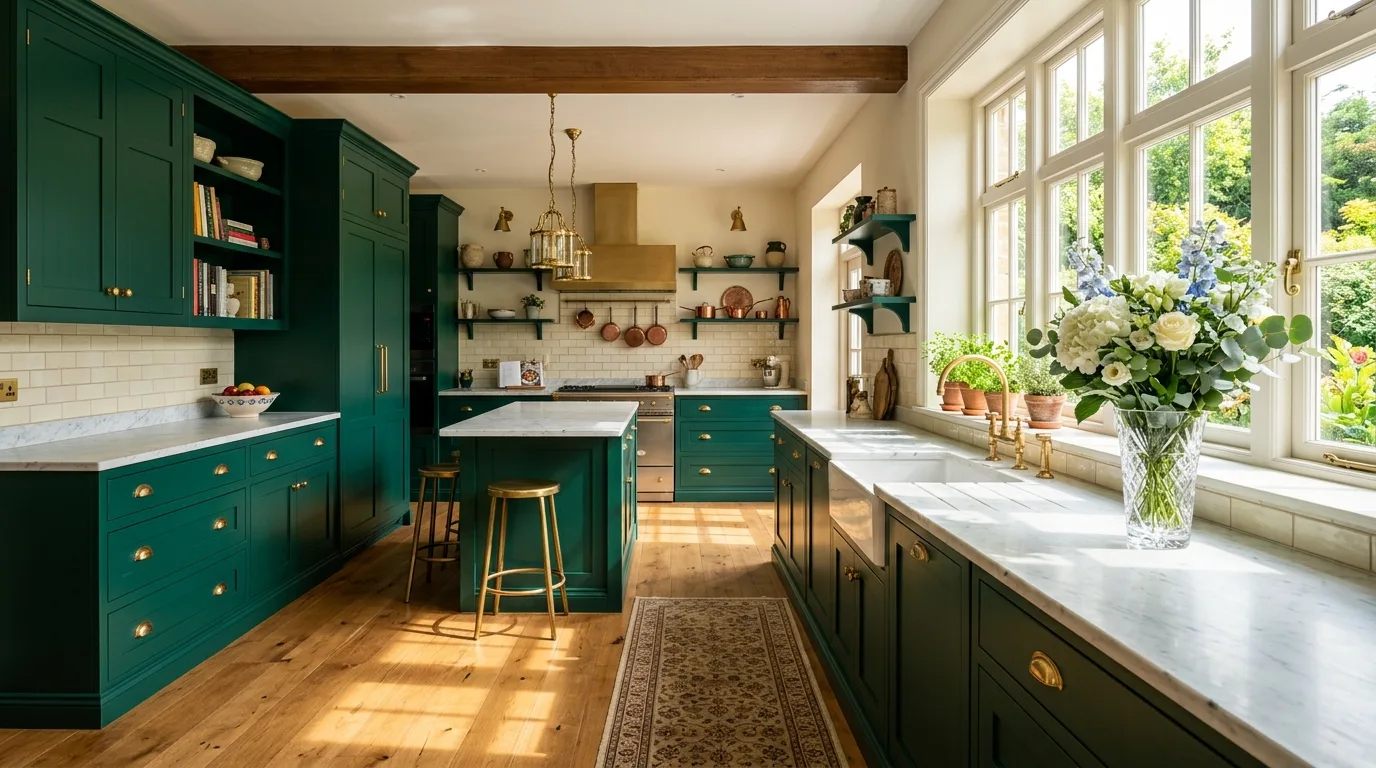
The refrigerator is one of the most frequently used appliances in the kitchen, which means its location can either support the room beautifully or create constant friction. Good placement affects traffic, prep efficiency, and even whether the kitchen feels crowded.
These ideas focus on positioning strategies that improve flow while still respecting style and storage needs. If your kitchen layout feels a little awkward, the refrigerator may be one of the first elements worth reconsidering.
Design ideas to borrow from this palette
Use the ideas below to compare hardware, countertop, flooring, and styling combinations that change how the cabinet color reads in a finished kitchen.
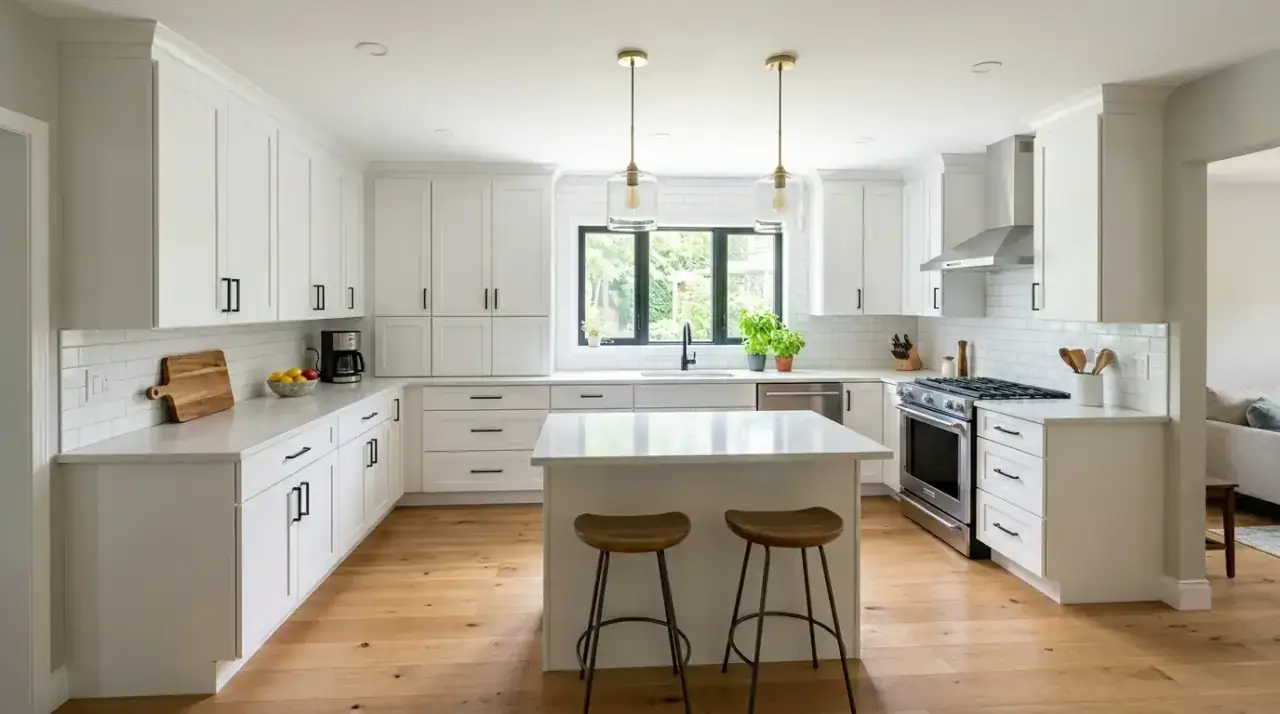
Place the Fridge Near the Kitchen Entry for Easy Grab and Go Access
Keeping the refrigerator near the edge of the kitchen can reduce traffic through the main cooking zone because family members can reach drinks and snacks without walking straight into prep space. This is especially helpful in busy households where the fridge is opened constantly throughout the day.
Rooted in routine and guided by practical flow, an entry-adjacent refrigerator can help a kitchen feel easier and more welcoming one thoughtful detail at a time. Small layout decisions like this often remove daily interruptions before they even happen.
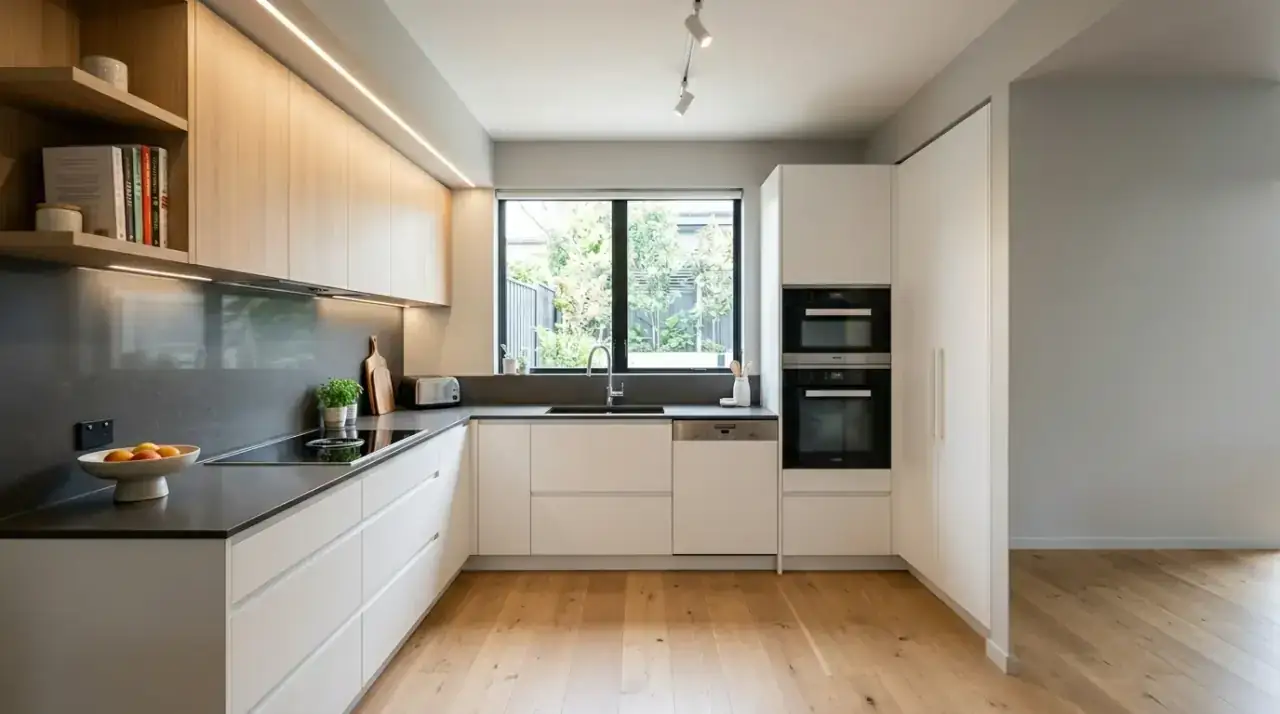
Keep It Close to a Landing Counter
A refrigerator works best when there is counter space nearby for groceries, meal prep, and quick unloading. Without that landing spot, the appliance becomes harder to use and creates more unnecessary movement through the room.
Rooted in convenience and guided by better workflow, a nearby landing counter can help a kitchen feel more efficient and more welcoming one thoughtful detail at a time. Access improves immediately when there is a natural place to set things down.
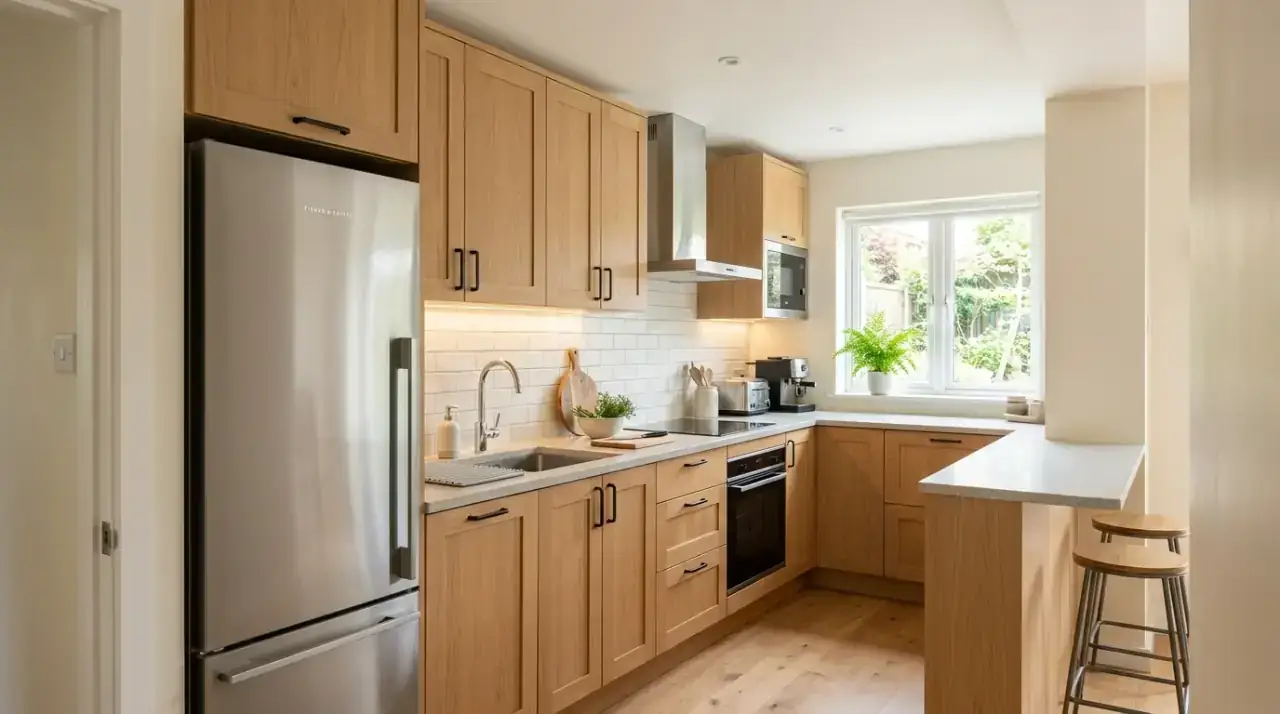
Tuck the Fridge into a Tall Cabinet Wall
Placing the refrigerator within a tall cabinet run can make the kitchen feel more ordered because the appliance becomes part of a larger vertical composition. This often helps it look less bulky, especially in modern kitchens that value cleaner lines.
Rooted in integration and guided by visual structure, a cabinet-wall refrigerator can help a kitchen feel more composed and more welcoming one thoughtful detail at a time. The room often looks calmer when major appliances are absorbed into larger forms.
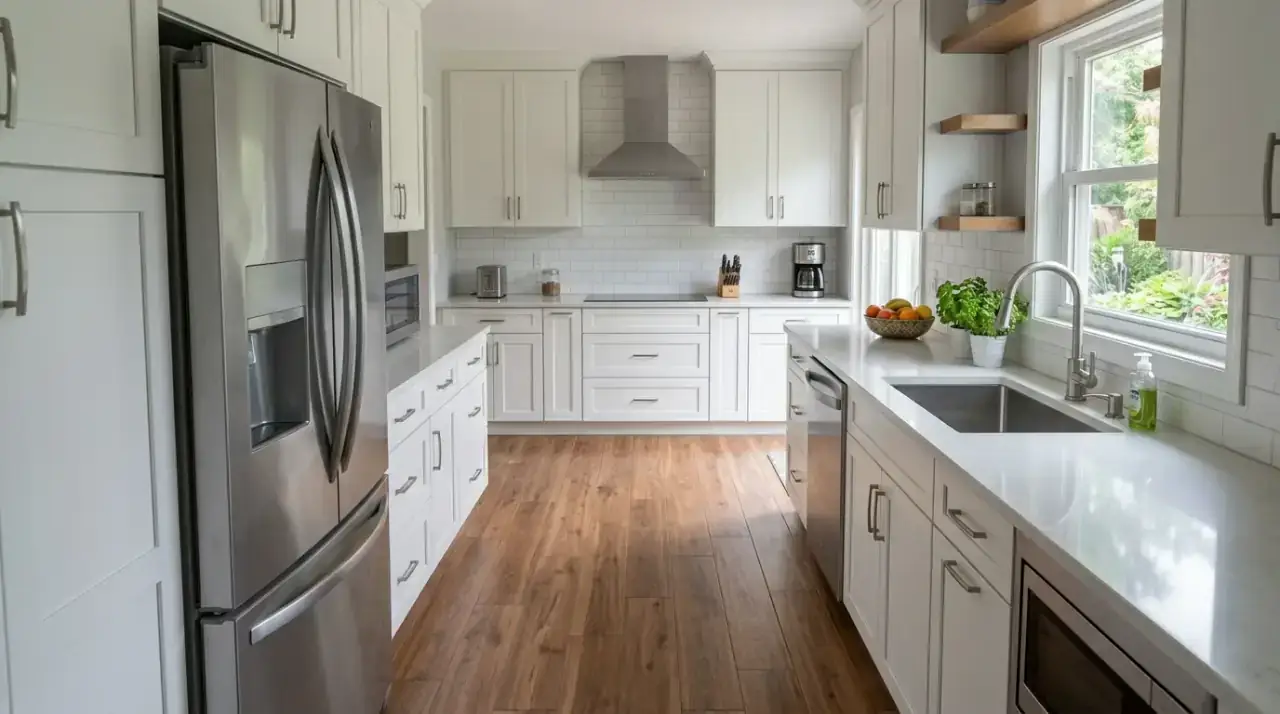
Avoid Blocking Main Walkways with Open Doors
One of the easiest refrigerator mistakes is placing it where open doors cut directly across the most common circulation path. Thinking about how the doors swing in real use can prevent the kitchen from feeling constantly interrupted.
Rooted in movement and guided by real-life planning, thoughtful door clearance can help a kitchen feel smoother and more welcoming one thoughtful detail at a time. Flow depends not only on where the appliance sits, but also on how it behaves once opened.
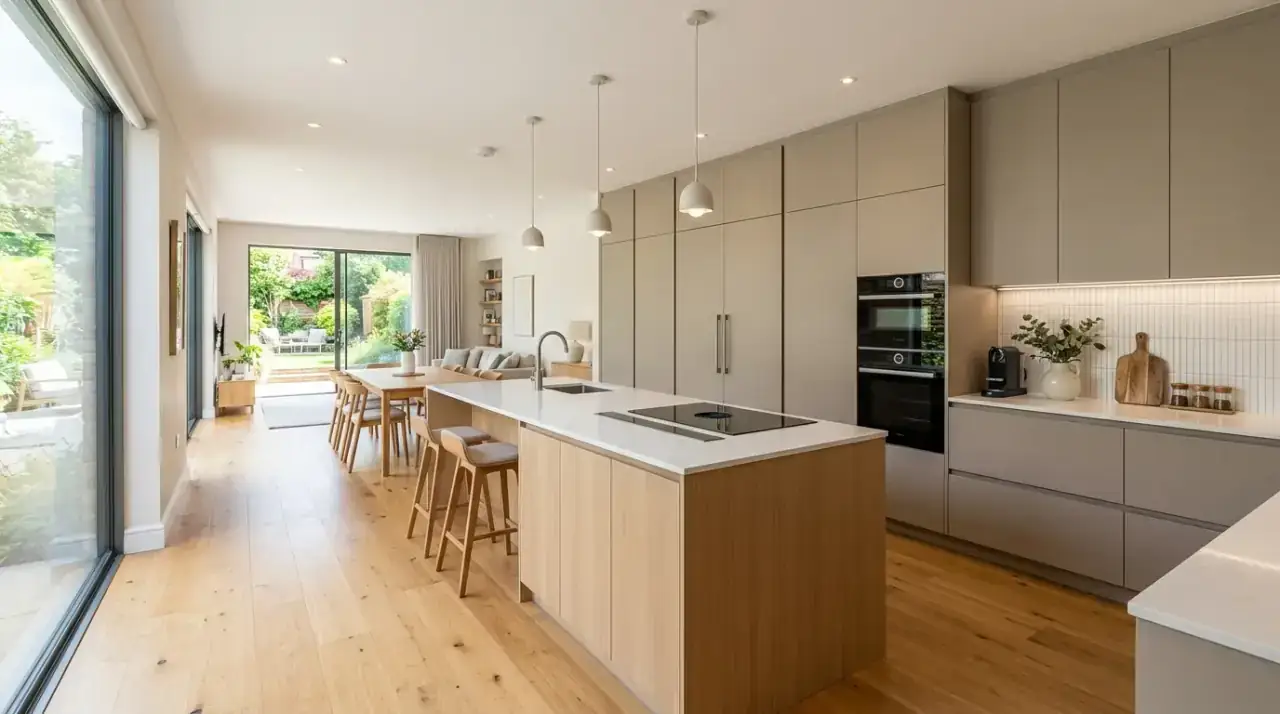
Use End Placement to Keep the Appliance from Dominating the Room
When a refrigerator sits at the end of a cabinet run rather than in the middle of the focal view, it often feels less visually heavy. This can be useful in smaller kitchens or more decorative spaces where a large appliance might otherwise take over the composition.
Rooted in balance and guided by visual restraint, end placement can help a kitchen feel lighter and more welcoming one thoughtful detail at a time. A large appliance becomes easier to live with when it is not always demanding center attention.
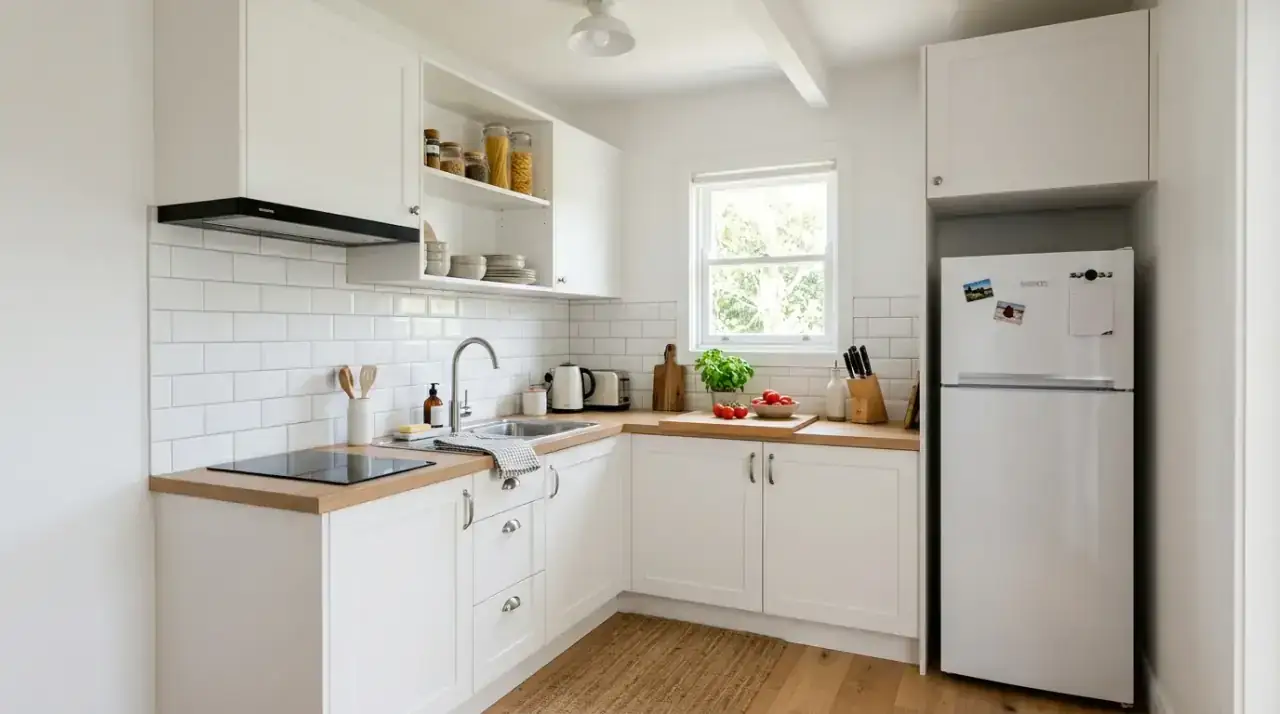
Keep the Fridge Convenient to the Sink and Prep Zone
The refrigerator does not need to sit directly beside the sink, but it should feel easy to move between cold storage, washing, and chopping without making long awkward loops. That triangle of activity shapes a huge amount of everyday kitchen comfort.
Rooted in workflow and guided by daily habits, a well-related fridge location can help a kitchen feel more natural and more welcoming one thoughtful detail at a time. Prep becomes calmer when the room supports the order in which tasks actually happen.
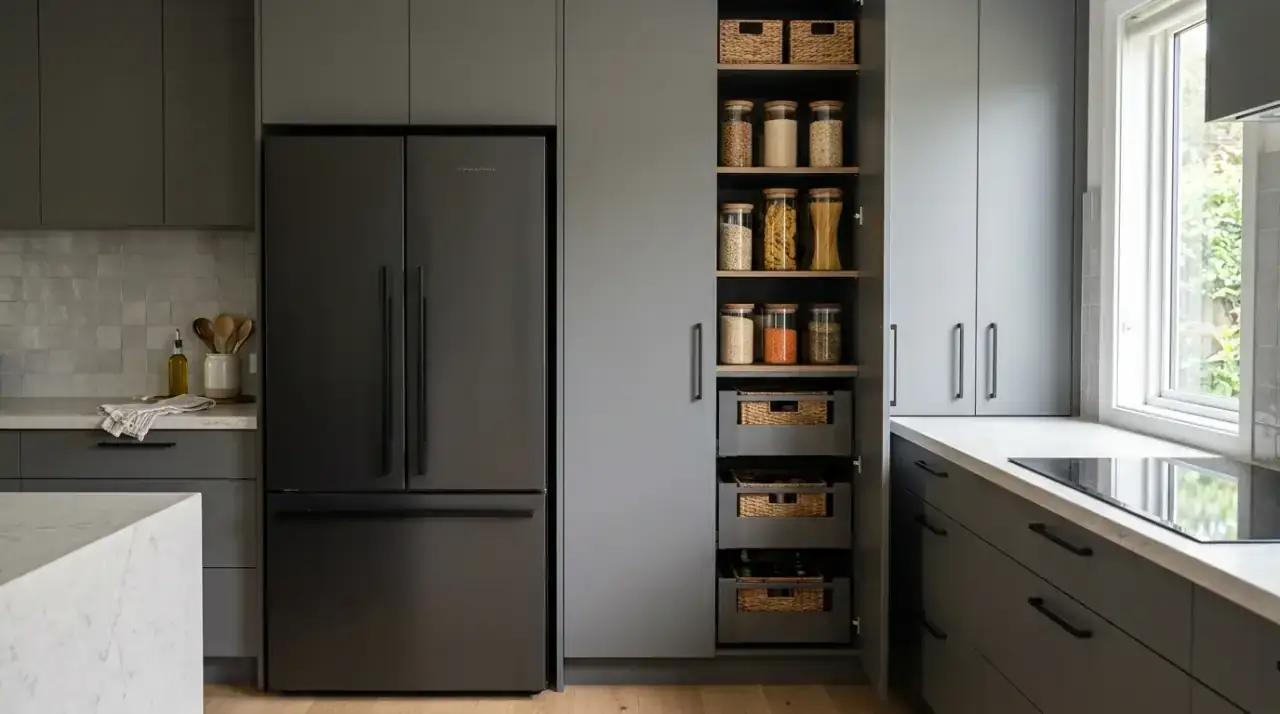
Use a Counter-Depth Model When Space Feels Tight
A counter-depth refrigerator can improve circulation simply by reducing how far the appliance projects into the room. This may sound minor, but in narrow kitchens it can make walkways feel noticeably easier and more relaxed.
Rooted in proportion and guided by space awareness, a shallower refrigerator can help a kitchen feel roomier and more welcoming one thoughtful detail at a time. Tight layouts often benefit most from reducing bulk where they can.
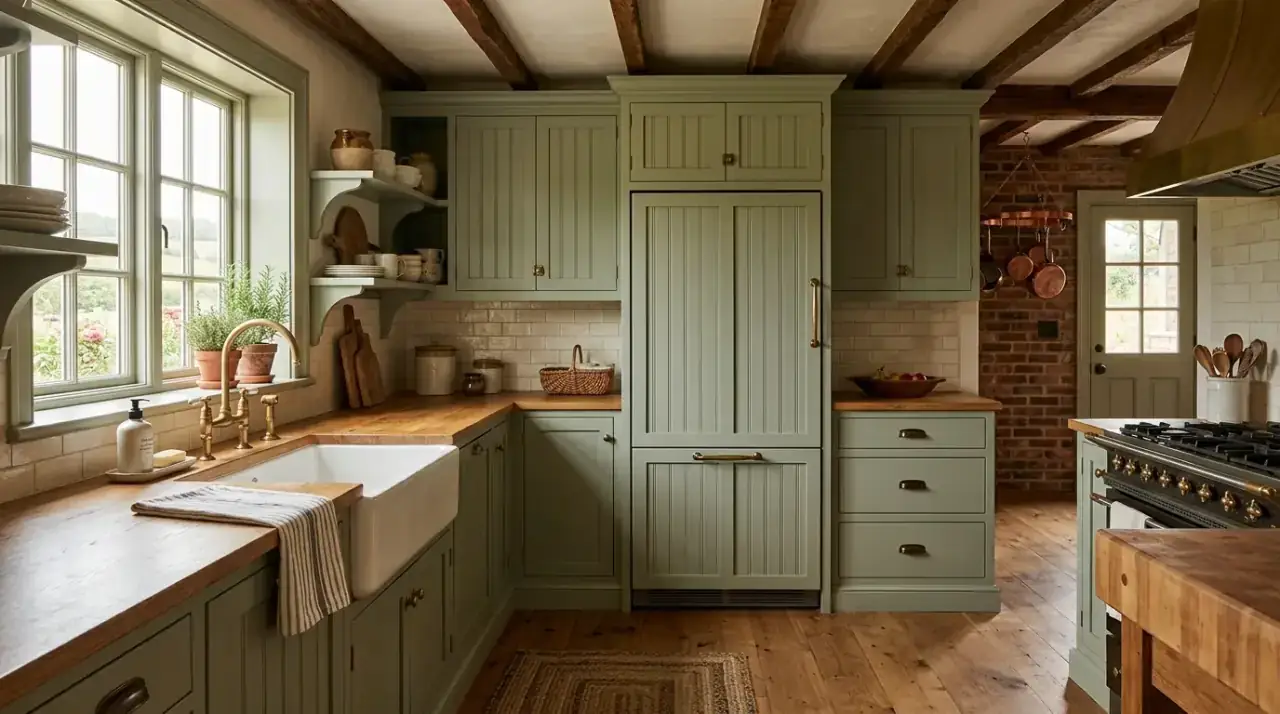
Let an Island Support Fridge Access Instead of Fighting It
In island kitchens, the distance between the refrigerator and island matters because that path is used constantly for unloading groceries and prepping food. Too little space feels cramped, while too much wastes movement.
Rooted in spacing and guided by practical ergonomics, good island clearance can help a kitchen feel more functional and more welcoming one thoughtful detail at a time. The refrigerator works best when the room gives it enough breathing room to participate gracefully.
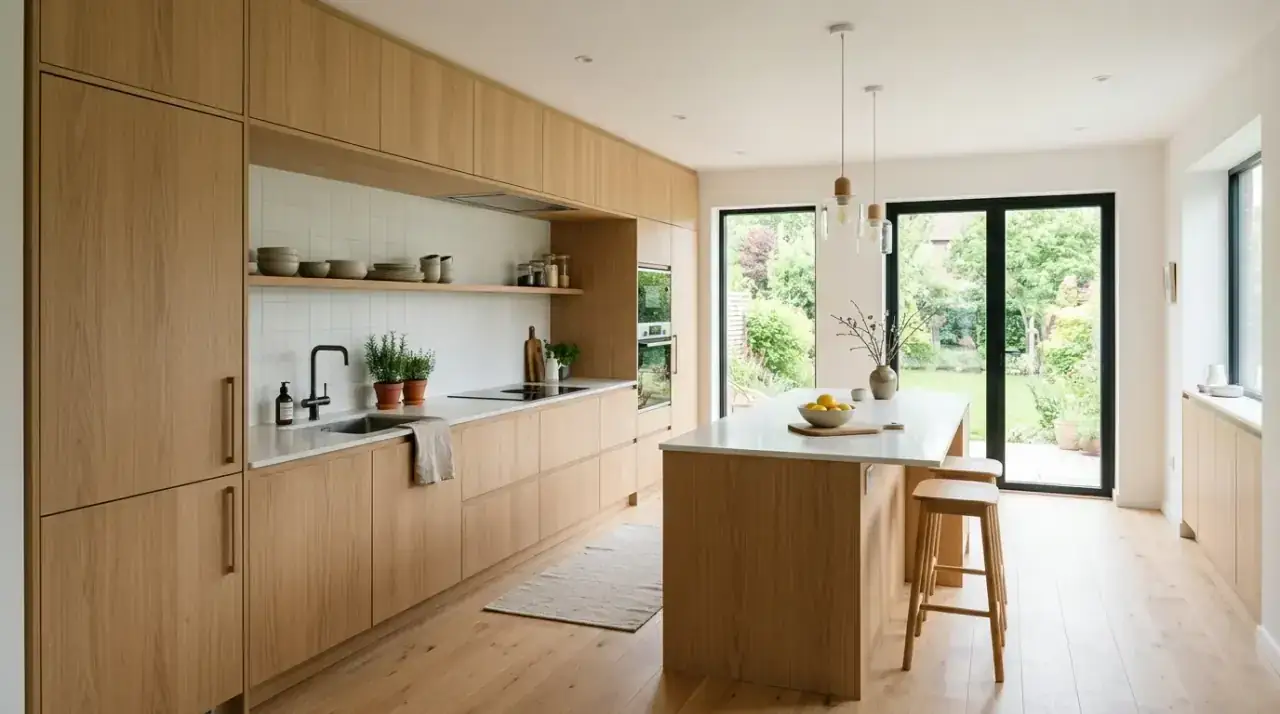
Panel the Fridge When You Want It to Recede
A paneled refrigerator can visually disappear into the cabinetry, which is especially effective in kitchens where calm surfaces and strong design lines matter. This does not change function, but it can change how heavy the appliance feels in the room.
Rooted in continuity and guided by style, a paneled fridge can help a kitchen feel more polished and more welcoming one thoughtful detail at a time. When the appliance recedes visually, the whole layout often reads more intentionally.
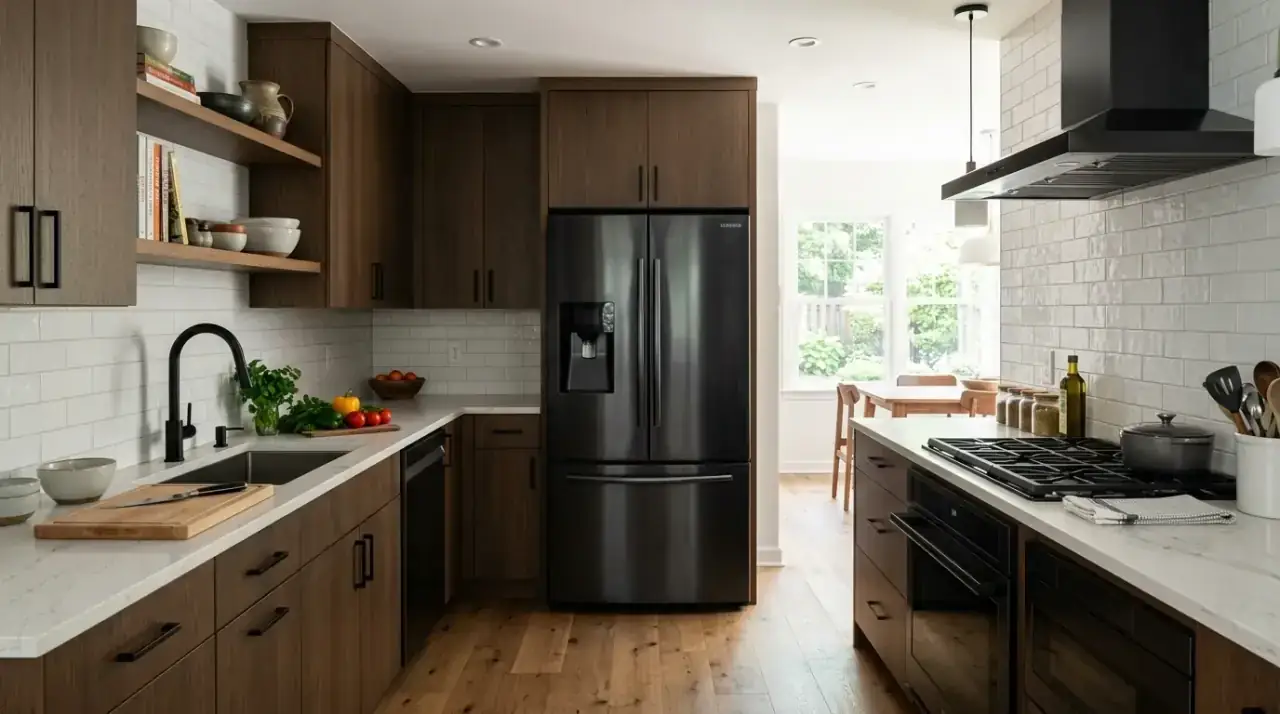
Think About Family Traffic as Much as Cooking Flow
The refrigerator is often used by everyone in the household, not only the person preparing meals. Positioning it where others can access it without interrupting the cook can improve harmony in a busy kitchen more than people expect.
Rooted in household rhythm and guided by shared use, family-friendly fridge placement can help a kitchen feel less chaotic and more welcoming one thoughtful detail at a time. Layout is at its best when it respects everyone who moves through the room.
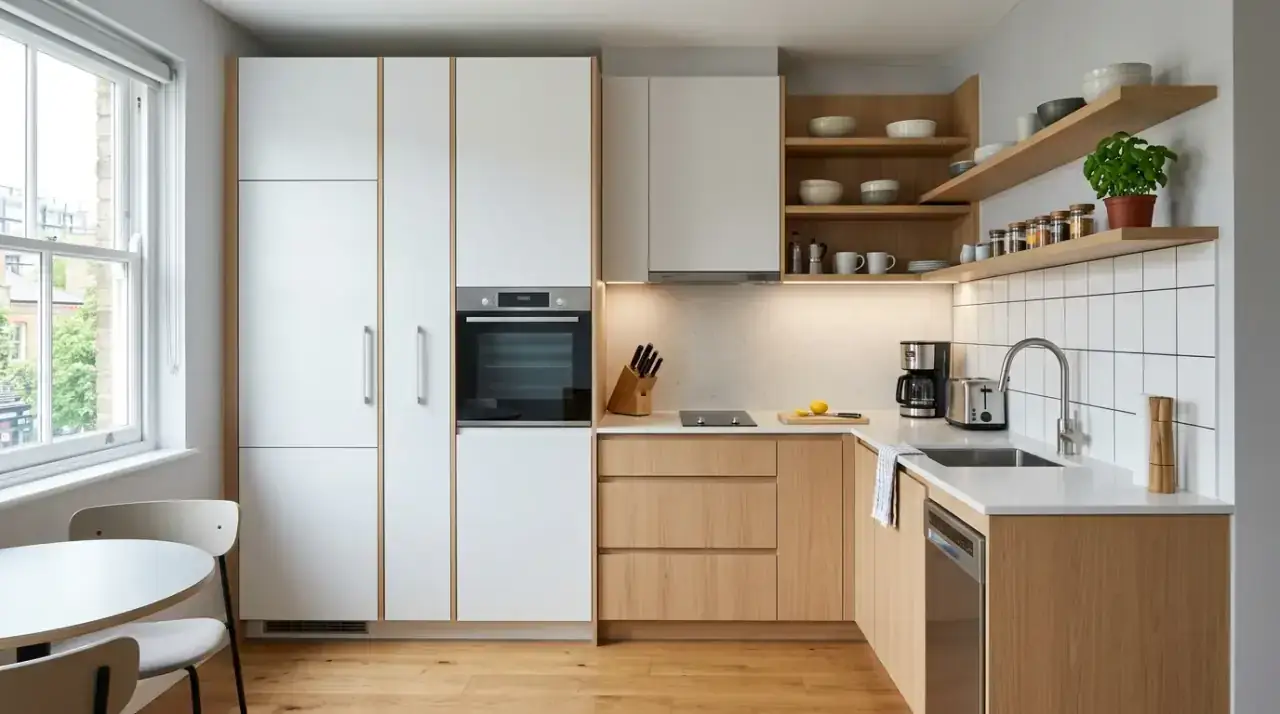
Use Corner Placement Carefully and Only When Access Still Works
A corner refrigerator can solve certain layout problems, but it only works when the doors and adjacent cabinets have enough clearance. Otherwise the corner becomes awkward and daily use feels more frustrating than efficient.
Rooted in caution and guided by practical access, corner placement can help a kitchen feel more resolved and more welcoming one thoughtful detail at a time when the clearances are right. The idea succeeds only if the corner remains genuinely usable.
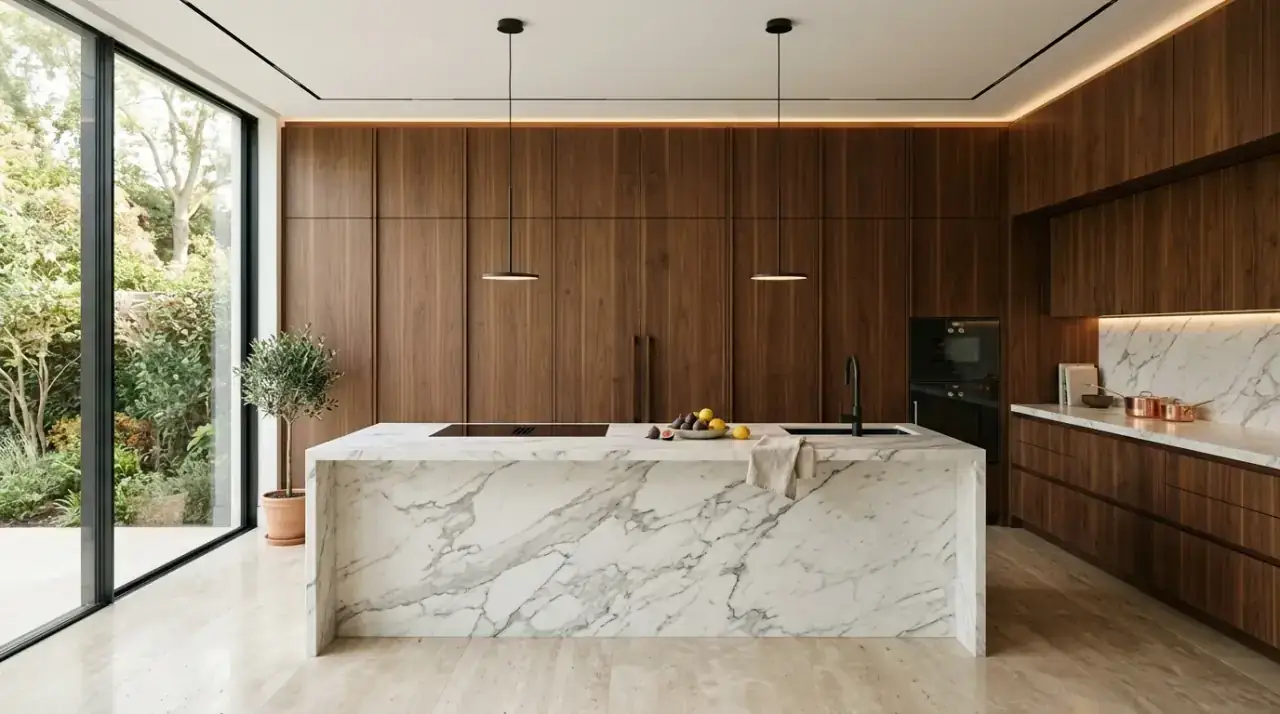
Pair the Fridge with Nearby Pantry Storage
Putting the refrigerator close to dry-goods storage creates a more efficient food zone because breakfast items, snacks, and ingredients can be gathered from one part of the kitchen. That relationship can save time and reduce back-and-forth movement.
Rooted in organization and guided by grouped storage, a fridge-and-pantry zone can help a kitchen feel more capable and more welcoming one thoughtful detail at a time. Related storage belongs together whenever the layout allows it.
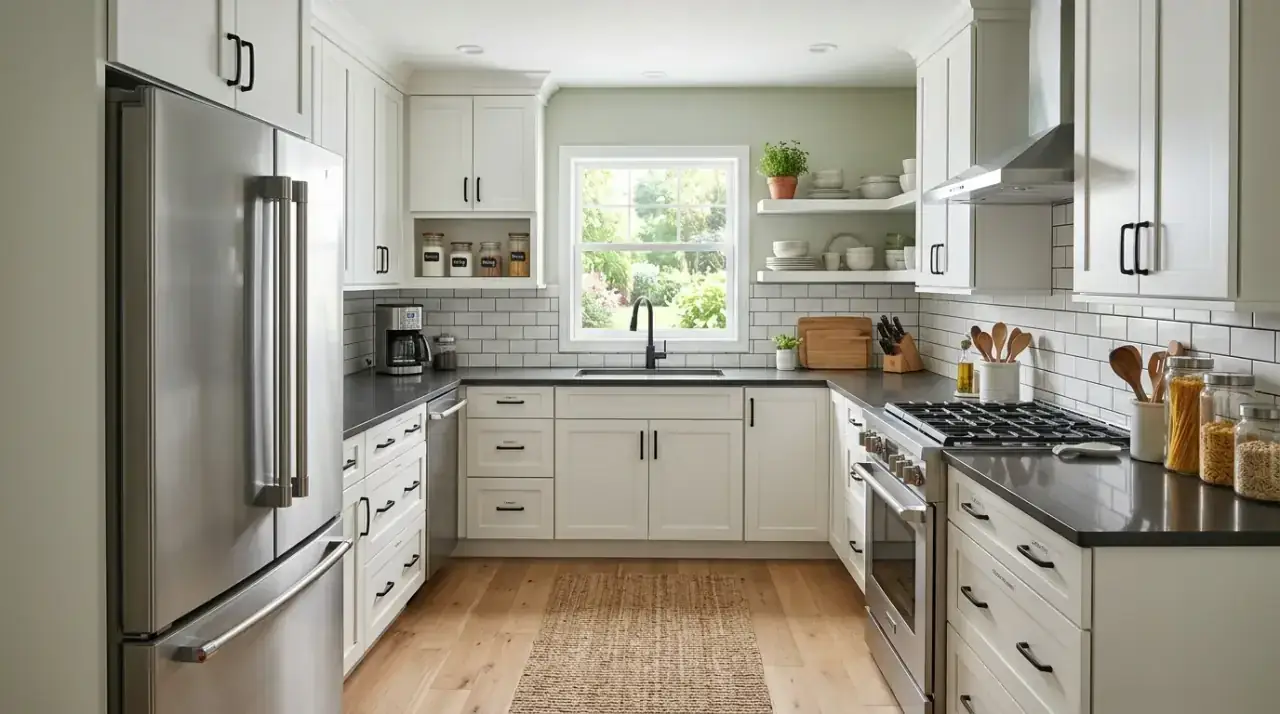
Optimal Flow Starts with Respecting the Fridge's Real Daily Role
Good refrigerator placement is not just about finding somewhere it fits. It is about understanding how often the appliance is used, who uses it, and what other actions need to happen around it smoothly.
Rooted in creativity and guided by style, smart refrigerator placement can turn a kitchen into a warm and welcoming workspace one thoughtful detail at a time. Flow improves most when the layout begins with real habits instead of only visual symmetry.