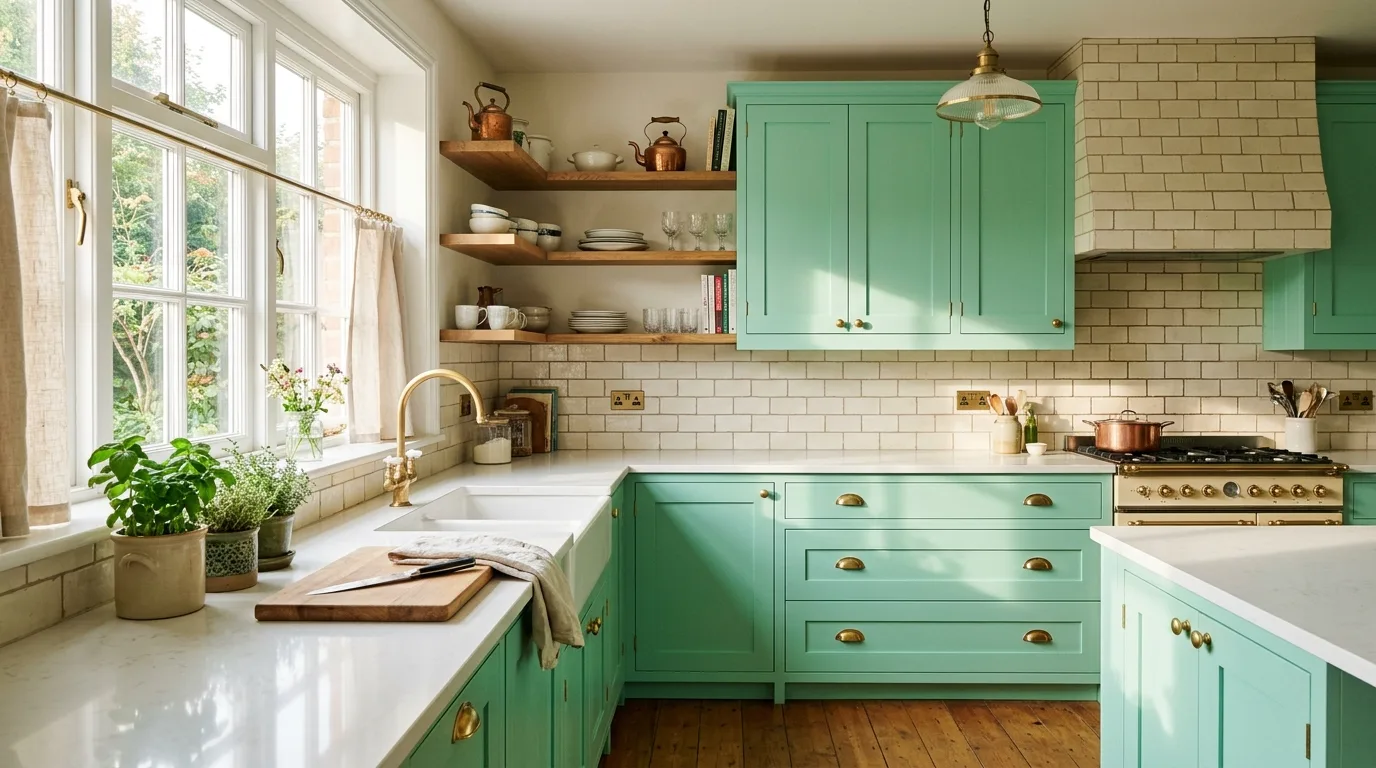
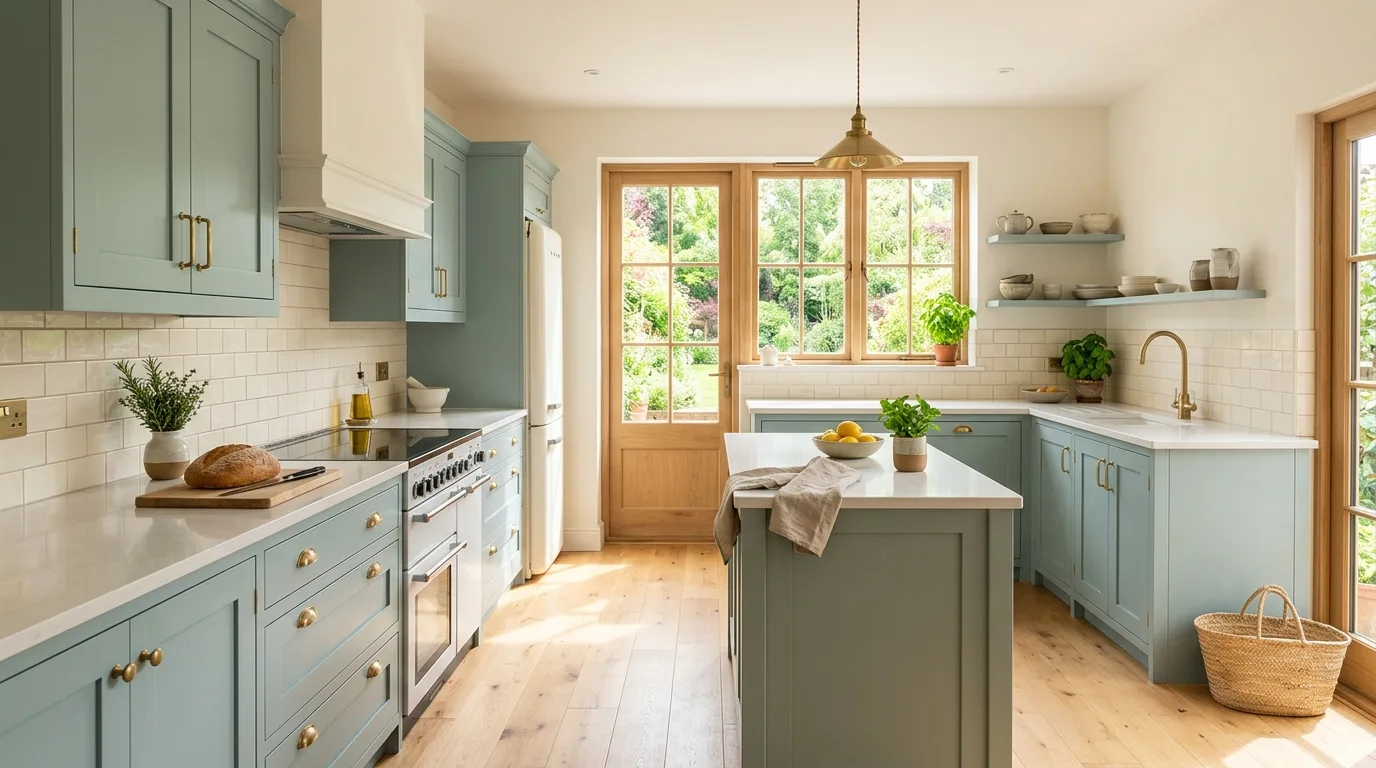
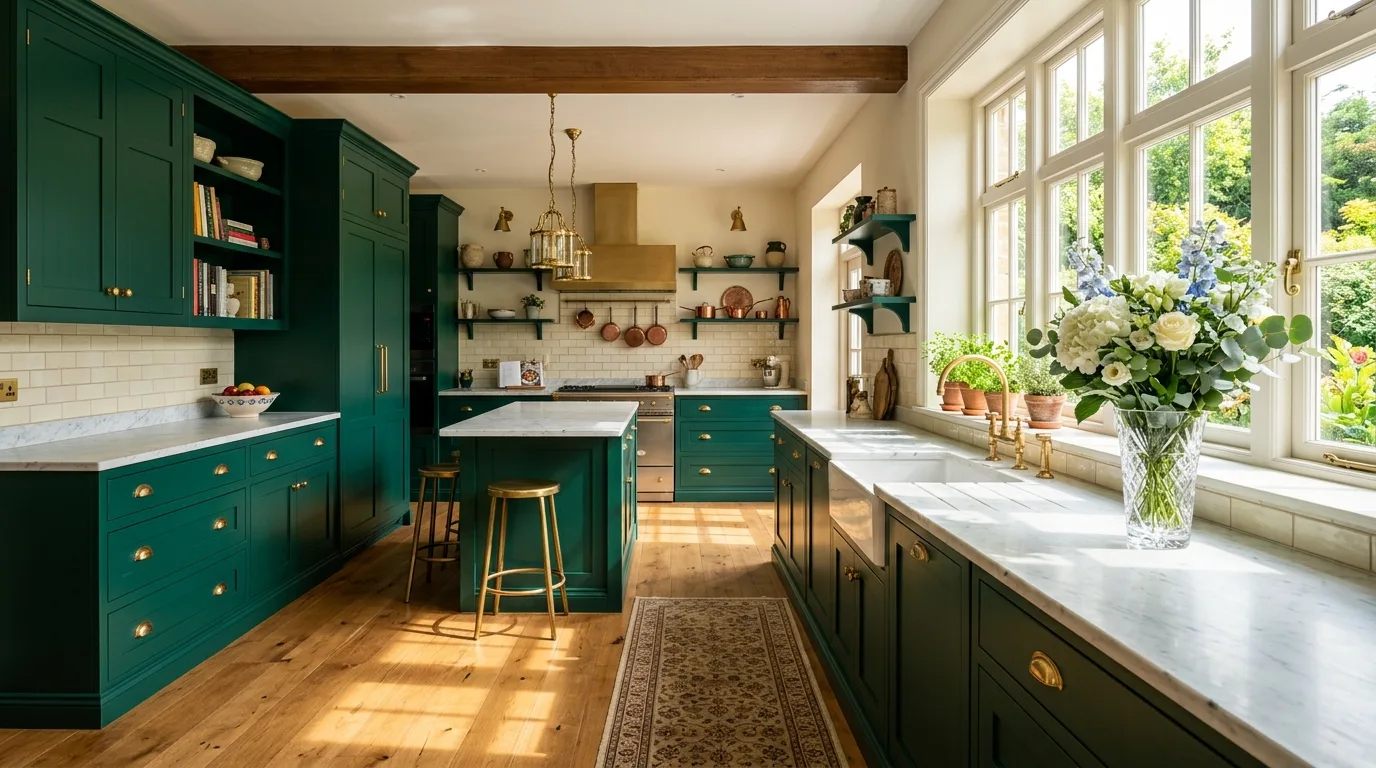
A nature-inspired kitchen is usually less about one obvious motif and more about creating the feeling of quiet connection through material, texture, and light. Timber, clay, stone, woven details, and gentle greens can all make the room feel steadier and more restorative.
These ideas show how to create a calm aesthetic without flattening the room into something bland. If you want a kitchen that feels grounded, breathable, and subtly beautiful, organic design offers a strong path.
Design ideas to borrow from this palette
Use the ideas below to compare hardware, countertop, flooring, and styling combinations that change how the cabinet color reads in a finished kitchen.
Use Warm Wood as the Main Anchor
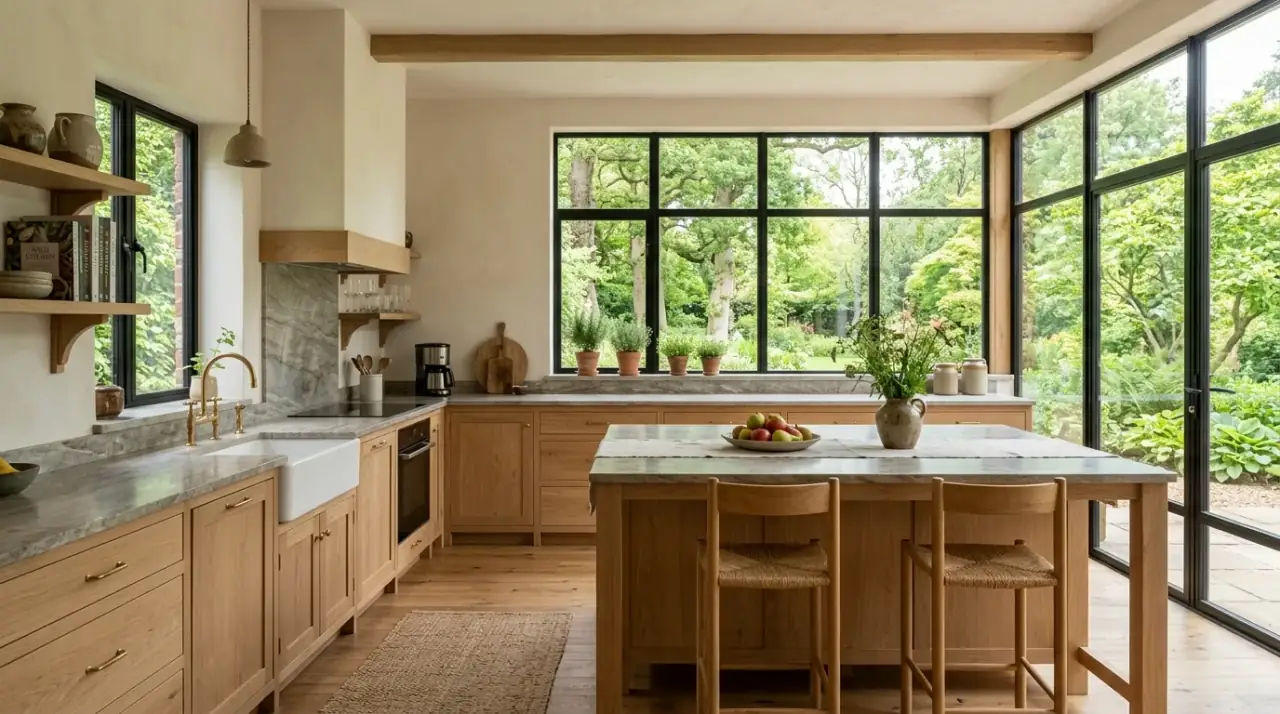
Wood is often the clearest way to bring nature into a kitchen because it adds visible grain, warmth, and the quiet irregularity that synthetic surfaces often lack. Used on cabinetry, shelving, or an island, it immediately makes the room feel more grounded.
Rooted in nature and guided by style, warm wood can turn a kitchen into a calm and welcoming retreat one thoughtful detail at a time. The material carries a softness that helps everything else settle around it.
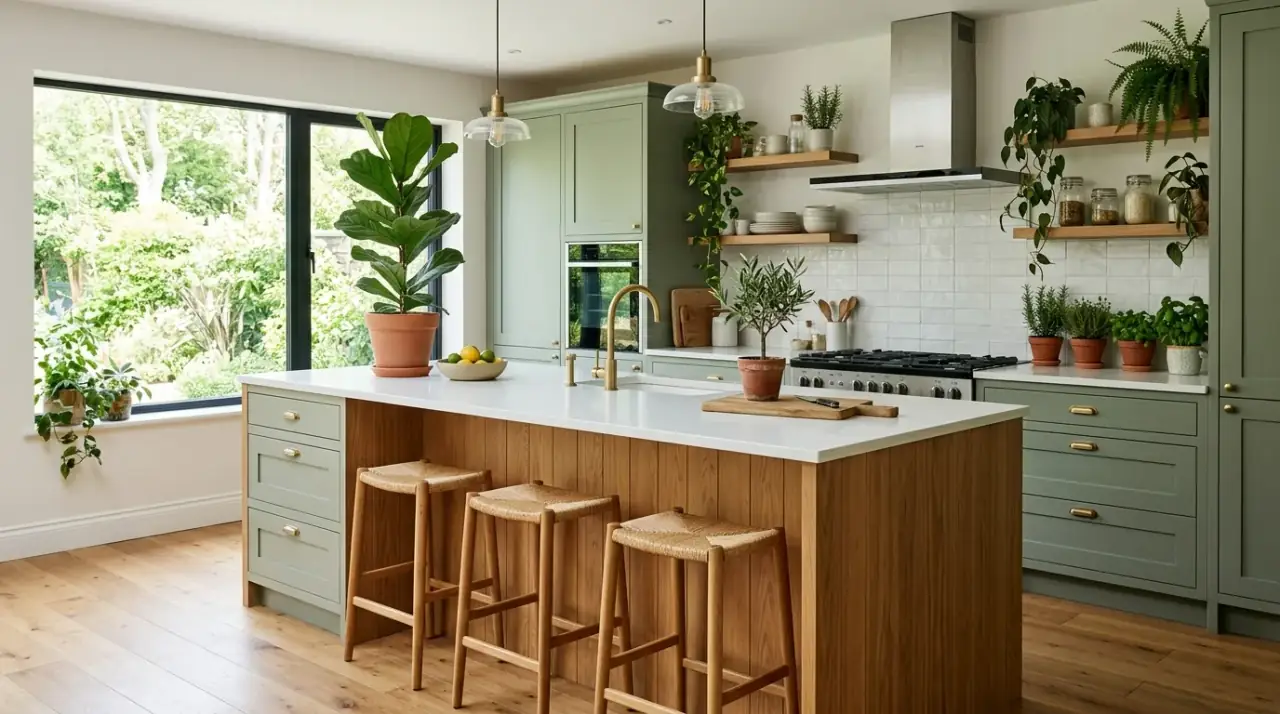
Let Stone Surfaces Add Quiet Weight
Natural stone counters or backsplashes work beautifully in an organic kitchen because they add depth without relying on loud pattern or high contrast. Their variation feels unforced, which helps the room stay calm while still looking rich.
Rooted in earth and guided by restraint, stone surfaces help a kitchen feel more grounded and more welcoming one thoughtful detail at a time. They offer strength while preserving a very gentle atmosphere.
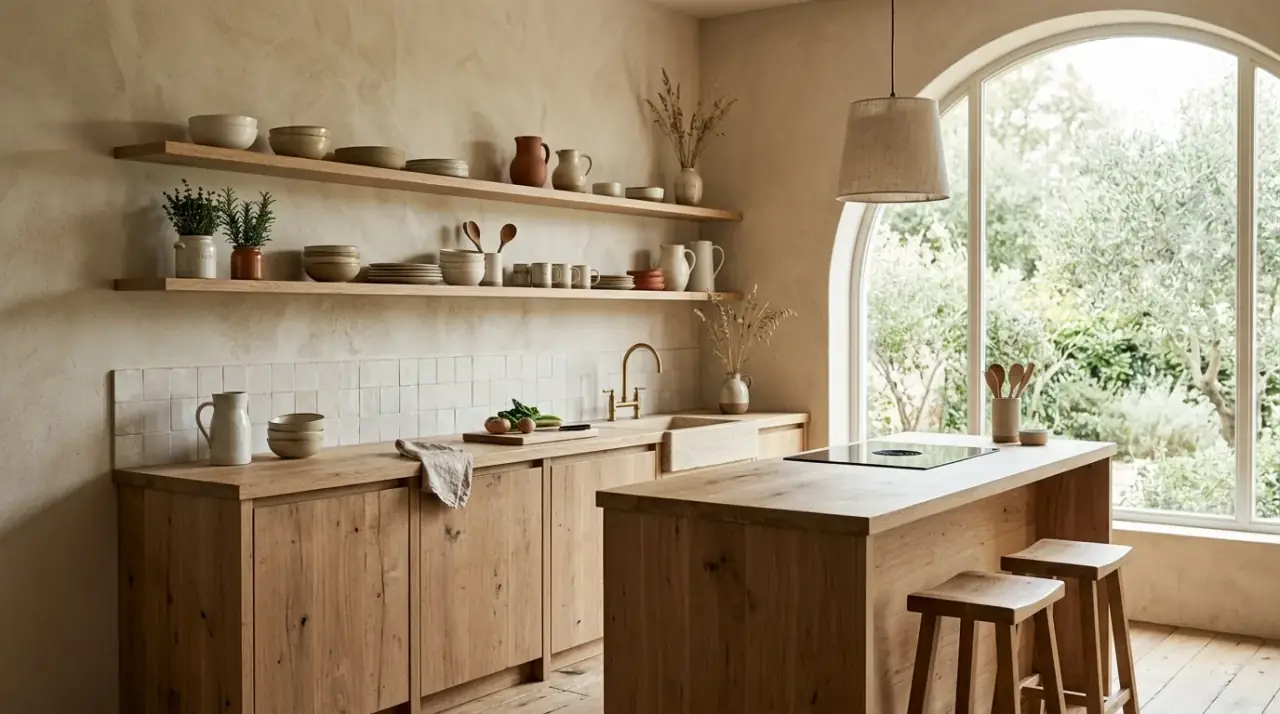
Choose a Soft Green or Clay-Tinted Palette
A muted nature-inspired palette often works best when it draws from leaves, bark, clay, and mist rather than from brighter obvious color. Soft greens, warm beige, dusty taupe, and subtle earth tones can make the room feel quieter without draining it of life.
Rooted in tone and guided by natural harmony, an earthy palette helps a kitchen feel more restorative and more welcoming one thoughtful detail at a time. The colors calm the eye because they already belong to the landscape.
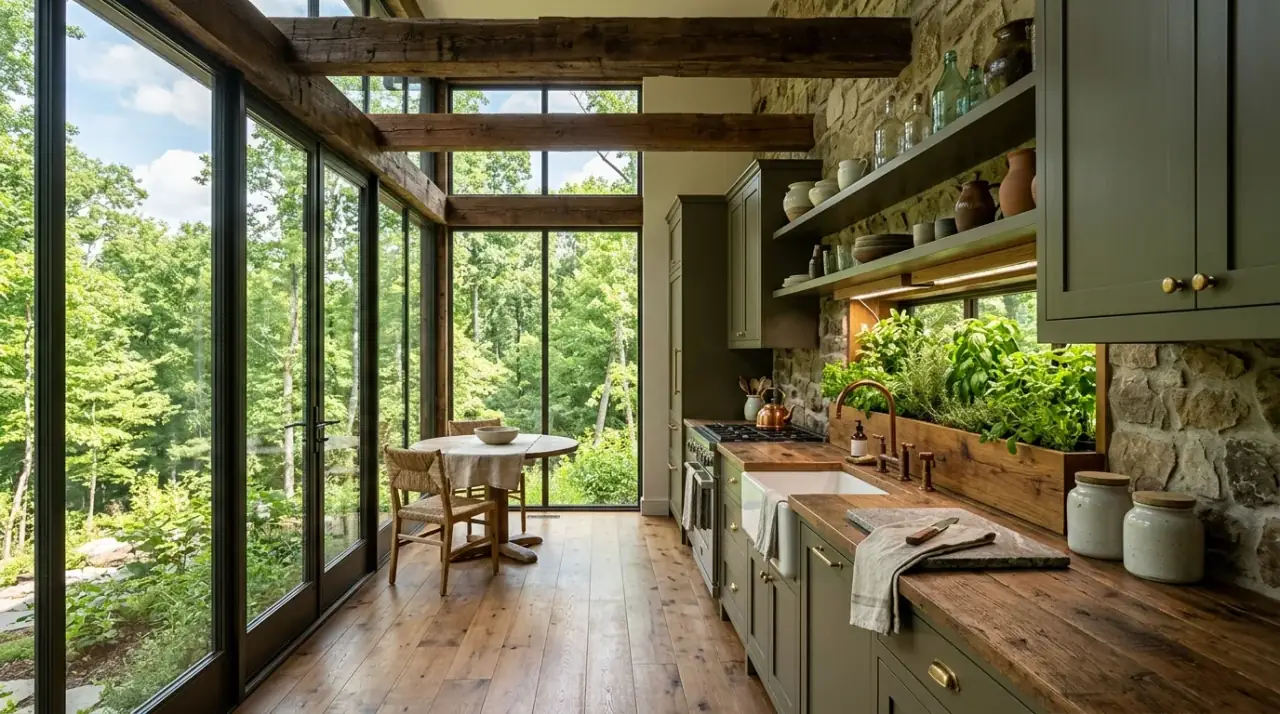
Use Open Shelves for Pottery and Greenery
A few open shelves can support an organic kitchen beautifully when they hold ceramic bowls, earthy vessels, and a little greenery instead of too many decorative pieces. The display feels gentle when the shapes and tones remain quiet and tactile.
Rooted in texture and guided by thoughtful editing, open shelves help a kitchen feel more alive and more welcoming one thoughtful detail at a time. Visible objects can deepen calm when they belong to the same natural language.
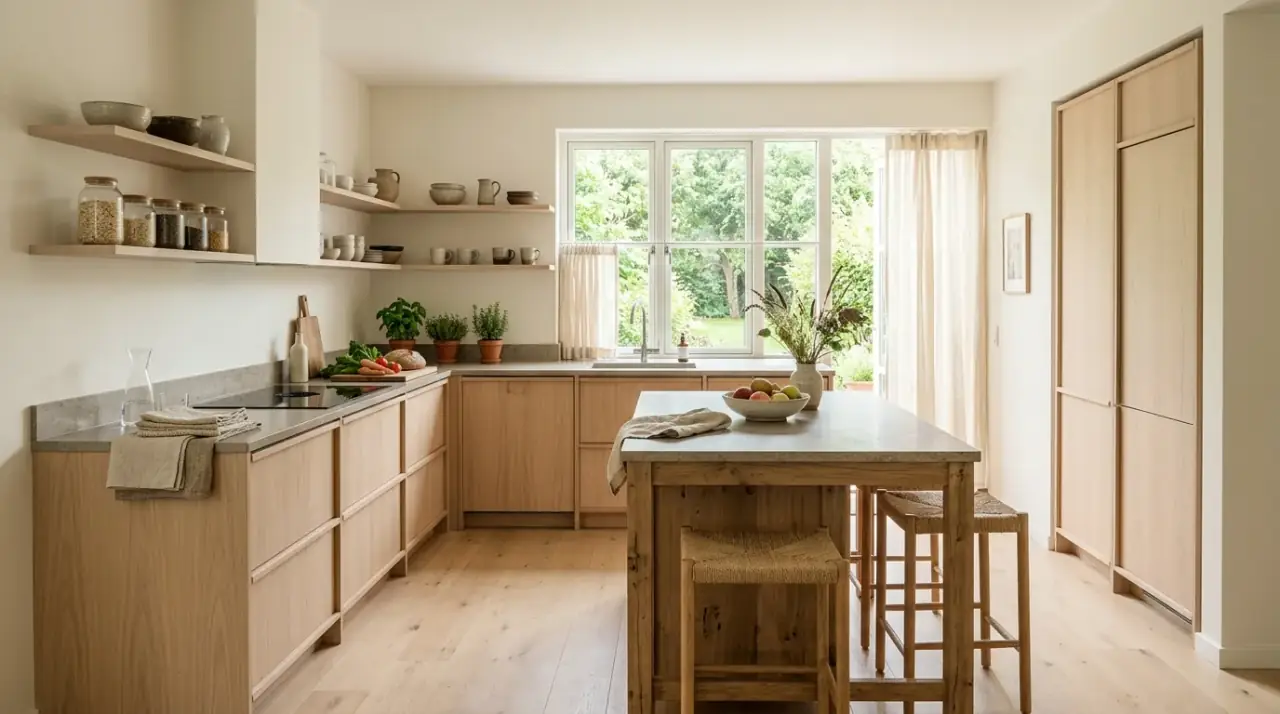
Bring in Woven Texture for Softness
Woven lights, stools, or baskets can soften an organic kitchen because they break up harder surfaces with something more breathable and handmade. This kind of texture is especially useful in rooms that need warmth but not more visual heaviness.
Rooted in craftsmanship and guided by softness, woven materials help a kitchen feel more layered and more welcoming one thoughtful detail at a time. They introduce texture without disturbing the room's calm rhythm.
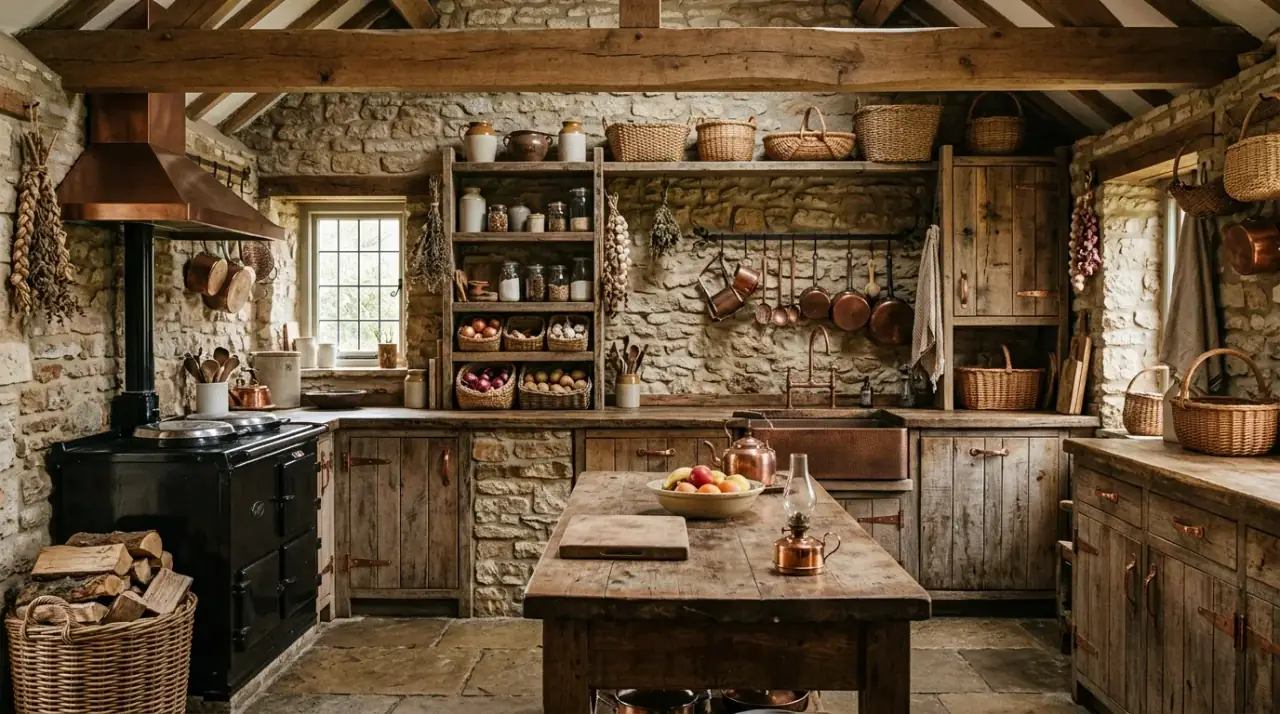
Keep the Cabinet Lines Clean but Not Cold
Organic kitchens often benefit from simplicity in the cabinetry so the materials themselves can take the lead. Clean lines allow wood, stone, and gentle color to read clearly, but the room still needs enough warmth to avoid feeling clinical.
Rooted in clarity and guided by balance, simple cabinetry helps a nature-inspired kitchen feel calmer and more welcoming one thoughtful detail at a time. The restraint works best when it supports texture rather than replacing it.
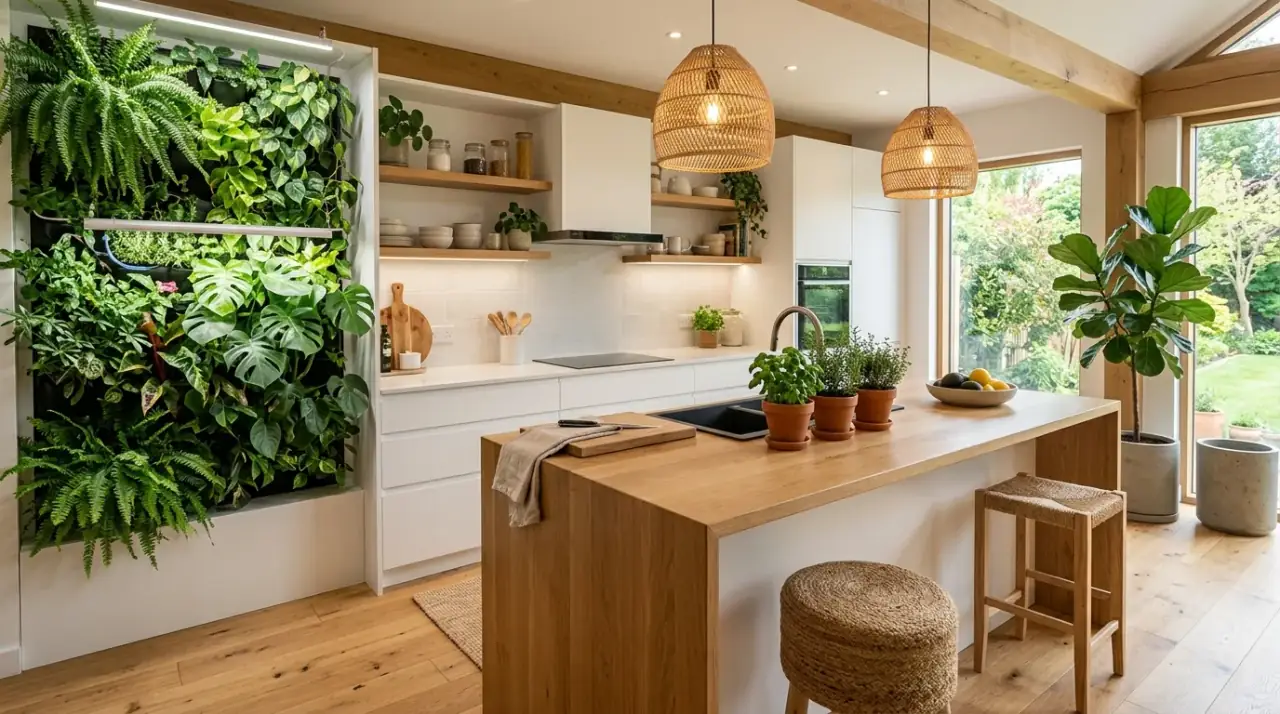
Use Daylight as a Material in Its Own Right
In a truly calm kitchen, daylight becomes part of the design because it shapes how wood, plaster, and stone are experienced across the day. A room that receives light well often feels more peaceful before any decorative detail is considered.
Rooted in light and guided by openness, daylight helps an organic kitchen feel more restorative and more welcoming one thoughtful detail at a time. The atmosphere deepens because the room is allowed to breathe naturally.
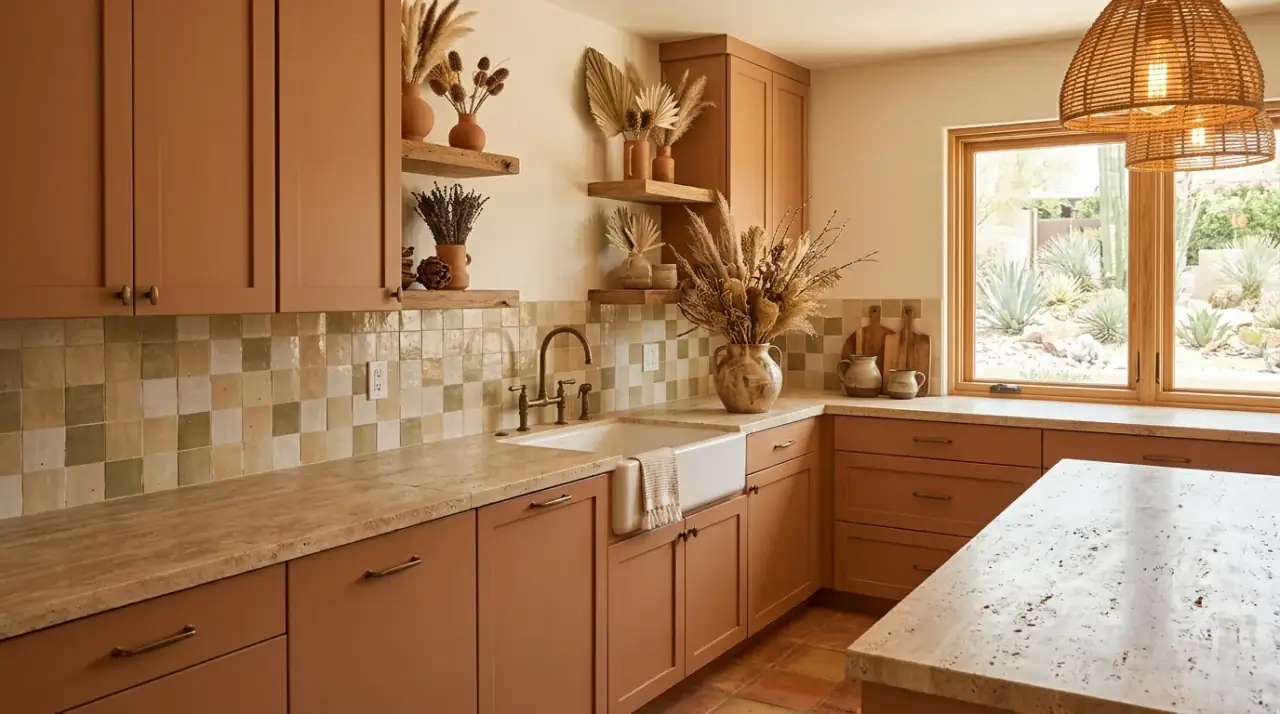
Choose Matte Finishes Over High Shine
Matte finishes often suit nature-inspired kitchens better because they feel softer, quieter, and less artificial than reflective surfaces. They allow the room to absorb light gently, which supports the grounded mood much more effectively.
Rooted in subtlety and guided by natural texture, matte finishes help a kitchen feel more peaceful and more welcoming one thoughtful detail at a time. The room reads calmer when nothing is trying too hard to sparkle.
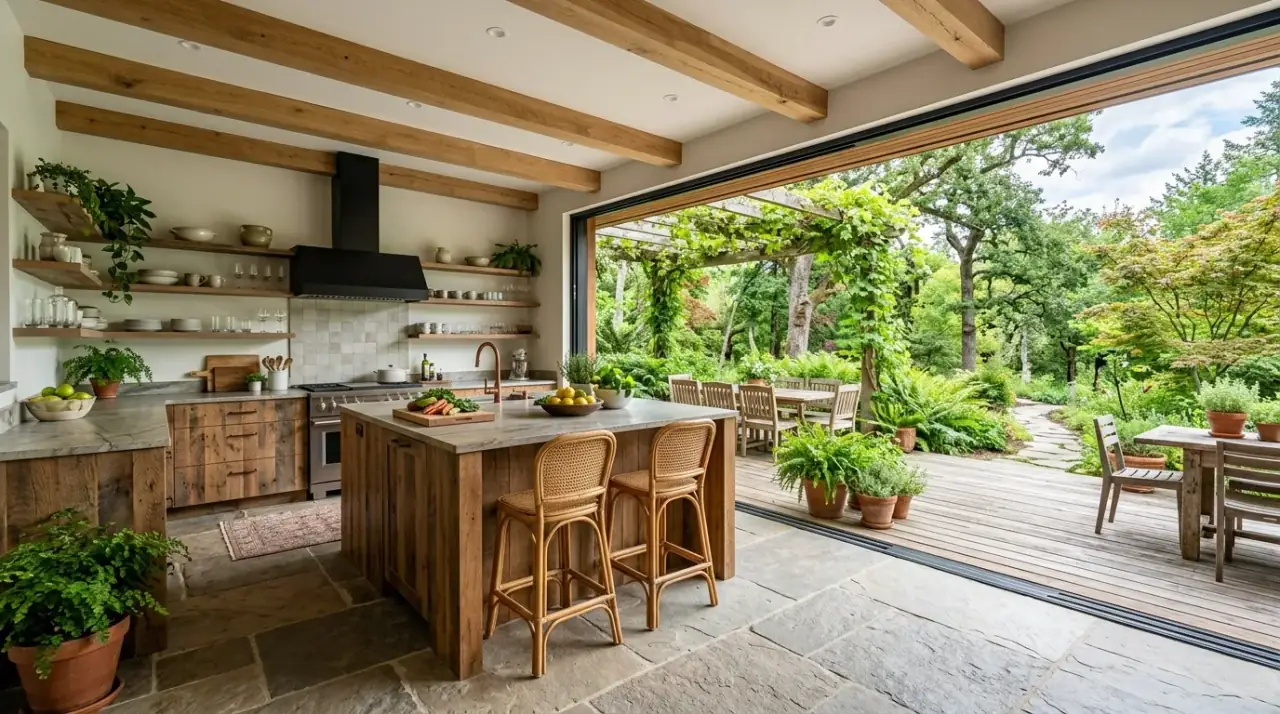
Let a Few Plants Matter More Than Many
Greenery is most effective in an organic kitchen when it is chosen thoughtfully and placed where it can really contribute to the room rather than simply filling corners. A few herbs, branches, or sculptural plants often feel calmer than a scattered collection.
Rooted in restraint and guided by living texture, well-placed plants help a kitchen feel more connected and more welcoming one thoughtful detail at a time. The room gains life without gaining clutter.
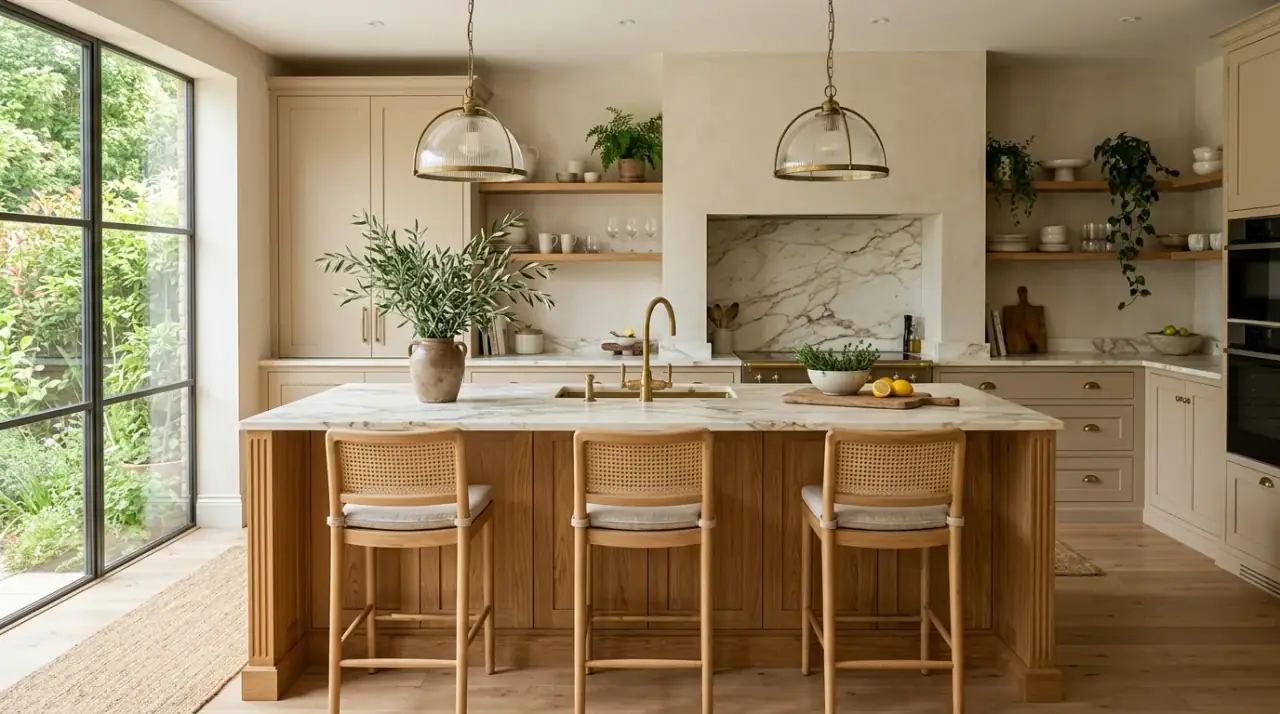
Use Clay, Linen, and Ceramics as Gentle Accents
Smaller materials matter in an organic kitchen because the room's calm often depends on a hundred quiet decisions rather than one dramatic feature. Clay bowls, linen towels, and simple ceramics all strengthen the natural feeling without pulling focus.
Rooted in tactile beauty and guided by ease, humble materials help a kitchen feel more considered and more welcoming one thoughtful detail at a time. The room becomes richer because the supporting details stay honest.
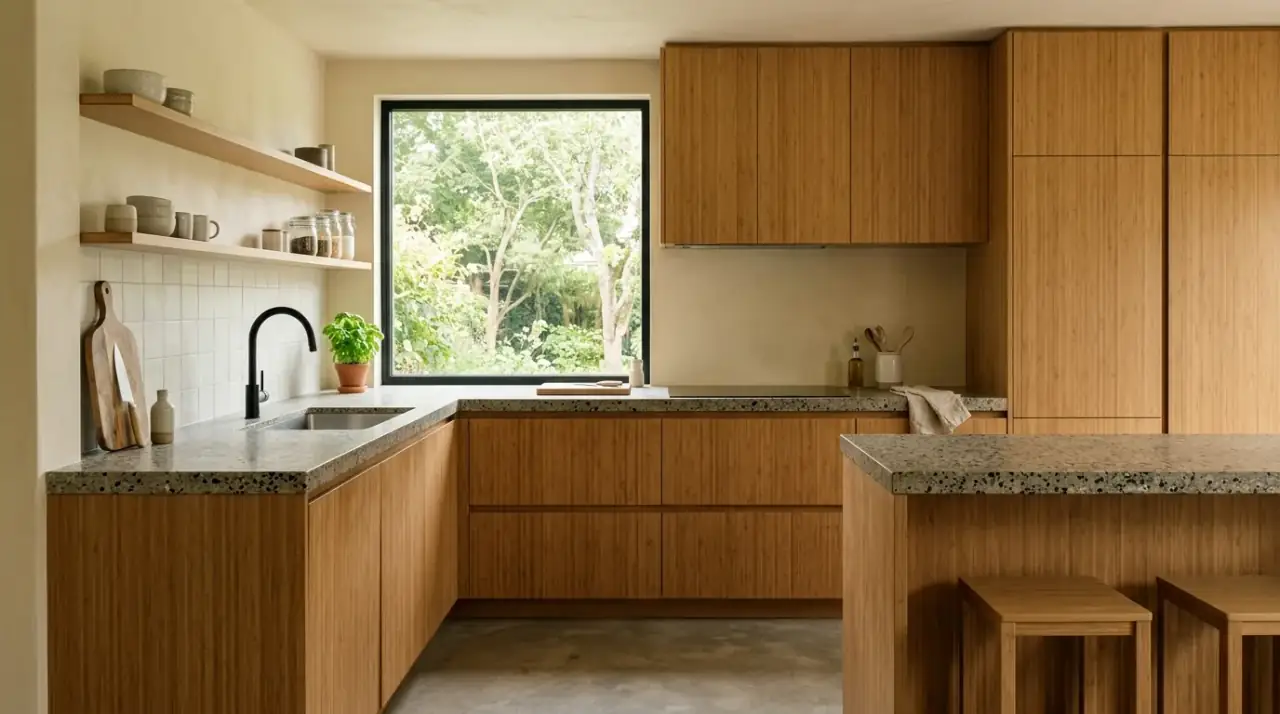
Hide the Clutter to Preserve the Calm
An organic kitchen can lose its restorative effect quickly if too many small appliances, wrappers, or random storage pieces remain out in view. Concealed organization helps the softer materials and colors continue doing their quiet work.
Rooted in order and guided by serenity, hidden storage helps a nature-inspired kitchen feel more peaceful and more welcoming one thoughtful detail at a time. Calm design depends on calm surfaces as much as warm materials.
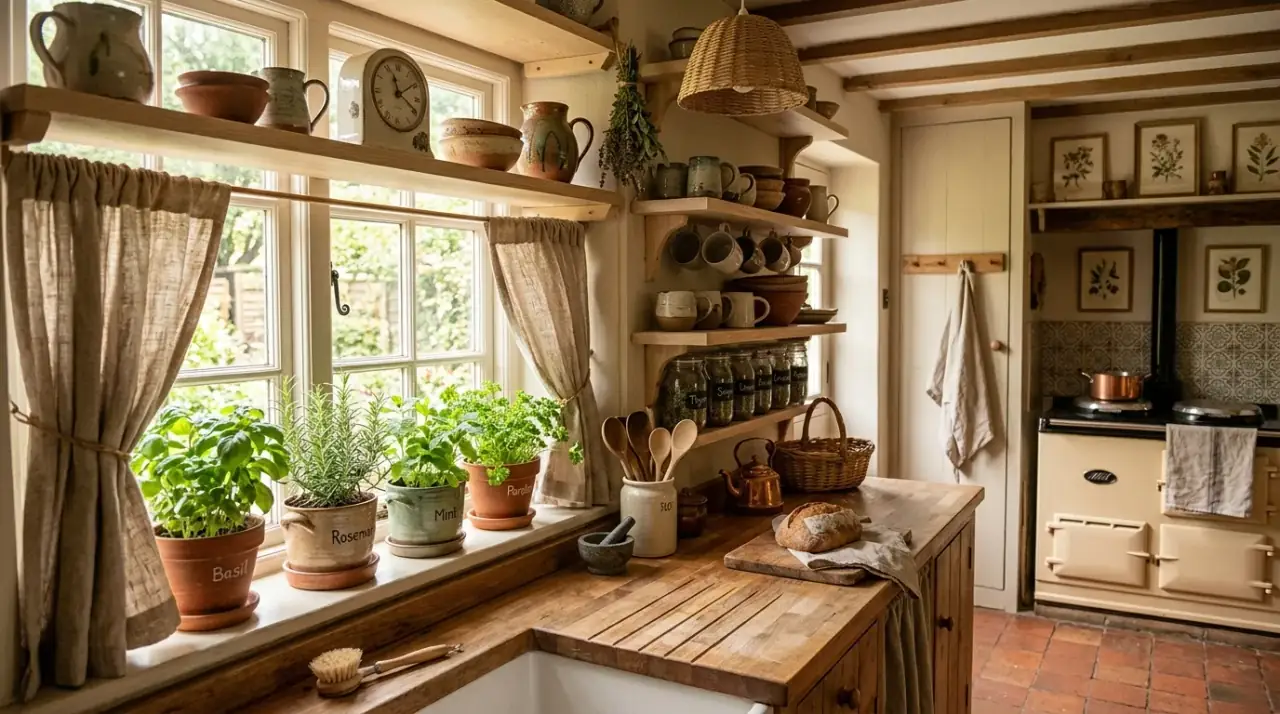
Use Curved Forms to Soften the Room
Rounded stools, gentle arch shapes, or softly curved lighting can help a nature-inspired kitchen feel more fluid and less mechanical. These shapes echo the softness of the natural world and balance out the straight lines that kitchens inevitably contain.
Rooted in flow and guided by organic form, gentle curves help a kitchen feel more soothing and more welcoming one thoughtful detail at a time. The room relaxes because fewer elements feel rigid or abrupt.
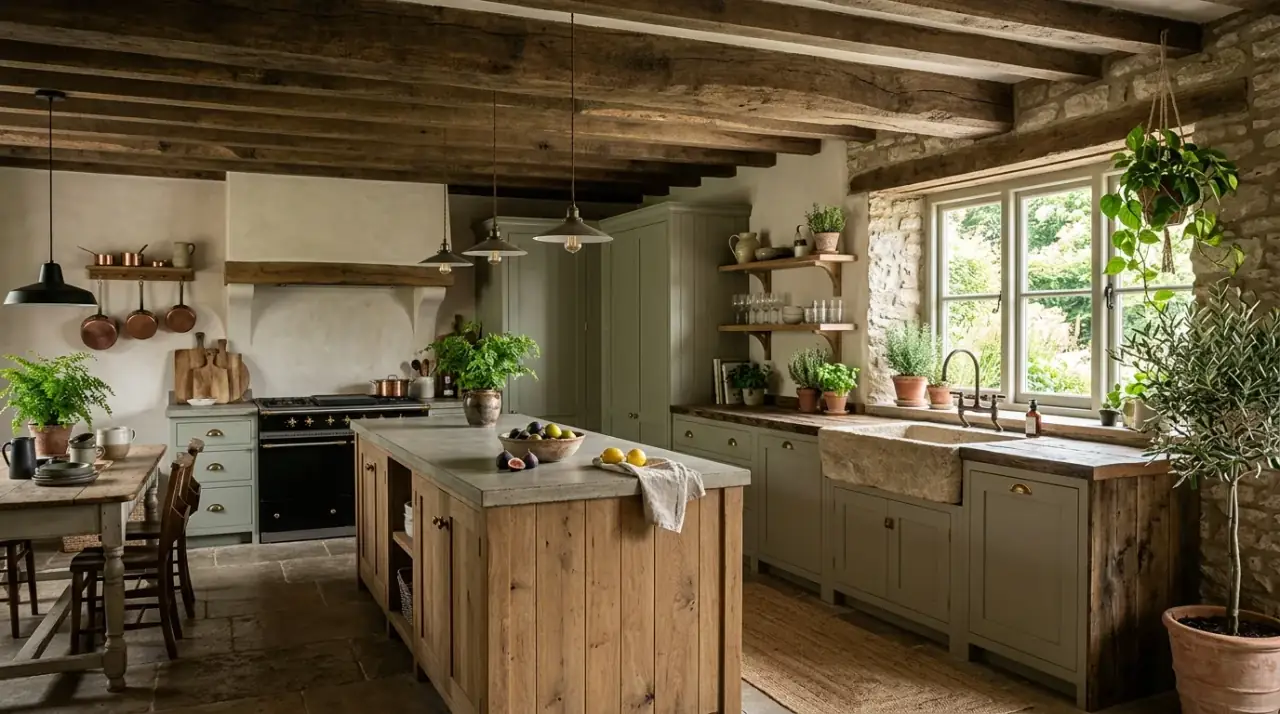
Let the Room Feel Collected, Not Decorated
Nature-inspired kitchens are at their strongest when they feel grown into rather than arranged around a trend. The room becomes more restful when each piece seems to belong naturally, whether it is a board, a plant, a bowl, or a stone surface.
Rooted in authenticity and guided by style, an organic kitchen can turn natural materials into a warm and welcoming everyday environment one thoughtful detail at a time. The calm holds because nothing feels forced.
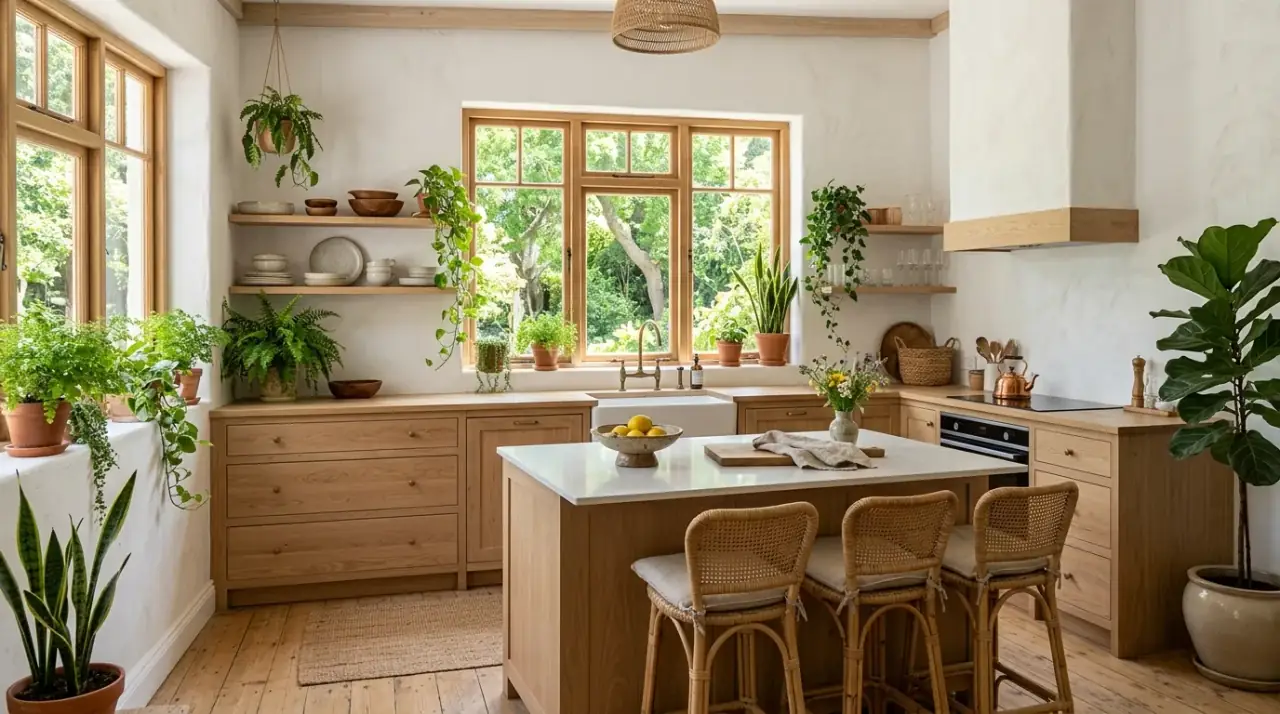
A Calm Aesthetic Built for Real Life
The most successful organic kitchens are not delicate concept rooms and instead spaces where warmth, storage, and usability all support one another quietly. When the design is grounded in real routines, the calm becomes much easier to maintain.
Rooted in creativity and guided by style, a nature-inspired kitchen can turn daily cooking into a warm and welcoming restorative ritual one thoughtful detail at a time. That practical serenity is what makes the aesthetic last.