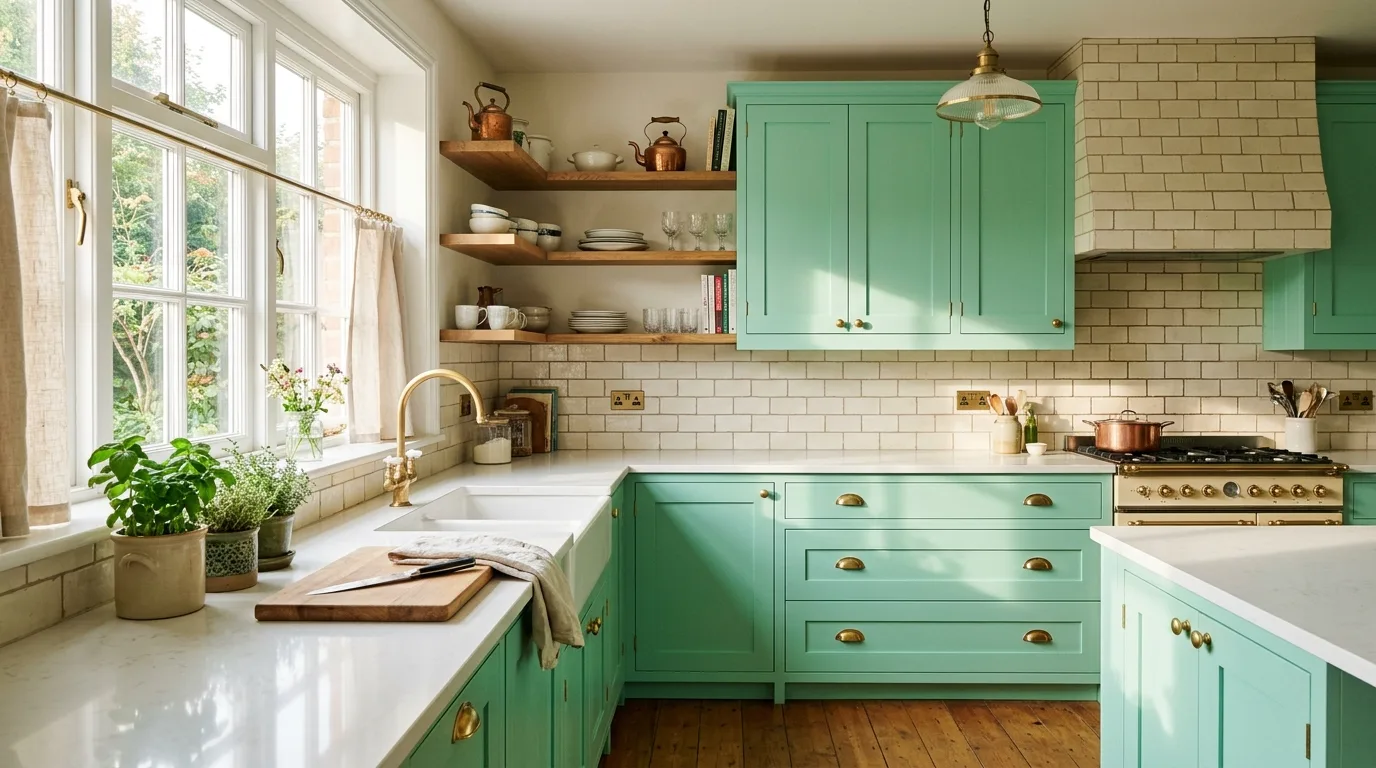
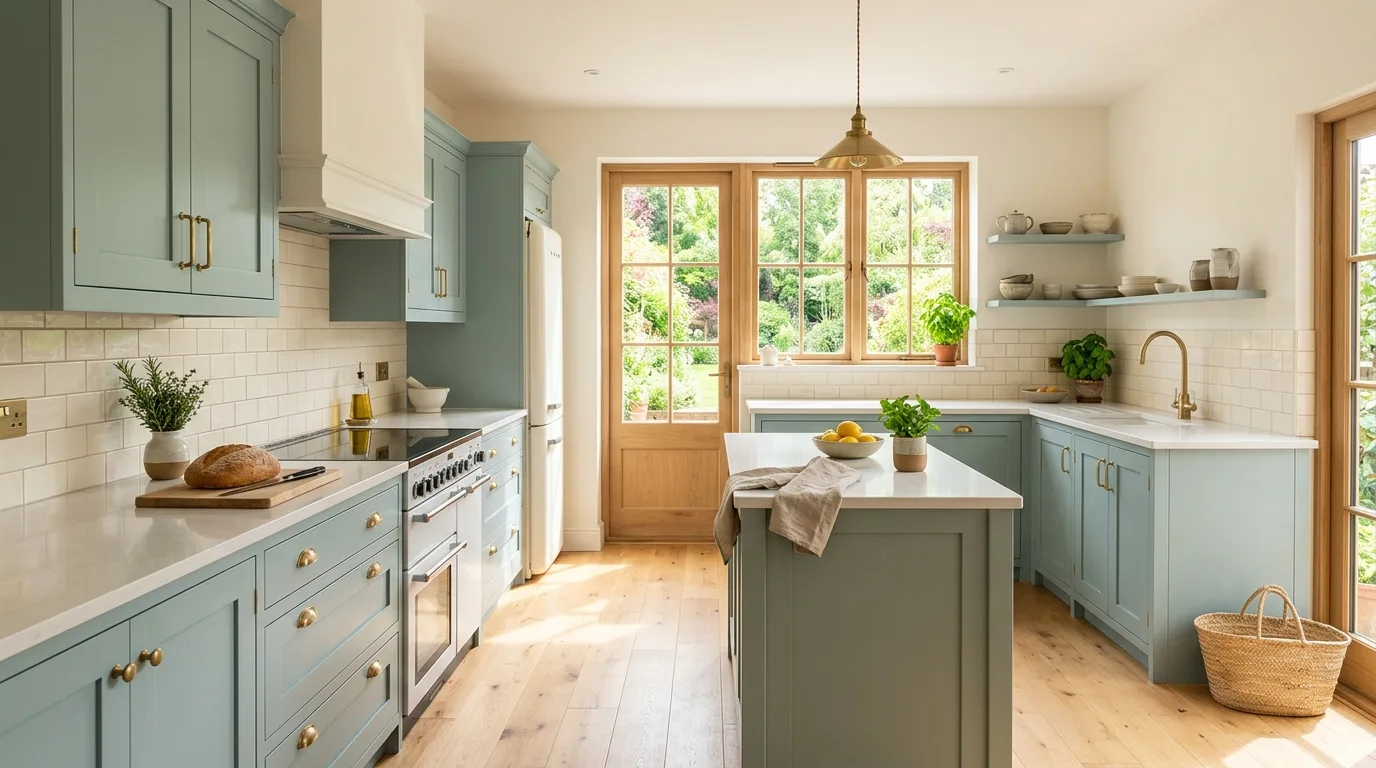
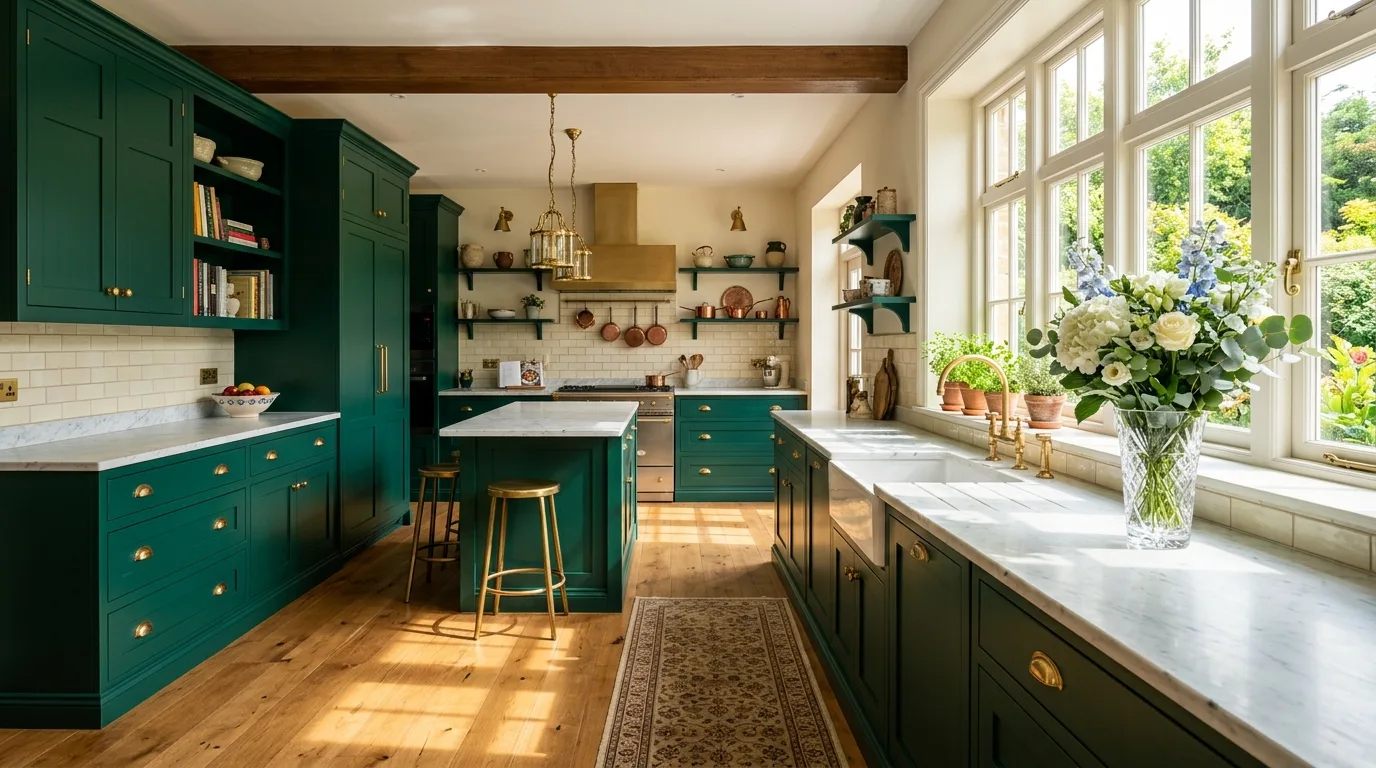
A Victorian kitchen asks for richer detail than many modern spaces, but the key is letting that detail feel authentic rather than overworked. Decorative tile, darker paint, polished brass, carved wood, and furniture-like silhouettes can all support the period mood beautifully.
These ideas focus on ways to create historical charm while still leaving room for practical modern living. If you want a kitchen that feels rooted in a home's past rather than disconnected from it, Victorian influence can be especially rewarding.
Design ideas to borrow from this palette
Use the ideas below to compare hardware, countertop, flooring, and styling combinations that change how the cabinet color reads in a finished kitchen.
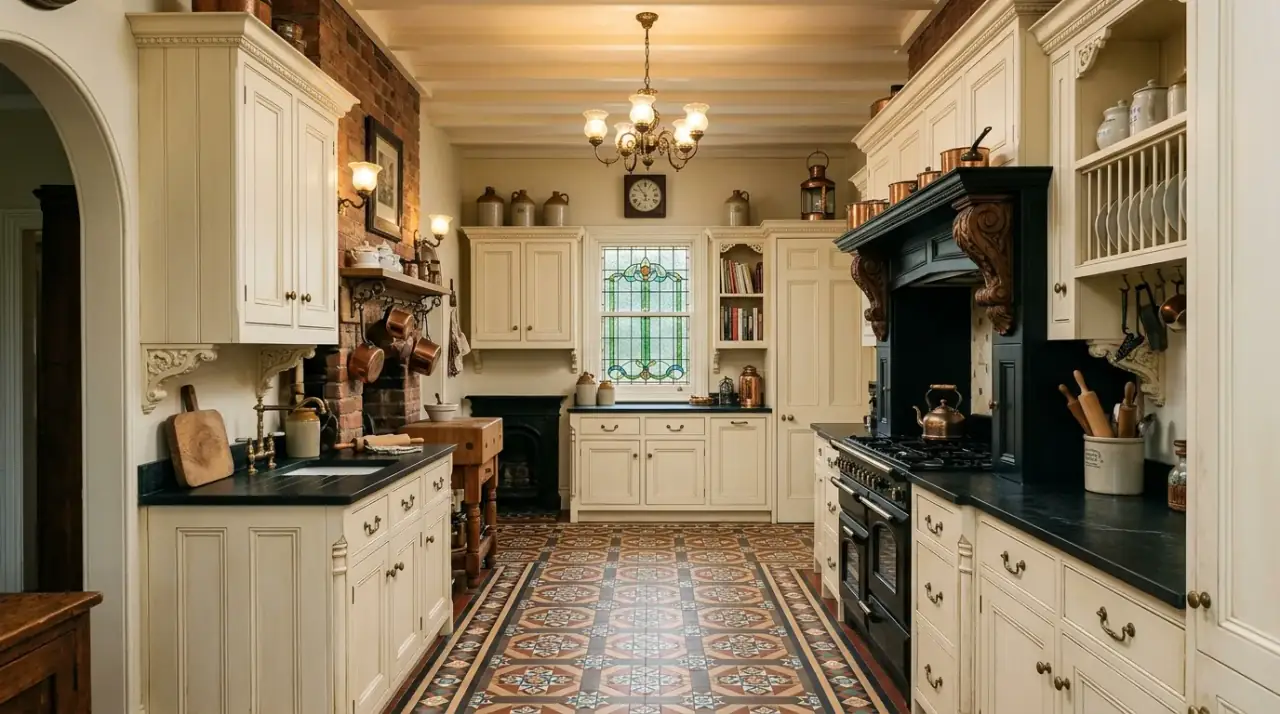
Use Decorative Floor Tile as a Foundation
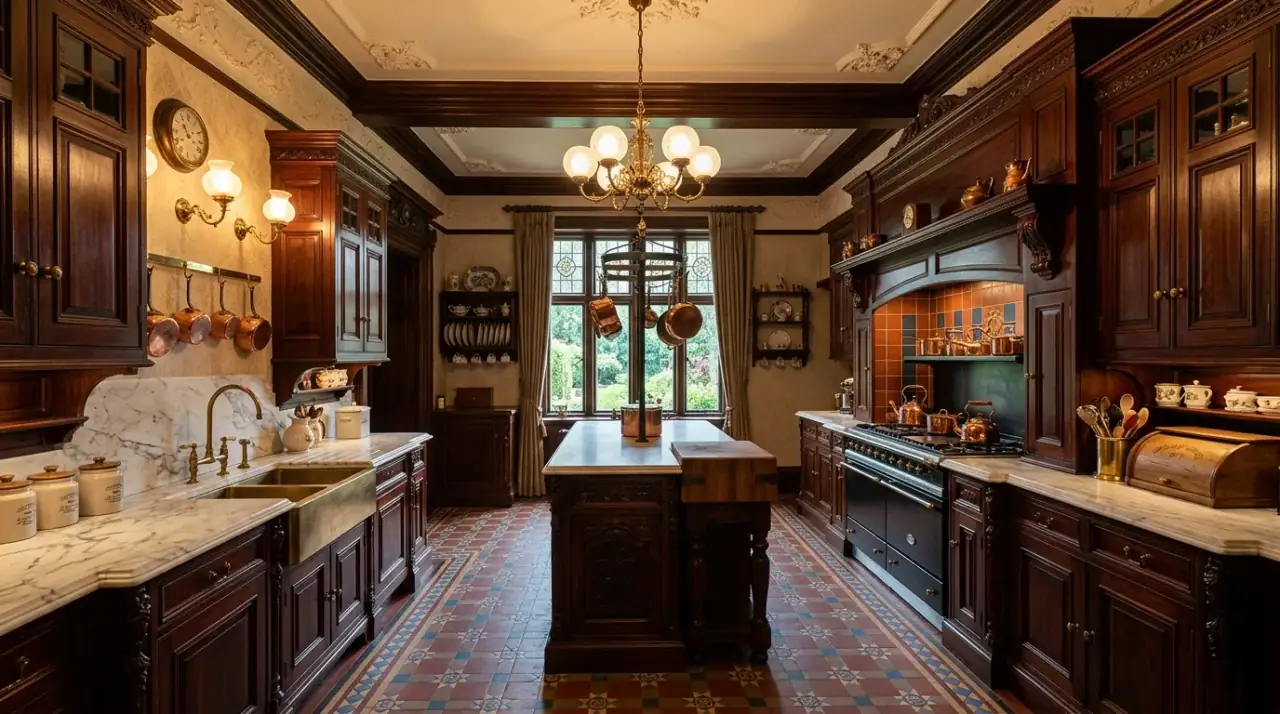
Victorian kitchens often gain their strongest identity from the floor because pattern immediately establishes the sense of period and richness. Geometric tile underfoot gives the room gravitas before any smaller decorative element is added.
Rooted in history and guided by style, patterned floor tile can turn a kitchen into a warm and welcoming period space one thoughtful detail at a time. The visual weight of the floor sets the tone for everything above it.
Dark Painted Cabinets with Rich Trim
Victorian cabinetry often feels strongest in deeper tones because darker paint helps carved edges, moldings, and paneling read more clearly. Navy, forest, oxblood, or near-black can all bring seriousness and old-house depth to the room.
Rooted in drama and guided by proportion, darker cabinetry helps a Victorian kitchen feel more ornate and more welcoming one thoughtful detail at a time. The richness of the color gives all the trim more presence.
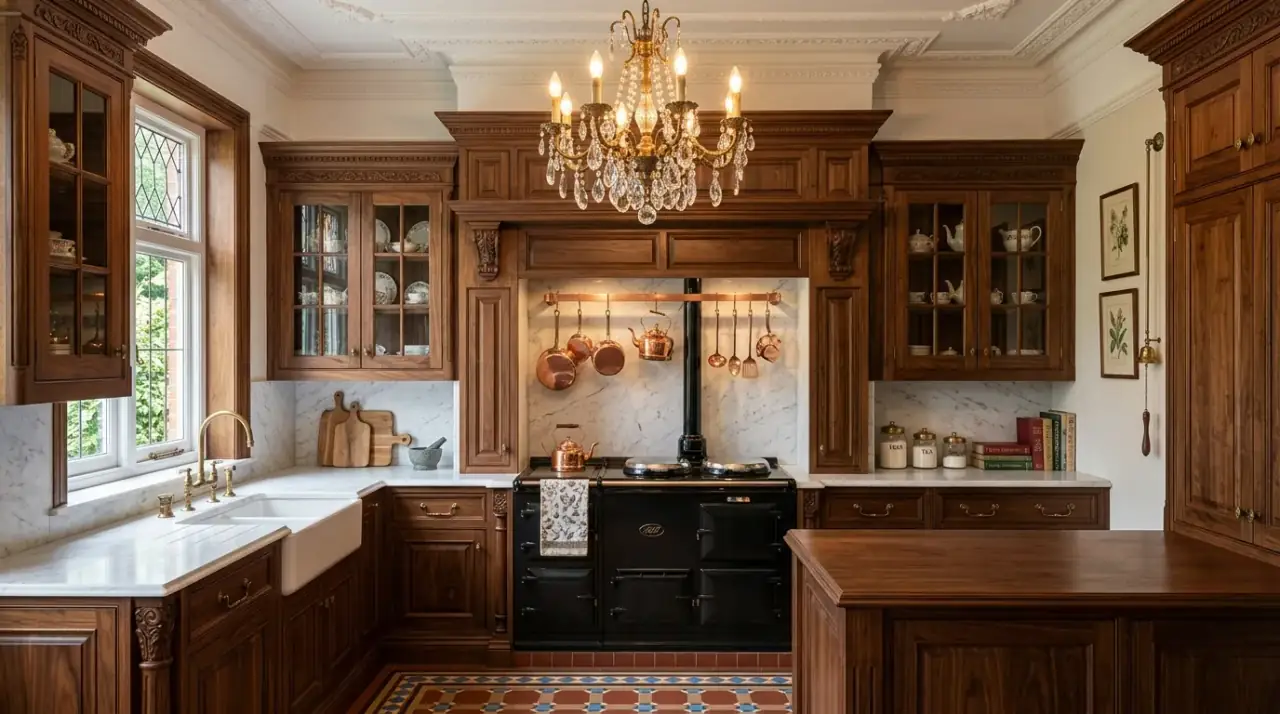
A Brass Bridge Faucet as a Historical Accent
A bridge faucet can introduce just enough old-world form to shift the sink wall toward a Victorian feel without needing major construction changes. In polished or aged brass, it becomes both a functional tool and a period cue.
Rooted in craftsmanship and guided by elegance, a brass faucet helps a Victorian kitchen feel more convincing and more welcoming one thoughtful detail at a time. Sometimes one historically informed silhouette changes the whole mood.
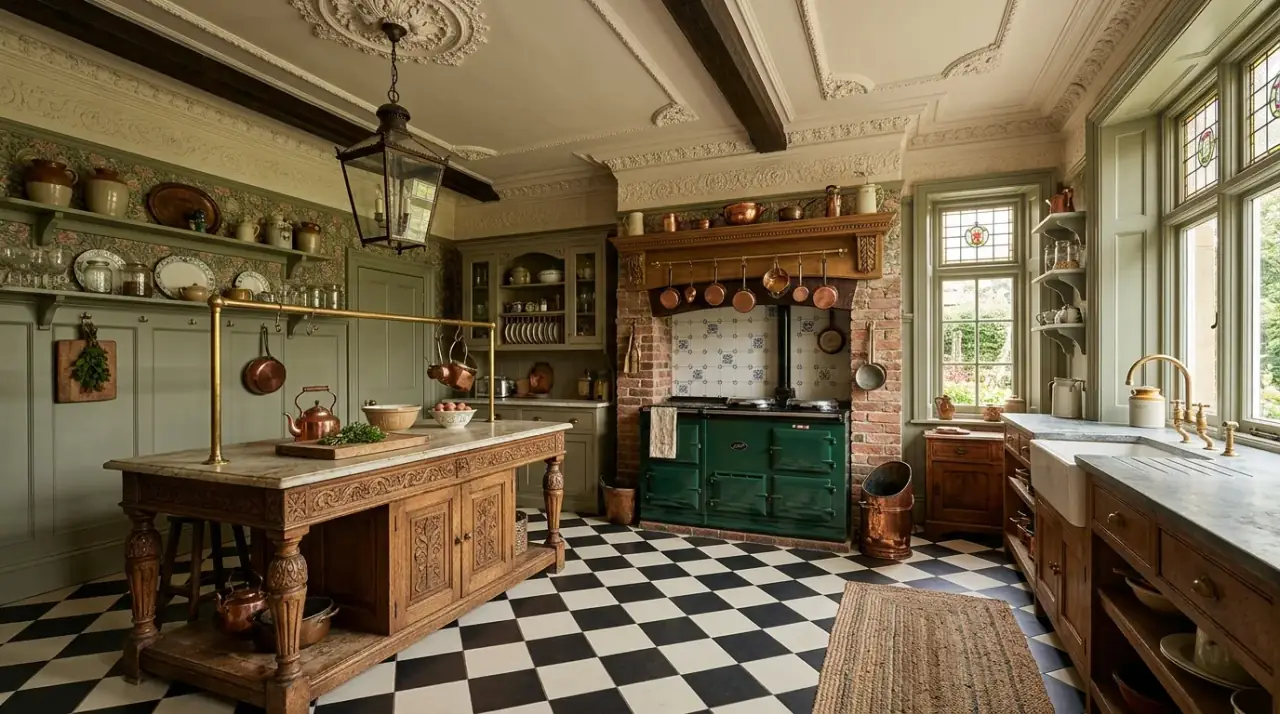
Display China and Glassware in a Furniture-Like Hutch
A hutch or glazed dresser feels right at home in a Victorian kitchen because it brings storage and display together through a furniture piece instead of another wall of cabinetry. The visible dishes also help the room feel inhabited rather than staged.
Rooted in domestic charm and guided by traditional form, a glazed hutch helps a Victorian kitchen feel more layered and more welcoming one thoughtful detail at a time. It supports both the beauty and the lived-in quality of the room.
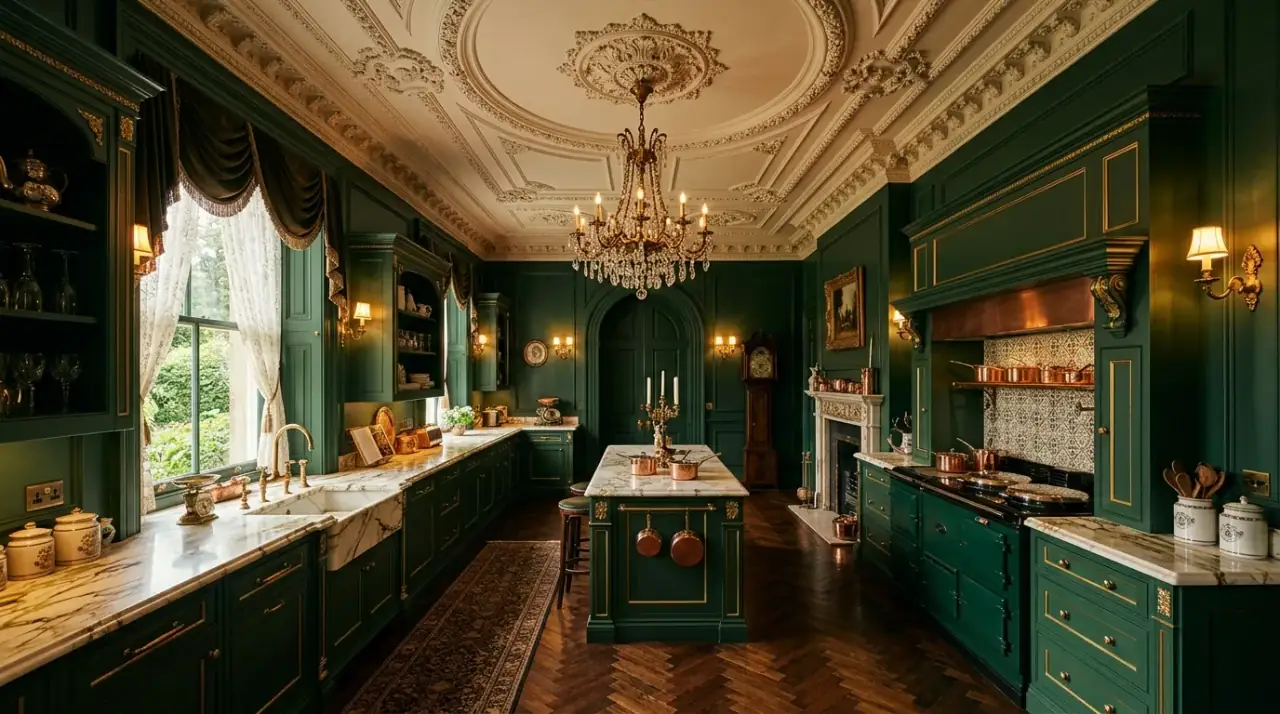
Use Wallpaper or Frieze Detailing with Care
Victorian rooms can carry pattern beautifully, but in a kitchen the key is choosing one area where wallpaper or a frieze makes sense rather than trying to decorate every wall. A restrained use of pattern can add period richness without overwhelming the room.
Rooted in ornament and guided by control, decorative wall detailing helps a Victorian kitchen feel more complete and more welcoming one thoughtful detail at a time. The pattern works because it knows when to stop.
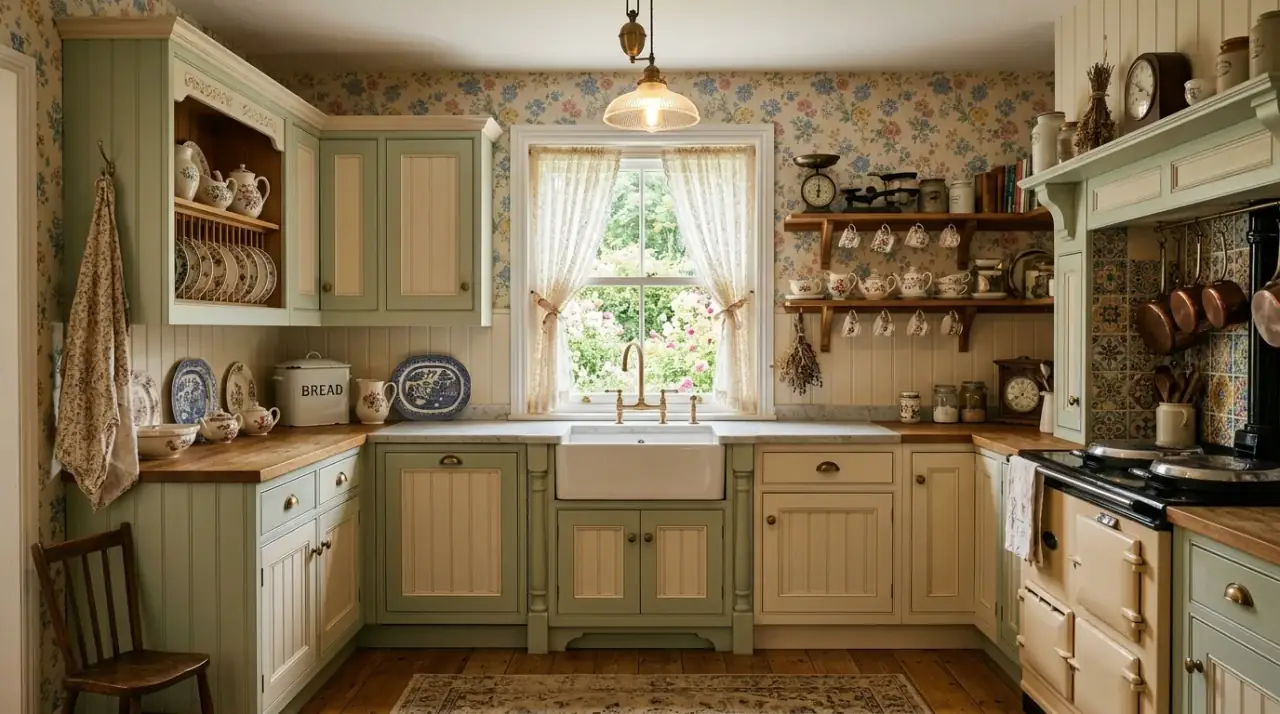
Bring in Marble for a Polished Historical Finish
Marble suits Victorian kitchens because it feels elegant, period-appropriate, and slightly formal without becoming cold when paired with darker woods and brass. Even a smaller marble-topped piece can add the right level of historic refinement.
Rooted in luxury and guided by restraint, marble helps a Victorian kitchen feel more polished and more welcoming one thoughtful detail at a time. The stone gives the room a refined edge that still feels rooted in the past.
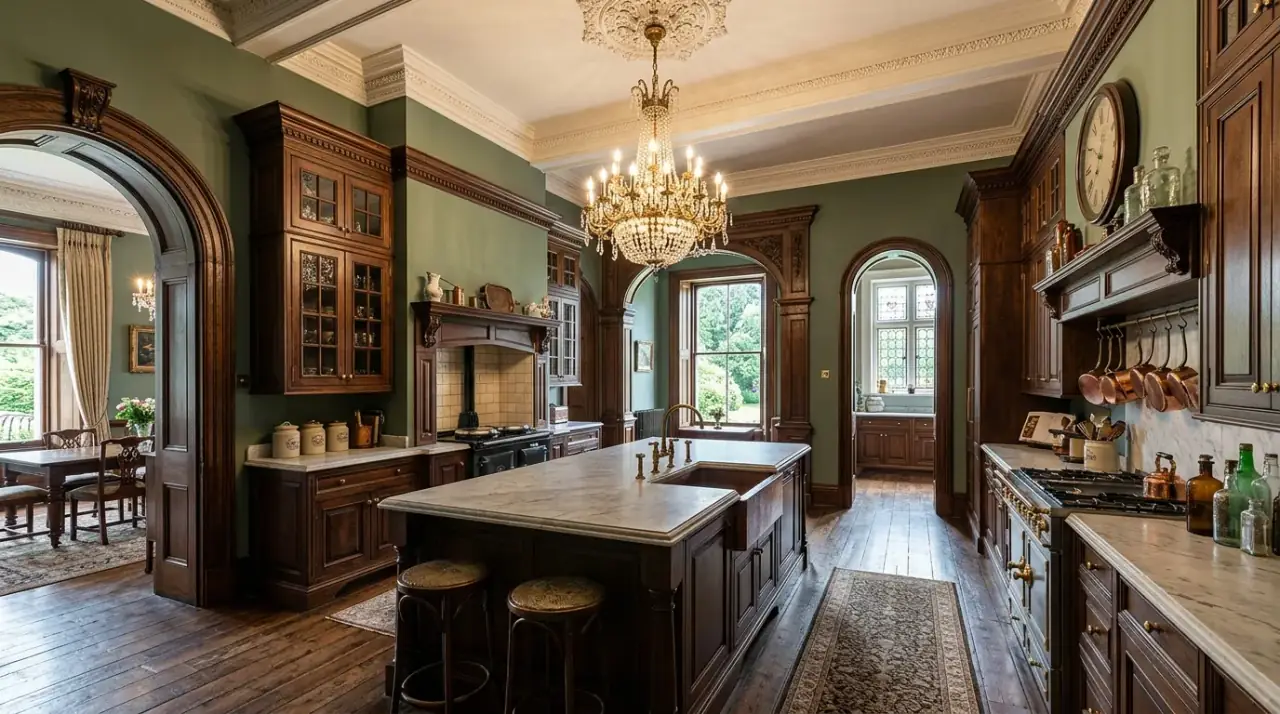
Choose Lighting with Presence and Detail
Victorian lighting should feel more decorative than purely minimal, whether that means shaded sconces, brass pendants, or a small statement fixture above a table. The right light does more than illuminate because it reinforces the room's era and richness.
Rooted in atmosphere and guided by design detail, thoughtful lighting helps a Victorian kitchen feel more ornate and more welcoming one careful feature at a time. The glow should feel just as considered as the millwork.
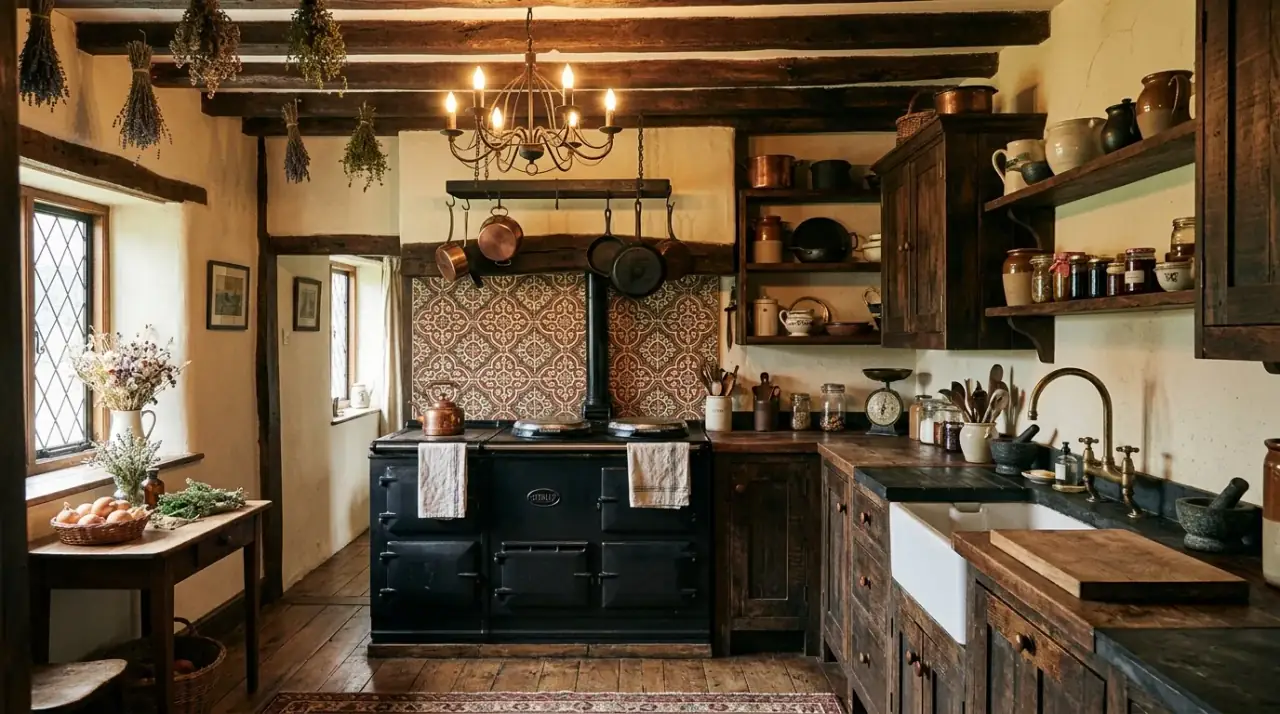
Use Turned Legs and Furniture Details on Islands
An island with turned legs or a table-like base feels far more at home in a Victorian kitchen than a plain modern box. These smaller furniture cues soften the room and connect the working center of the kitchen to the rest of the period style.
Rooted in craftsmanship and guided by historical form, furniture details help a Victorian kitchen feel more graceful and more welcoming one thoughtful detail at a time. The island becomes part of the era rather than an interruption to it.
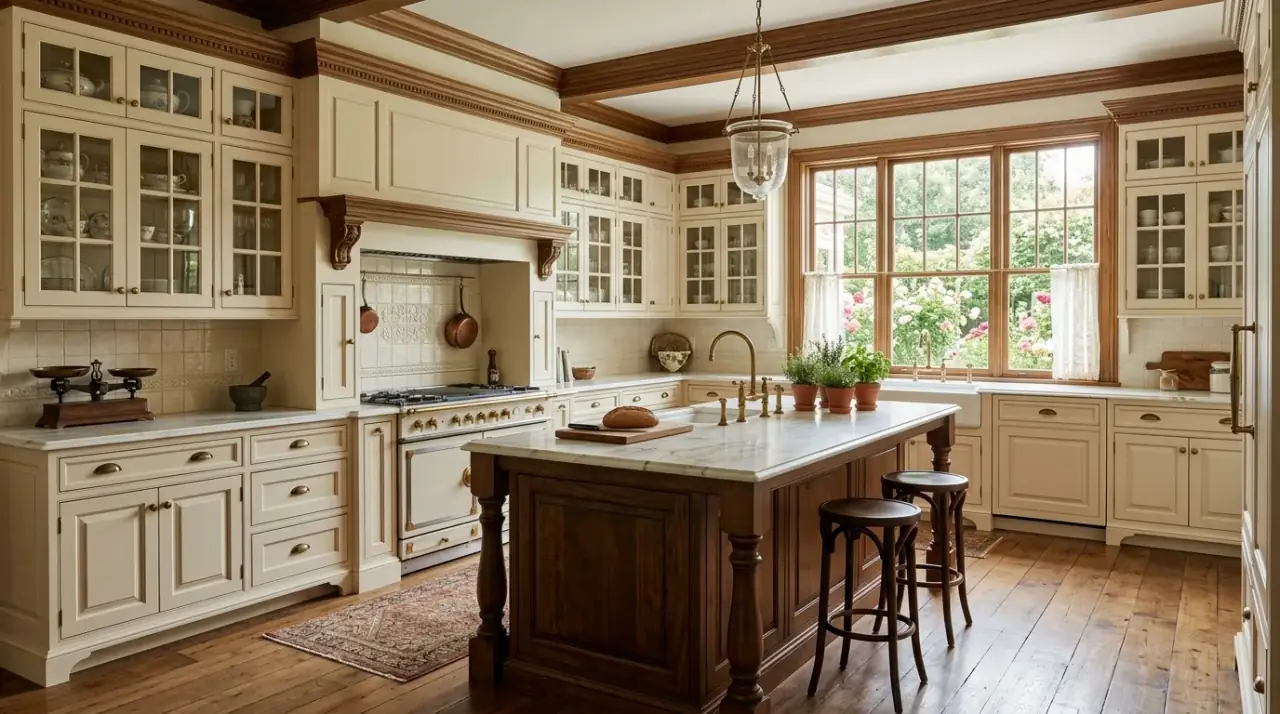
Layer in Deep Reds, Greens, or Plum
Victorian color palettes often feel richer when they include one deeper jewel-like tone rather than staying fully neutral. Used thoughtfully, plum, moss, or oxblood can add dramatic warmth that suits the style beautifully.
Rooted in mood and guided by period color, richer tones help a Victorian kitchen feel more distinctive and more welcoming one thoughtful detail at a time. The space begins to carry a stronger emotional weight.
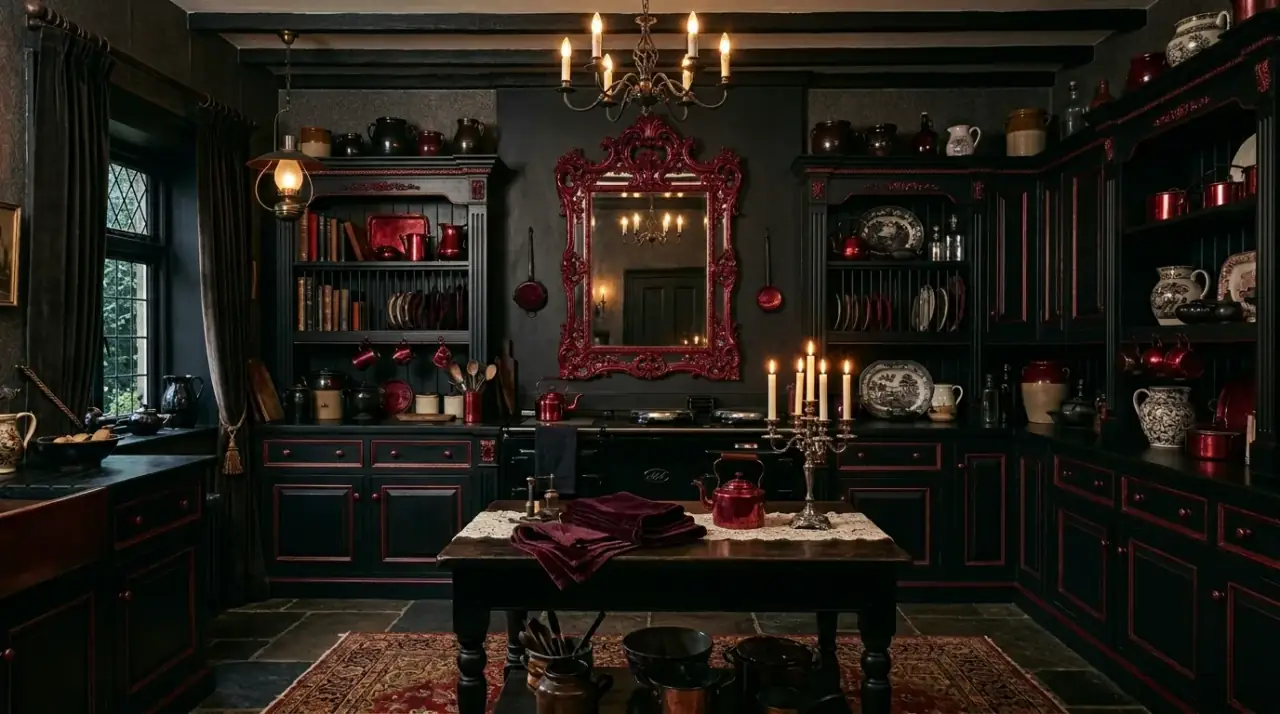
Show Off Carved Wood and Heavier Joinery
Victorian kitchens often feel authentic when the woodwork has some visual weight, whether that comes through cabinet doors, sideboards, shelving, or decorative trim. Heavier joinery helps the room feel anchored in its period rather than loosely inspired by it.
Rooted in material depth and guided by craftsmanship, carved wood details help a Victorian kitchen feel more storied and more welcoming one thoughtful detail at a time. The room gains dignity through its surfaces.
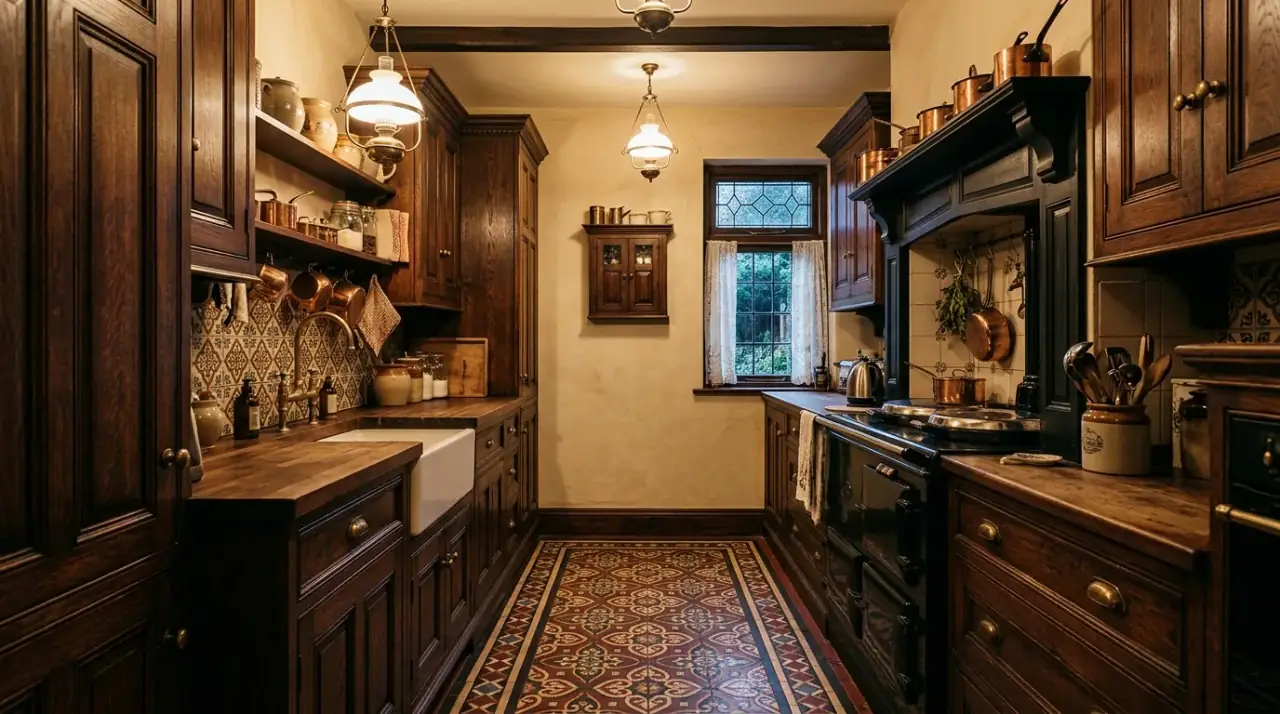
Let Accessories Feel Useful, Not Costume-Like
A Victorian kitchen works best when its details still feel tied to real daily use, whether through enamelware, crockery, trays, or jars. Decorative pieces become much more convincing when they seem like natural extensions of the room instead of themed props.
Rooted in realism and guided by style, practical period accessories help a Victorian kitchen feel more authentic and more welcoming one thoughtful detail at a time. The charm lasts when the objects still belong to everyday life.
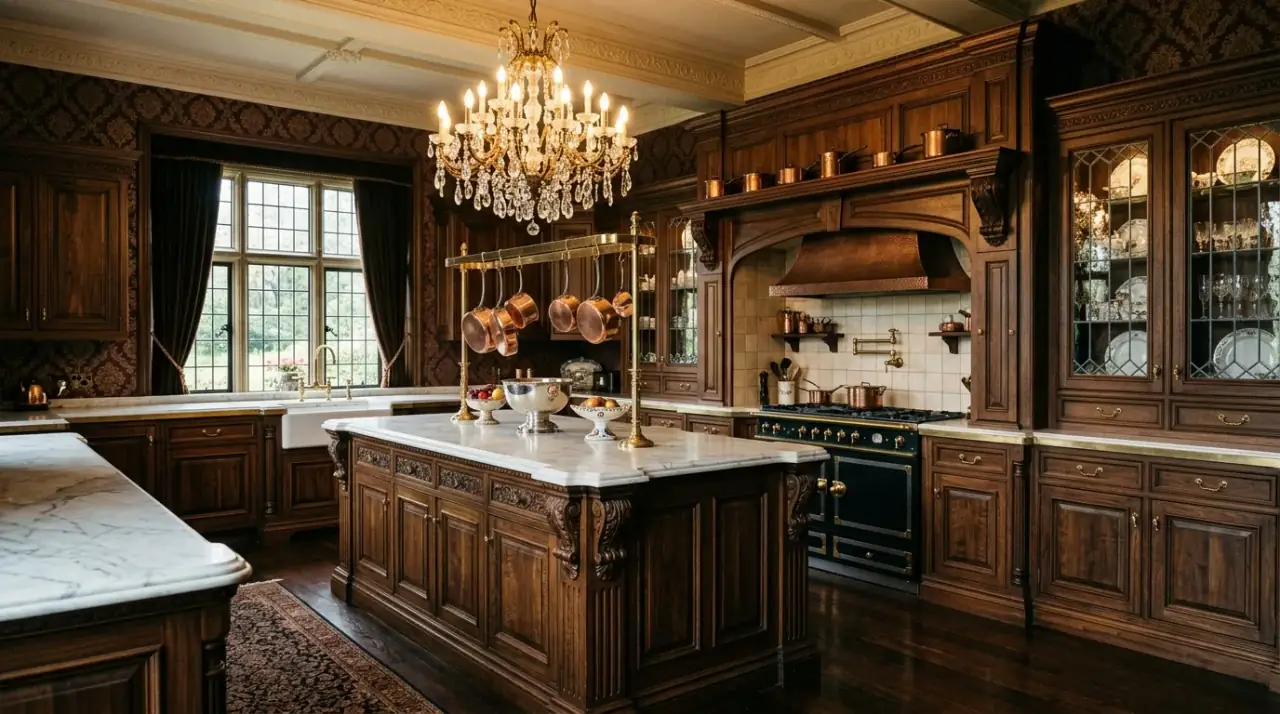
Balance Ornament with Clear Function
Victorian design can handle more richness than many other styles, but the kitchen still has to work hard. Keeping counters usable, storage sensible, and pathways clear allows the ornate elements to feel elegant rather than overwhelming.
Rooted in function and guided by beauty, balanced planning helps a Victorian kitchen feel more comfortable and more welcoming one thoughtful detail at a time. The room earns its detail because it still supports daily life well.
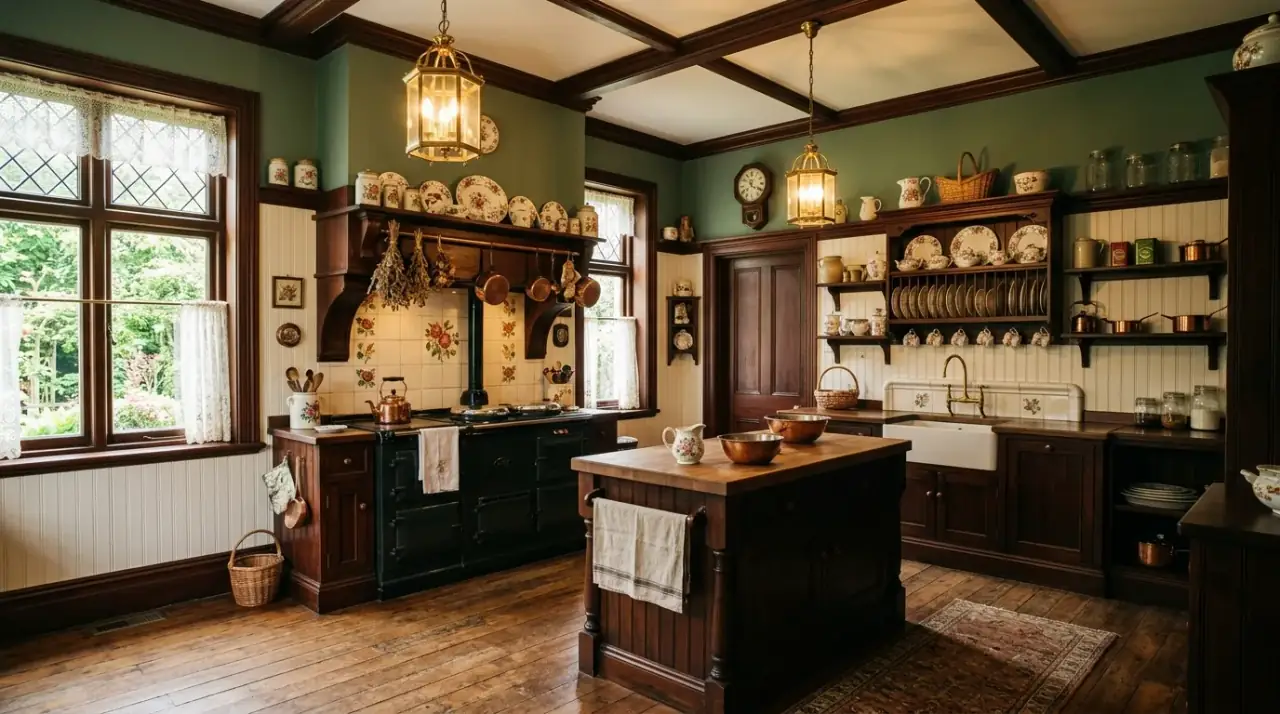
Period Charm That Still Feels Livable
The best Victorian kitchens do not attempt to freeze a room in time and instead translate period richness into a home that still functions for the present. When detail, color, and material are handled with care, the result feels warm rather than fussy.
Rooted in creativity and guided by style, a Victorian kitchen can turn historic detail into a warm and welcoming everyday setting one thoughtful detail at a time. That balance is what keeps period charm from becoming costume.