Brown cabinetry carries a lot of warmth and visual weight, which means the backsplash beside it has an important job. The right wall finish can lighten the room, sharpen the cabinet color, or make the whole kitchen feel more current without losing its grounded character.
These ideas focus on backsplash surfaces that work especially well with wood tones ranging from medium walnut to deep espresso. If your cabinets already bring warmth and richness, the best pairings are the ones that support that strength rather than competing with it.
Design ideas to borrow from this palette
Use the ideas below to compare hardware, countertop, flooring, and styling combinations that change how the cabinet color reads in a finished kitchen.
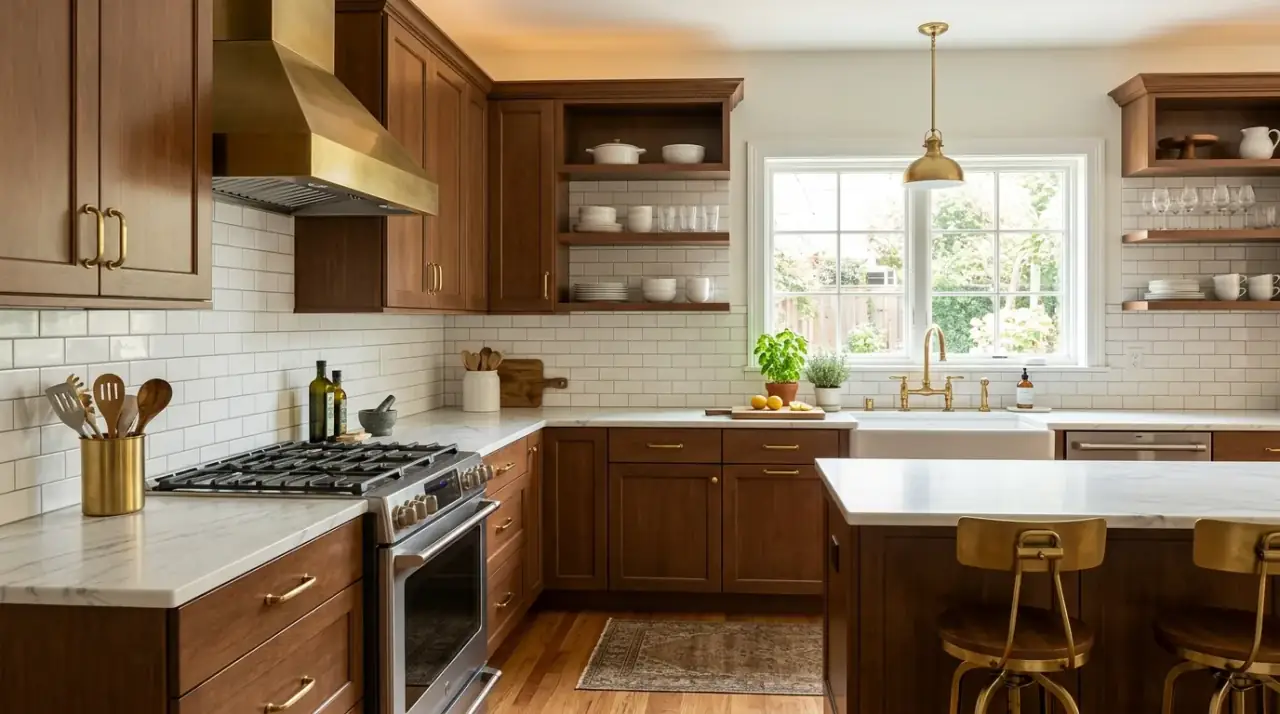
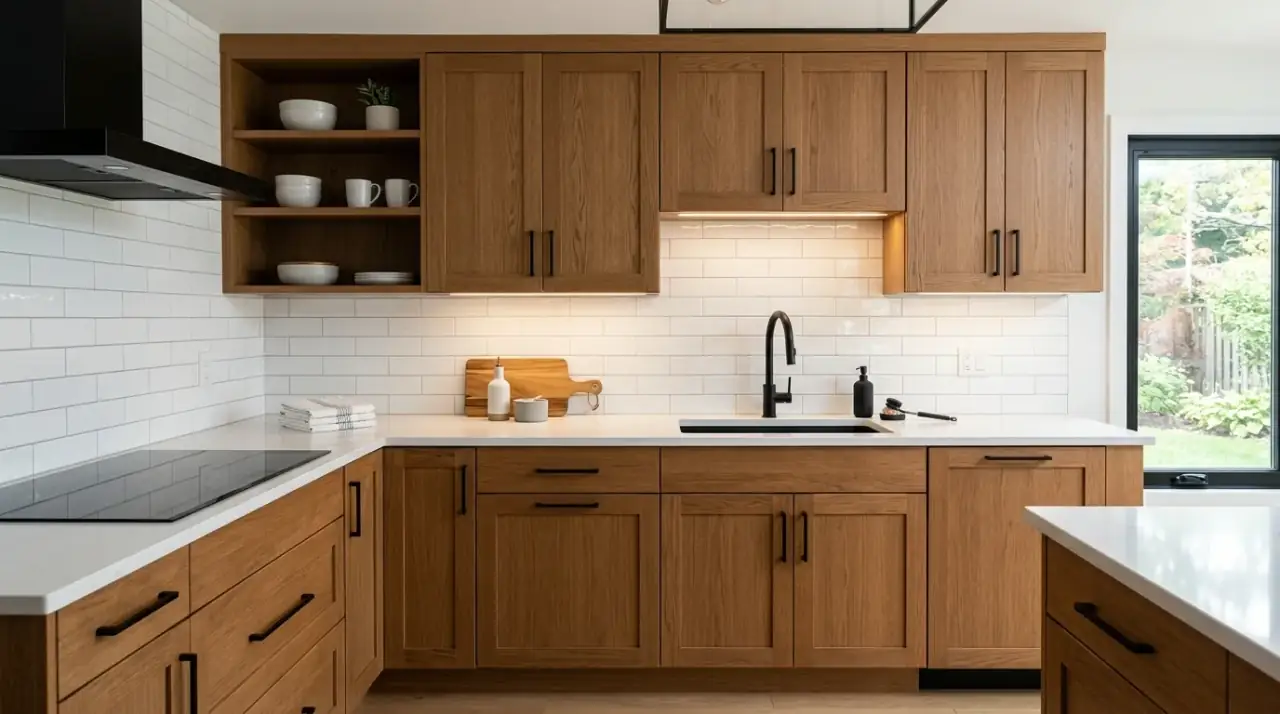
Warm White Subway Tile for Easy Contrast
A warm white subway backsplash is one of the safest and strongest pairings for brown cabinets because it brightens the room without turning the contrast too stark. The gentle white keeps the cabinetry feeling rich while making the counters and walls feel much lighter.
Rooted in balance and guided by style, a warm white backsplash can turn brown cabinets into part of a more open and welcoming kitchen one thoughtful detail at a time. The pairing feels dependable because it respects both warmth and clarity.
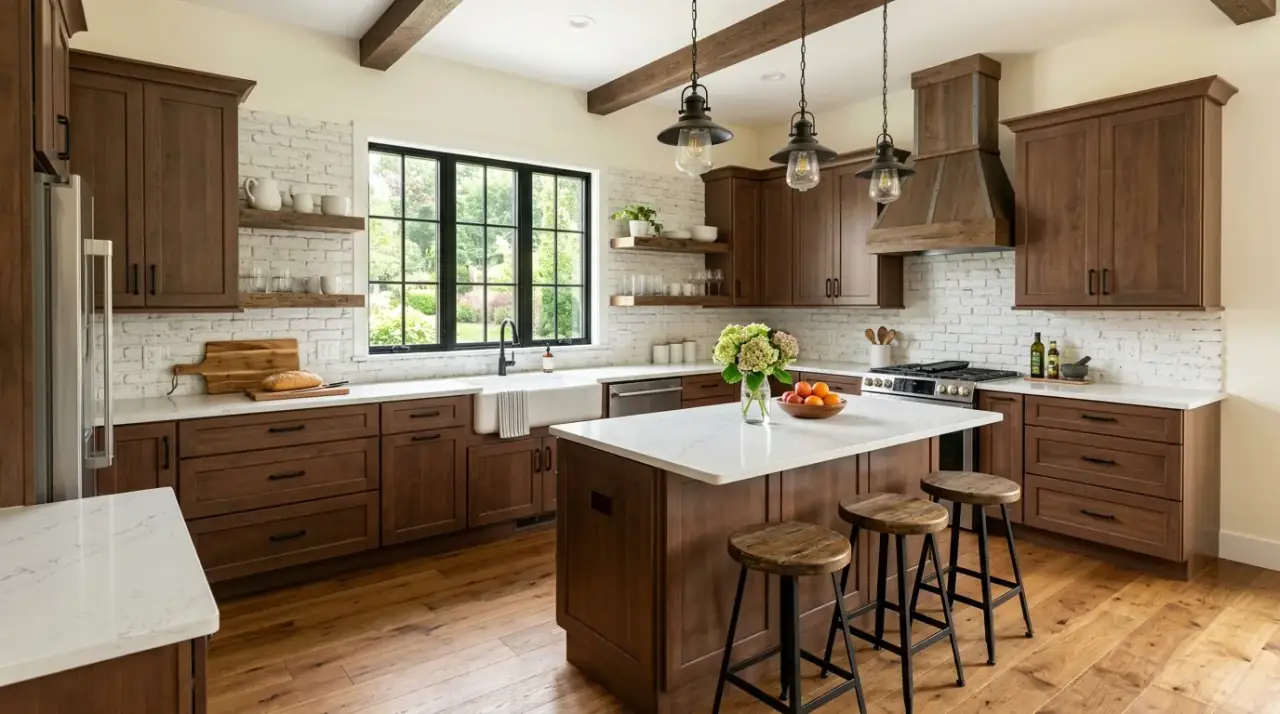
Creamy Handmade Tile for Softer Warmth
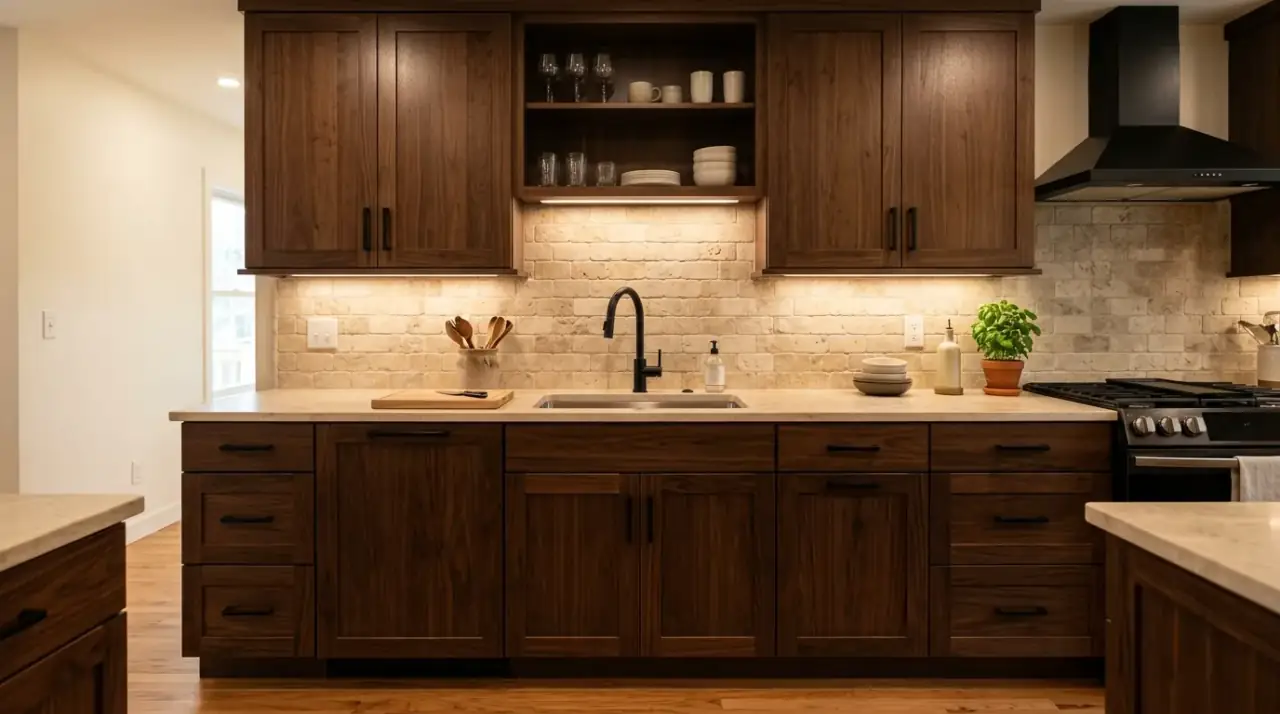
Handmade-look tile in cream or ivory can keep brown cabinets from feeling too heavy while also preserving the room's warmth. The slight variation in the tile surface adds life and texture that works beautifully with visible wood grain.
Rooted in texture and guided by warmth, a creamy handmade backsplash helps a brown-cabinet kitchen feel softer and more welcoming one thoughtful detail at a time. The wall stays bright without flattening the room's character.
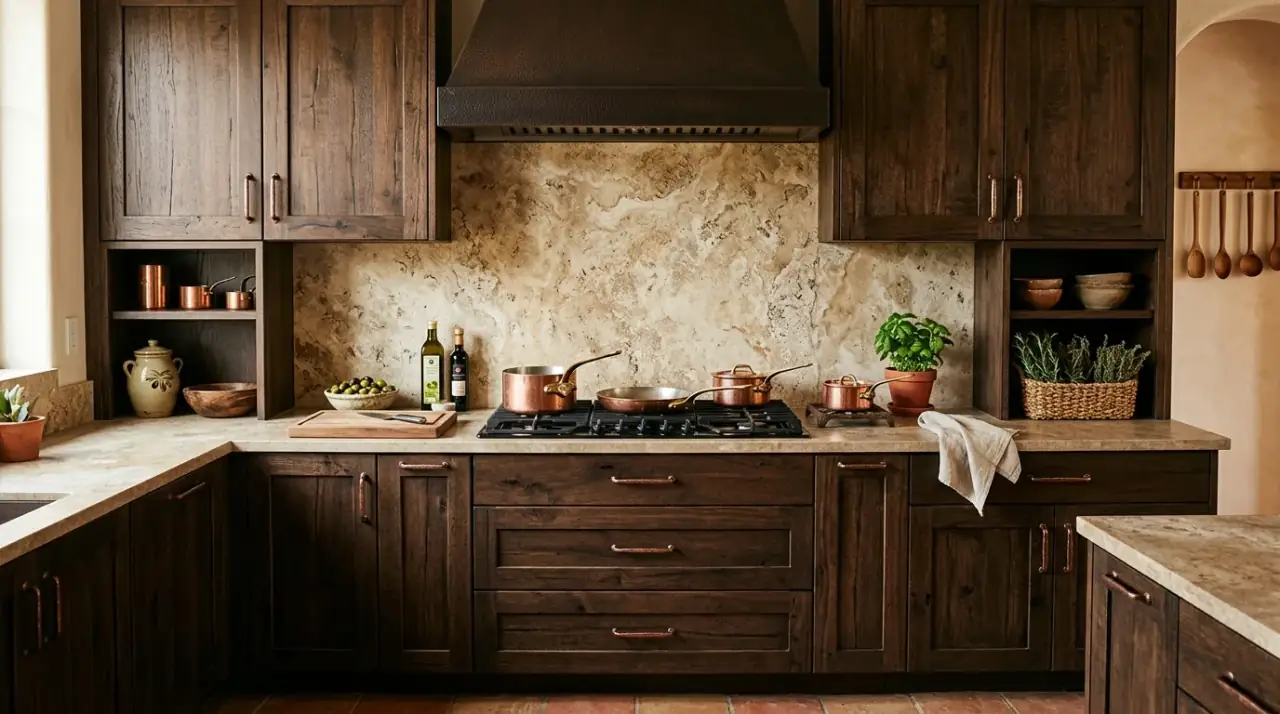
Travertine or Tumbled Stone for Earthy Depth
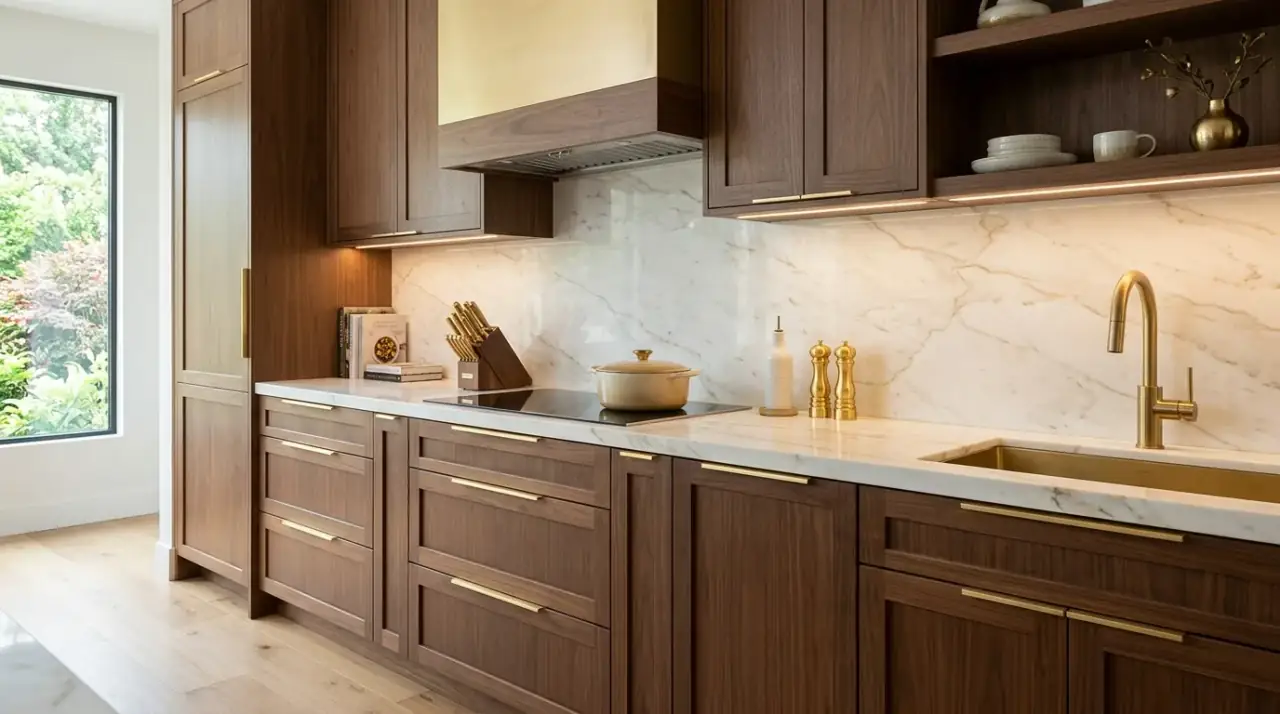
Natural stone backsplashes often suit brown cabinets beautifully because both materials share an earthy depth that feels organic and grounded. Tumbled edges or soft movement in the stone can help the room feel richer without becoming overly dark.
Rooted in natural material and guided by cohesion, stone pairings help a kitchen with brown cabinets feel more layered and more welcoming one thoughtful detail at a time. The connection works because both surfaces speak the same earthy language.
Glossy White Tile to Bounce More Light
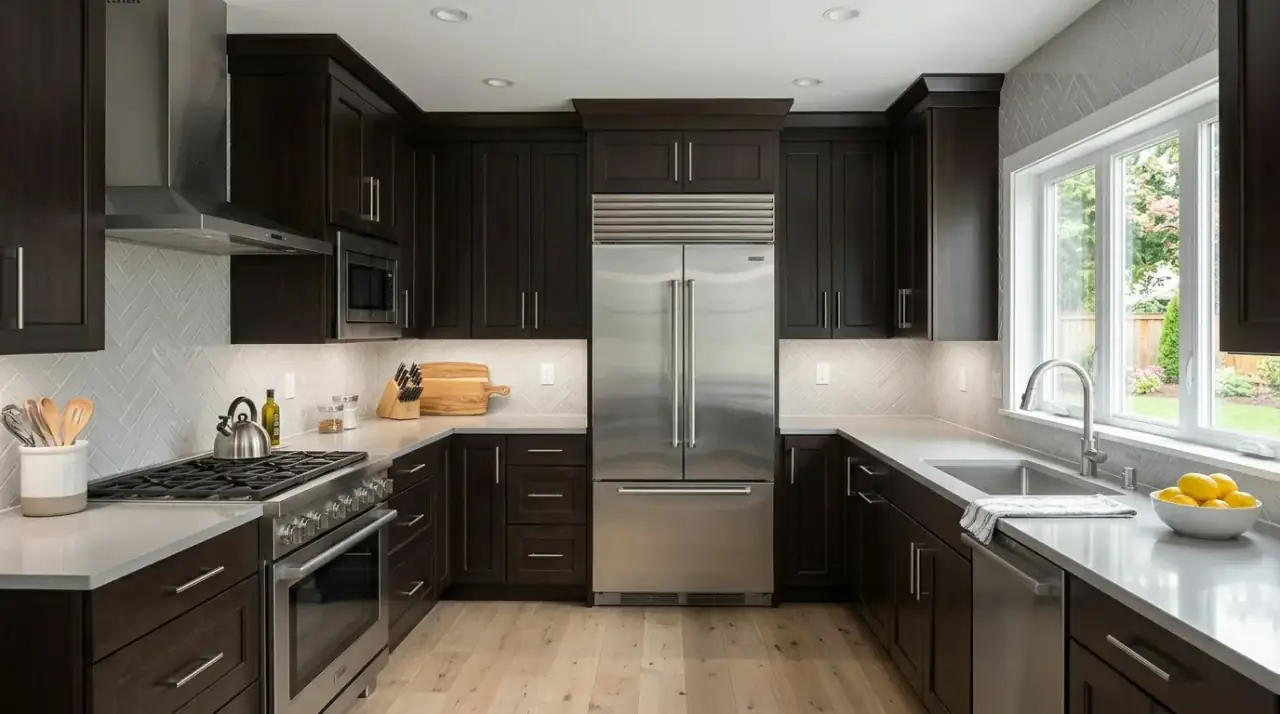
In darker kitchens, glossy white backsplash tile can be especially useful because it reflects light back into the room and stops the brown cabinets from closing in visually. The shine also creates a fresher, slightly more modern finish against traditional wood tones.
Rooted in brightness and guided by practical contrast, glossy tile helps a brown-cabinet kitchen feel more energetic and more welcoming one thoughtful detail at a time. Light reflection does a lot of work when cabinetry already carries depth.
Greige Tile for a More Contemporary Blend
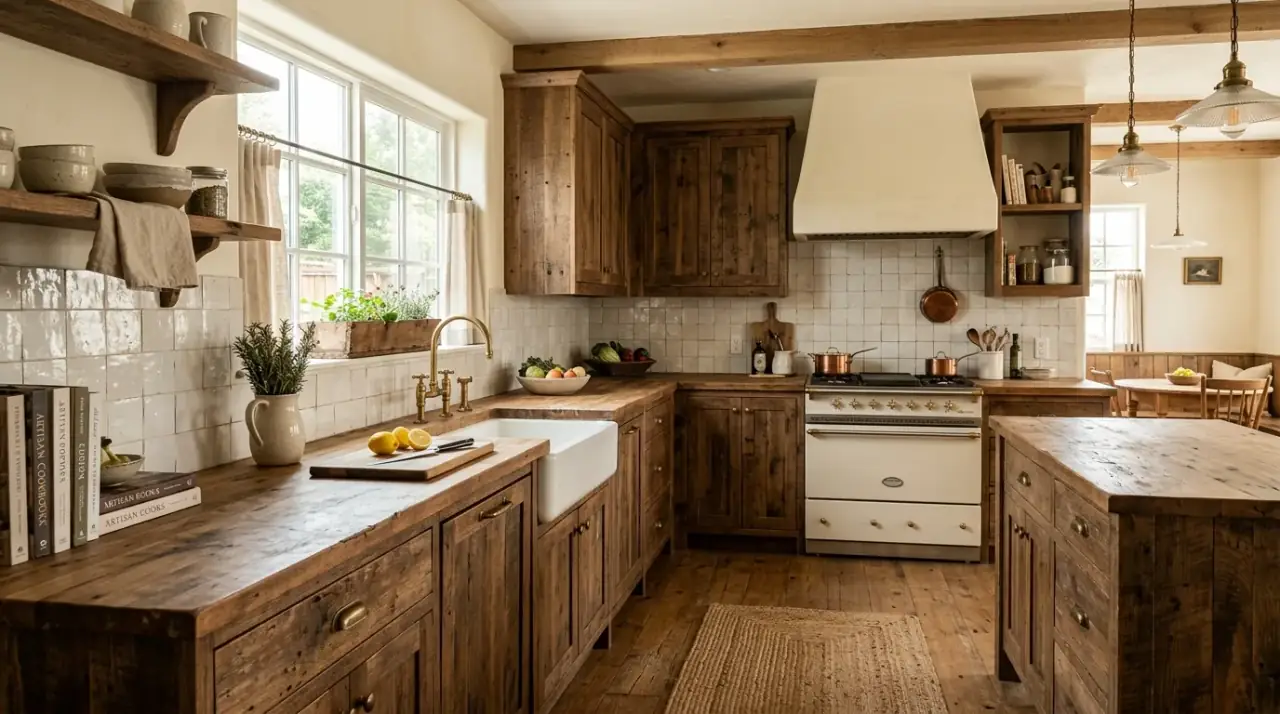
A pale greige backsplash can help brown cabinets feel more current because it softens the classic wood warmth with a slightly cooler neutral note. This works especially well in kitchens aiming to bridge traditional cabinetry and more modern countertops or fixtures.
Rooted in nuance and guided by updated color balance, greige tile helps a brown-cabinet kitchen feel more refined and more welcoming one thoughtful detail at a time. The slight tonal shift can make older cabinetry read in a fresher way.
Marble-Look Slab for Cleaner Refinement
A slab backsplash with subtle marble movement can lighten and simplify a kitchen with brown cabinets at the same time. The continuous surface reduces visual interruption, which helps the room feel more polished and less busy around darker wood.
Rooted in elegance and guided by simplicity, a stone slab wall helps a brown-cabinet kitchen feel more elevated and more welcoming one thoughtful detail at a time. The uninterrupted surface gives the cabinetry a cleaner frame.
Soft Beige Tile for Tonal Harmony
If you want the kitchen to feel warm and blended rather than sharply contrasted, soft beige backsplash tile can work beautifully with brown cabinets. The pairing feels cohesive and calm, especially when counters and flooring stay within the same earthy family.
Rooted in harmony and guided by warm neutrals, beige tile helps a brown-cabinet kitchen feel more settled and more welcoming one thoughtful detail at a time. The room stays gentle because the tones belong together naturally.
Vertical Stacked Tile for a Cleaner Update
A stacked tile layout can bring a more contemporary edge to brown cabinets without asking you to change the cabinet color itself. The vertical lines feel crisp and architectural, which helps balance the traditional warmth of the wood.
Rooted in clean geometry and guided by subtle modernization, stacked tile helps a brown-cabinet kitchen feel sharper and more welcoming one thoughtful detail at a time. The layout changes the tone of the room without disrupting its warmth.
Zellige-Style White Tile for Richer Variation
Zellige-style white tile can keep a backsplash bright while adding enough surface variation to stand up to the richness of brown cabinets. The uneven glaze helps the wall feel artisanal and lively instead of plain.
Rooted in handcrafted texture and guided by warmth, zellige-inspired tile helps a brown-cabinet kitchen feel more layered and more welcoming one thoughtful detail at a time. The finish has enough movement to hold its own beside the wood.
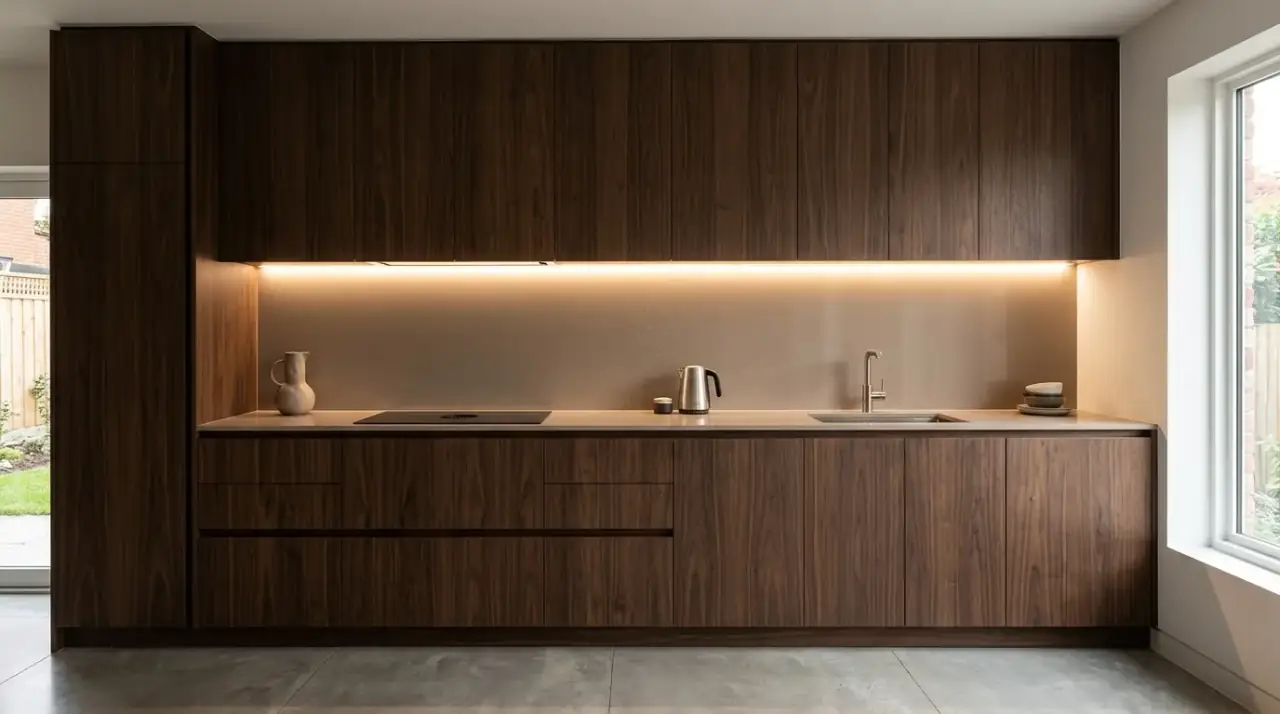
Muted Green Tile for an Earthy Counterpoint
Soft sage or muted olive backsplash tile can pair surprisingly well with brown cabinets because both colors feel rooted in nature. The green shifts the room away from a fully neutral palette while still preserving its warmth and grounded character.
Rooted in earthiness and guided by color restraint, muted green tile helps a brown-cabinet kitchen feel fresher and more welcoming one thoughtful detail at a time. The contrast is gentle enough to feel natural instead of abrupt.
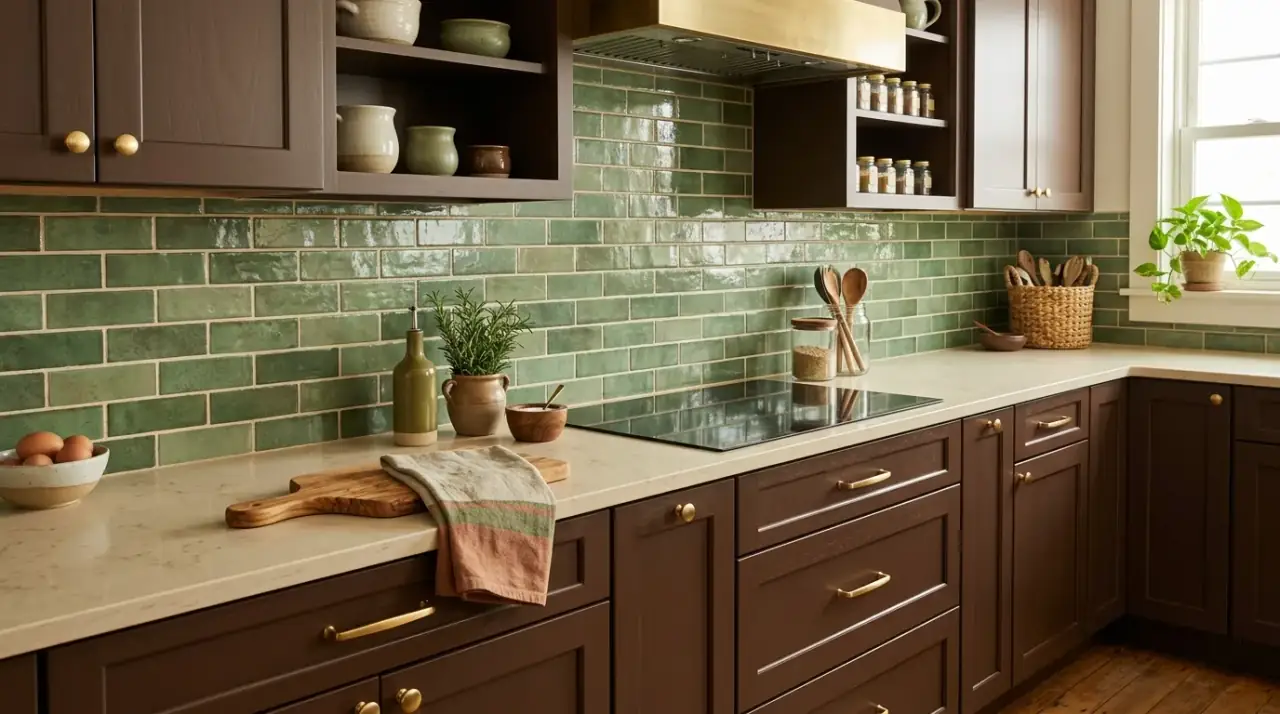
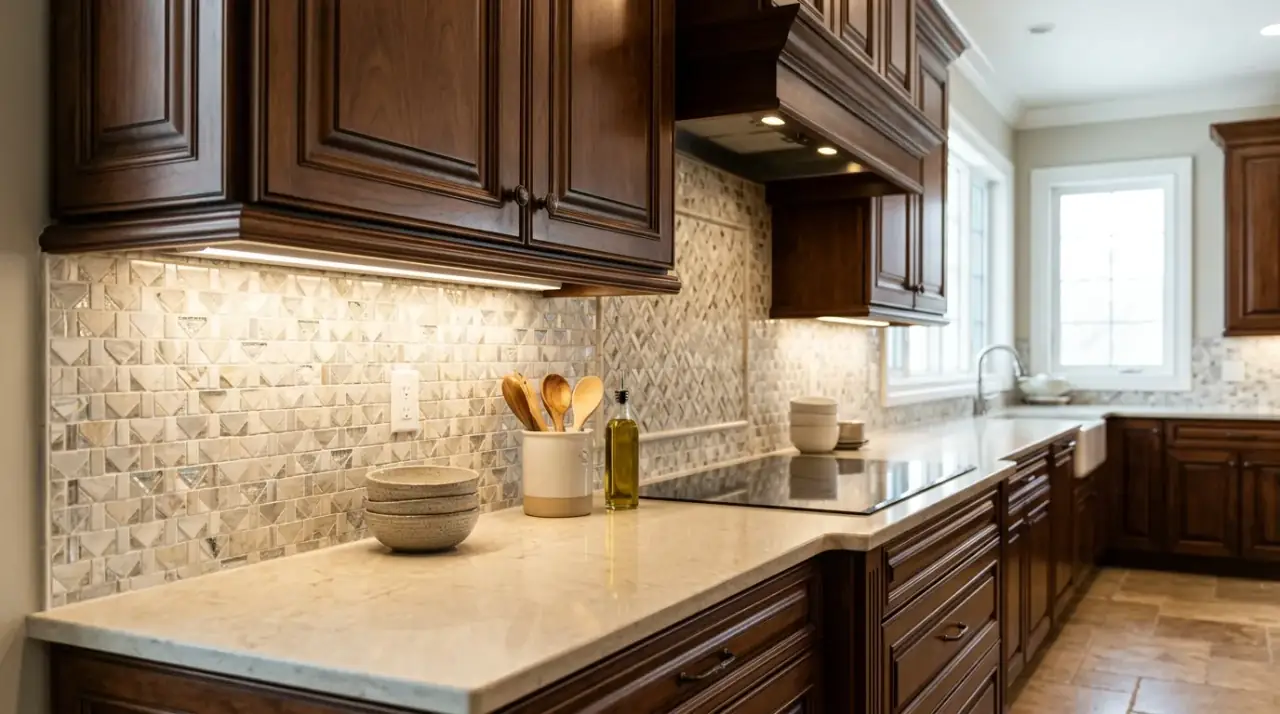
A Herringbone Layout for Subtle Pattern
Herringbone can give a kitchen with brown cabinets more movement without relying on stronger color or dramatic materials. The pattern adds elegance and direction while still allowing the cabinetry to remain the main visual anchor.
Rooted in detail and guided by refinement, herringbone tile helps a brown-cabinet kitchen feel more polished and more welcoming one thoughtful detail at a time. Pattern works best here when the palette itself stays calm.
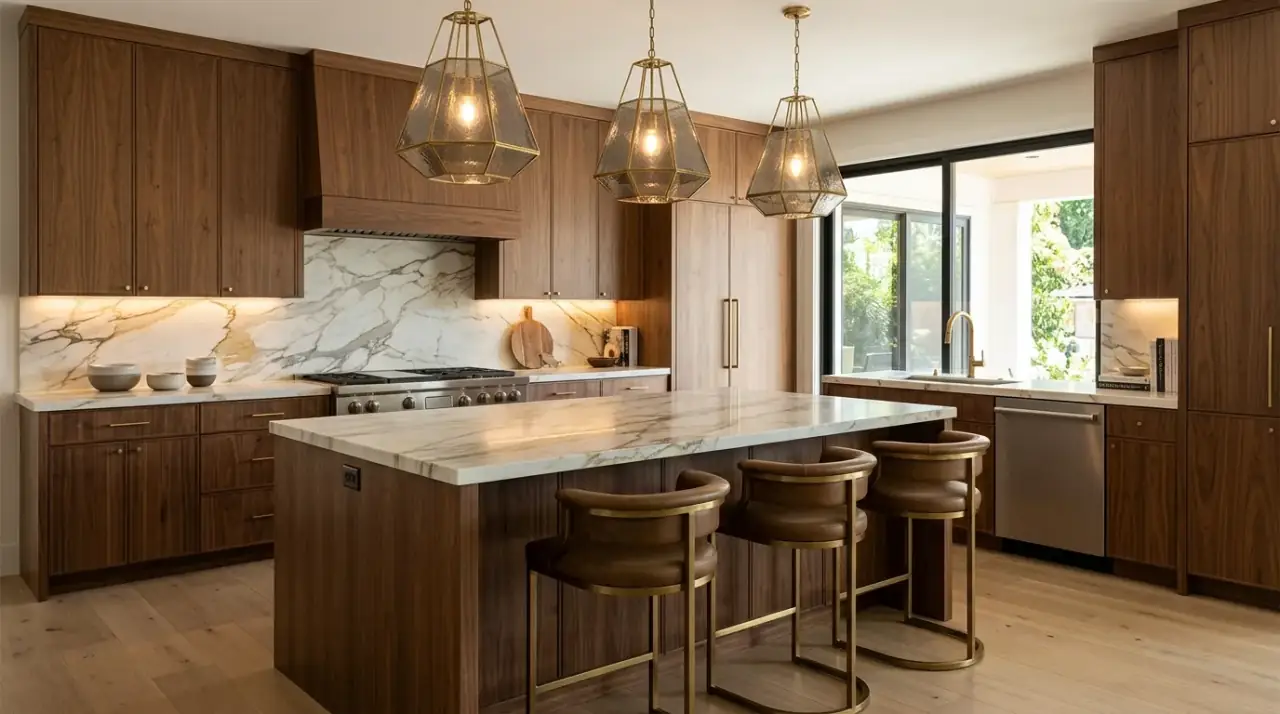
Use a Backsplash That Echoes the Countertop Undertone
One of the smartest pairing moves is choosing a backsplash that picks up the same warm, cool, or mixed undertone already present in the countertop. That small decision helps brown cabinets feel integrated into the room rather than isolated from the surrounding finishes.
Rooted in cohesion and guided by thoughtful color matching, undertone-aware backsplash choices help a brown-cabinet kitchen feel more finished and more welcoming one thoughtful detail at a time. Harmony often comes from these quieter decisions.
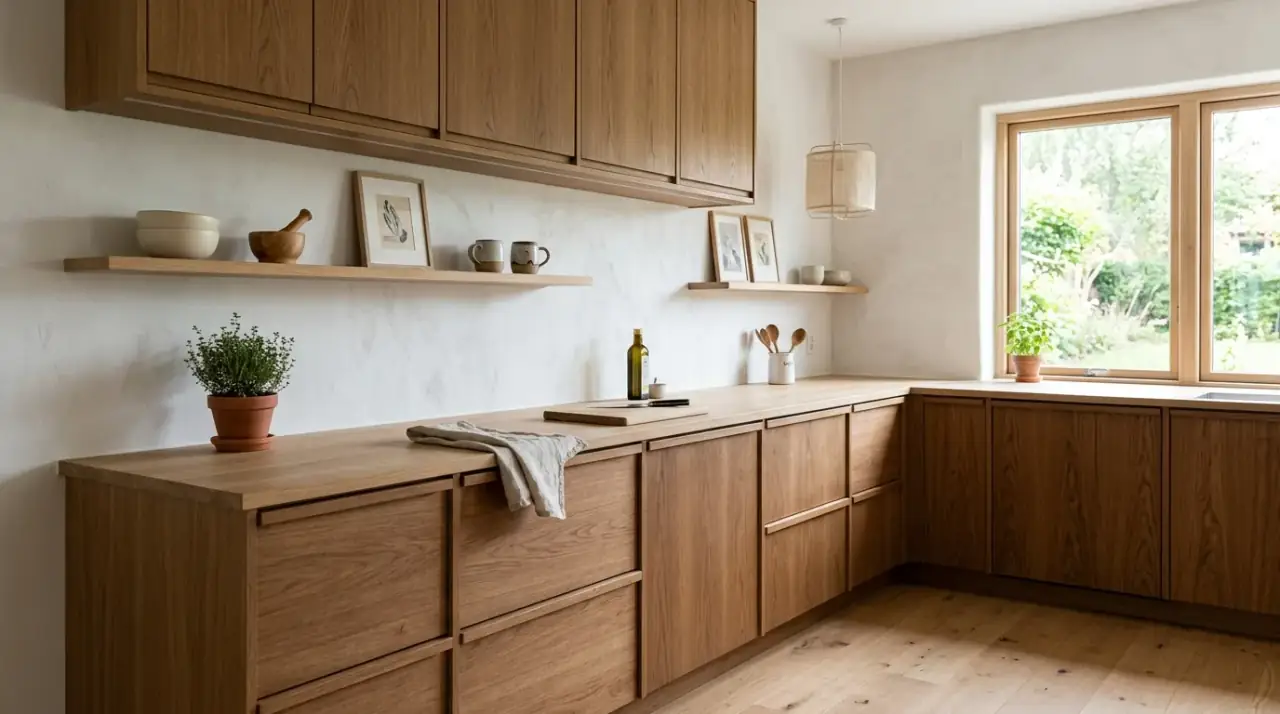
A Pairing That Lets Brown Cabinets Feel Intentional
Brown cabinets can look deeply beautiful when the backsplash around them is chosen to lift, balance, or modernize their natural warmth rather than hide it. The strongest pairings understand whether the kitchen needs brightness, softness, contrast, or earthy continuity.
Rooted in creativity and guided by style, the right backsplash can turn brown cabinets into part of a warm and welcoming kitchen one thoughtful detail at a time. Good pairing is less about trend and more about helping the room feel coherent and alive.