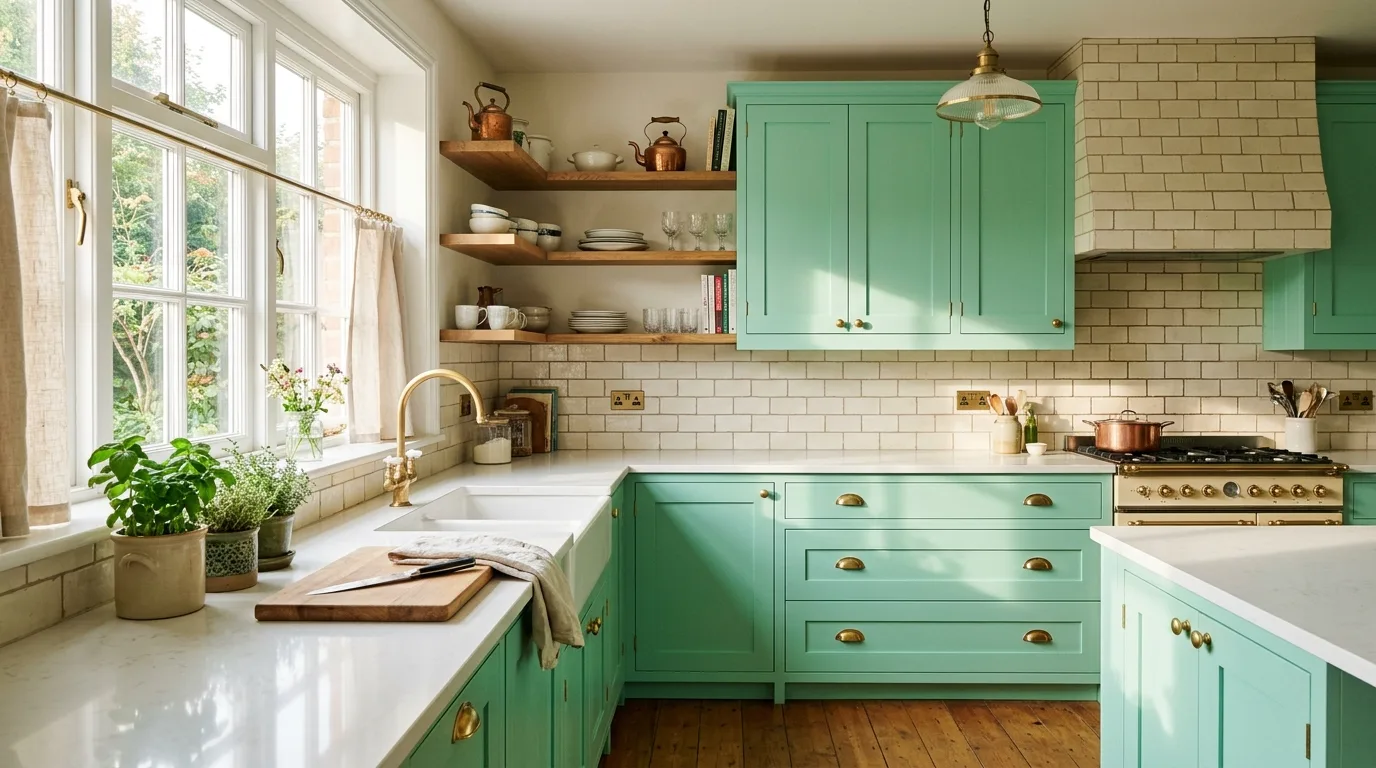
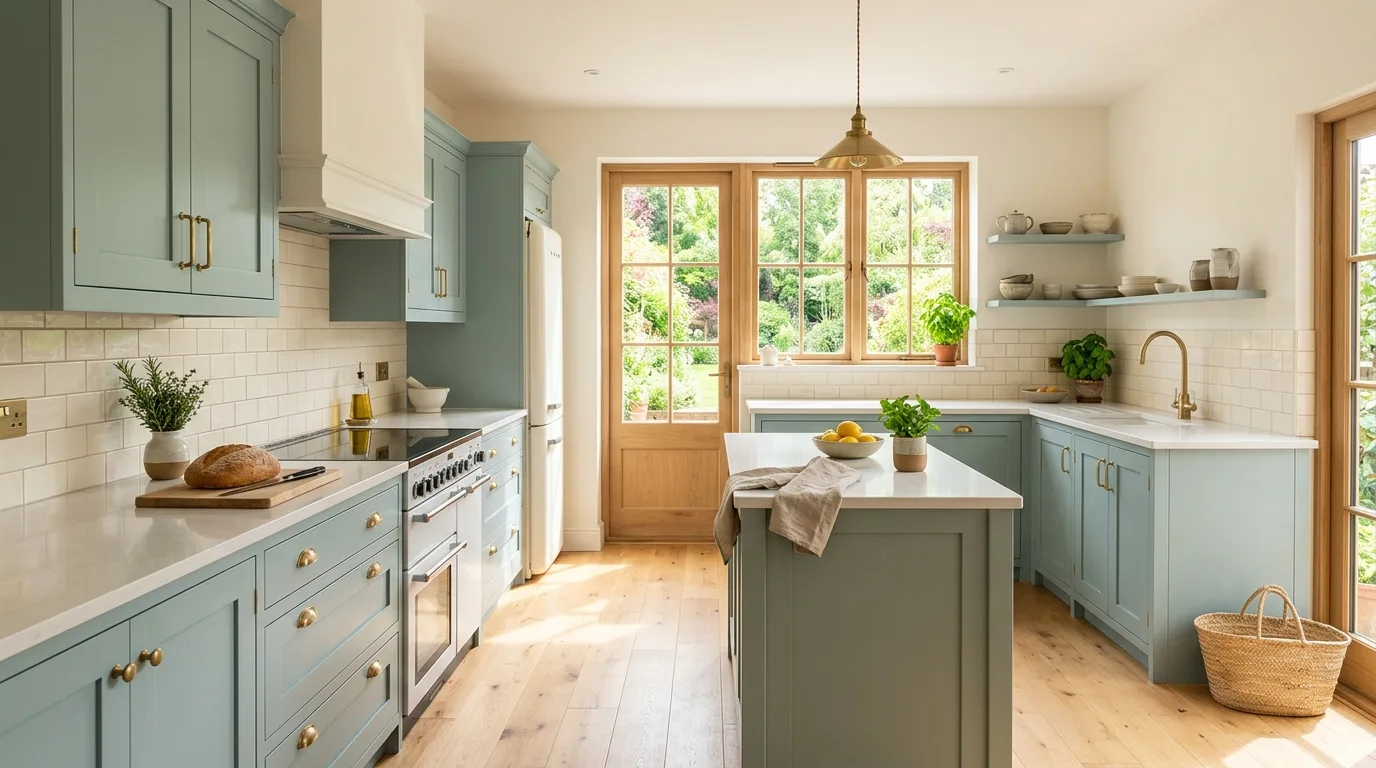
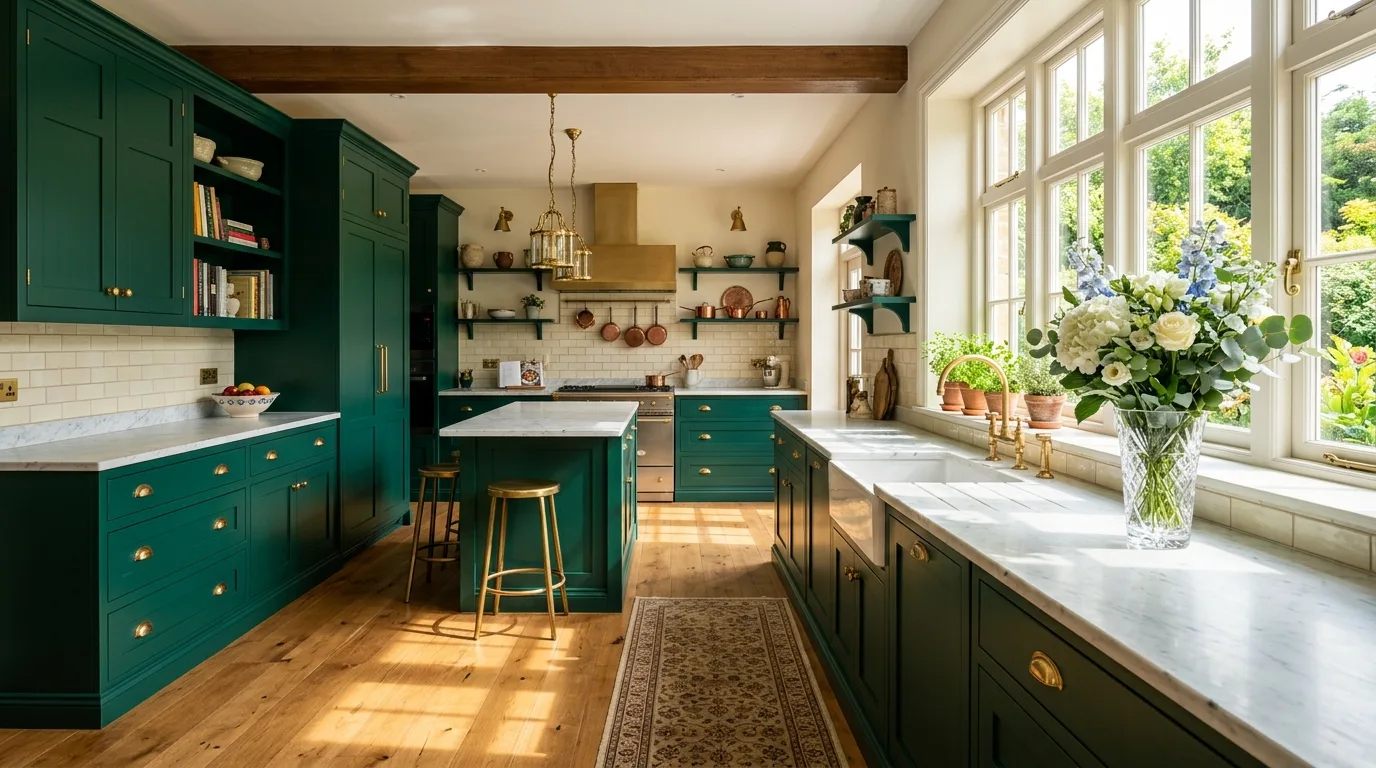
An unfitted kitchen replaces rigid sameness with personality, layering furniture-like pieces, open shelving, varied storage, and materials that feel acquired rather than installed all at once. The result often feels warmer, softer, and more relaxed than fully built-in rooms.
These ideas explore how to create that collected-over-time mood while keeping the kitchen practical and easy to live in. If you want a room with more individuality and less showroom polish, the unfitted approach offers a beautiful alternative.
Design ideas to borrow from this palette
Use the ideas below to compare hardware, countertop, flooring, and styling combinations that change how the cabinet color reads in a finished kitchen.
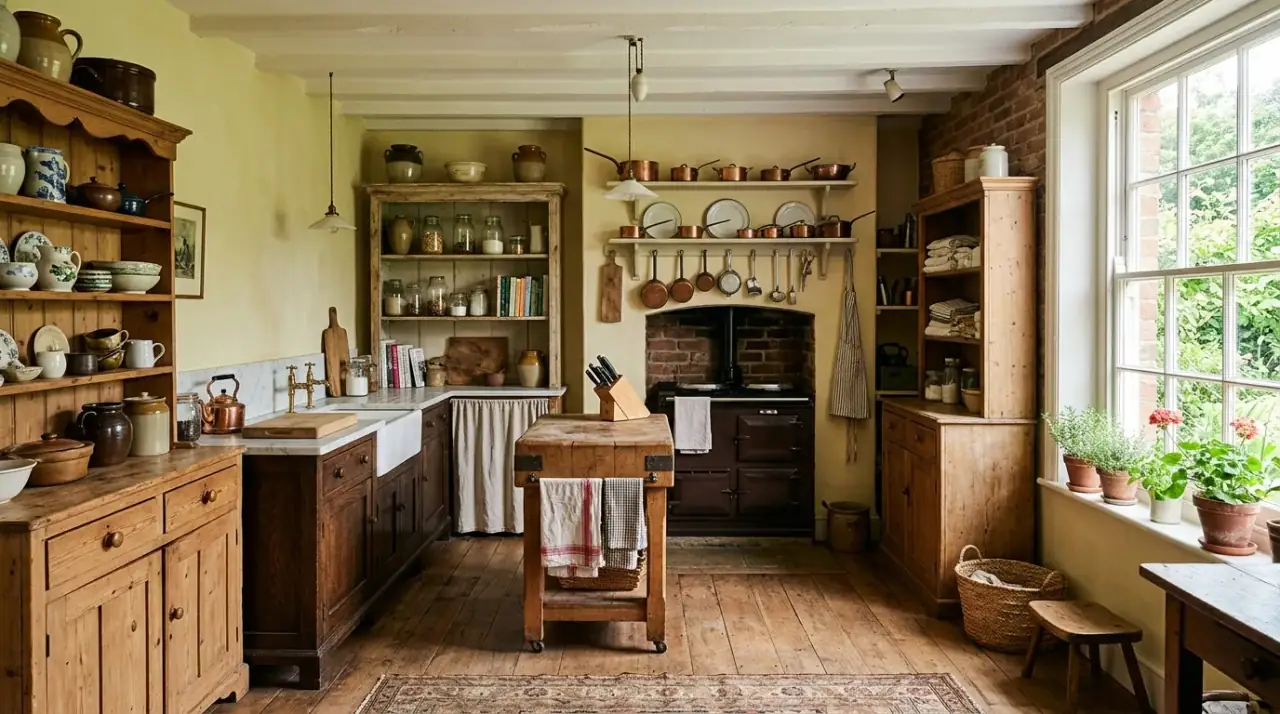
Use a Freestanding Worktable Instead of a Standard Island
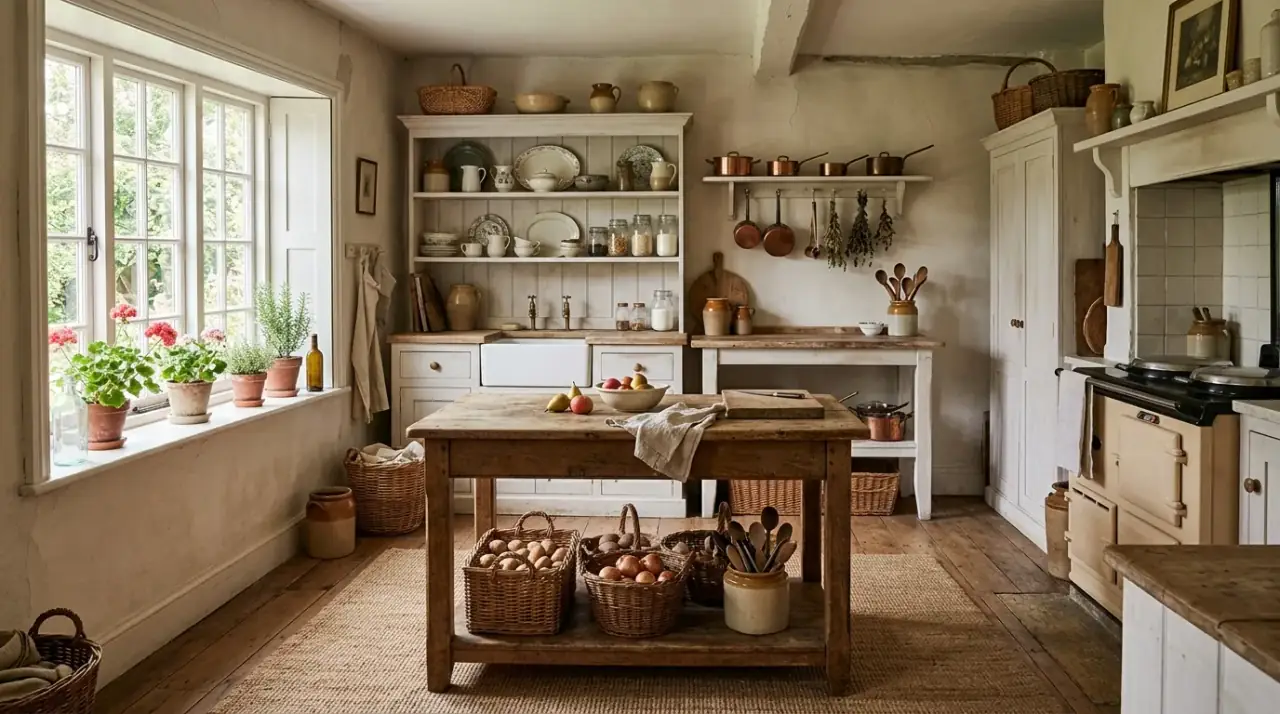
A freestanding table immediately changes the feel of a kitchen because it introduces the language of furniture rather than cabinetry. The room starts to feel less rigid and more lived in, especially when the table shows grain, wear, or a slightly imperfect shape.
Rooted in character and guided by style, a freestanding worktable can turn a kitchen into a warm and welcoming room one thoughtful detail at a time. The ease of the piece is what helps the whole space feel more collected.
Mix Painted Cabinetry with Natural Wood Pieces
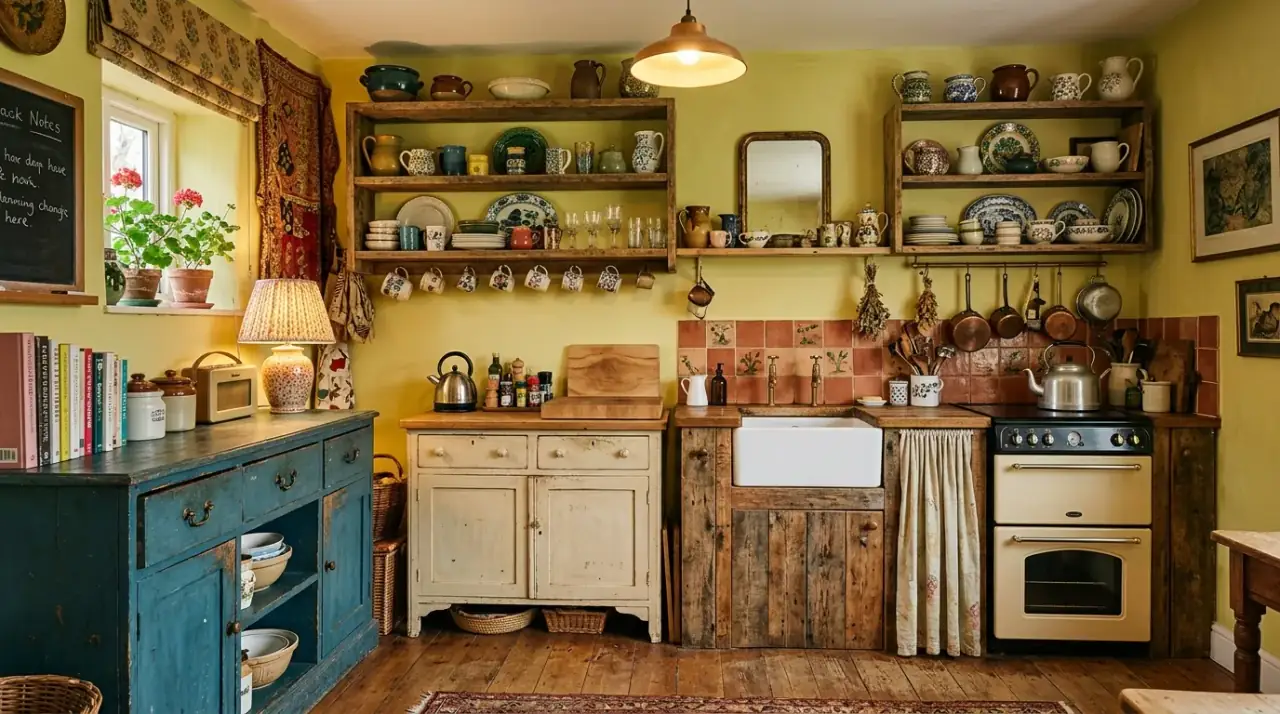
An unfitted kitchen looks more believable when every surface does not match perfectly, which is why painted lower cabinets and a few natural wood pieces work so well together. The contrast creates a room that feels gathered through use rather than ordered as a single package.
Rooted in variation and guided by warmth, mixed finishes help an unfitted kitchen feel more soulful and more welcoming one thoughtful detail at a time. The beauty comes from harmony, not exact repetition.
Let Open Shelves Replace Some Upper Cabinets
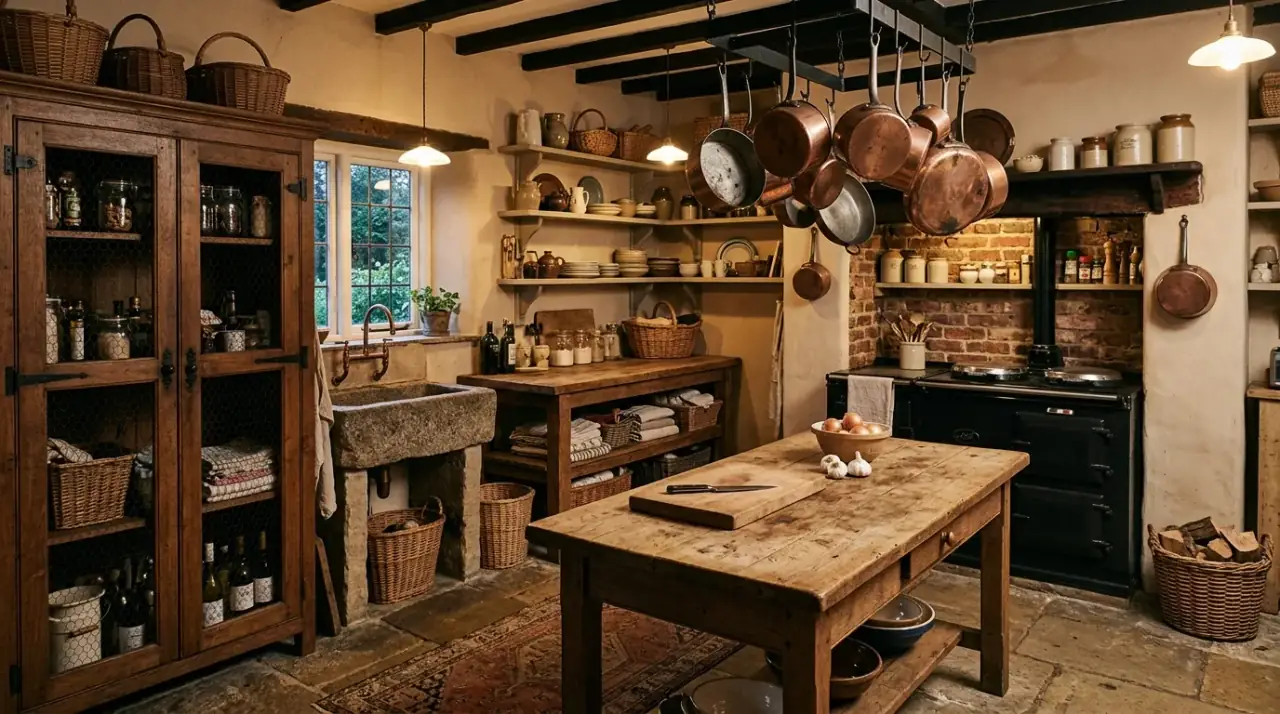
Removing some uppers makes space for shelves that can hold dishes, crockery, and useful objects in a way that feels more domestic and less fitted. The room becomes lighter, and the visible storage contributes to the sense that the kitchen has evolved over time.
Rooted in openness and guided by restraint, shelf-based storage helps an unfitted kitchen feel more relaxed and more personal one thoughtful detail at a time. The key is displaying only what deserves to stay visible.
Bring in a Hutch or Dresser for Storage
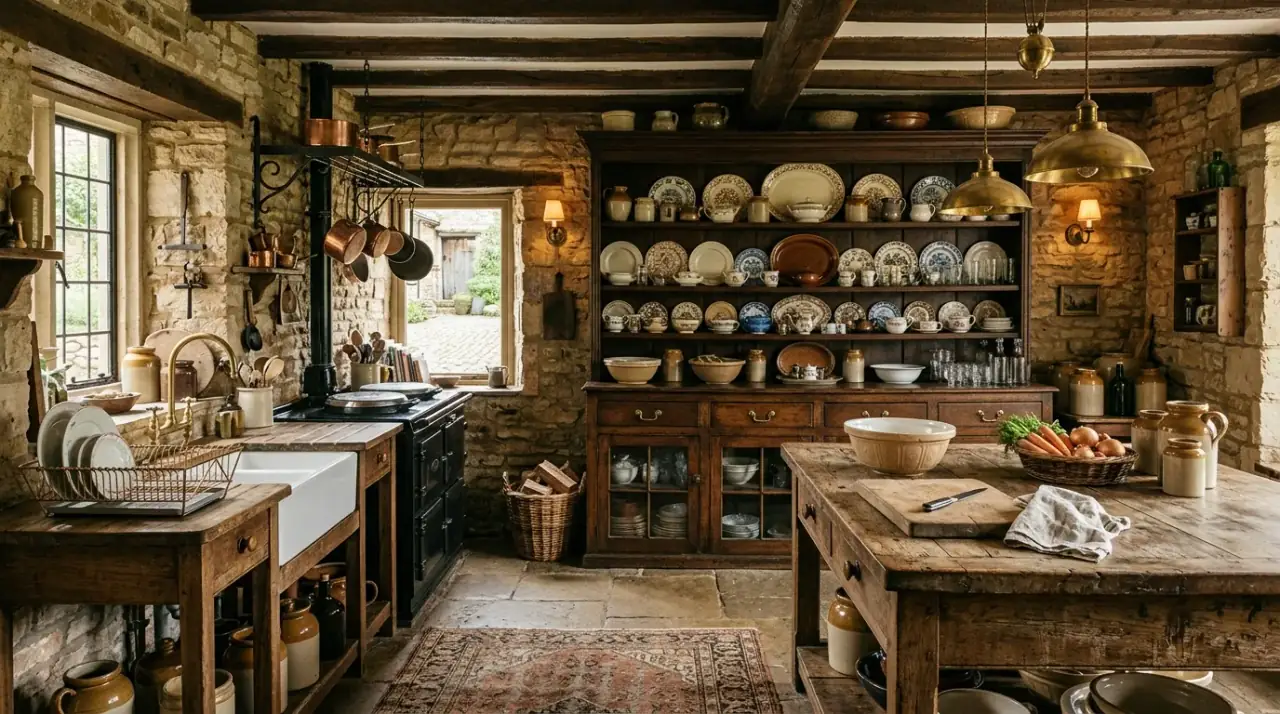
A tall hutch or old dresser gives an unfitted kitchen real presence because it adds vertical storage through a furniture piece rather than another wall of built-ins. That difference changes the whole personality of the room, making it feel more inhabited and storied.
Rooted in history and guided by practicality, a hutch can turn kitchen storage into part of a warm and welcoming design story one thoughtful detail at a time. It holds the function while deepening the atmosphere.
Use Soft Skirted Storage in Select Spots
A fabric skirt under a sink or side table can introduce a more relaxed unfitted feeling while also hiding utilitarian storage beautifully. The softness of the textile changes the rhythm of the room and keeps the kitchen from feeling too hard or overly built-in.
Rooted in softness and guided by charm, skirted storage helps an unfitted kitchen feel more graceful and more welcoming one thoughtful detail at a time. It is an old-fashioned detail that still feels surprisingly fresh.
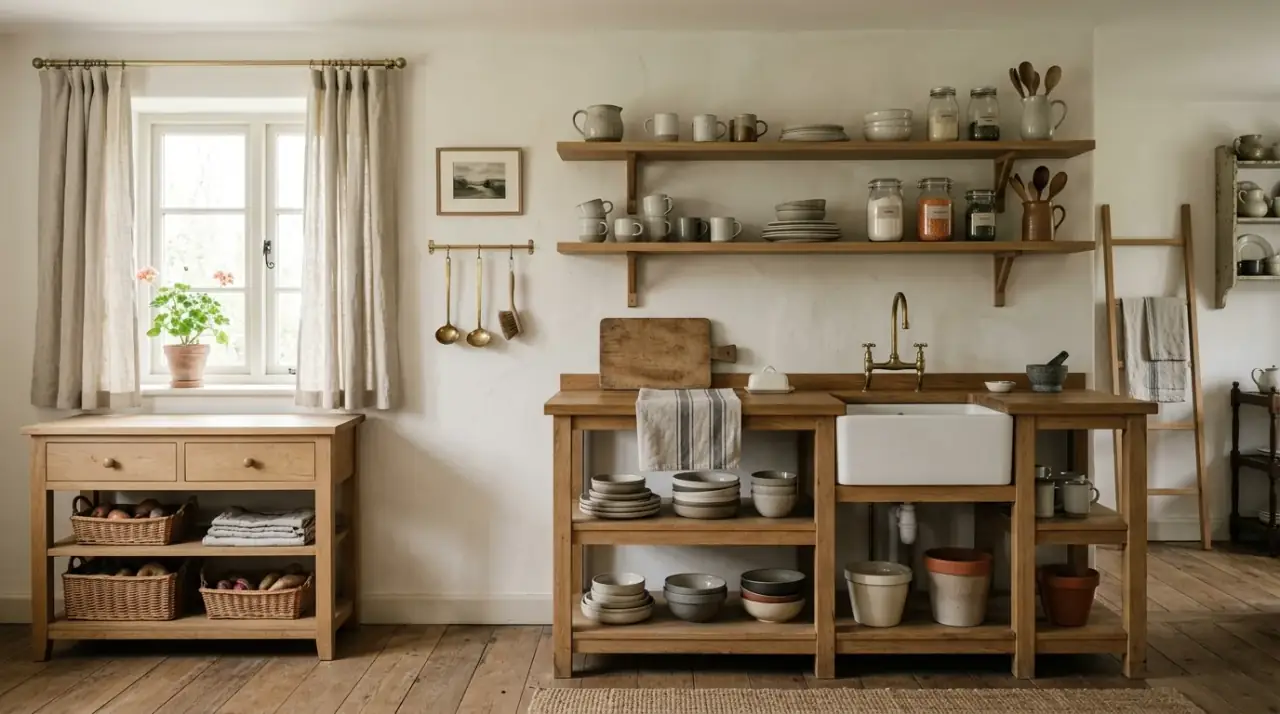
Choose Furniture-Like Legs and Feet
Cabinets or islands with visible legs, feet, or lighter bases look much more at home in an unfitted kitchen because they borrow the language of tables and dressers. That visual lift keeps the room airy and helps each piece feel more individual.
Rooted in proportion and guided by furniture design, visible legs help an unfitted kitchen feel more elegant and more welcoming one thoughtful detail at a time. The silhouettes matter just as much as the surfaces.
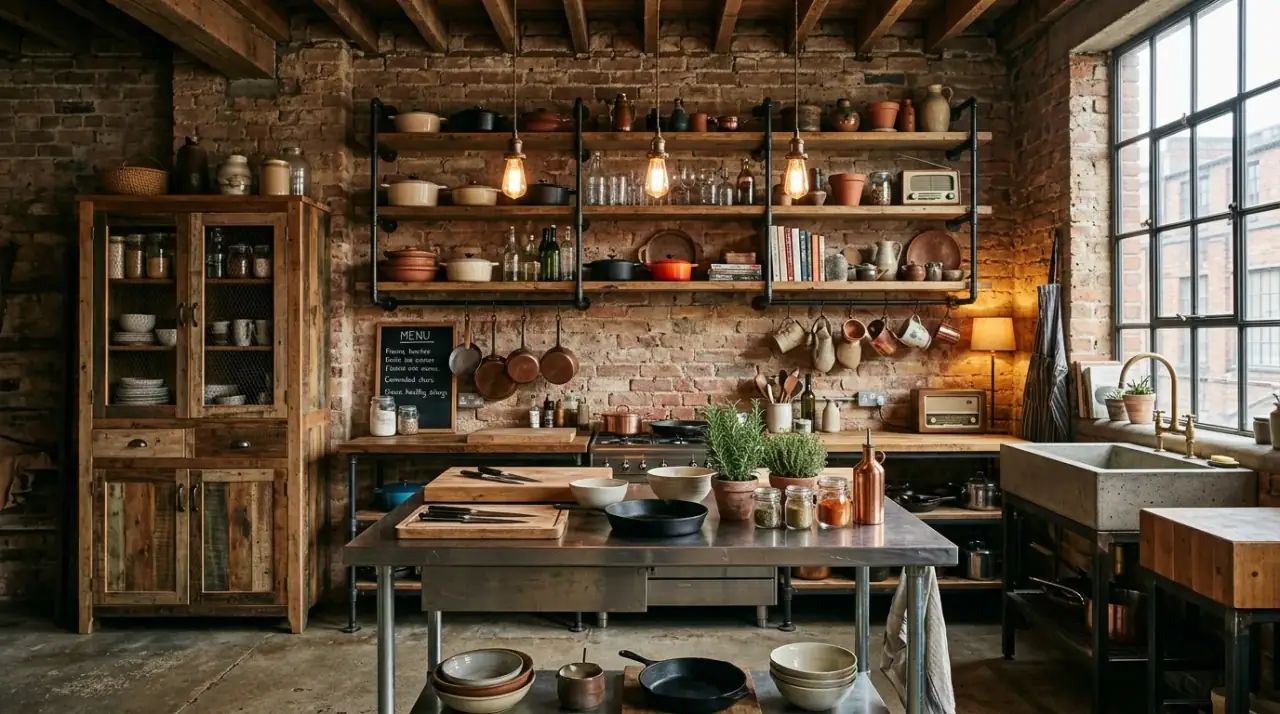
Let Useful Crockery Stay in View
Visible dishes, bowls, boards, and jars can strengthen the collected-over-time mood because they make the kitchen feel truly lived in. The room looks less staged when its everyday tools help shape its visual identity.
Rooted in daily life and guided by practical beauty, visible crockery helps an unfitted kitchen feel more authentic and more welcoming one thoughtful detail at a time. The atmosphere grows out of how the room is actually used.
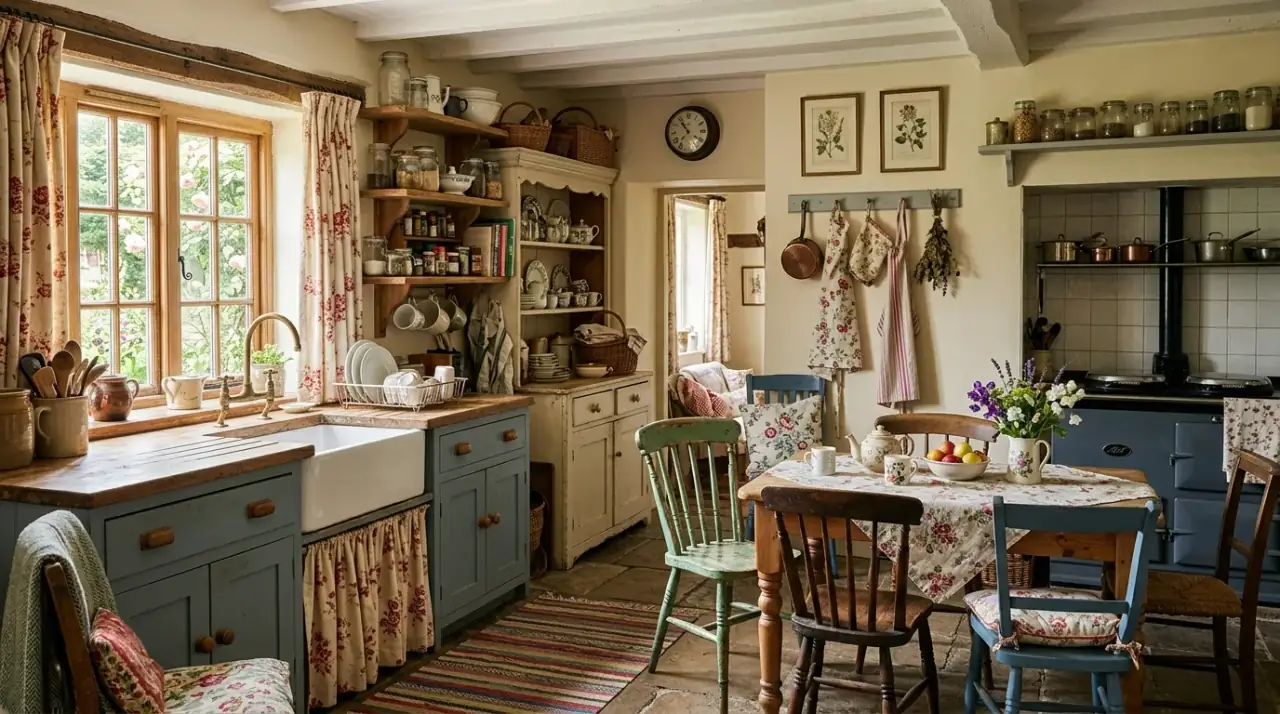
Mix Metals Instead of Matching Everything Exactly
An unfitted kitchen does not need every knob, tap, and light fixture to come from the same metal family, especially if the room is leaning toward vintage or country warmth. A little mix between brass, iron, and aged finishes can make the space feel much more natural.
Rooted in ease and guided by subtle variation, mixed metals help an unfitted kitchen feel more layered and more relaxed one thoughtful detail at a time. Uniform perfection is rarely the goal in a room like this.
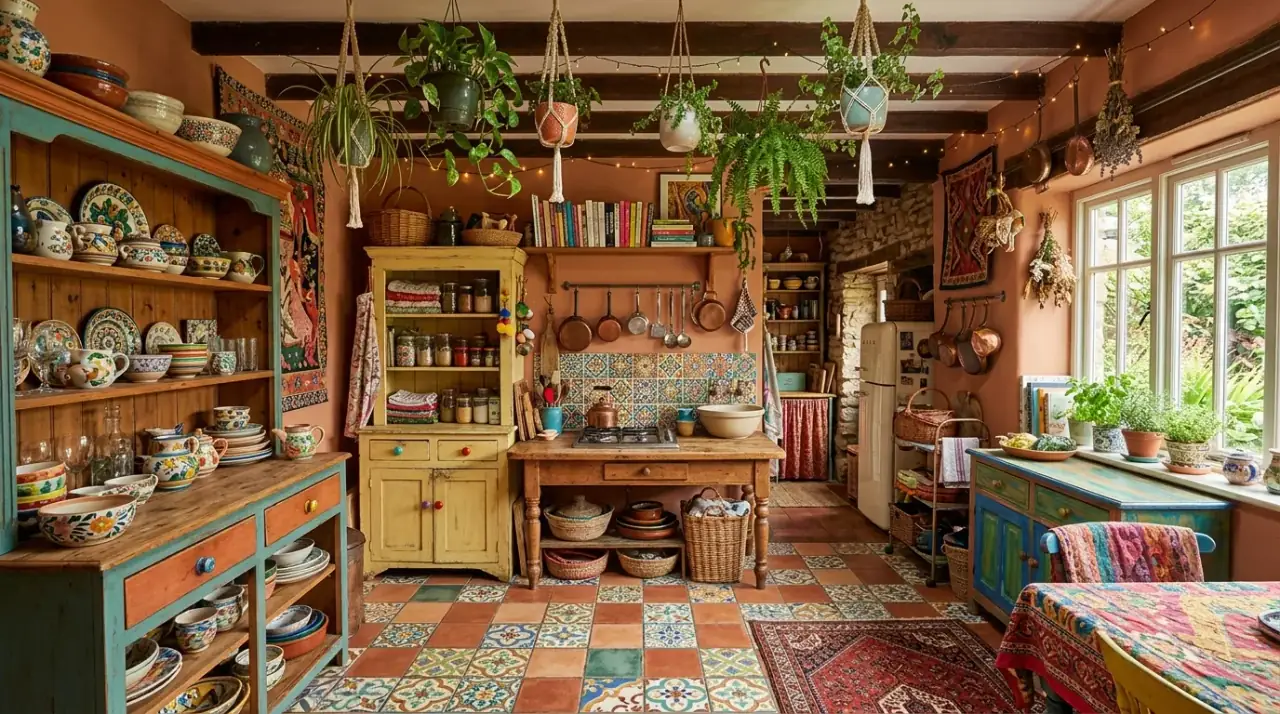
Use Smaller Distinct Storage Pieces Instead of One Long Run
Breaking storage into separate pieces can make a kitchen feel less architectural and more domestic, especially in older homes. A dresser here, a shelf there, and a low cabinet elsewhere create the impression of a room that has evolved gently over time.
Rooted in individuality and guided by composition, separate storage pieces help an unfitted kitchen feel more human and more welcoming one thoughtful detail at a time. The layout becomes softer because it is less rigidly repeated.
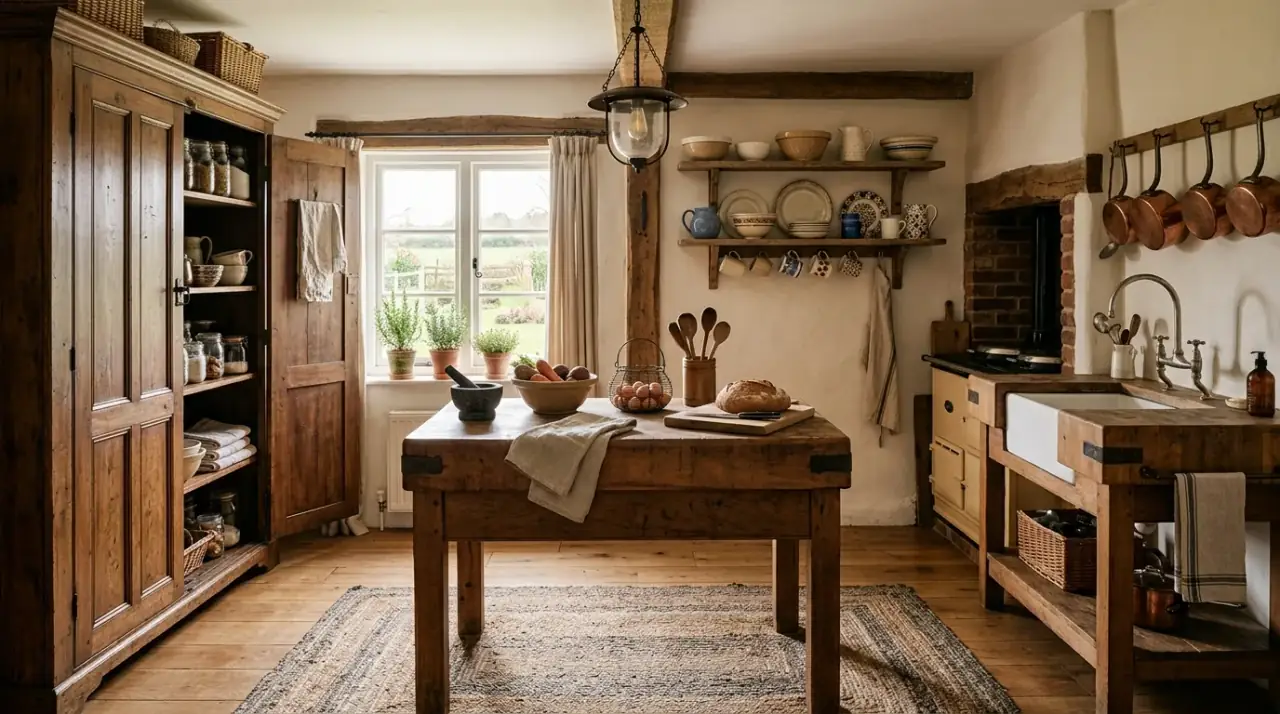
Keep the Palette Gentle and Lived In
Muted colors often suit unfitted kitchens better than sharp contrasts because they help all the different elements sit together more comfortably. Soft green, cream, grey-blue, and worn wood tones can make the room feel settled instead of newly composed.
Rooted in calm and guided by softness, a gentle palette helps an unfitted kitchen feel more harmonious and more welcoming one thoughtful detail at a time. The collected look becomes believable because the tones are easy on the eye.
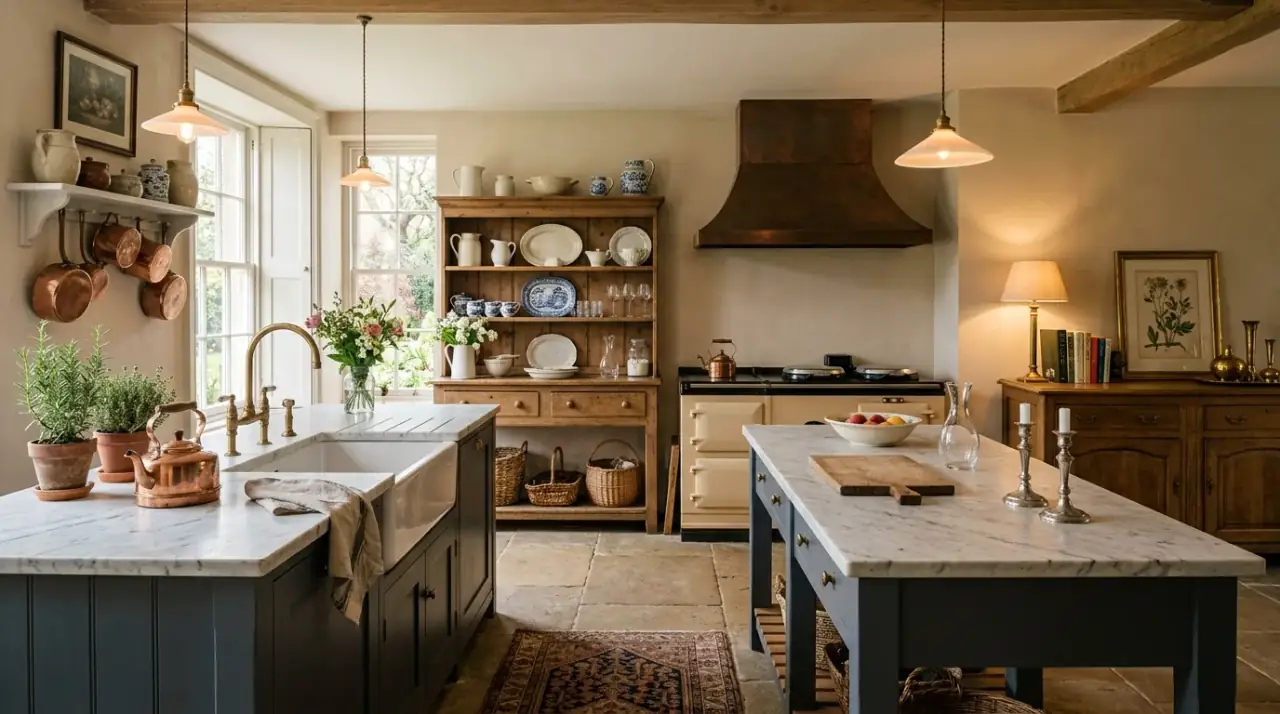
Add a Small Table or Chair That Feels Inherited
Even one chair or side table with a little age can help the whole kitchen feel more gathered and less purchased all at once. The personality of that piece often changes the mood far more effectively than a larger new installation would.
Rooted in memory and guided by style, inherited-looking furniture helps an unfitted kitchen feel more soulful and more welcoming one thoughtful detail at a time. The room starts to suggest history even if it is newly arranged.
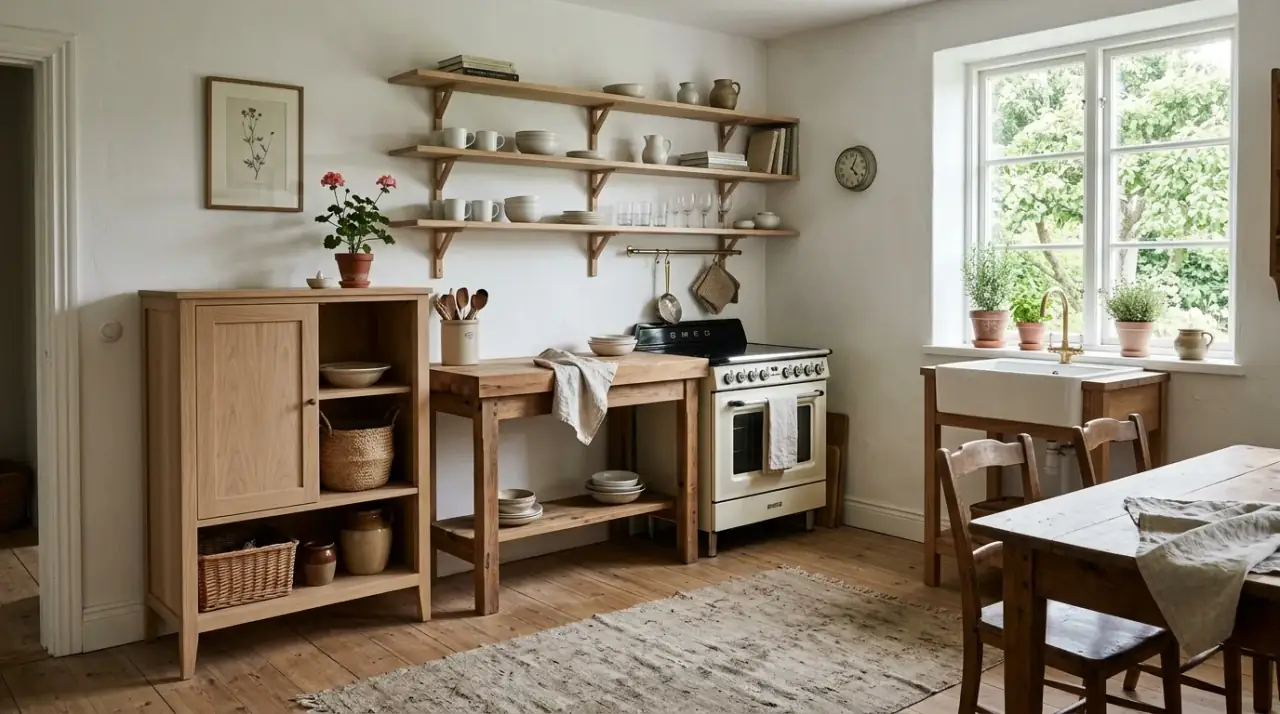
Let Imperfection Be Part of the Charm
Unfitted kitchens are compelling partly because they do not need exact symmetry or flawless repetition to feel beautiful. Slight differences in finish, height, color, or wear make the room feel more authentic and much less generic.
Rooted in imperfection and guided by warmth, relaxed variation helps an unfitted kitchen feel more charming and more welcoming one thoughtful detail at a time. The room breathes because it is allowed to be individual.
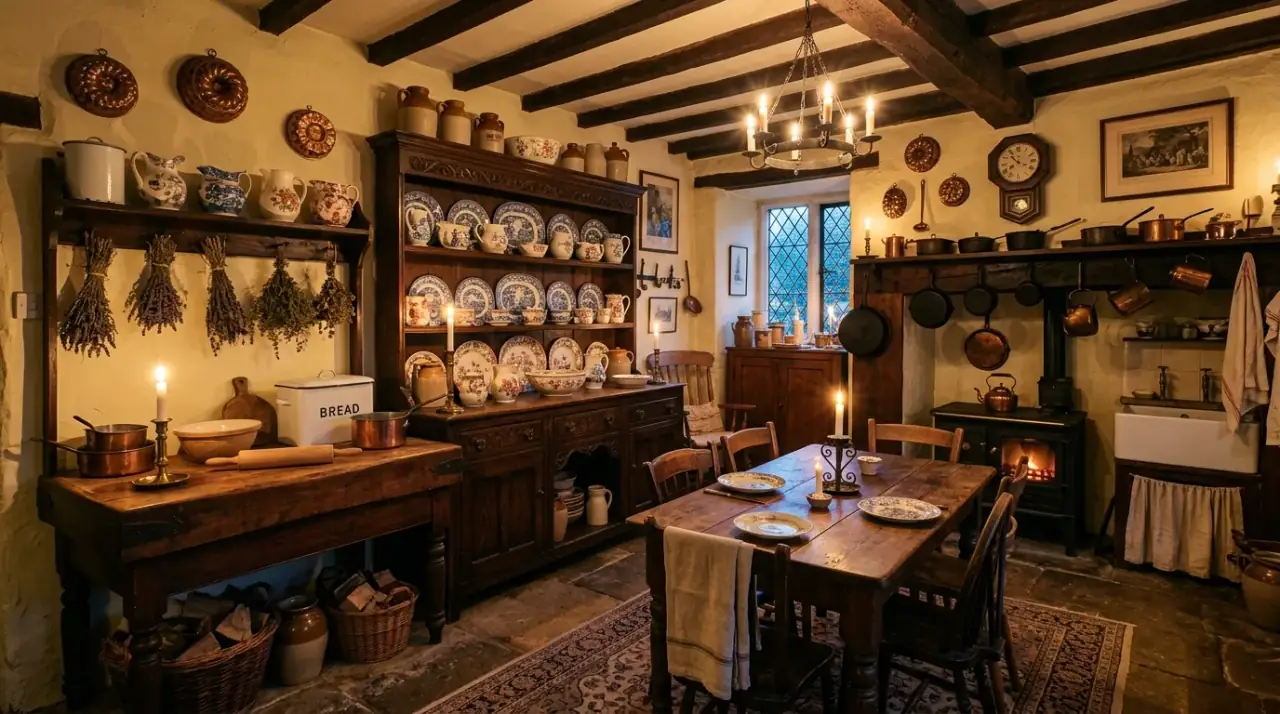
A Collected Look That Still Works Hard
The most successful unfitted kitchens are not simply decorative and instead combine their furniture-like charm with serious practical use. When the room stores well, surfaces work properly, and movement stays easy, the relaxed style becomes much more convincing.
Rooted in creativity and guided by style, an unfitted kitchen can turn everyday function into a warm and welcoming collected interior one thoughtful detail at a time. The look lasts because it supports real living instead of fighting it.