Minimalism can be especially powerful in a small kitchen because reduced visual noise helps every inch feel more intentional. Clean lines, concealed storage, and a controlled palette can make a compact room seem calmer and more capable at the same time.
These ideas focus on modern kitchens that stay streamlined without feeling cold. If you want a smaller cookspace to feel more sophisticated and more open, minimalism offers some of the clearest strategies.
Design ideas to borrow from this palette
Use the ideas below to compare hardware, countertop, flooring, and styling combinations that change how the cabinet color reads in a finished kitchen.
Use Flat Front Cabinets to Reduce Visual Noise
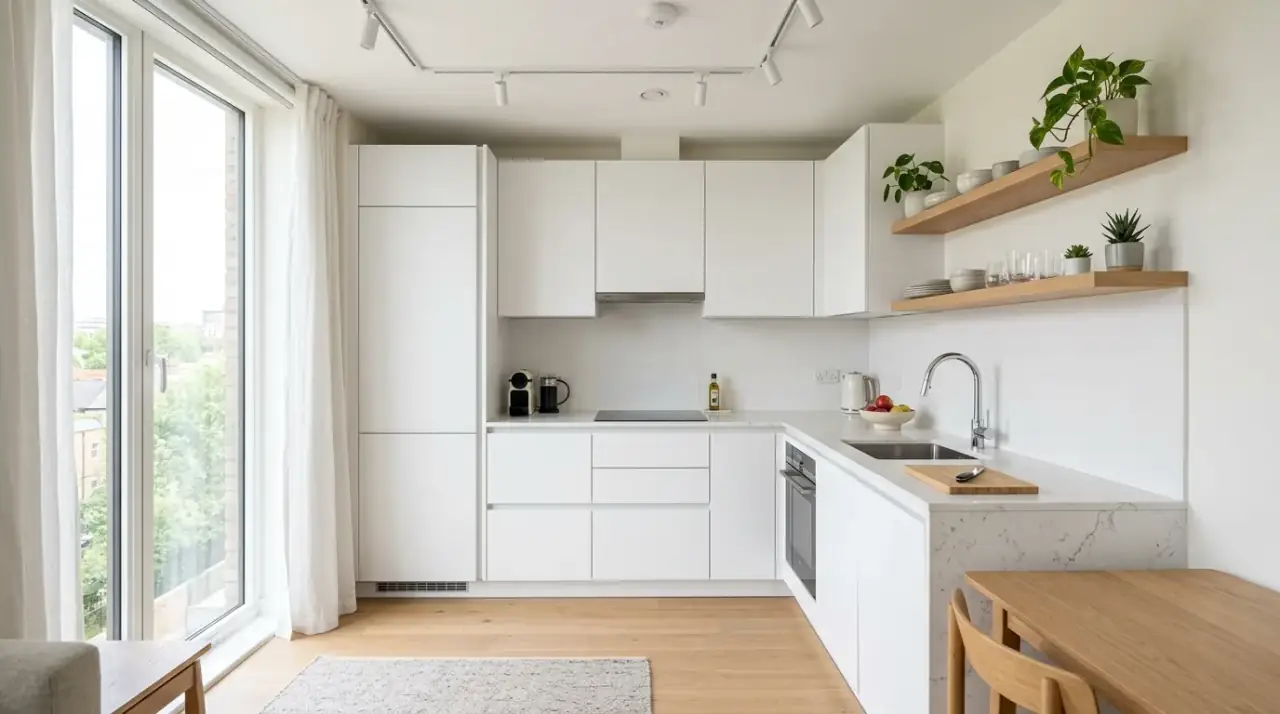
Flat cabinet fronts help a small kitchen feel simpler because they remove extra lines and detailing from the main surfaces. The room reads more cleanly and gains a more modern architectural quality.
Rooted in clarity and guided by sleek design, flat cabinetry can help a compact kitchen feel calmer and more welcoming one thoughtful detail at a time. Minimalism often begins with letting the largest surfaces stay quiet.
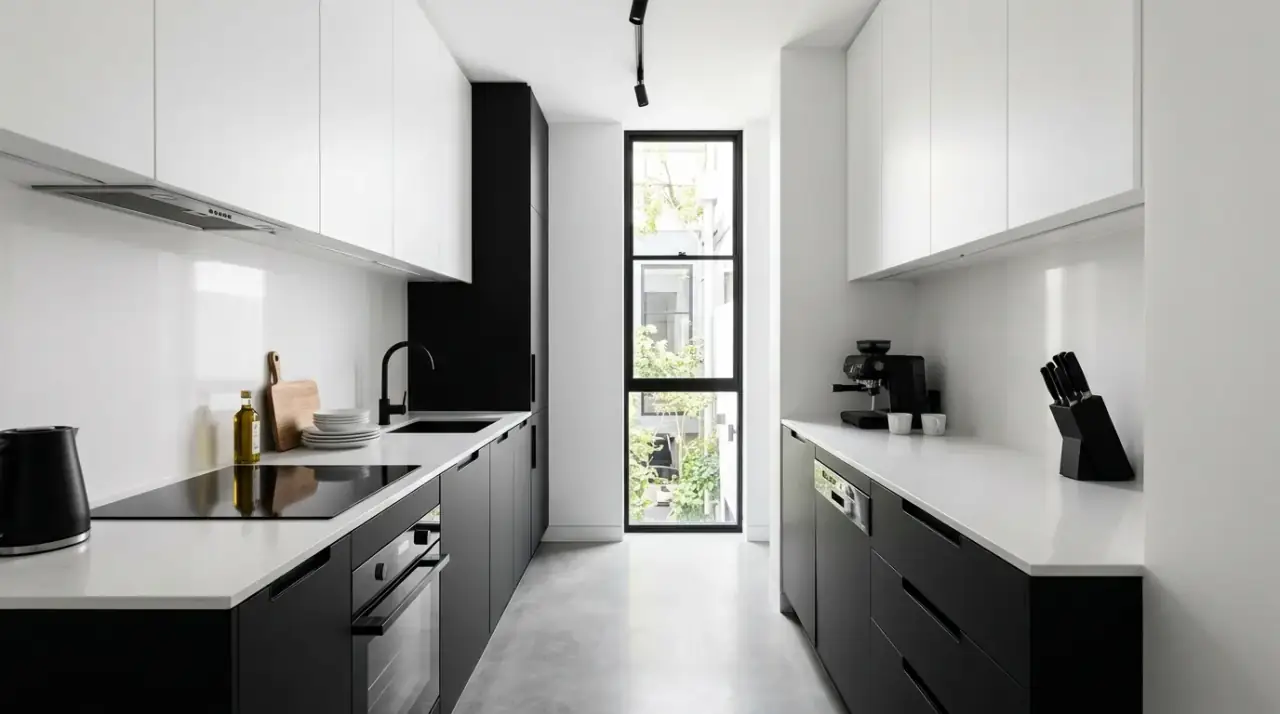
Keep the Palette Tight and Tonal
A minimalist small kitchen often feels larger when the palette stays close in tone through whites, beiges, soft greys, or pale wood. Fewer sharp color breaks make the boundaries of the room feel more fluid.
Rooted in tonal harmony and guided by visual calm, a tighter palette can help a small kitchen feel more open and more welcoming one thoughtful detail at a time. Smooth color transitions often create a greater sense of space.
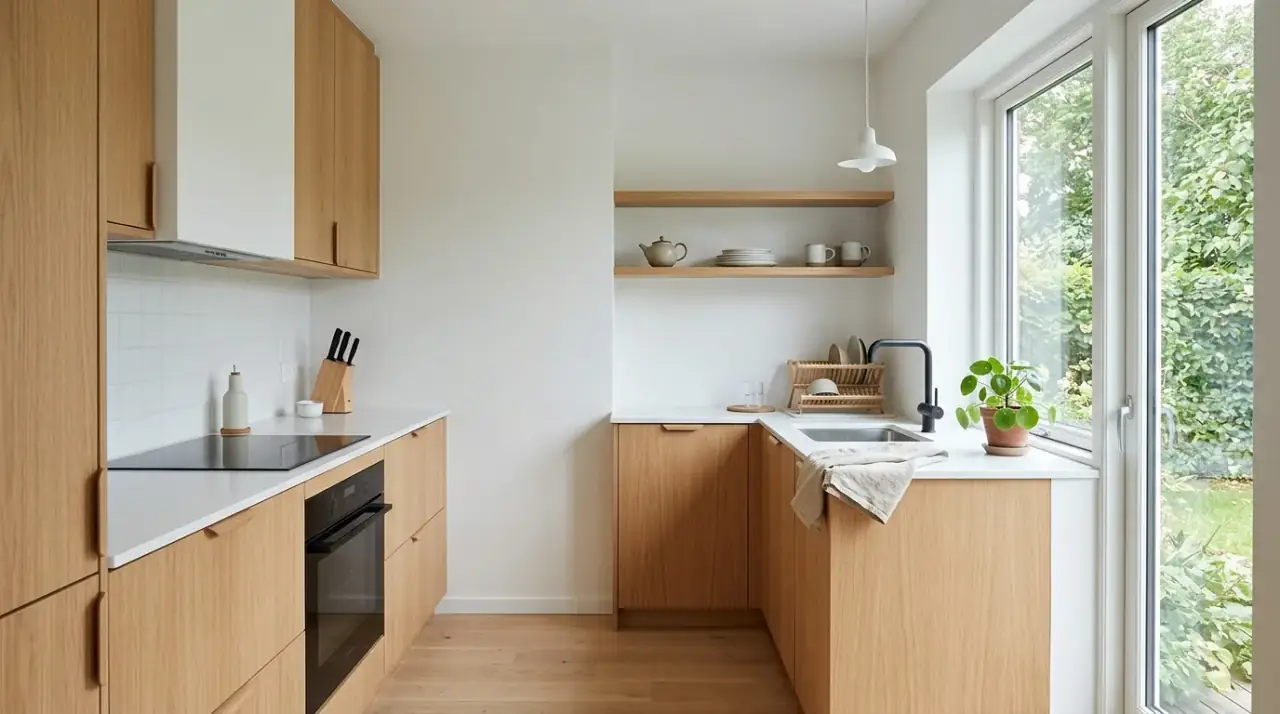
Hide Appliances When Possible
Panel-ready refrigerators, built-in microwaves, and concealed storage for small appliances can dramatically reduce visual clutter in a small kitchen. The result feels calmer and more seamless.
Rooted in continuity and guided by efficient concealment, integrated appliances can help a compact kitchen feel more polished and more welcoming one thoughtful detail at a time. A smoother visual field often makes the room seem instantly larger.
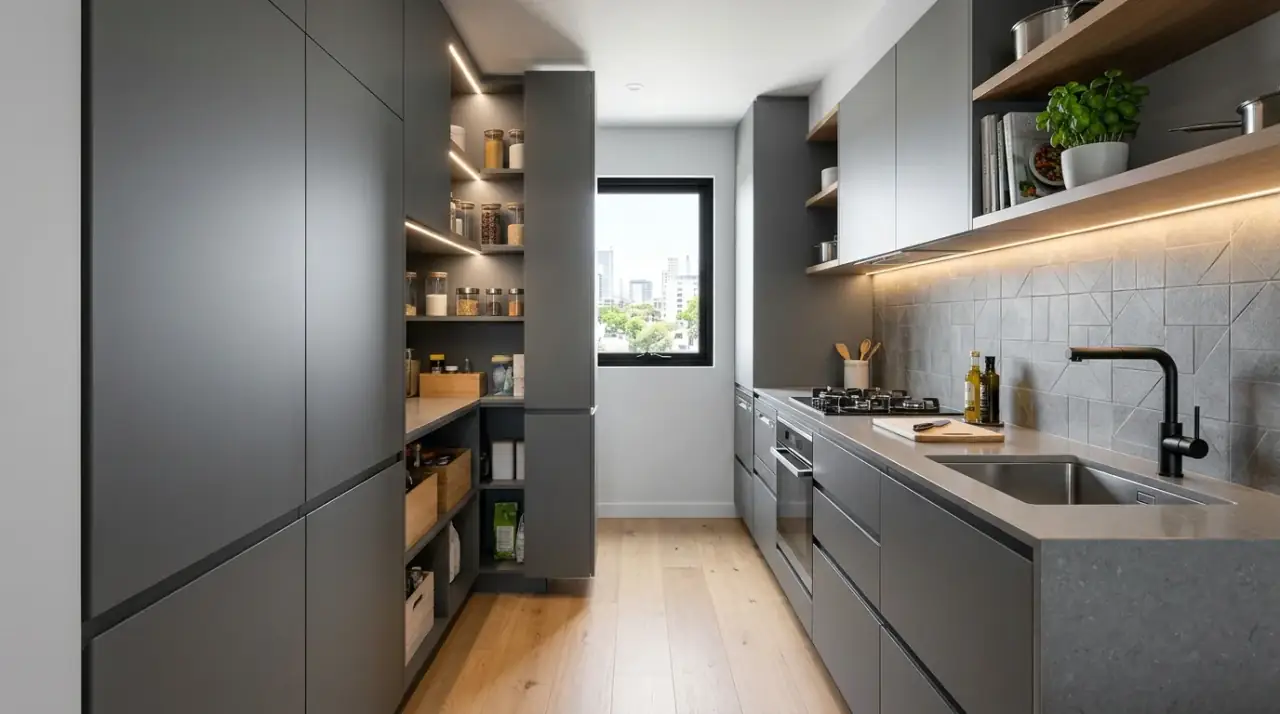
Use One Continuous Counter and Backsplash Material
Running the same material across the counter and backsplash can make a compact kitchen feel more unified by reducing joints, pattern changes, and unnecessary visual interruption. This gives the room a cleaner rhythm.
Rooted in continuity and guided by minimalist simplicity, a single-surface look can help a small kitchen feel more refined and more welcoming one thoughtful detail at a time. Fewer breaks often mean more visual calm.
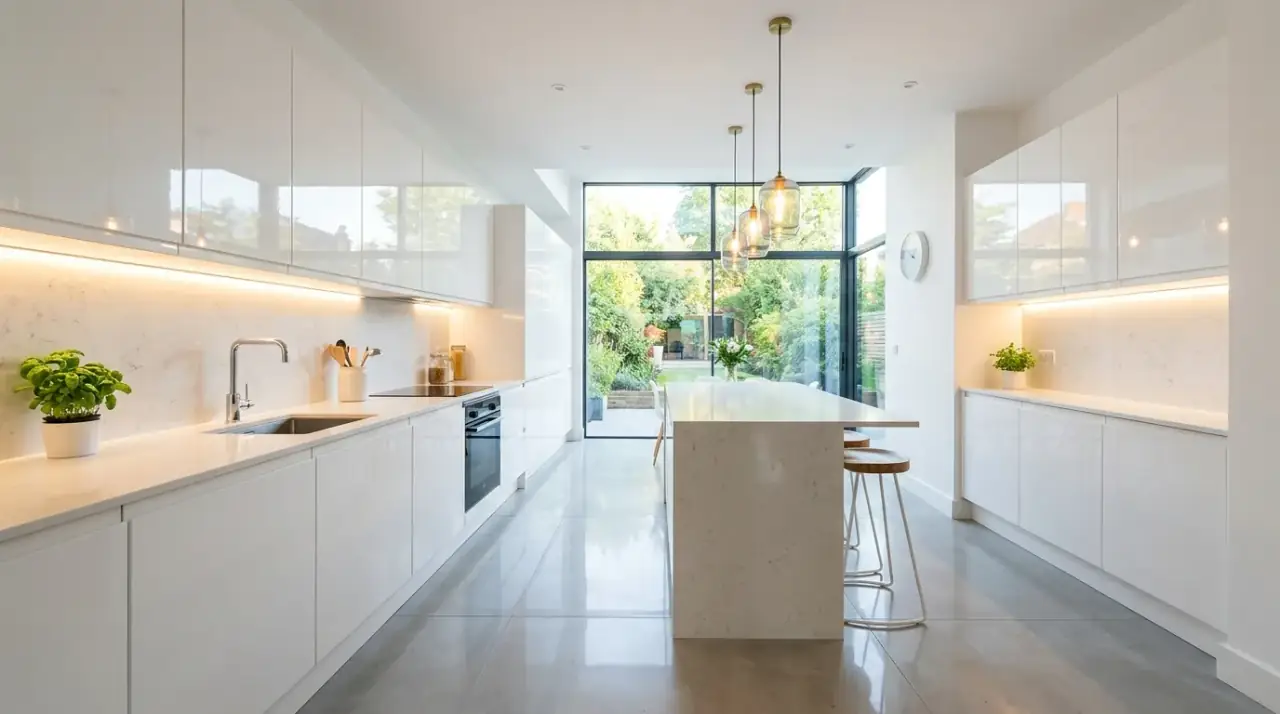
Keep the Countertops Almost Completely Open
Minimalist small kitchens depend heavily on open counter space because clutter quickly undermines the whole effect. Leaving the surface mostly clear also makes prep feel easier in a compact room.
Rooted in restraint and guided by practical calm, clear countertops can help a small kitchen feel more spacious and more welcoming one thoughtful detail at a time. Empty surface becomes an active part of the design.
Use Subtle Under Cabinet Lighting for Precision
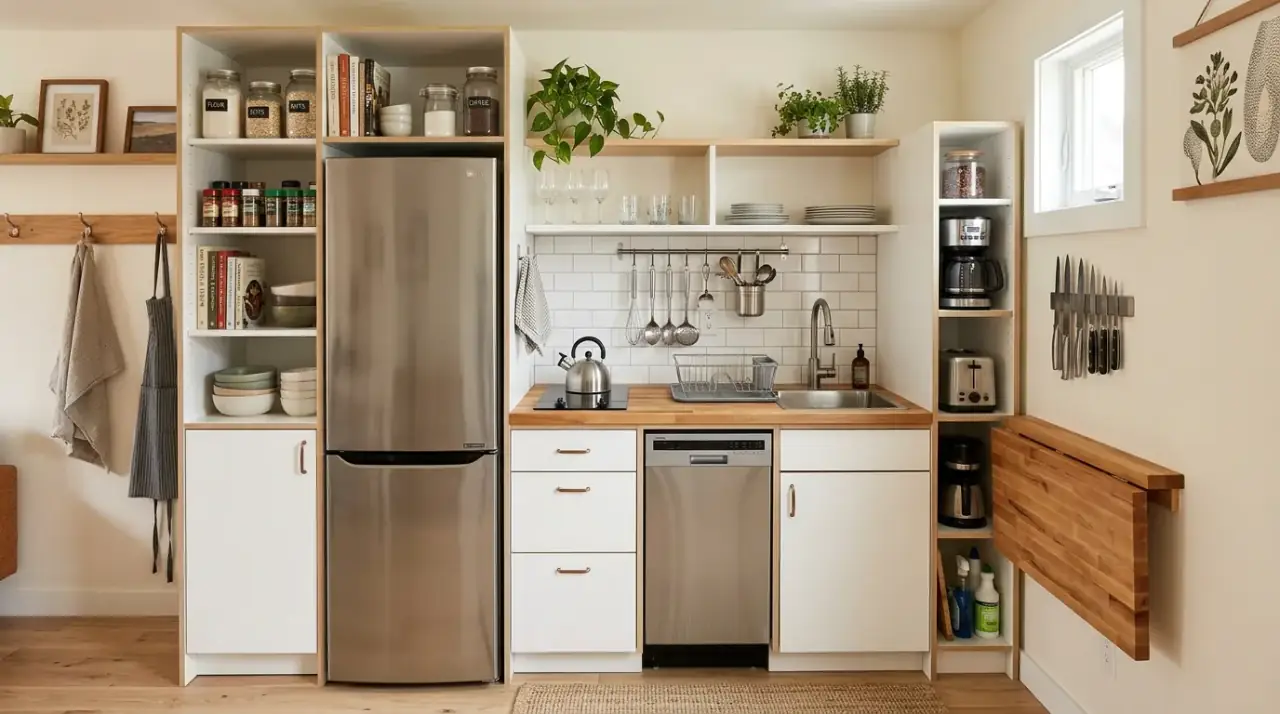
Minimalist kitchens often look more elevated when under-cabinet lighting quietly sharpens the work surfaces and adds an architectural glow. In a small space, this also makes the room feel more considered and usable.
Rooted in precision and guided by clean illumination, subtle task lighting can help a compact kitchen feel more polished and more welcoming one thoughtful detail at a time. Good light gives minimal spaces their finished clarity.
Use Open Shelving Only in Small Controlled Amounts
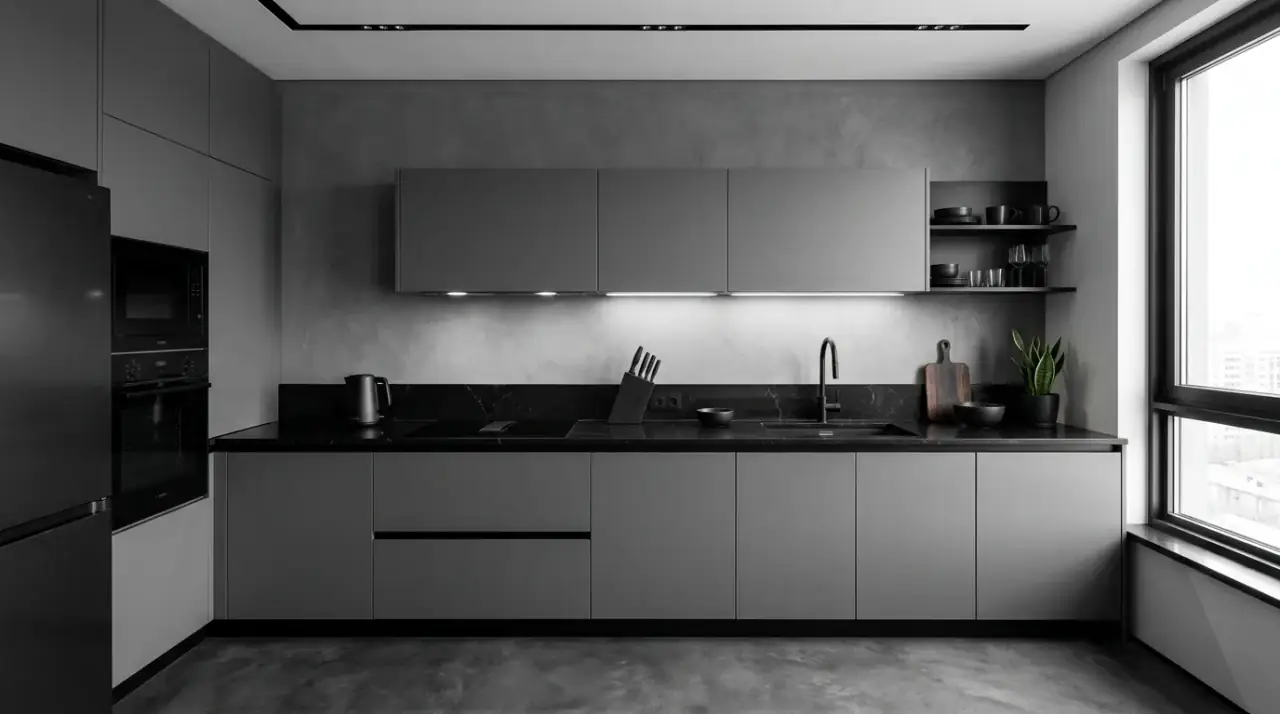
A little open shelving can keep a compact kitchen from feeling too boxed in, but too much will quickly reintroduce clutter. One short section is often enough to provide visual relief while still protecting the minimalist mood.
Rooted in balance and guided by disciplined openness, selective shelving can help a small kitchen feel lighter and more welcoming one thoughtful detail at a time. Minimalist design works best when display stays highly edited.
Choose Slimmer Hardware or Integrated Pulls
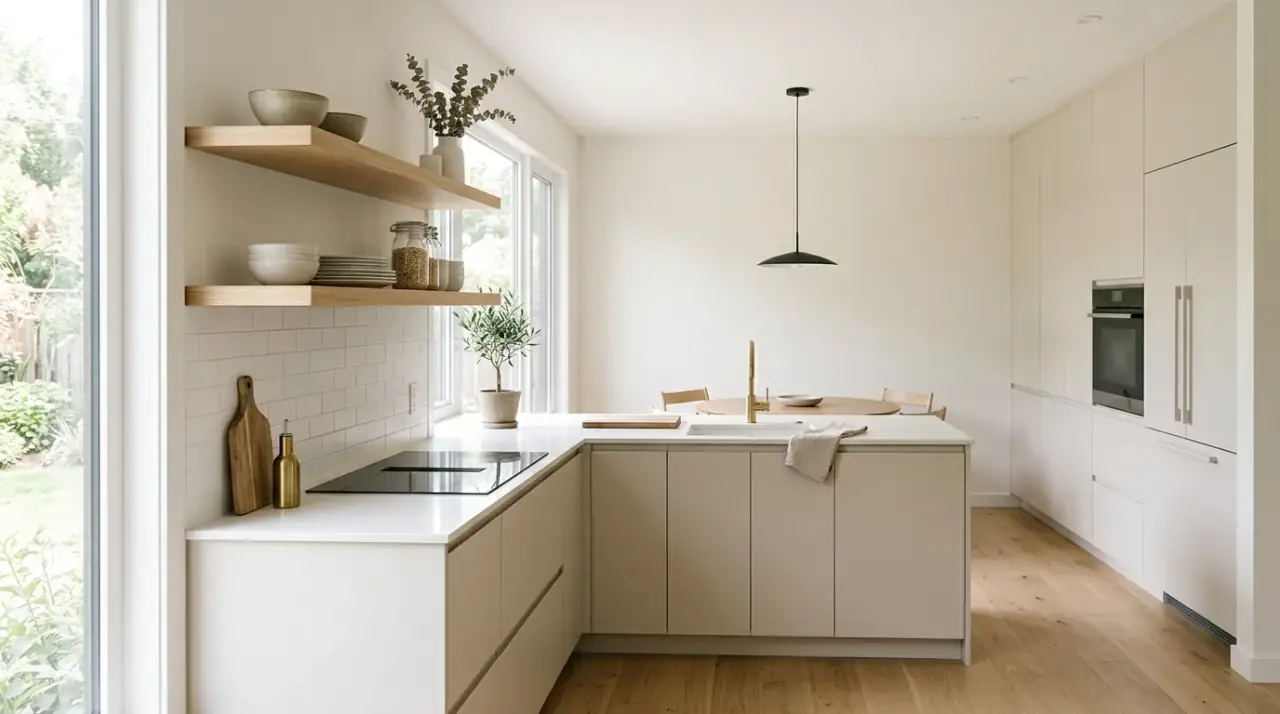
Bulky handles can interrupt the clean lines of a small minimalist kitchen more than people realize. Slim hardware or integrated pulls preserve the sleek silhouette and keep the cabinets visually lighter.
Rooted in subtle detail and guided by modern restraint, lighter hardware can help a compact kitchen feel sharper and more welcoming one thoughtful detail at a time. Small interruptions matter more in smaller rooms.
Let One Material Bring Warmth to the Simplicity
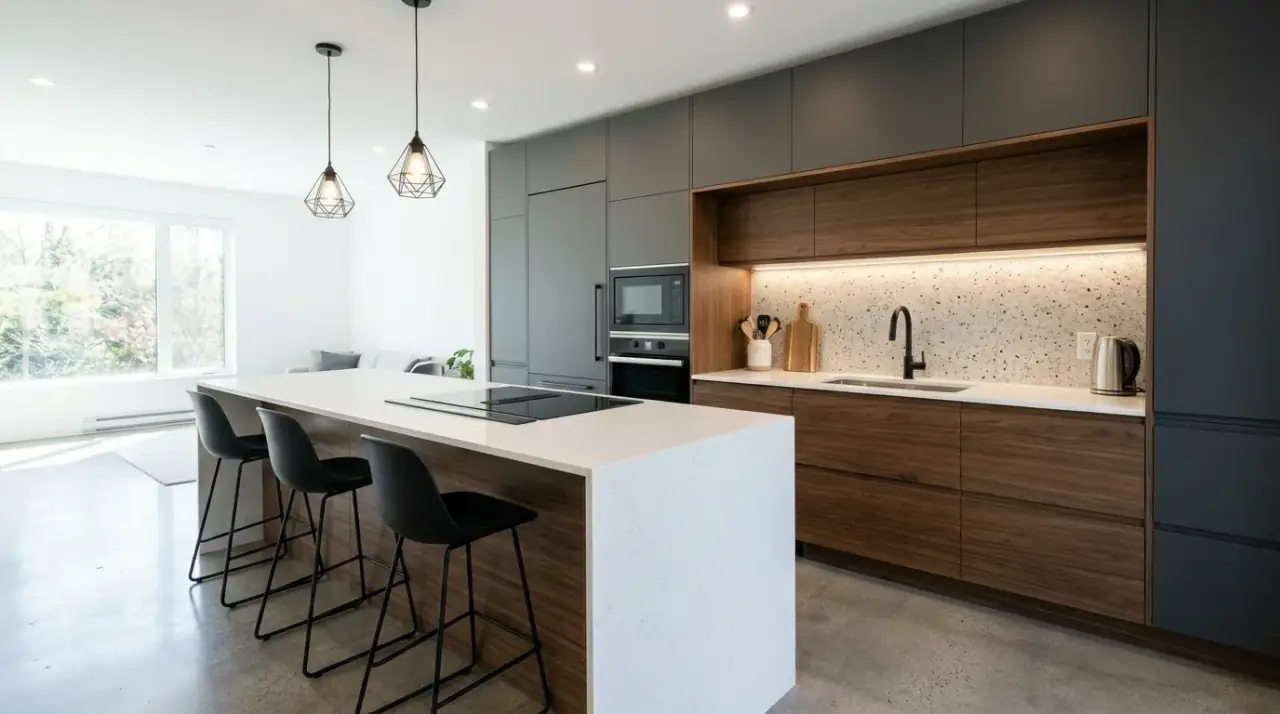
A minimalist kitchen can feel too cold unless one element such as pale oak, warm stone, or a wood stool introduces human warmth. That single material note often keeps the room livable and soft.
Rooted in warmth and guided by thoughtful restraint, one natural material can help a small kitchen feel more humane and more welcoming one thoughtful detail at a time. Minimalism becomes easier to love when one element carries emotional softness.
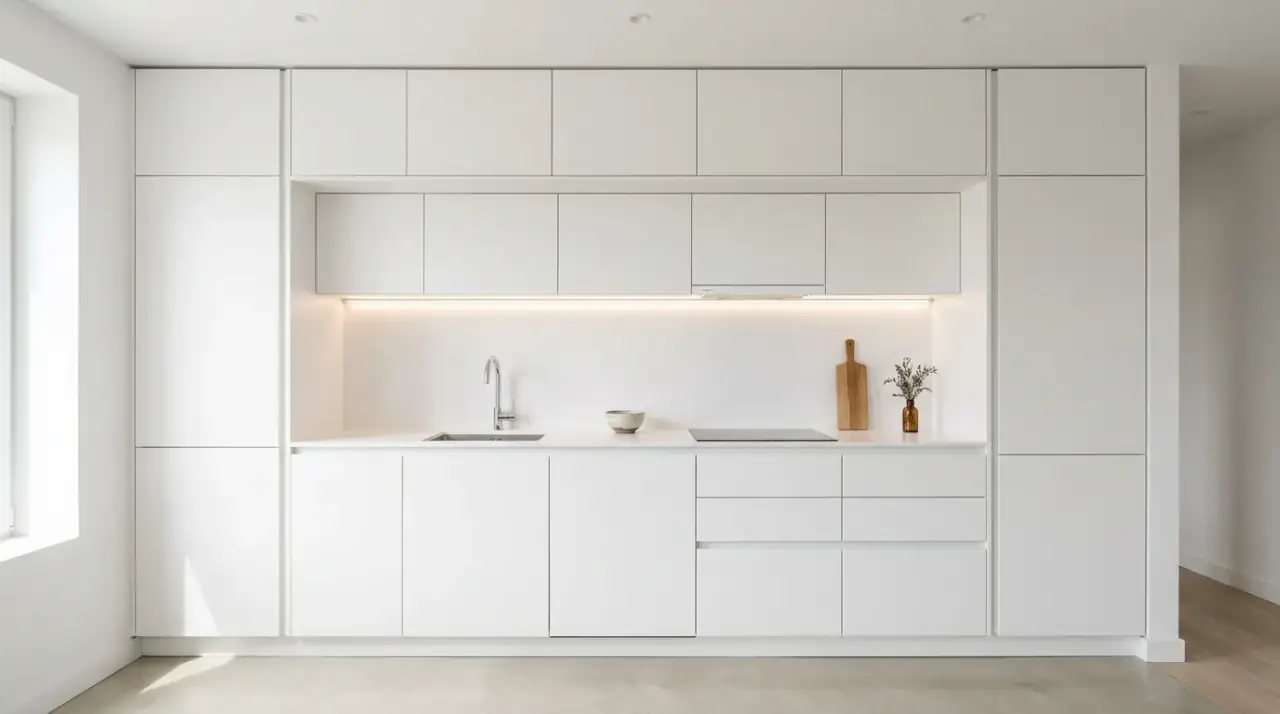
Use Full Height Cabinetry to Maximize Clean Storage
Tall cabinets can make a small kitchen work harder while also reducing the need for extra visible storage elsewhere. The uninterrupted vertical lines often make the space feel more architectural and deliberate.
Rooted in efficiency and guided by clean vertical form, full-height cabinetry can help a compact kitchen feel more capable and more welcoming one thoughtful detail at a time. Height often creates both storage and style at once.
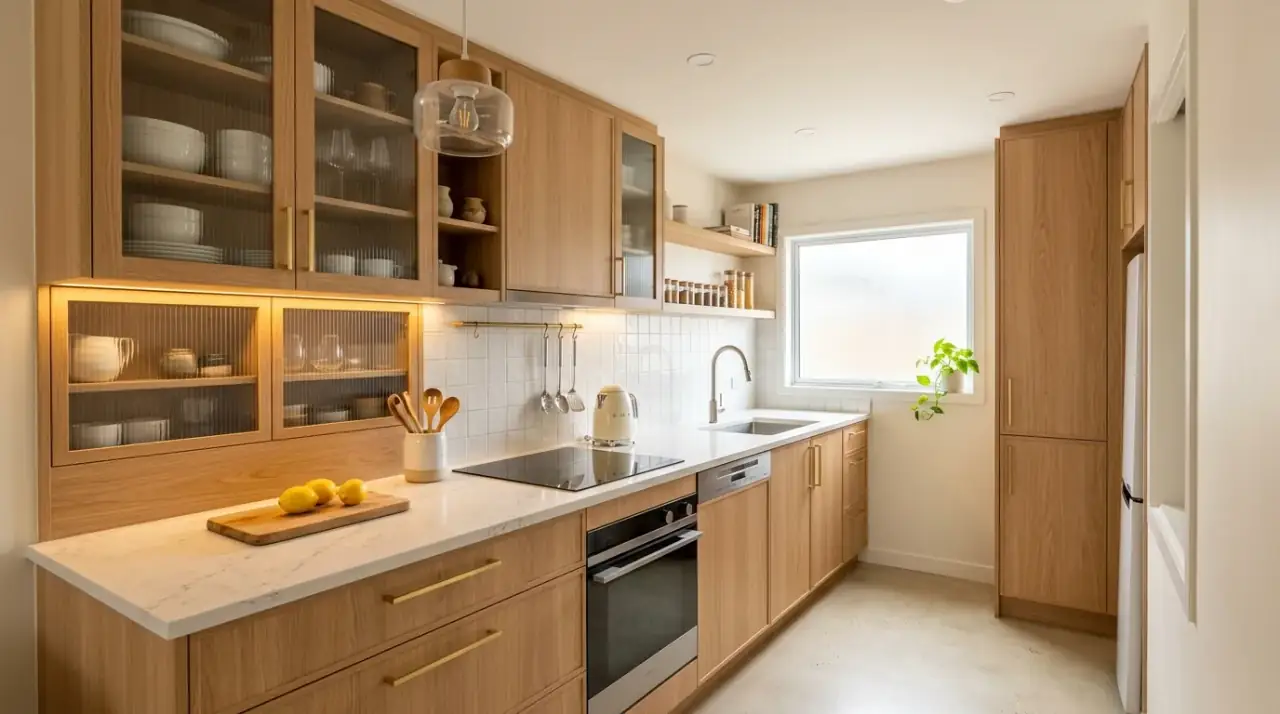
Minimize Decorative Objects So the Space Stays Crisp
A minimalist kitchen usually looks strongest when only a few very intentional objects remain visible, such as a bowl, a board, or one vase. Too many accessories break the quiet rhythm quickly.
Rooted in editing and guided by visual discipline, sparse decor can help a compact kitchen feel more composed and more welcoming one thoughtful detail at a time. The style depends as much on what you remove as what you keep.
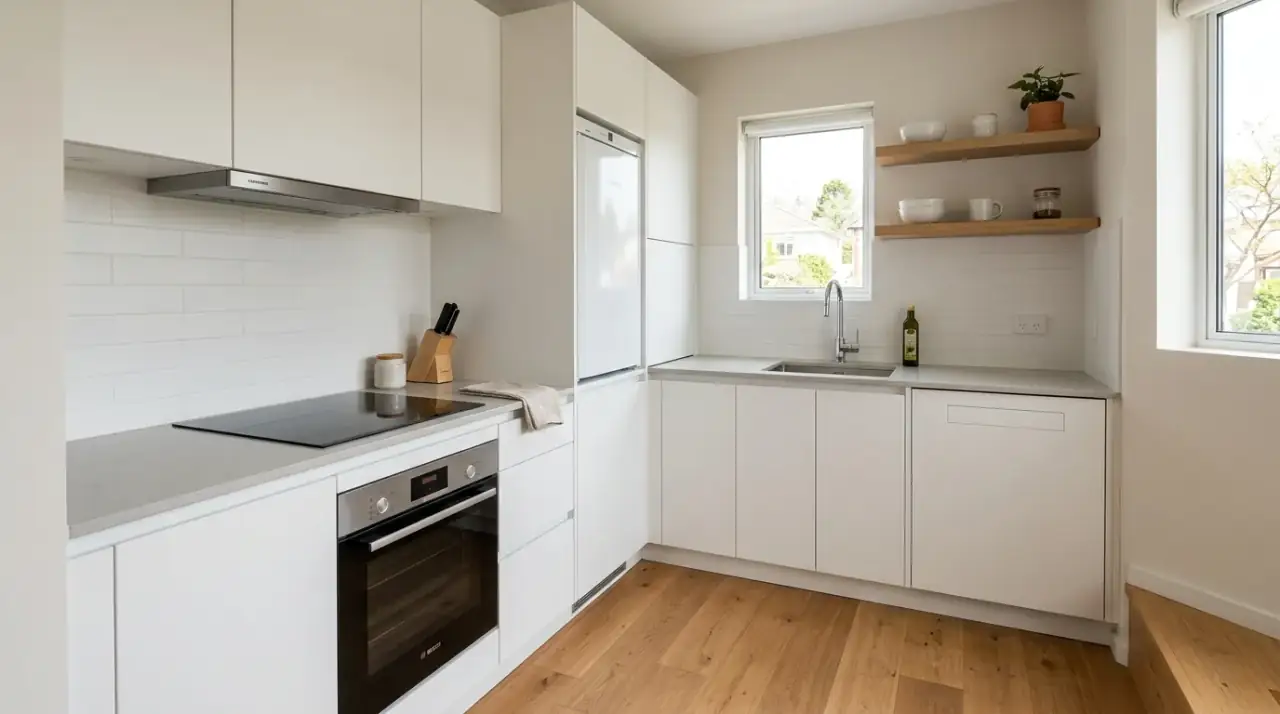
Use Glass or Reflective Notes with Care
A touch of reflection through glass fronts, pendants, or backsplash sheen can help a small minimalist kitchen feel deeper, but the effect should stay subtle. Too much gloss can fight the room's calmness.
Rooted in light and guided by careful balance, selective reflection can help a compact kitchen feel more luminous and more welcoming one thoughtful detail at a time. The goal is depth, not distraction.
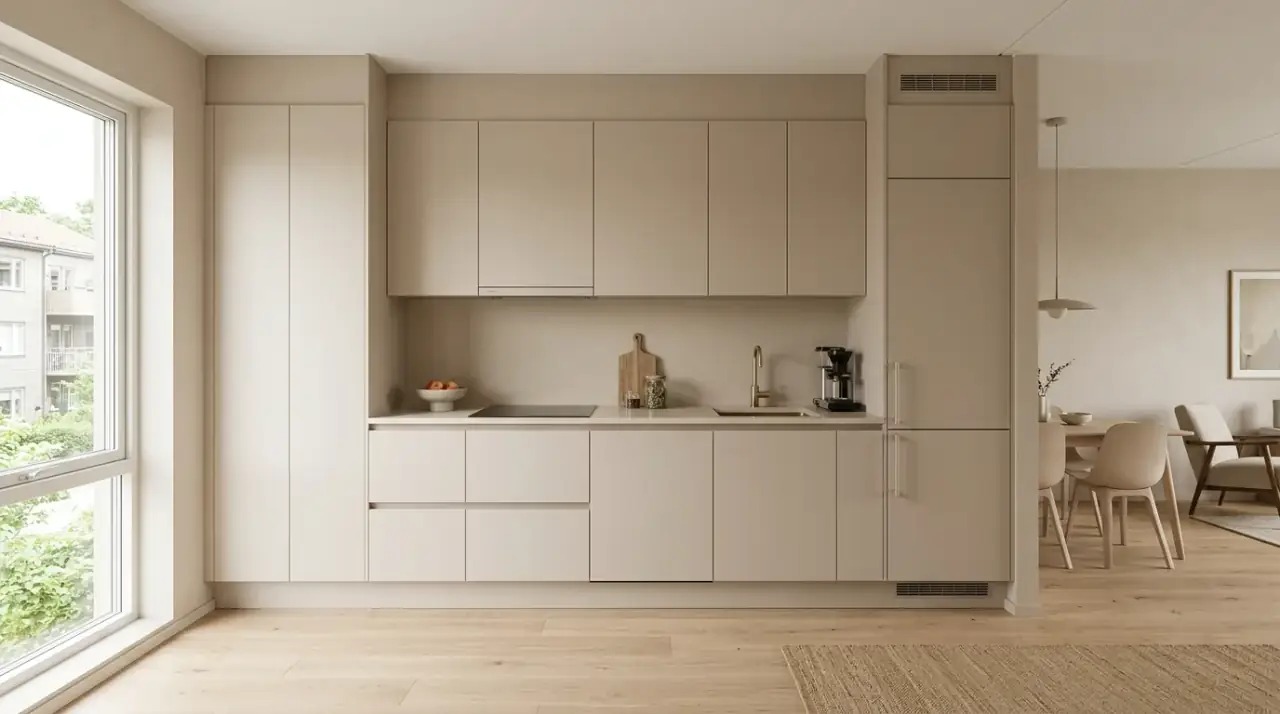
Keep the Layout Easy to Read and Move Through
A modern minimalist kitchen should feel intuitive at a glance, with clear relationships between the sink, cooktop, and storage. Simplicity in movement matters as much as simplicity in appearance.
Rooted in flow and guided by thoughtful planning, a readable layout can help a compact kitchen feel smoother and more welcoming one thoughtful detail at a time. Minimalist design works best when it reduces mental friction as well as visual noise.
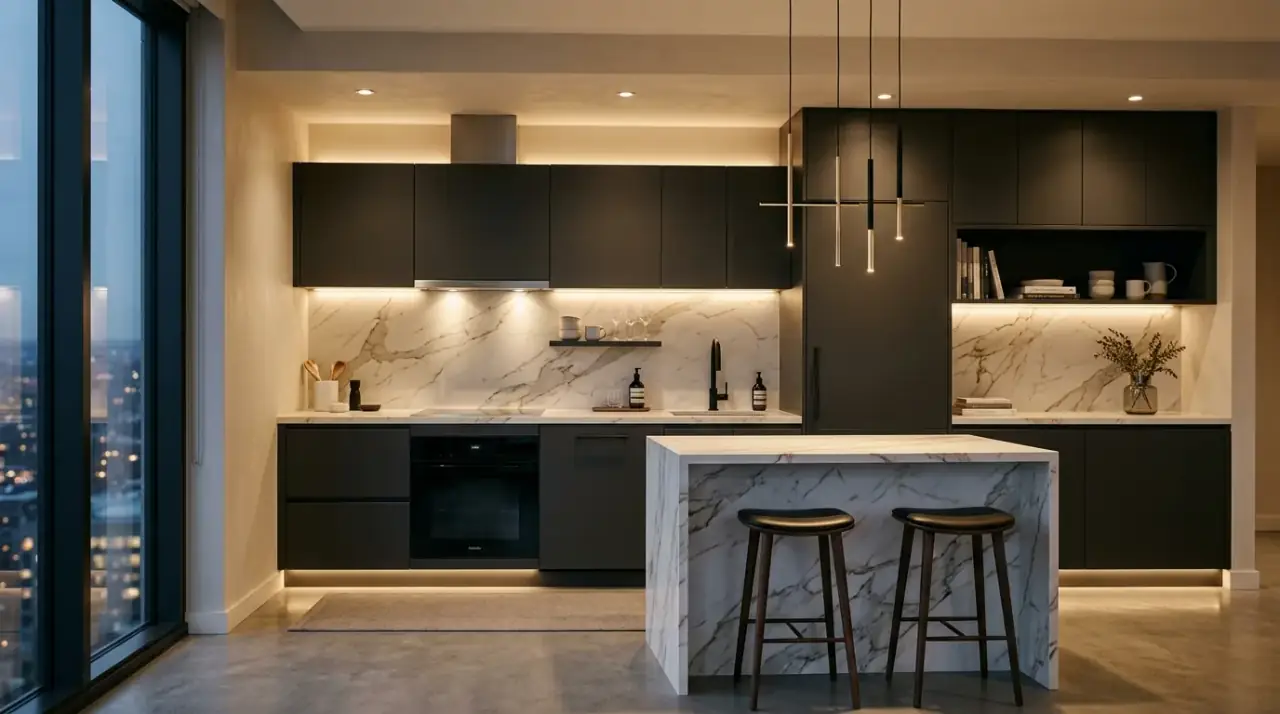
Compact Living Feels Better When the Kitchen Looks Quiet and Works Hard
The best minimalist small kitchens feel sleek because every finish, line, and storage decision supports clarity. They may be compact, but they avoid feeling cramped because the room is not arguing with itself visually.
Rooted in creativity and guided by style, modern minimalism can turn a small kitchen into a warm and welcoming compact living space one thoughtful detail at a time. Its power comes from making less feel like more.