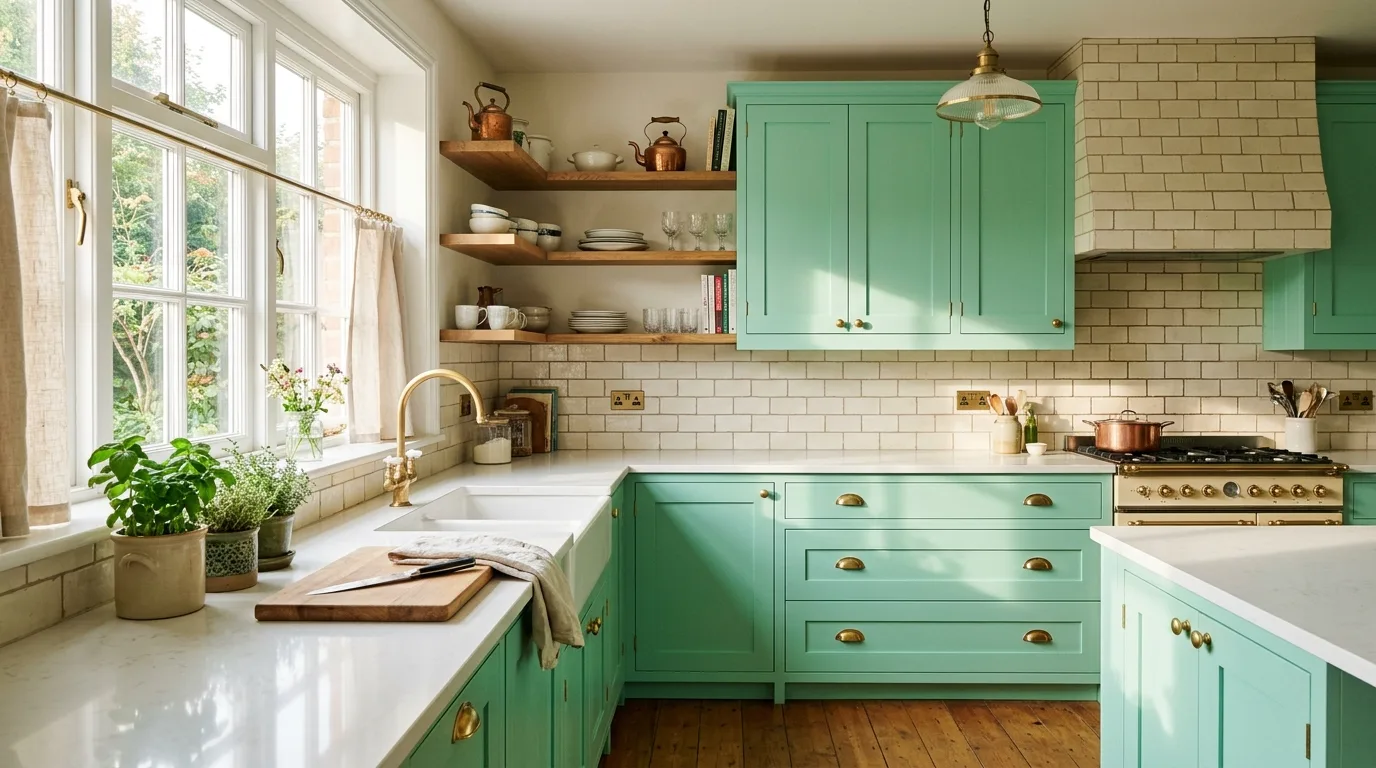
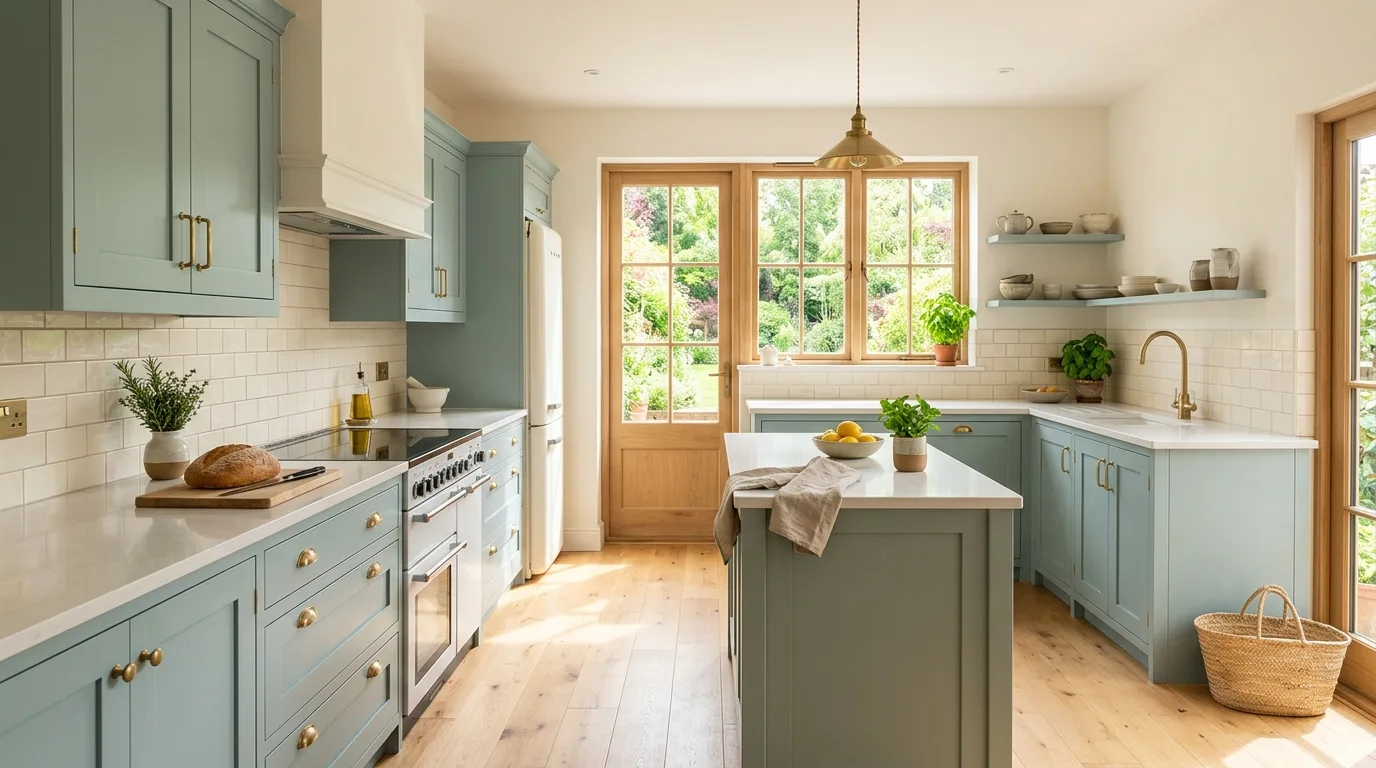
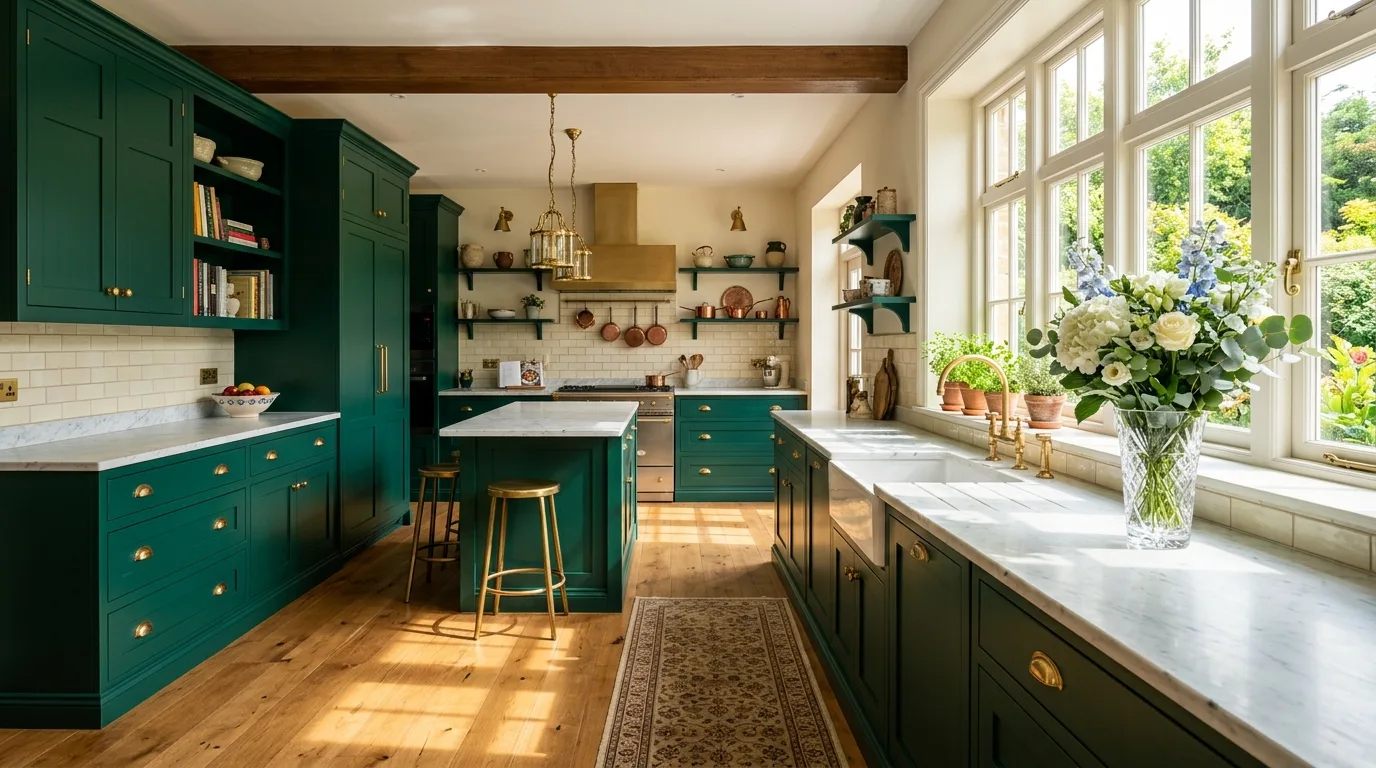
Small kitchens are rarely improved by decoration alone because most problems come down to circulation, reach, and how the work zones relate to one another. Good layout choices can make even a compact room feel far less frustrating to use.
These ideas cover galley, L-shaped, one-wall, and hybrid arrangements along with details that help each plan perform better. If you want a tight kitchen to feel smoother and more efficient, layout is the first thing to get right.
Design ideas to borrow from this palette
Use the ideas below to compare hardware, countertop, flooring, and styling combinations that change how the cabinet color reads in a finished kitchen.
A One-Wall Layout with Clear Zones
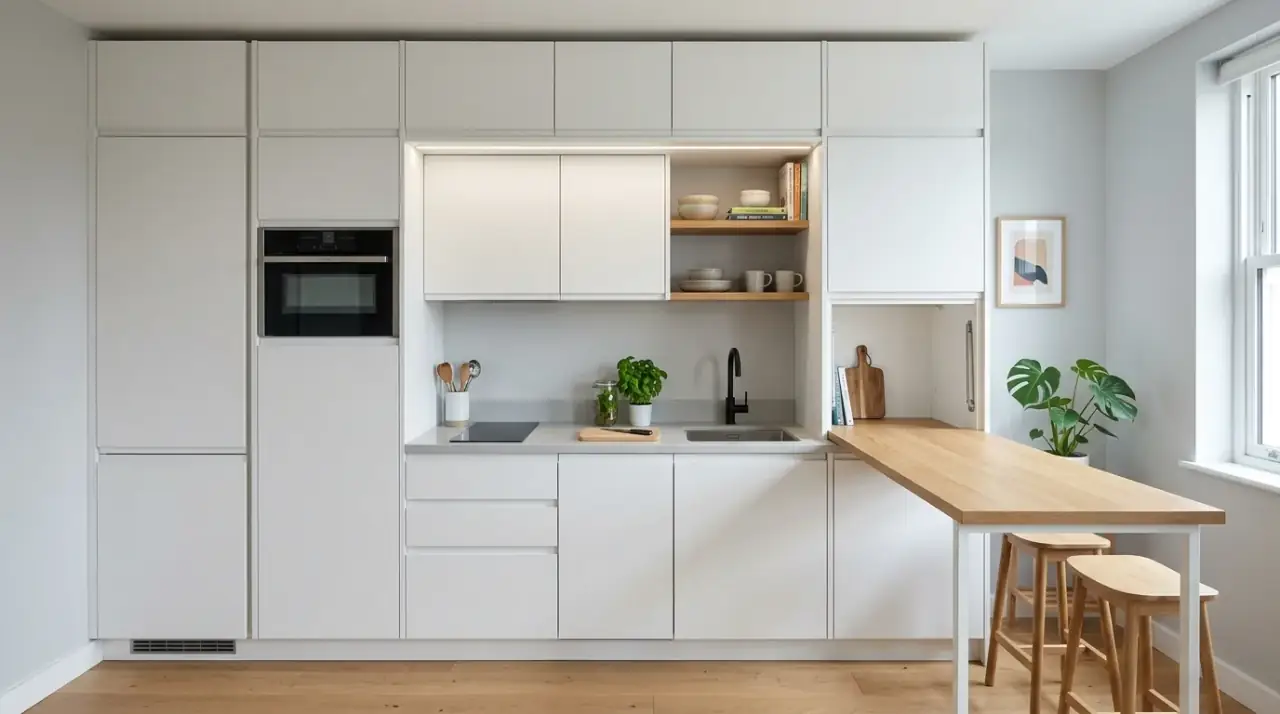
One-wall kitchens work best when cooking, prep, and cleanup zones are still clearly arranged rather than placed randomly along the run. That simple organization can make the whole space feel more intuitive.
Rooted in order and guided by smart planning, a clear one-wall layout improves the kitchen one thoughtful zone at a time. The room feels easier to read and easier to use.
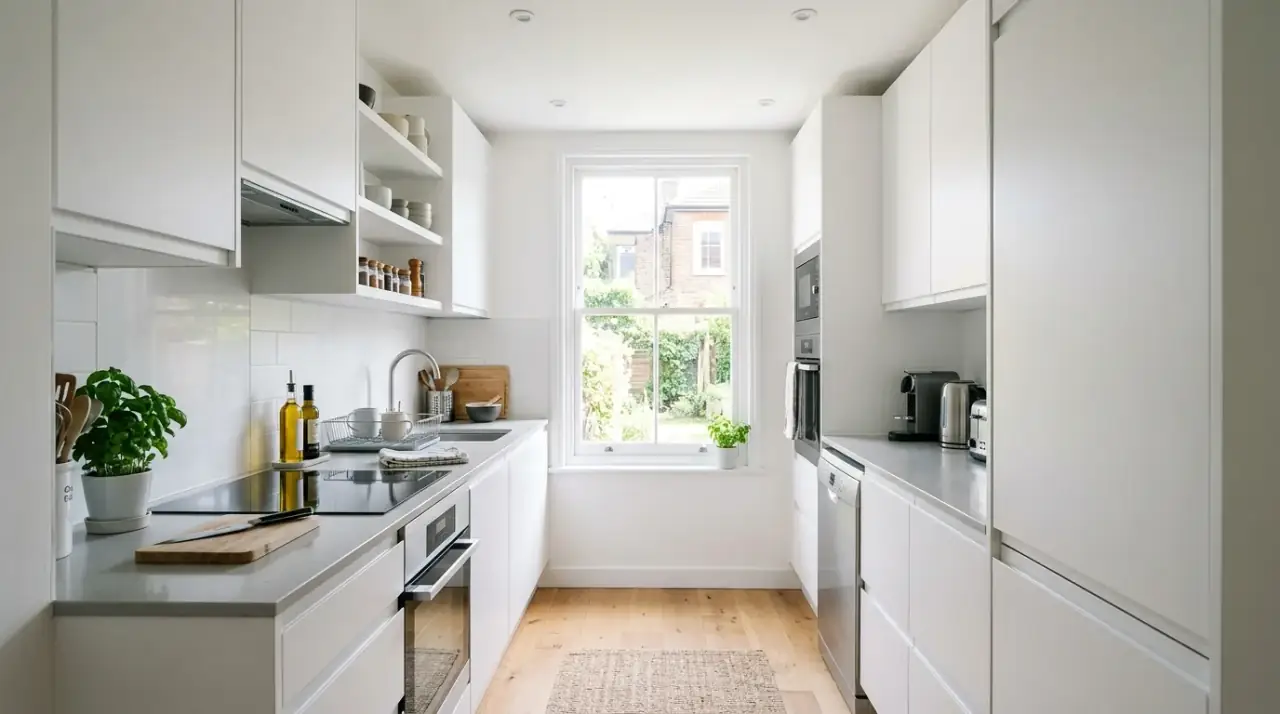
A Galley Kitchen with Uncluttered Walk Space
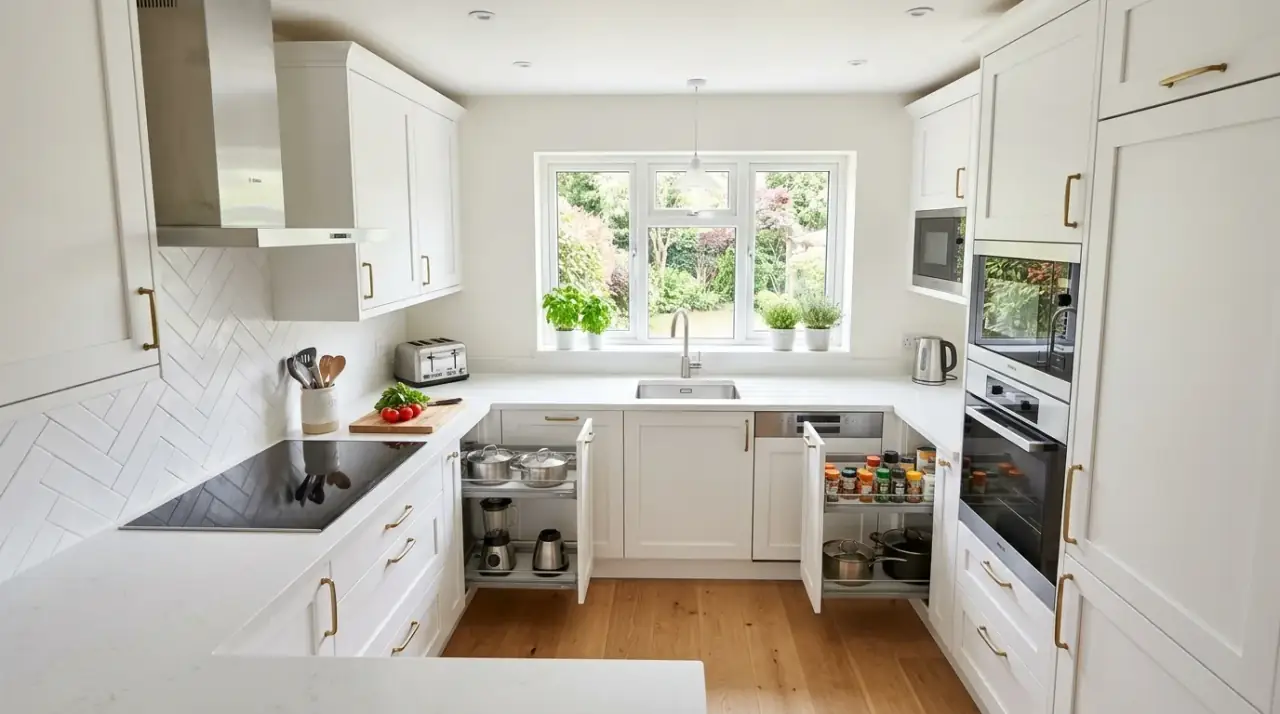
Galley kitchens can be extremely efficient as long as the walkway stays comfortable and the cabinets do not overcomplicate the walls. Keeping circulation clear helps the space feel less compressed.
Rooted in efficiency and guided by movement, a good galley plan shapes the kitchen one thoughtful passage at a time. The room feels tighter in the best possible way.
An L-Shape That Opens a Corner
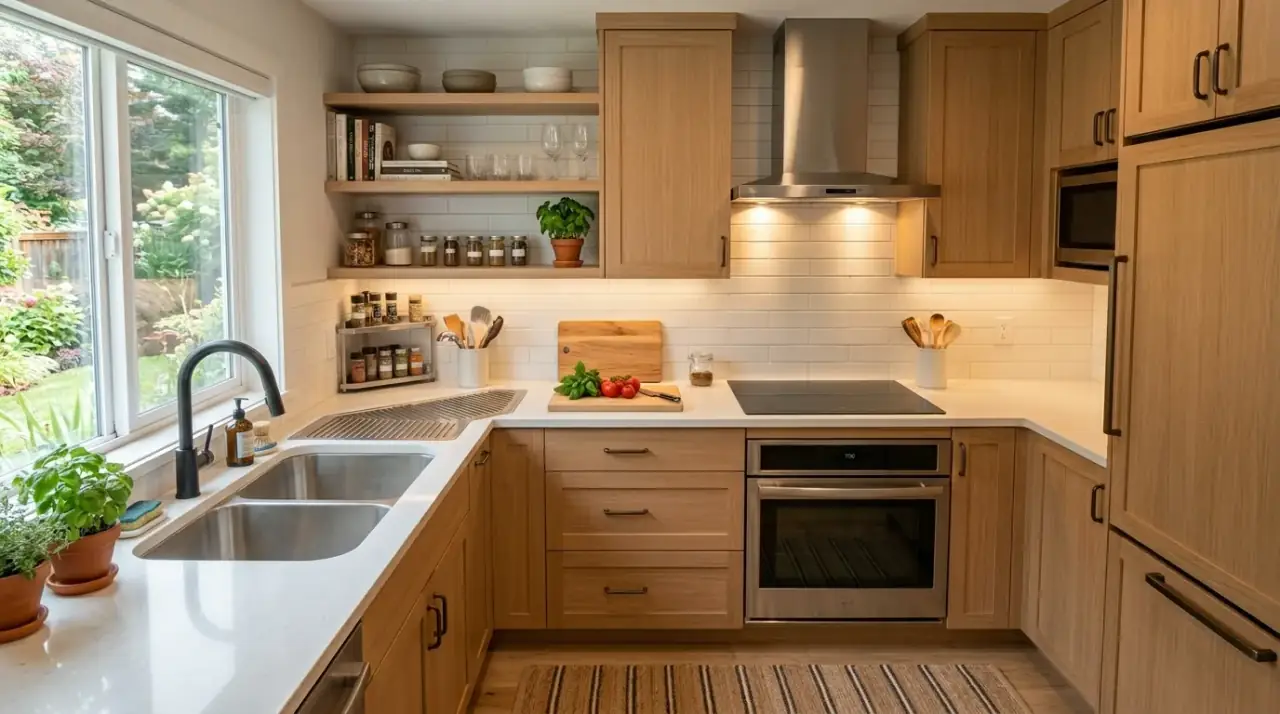
L-shaped kitchens often feel friendlier in small homes because they leave one side more open while still offering useful counter continuity. The corner can become a strength rather than wasted space when planned well.
Rooted in flow and guided by practical geometry, an L-shaped layout supports the kitchen one thoughtful turn at a time. The room feels more open and more flexible.
Tall Storage at the Least Busy End
Placing tall cabinets or the refrigerator at one end can prevent a small kitchen from feeling visually chopped up. It also helps preserve clearer prep and cooking surfaces through the central work area.
Rooted in visual balance and guided by utility, tall storage strengthens the kitchen one thoughtful placement at a time. The room feels more organized and less crowded.
Use a Peninsula Instead of a Full Island
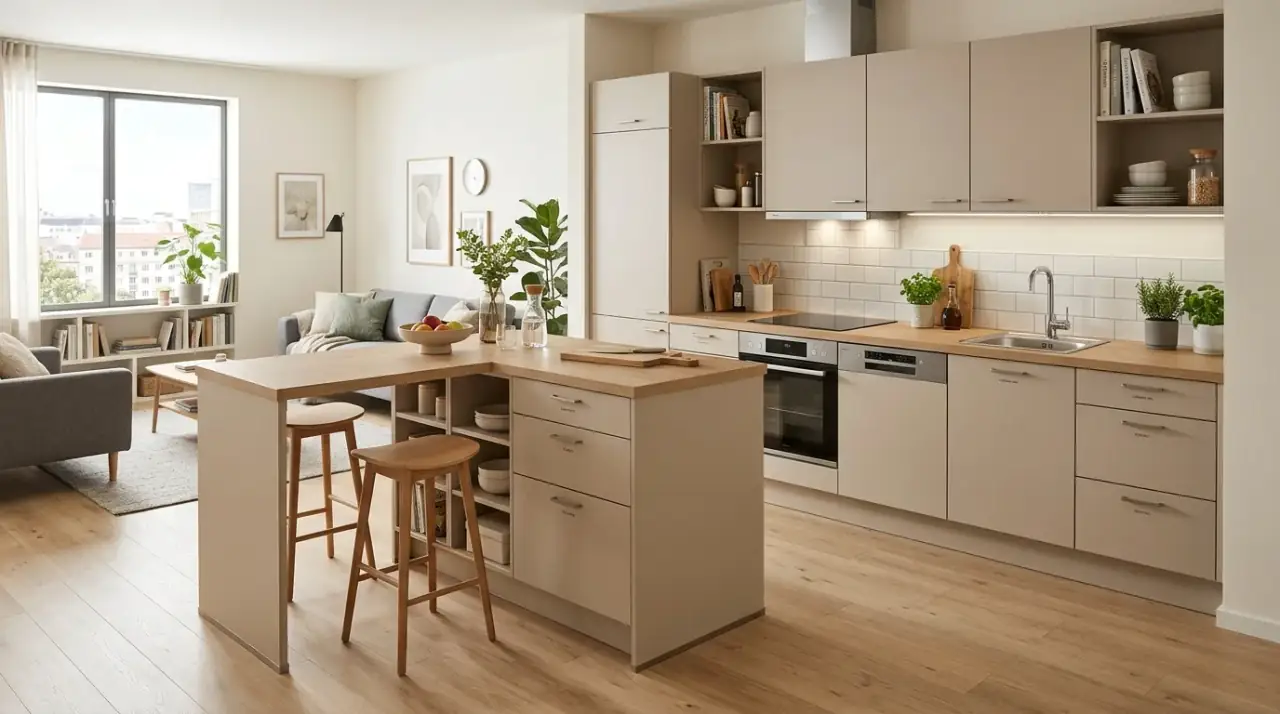
In smaller kitchens, a peninsula often gives you many island benefits without demanding the same circulation space. It can create extra prep room, seating, and definition in open layouts.
Rooted in adaptability and guided by compact planning, a peninsula helps the kitchen one thoughtful extension at a time. The room feels more useful and more connected.
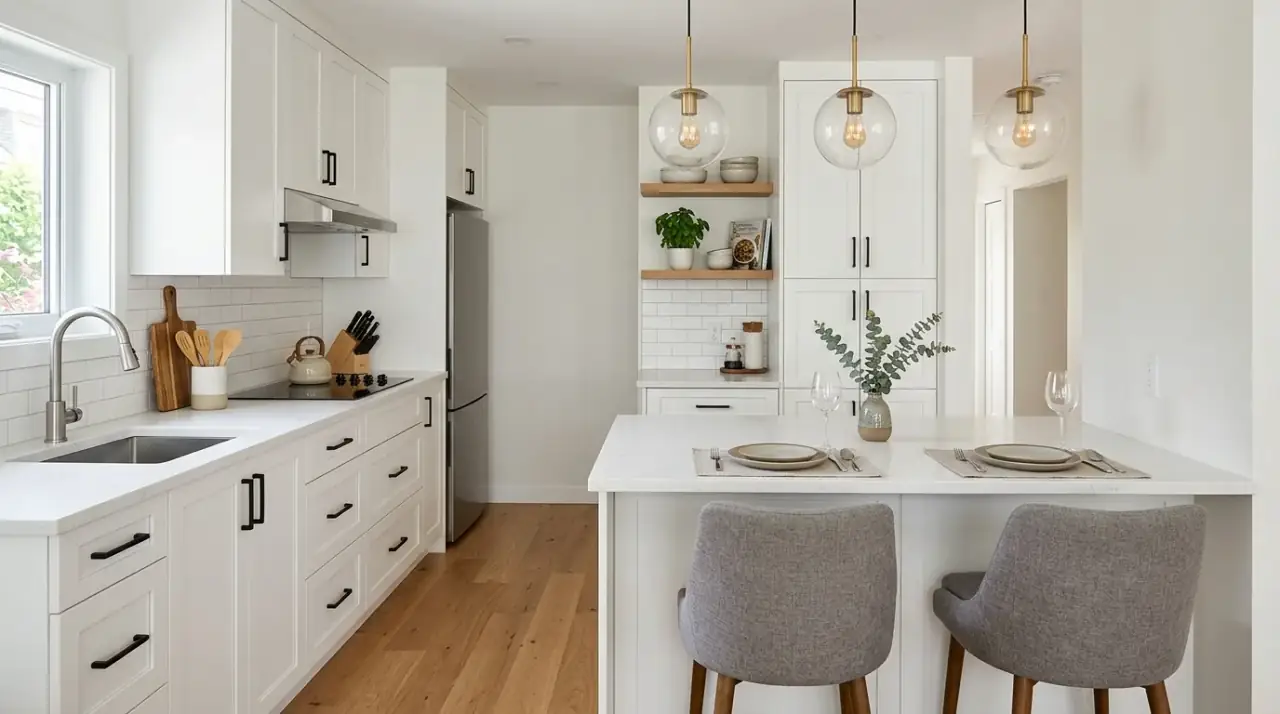
Keep the Sink Near Natural Light
Placing the sink by a window or brighter wall can make a small kitchen feel more pleasant to work in for daily tasks. The layout then supports mood as well as pure efficiency.
Rooted in comfort and guided by everyday use, thoughtful sink placement improves the kitchen one careful decision at a time. The room feels brighter and less confined.
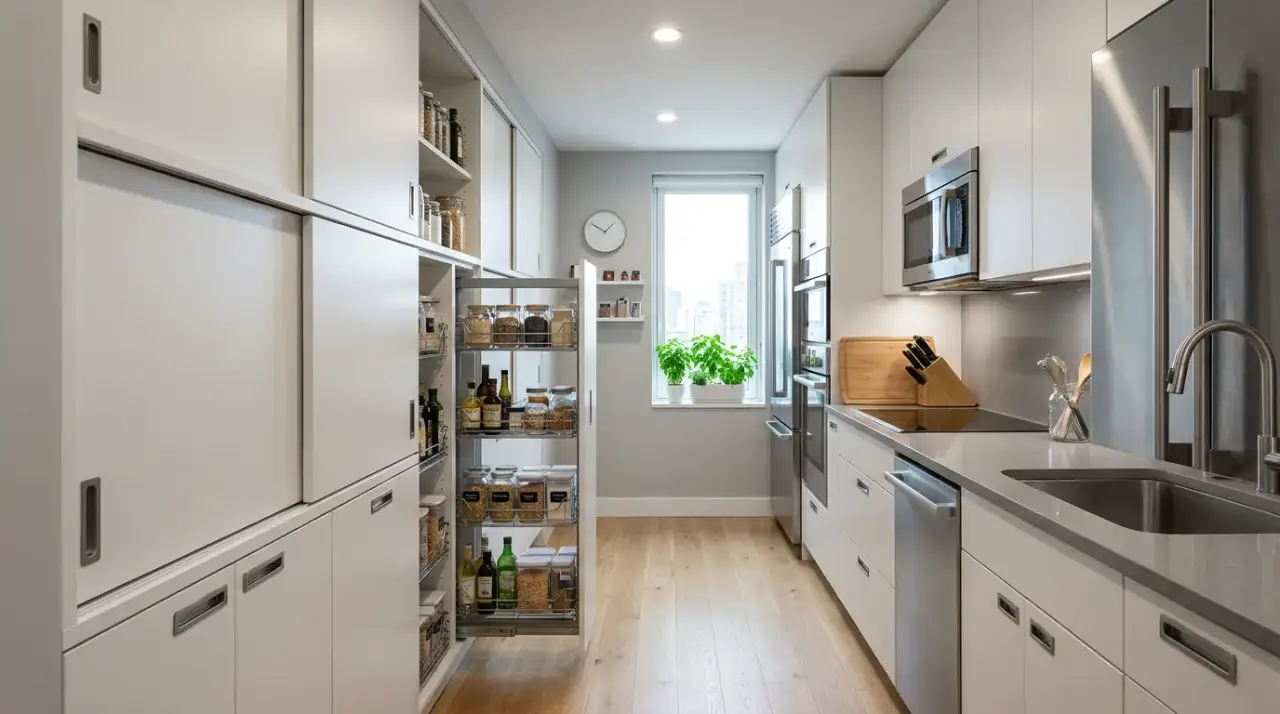
Create a Better Prep Zone Between Sink and Cooktop
One of the most important small-kitchen moves is preserving useful landing and prep space between the sink and stove. That area carries much of the daily workload and should not be interrupted unnecessarily.
Rooted in function and guided by workflow, a good prep zone supports the kitchen one thoughtful inch at a time. The room feels much more efficient in practice.
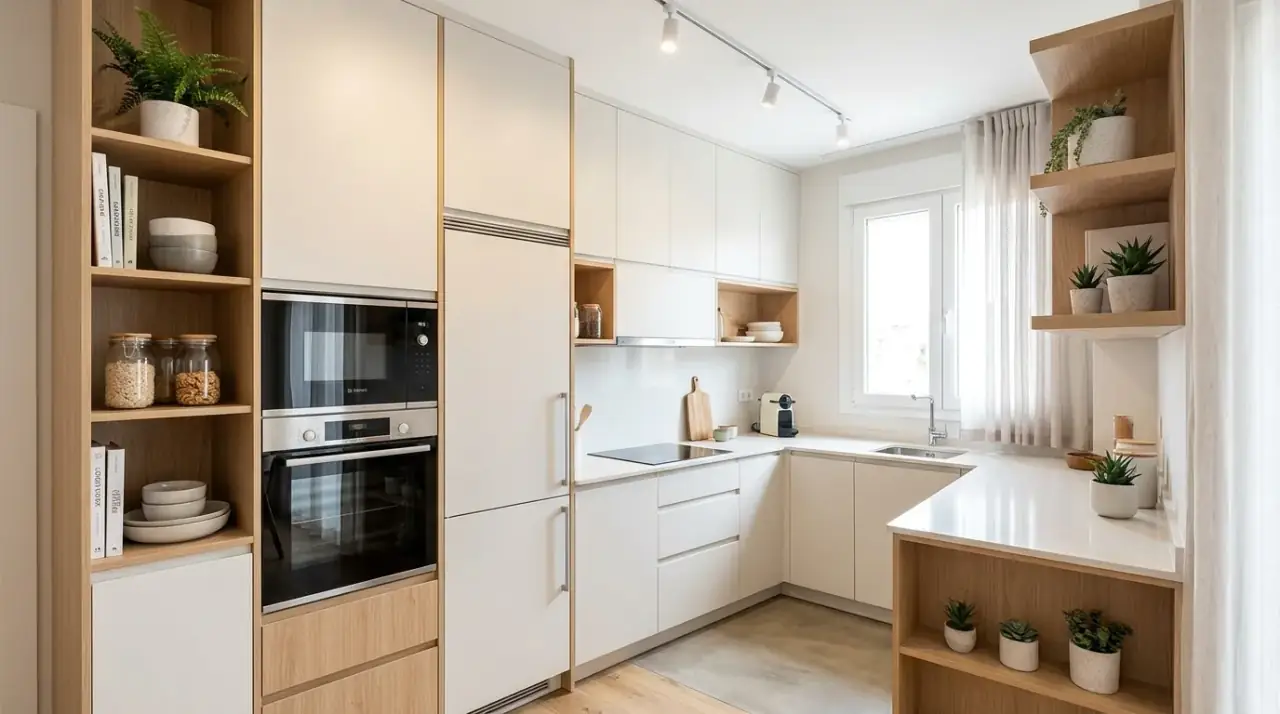
Choose Drawers Over Lower Cabinets Where Possible
Drawers improve access dramatically in small kitchens because they let you reach items without digging through deep cabinets. That means less frustration and better use of every inch.
Rooted in usability and guided by smart storage, drawer-based planning improves the kitchen one thoughtful cabinet at a time. The room feels more capable and more organized.
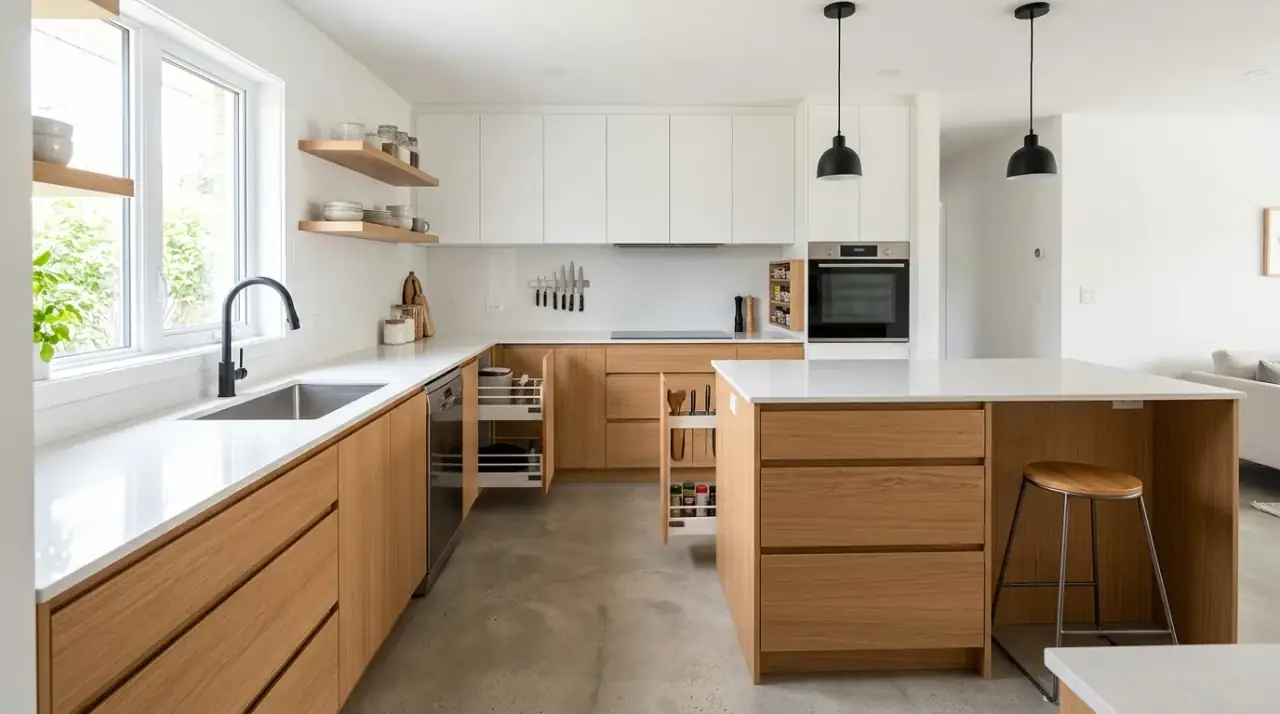
Let Upper Cabinets Go Higher
Running upper cabinets closer to the ceiling can make a small kitchen work harder without taking any extra floor space. The highest shelves can hold seasonal or less-used items while the lower levels stay practical.
Rooted in vertical thinking and guided by efficiency, taller cabinetry expands the kitchen one thoughtful level at a time. The room feels more useful and less constrained.
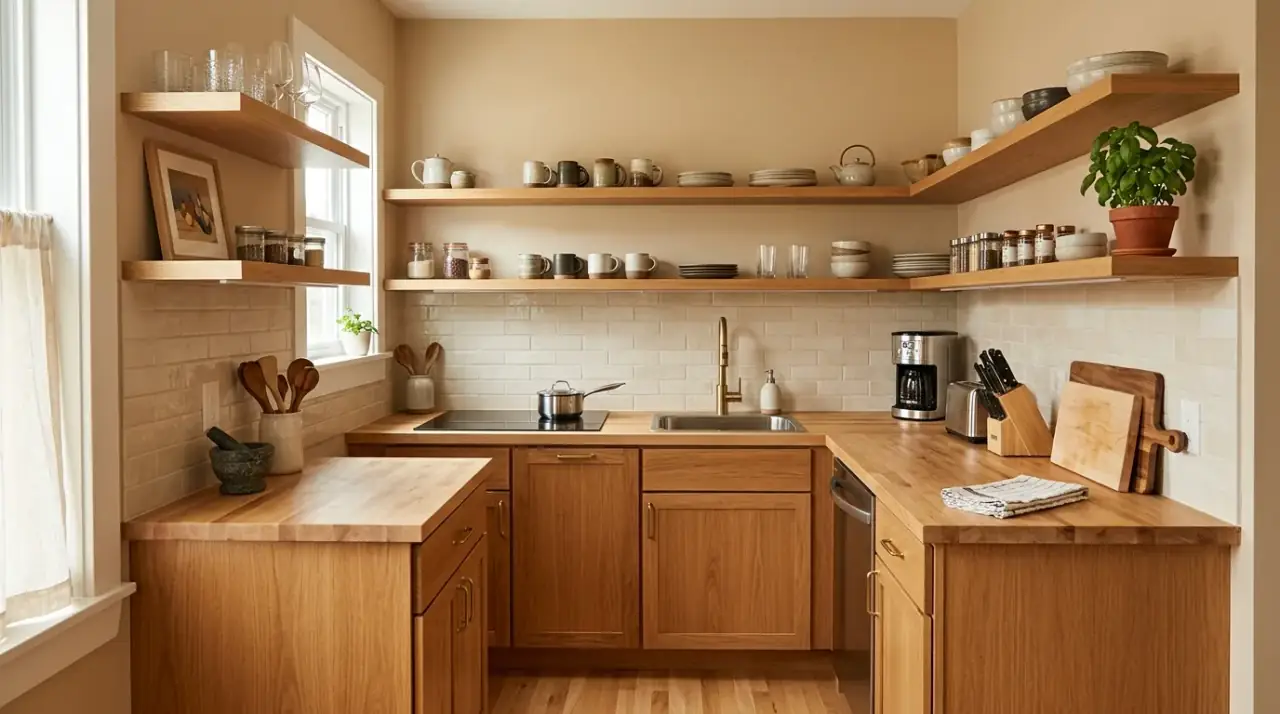
Keep Appliances in Proportion
Oversized appliances can throw off a small kitchen layout quickly by consuming too much counter and circulation space. Choosing the right scale preserves the room's usefulness far better.
Rooted in proportion and guided by practical living, right-sized appliances support the kitchen one thoughtful choice at a time. The room feels more balanced and less cramped.
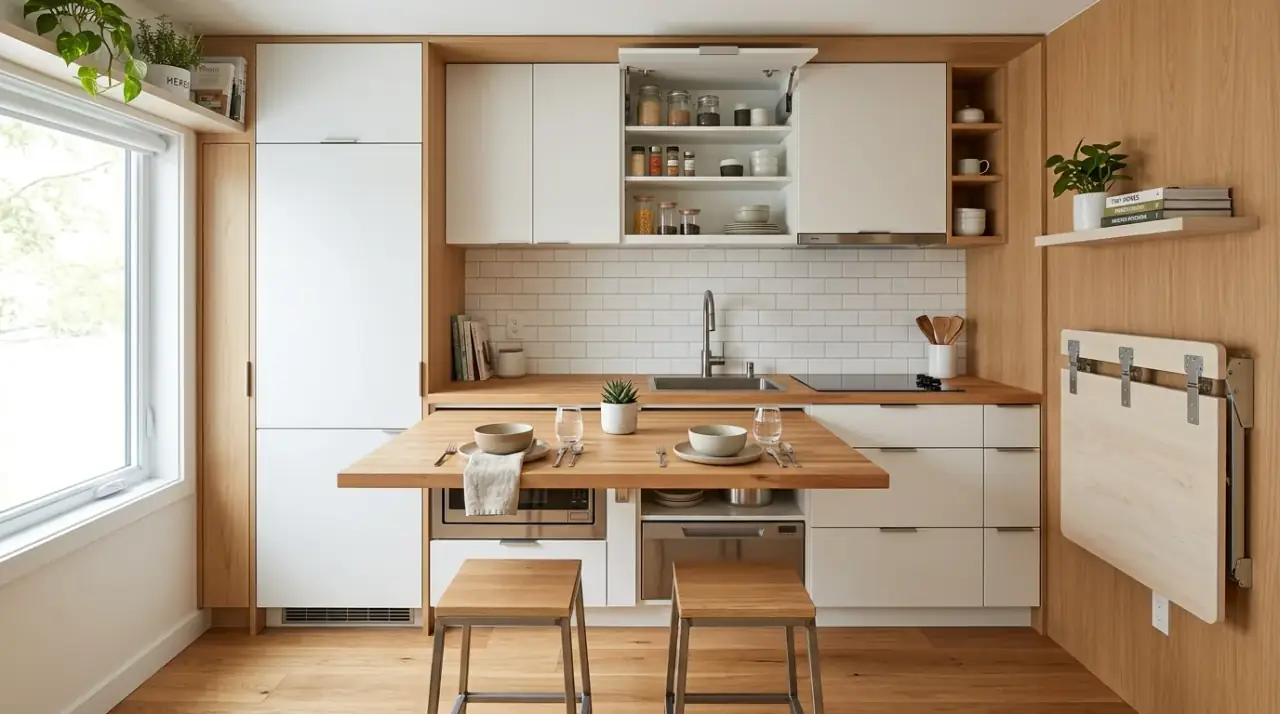
Use Open Sightlines to Borrow Space
Layouts that maintain views into adjacent rooms can make a small kitchen feel larger because the eye is not stopped by heavy partitions or bulky furniture. Visual openness matters almost as much as square footage.
Rooted in openness and guided by spatial clarity, better sightlines enlarge the kitchen one thoughtful decision at a time. The room feels lighter and more expansive.
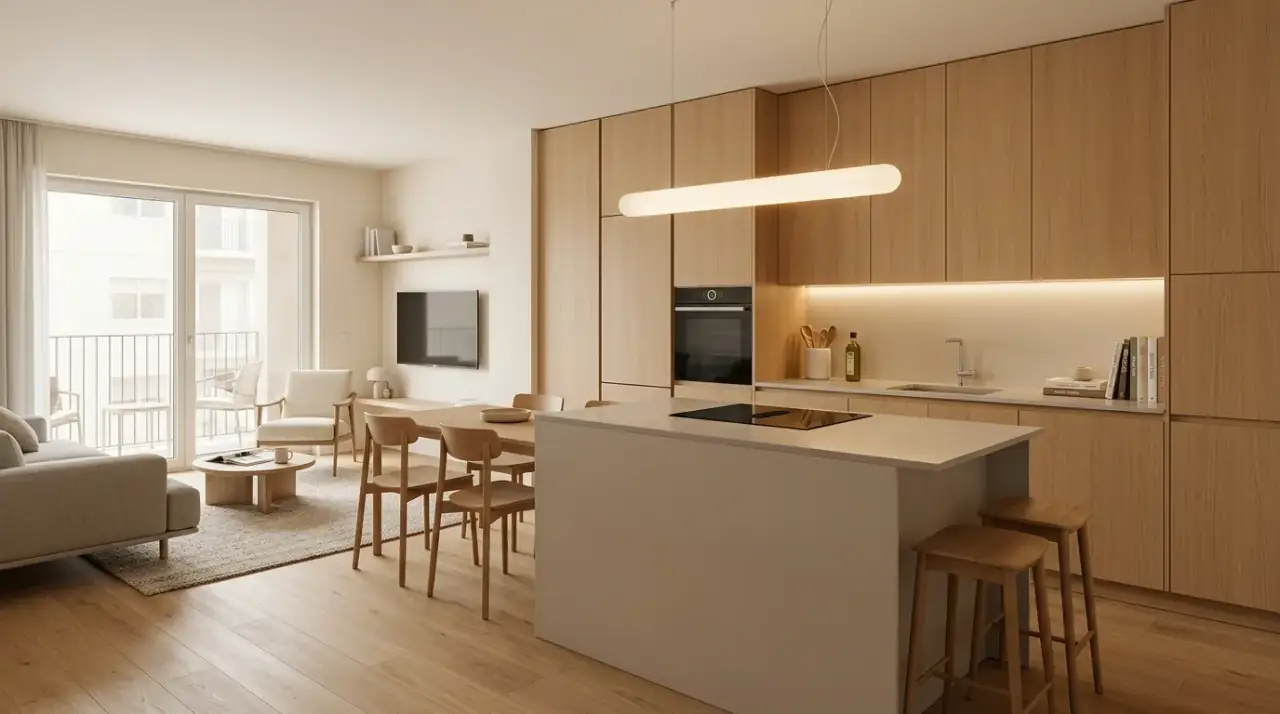
Add a Fold-Down or Pull-Out Surface
When permanent counters are limited, a fold-down or pull-out worktop can create temporary prep space exactly when it is needed. This kind of flexibility can make a very small kitchen far more workable.
Rooted in flexibility and guided by compact living, expandable surfaces help the kitchen one thoughtful move at a time. The room feels more responsive and less limiting.
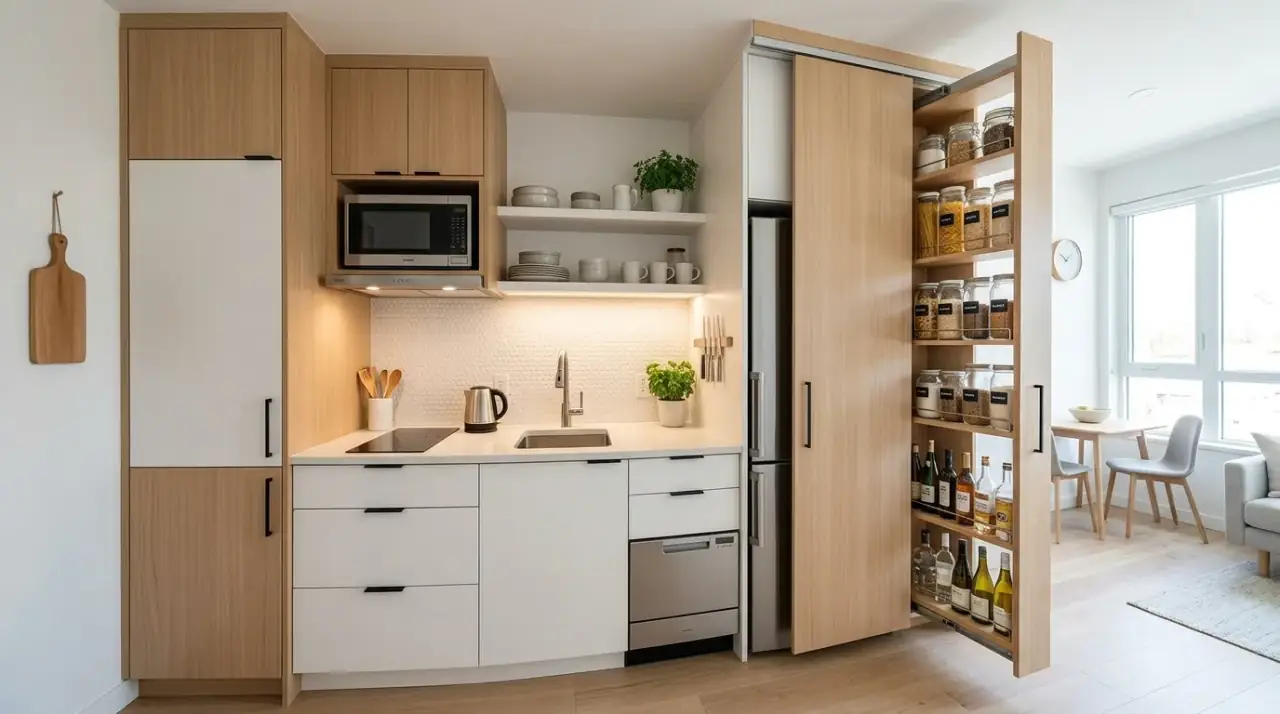
Light Finishes Where the Room Needs Lift
A small layout often performs better visually when the most enclosing surfaces stay lighter and more reflective. This can keep the plan from feeling boxed in, especially in kitchens with less daylight.
Rooted in brightness and guided by visual ease, lighter finishes open the kitchen one thoughtful surface at a time. The room feels more generous and calmer.
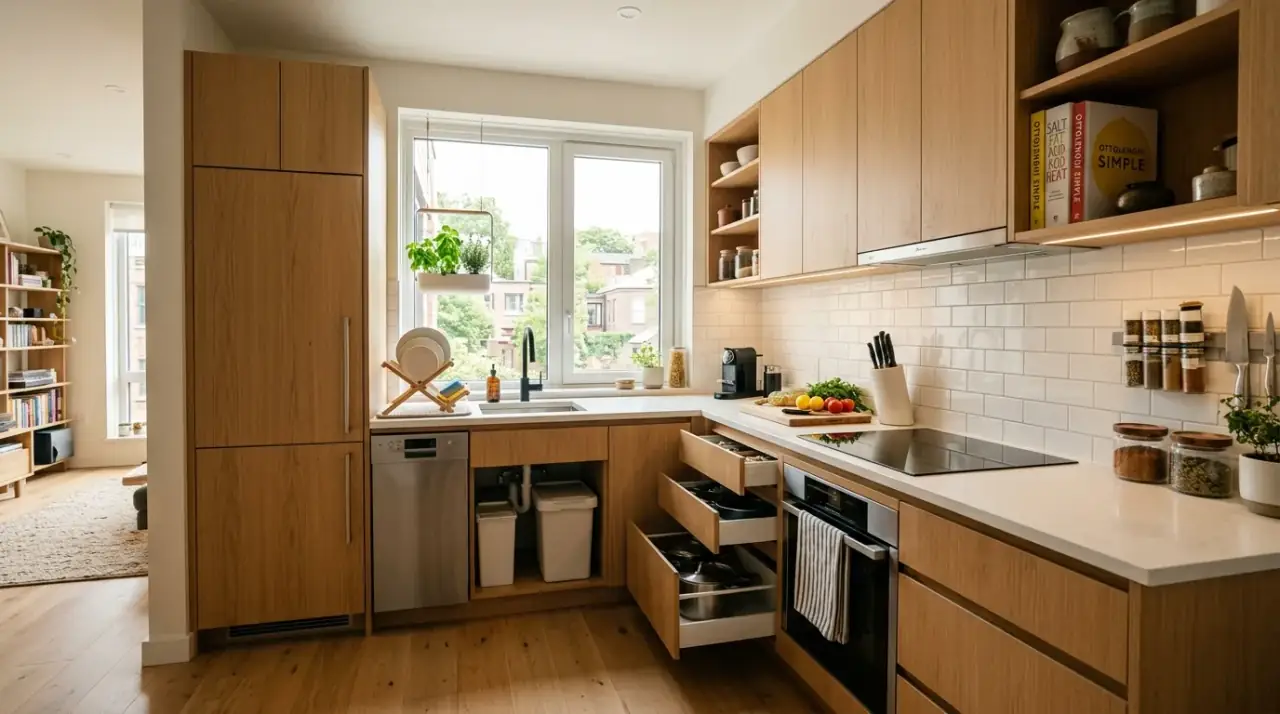
A Small Layout Planned Around Real Life
The most effective small kitchens work because every layout choice responds to how people actually cook, clean, store, and move rather than following a generic template. When the plan respects daily habits, the room becomes much easier to enjoy.
Rooted in creativity and guided by style, a smart small-space kitchen layout can turn a tight room into a warm and welcoming home feature one thoughtful detail at a time. That practical intelligence is what creates real efficiency.