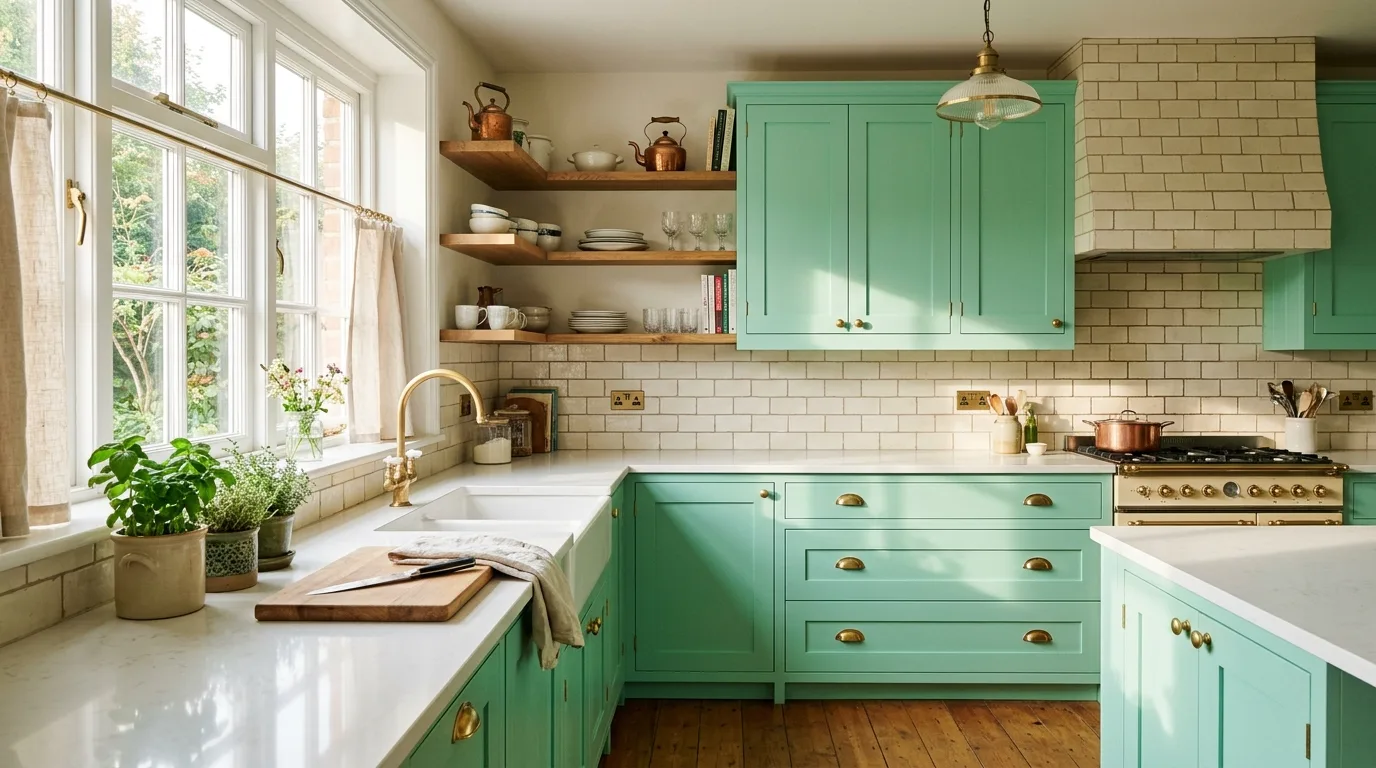
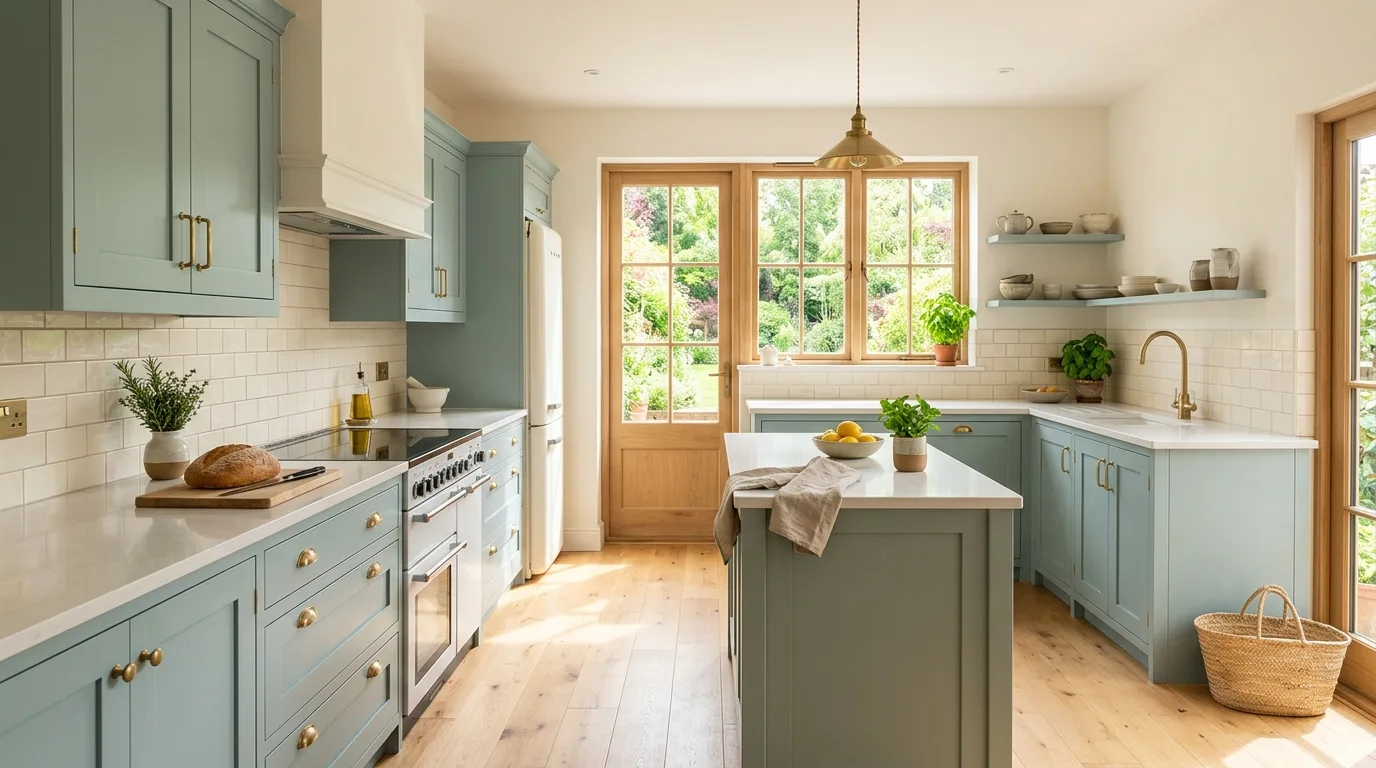
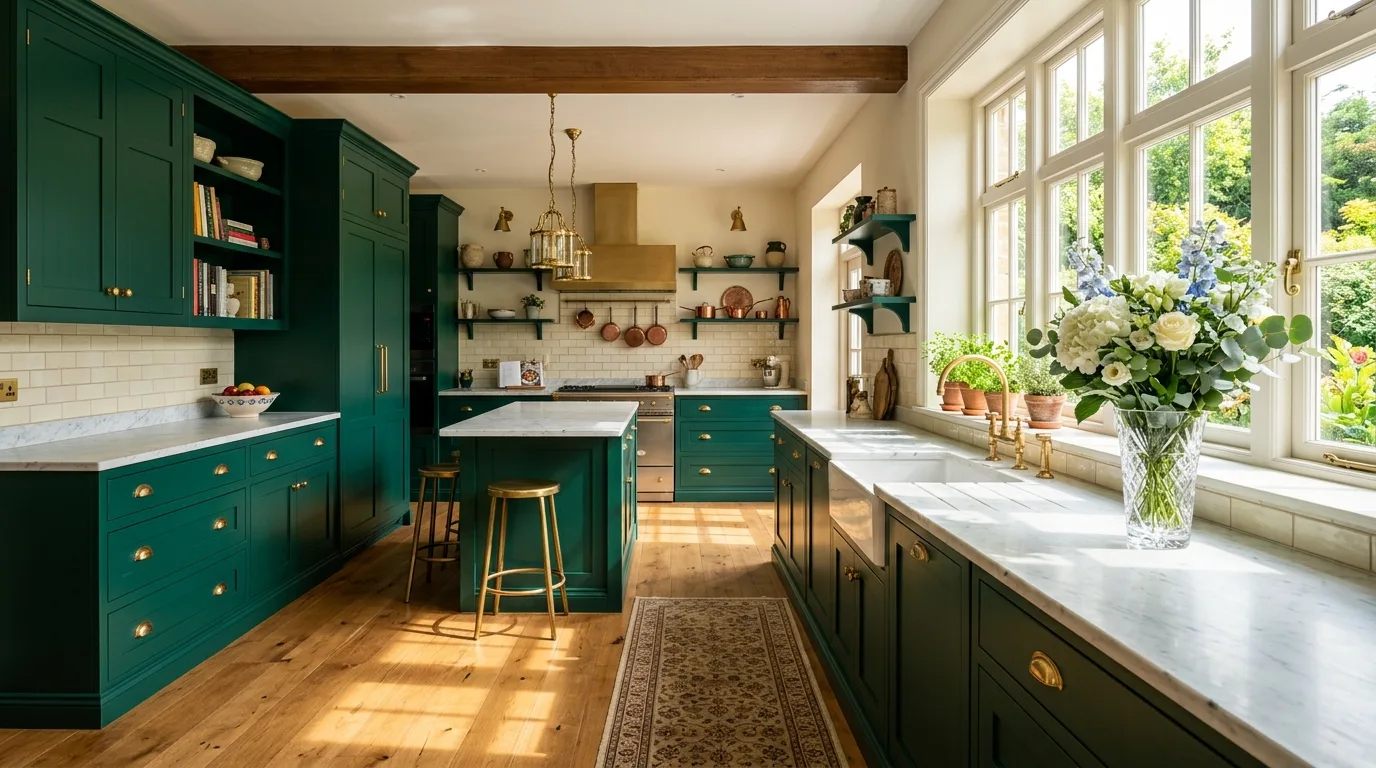
Two tone cabinets can do much more than add contrast. They can change how a kitchen feels proportionally, help different zones stand apart, and bring color into the room in a way that still feels balanced.
These ideas focus on combinations that feel thoughtful rather than random. If you want cabinetry with more dimension and a little more design confidence, a strong two tone palette is one of the best places to begin.
Design ideas to borrow from this palette
Use the ideas below to compare hardware, countertop, flooring, and styling combinations that change how the cabinet color reads in a finished kitchen.
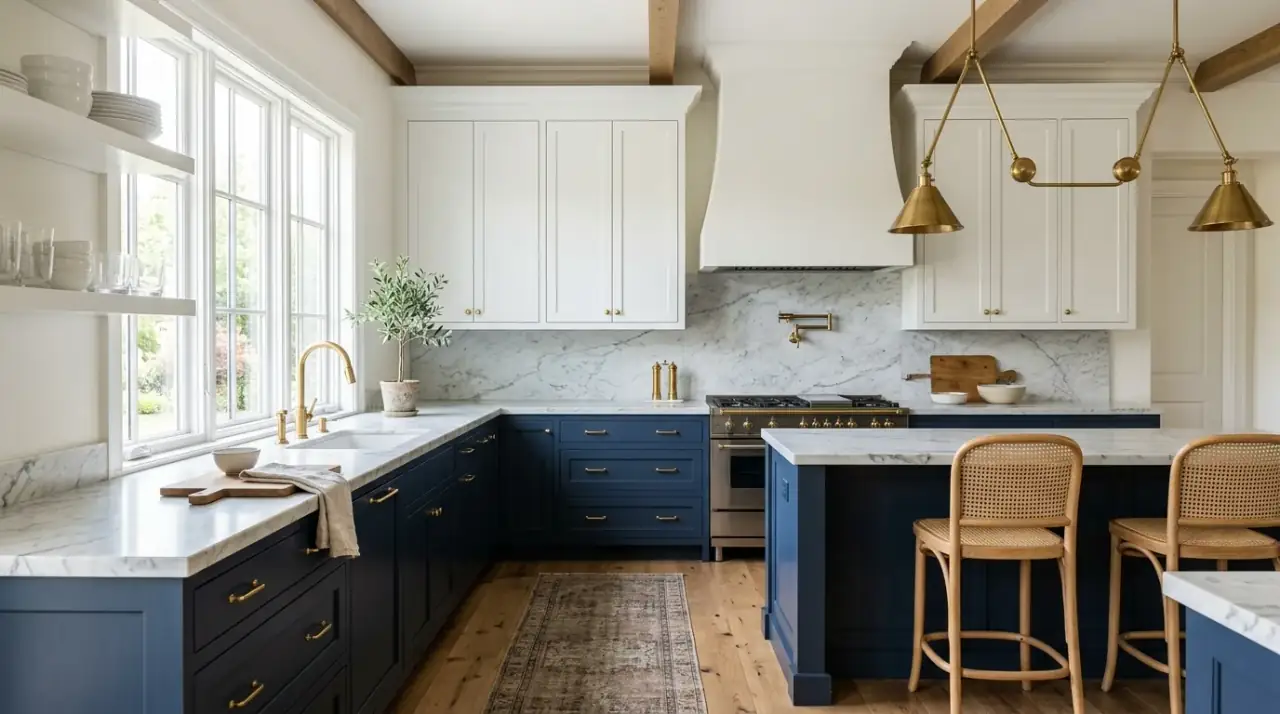
White Uppers and Deep Blue Lowers for Classic Contrast
This pairing remains popular because it gives the kitchen depth at the base while keeping the upper half of the room bright and open. The contrast feels tailored rather than loud, which makes it suitable for both traditional and more updated spaces.
Rooted in balance and guided by structure, white and deep blue cabinets can turn a kitchen into a warm and welcoming room one thoughtful detail at a time. The success of the combination comes from how clearly it divides weight and lightness.
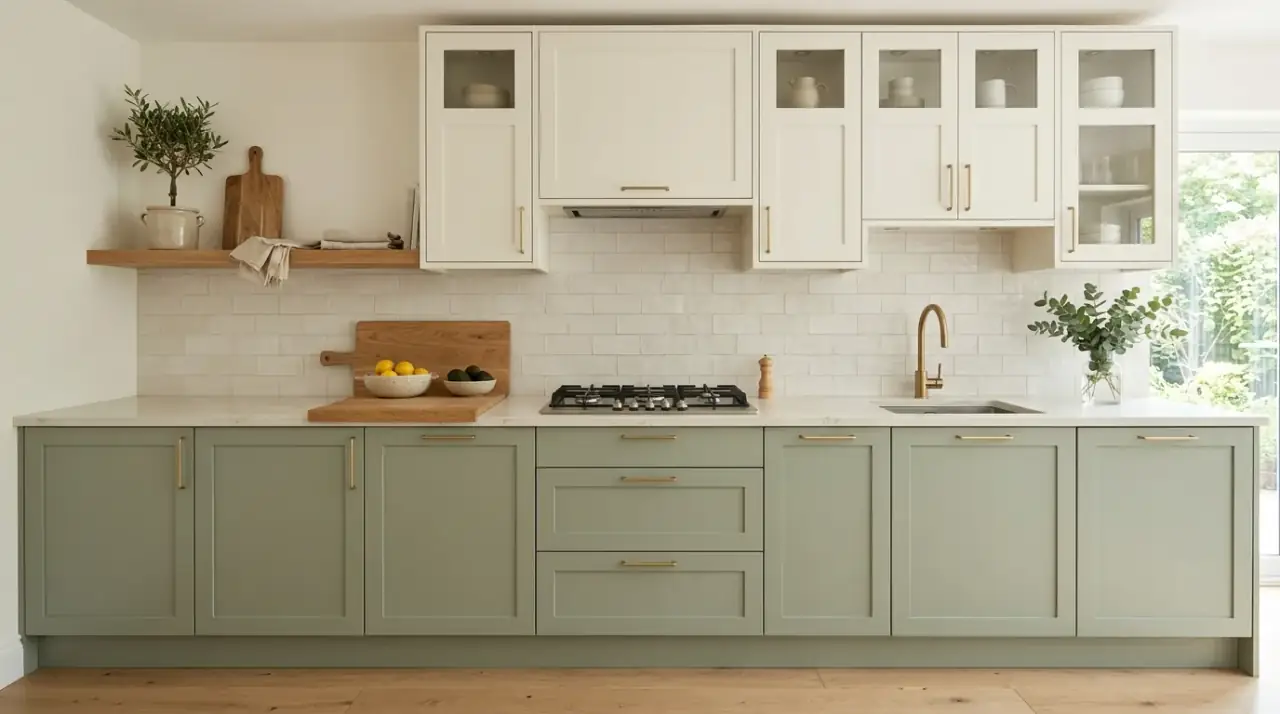
Warm Wood and Painted Cabinets for Natural Layering
Combining natural wood with a painted cabinet color brings texture and personality at the same time. The wood keeps the kitchen grounded while the painted section introduces mood, whether that is green, blue, taupe, or soft black.
Rooted in warmth and guided by material contrast, wood and paint can help a kitchen feel more layered and more welcoming one thoughtful detail at a time. It is a pairing that often feels custom because no two grain-and-color combinations read exactly alike.
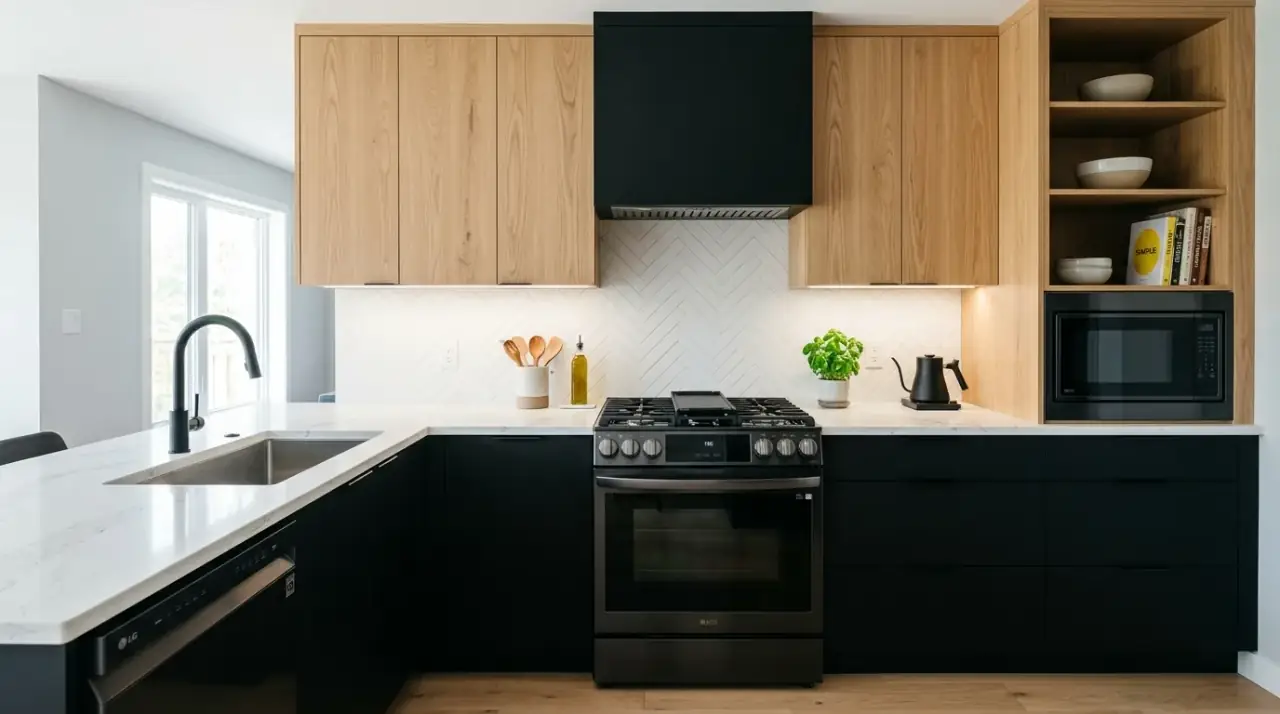
Greige and White for a Softer Two Tone Effect
Not every two tone kitchen needs a dramatic shift between upper and lower cabinets. Greige and white create a gentler version of the look, offering separation and depth while keeping the overall mood quiet and easy to live with.
Rooted in subtlety and guided by tonal harmony, greige and white can help a kitchen feel more serene and more welcoming one thoughtful detail at a time. Soft contrast often creates a more timeless result than extreme opposites.
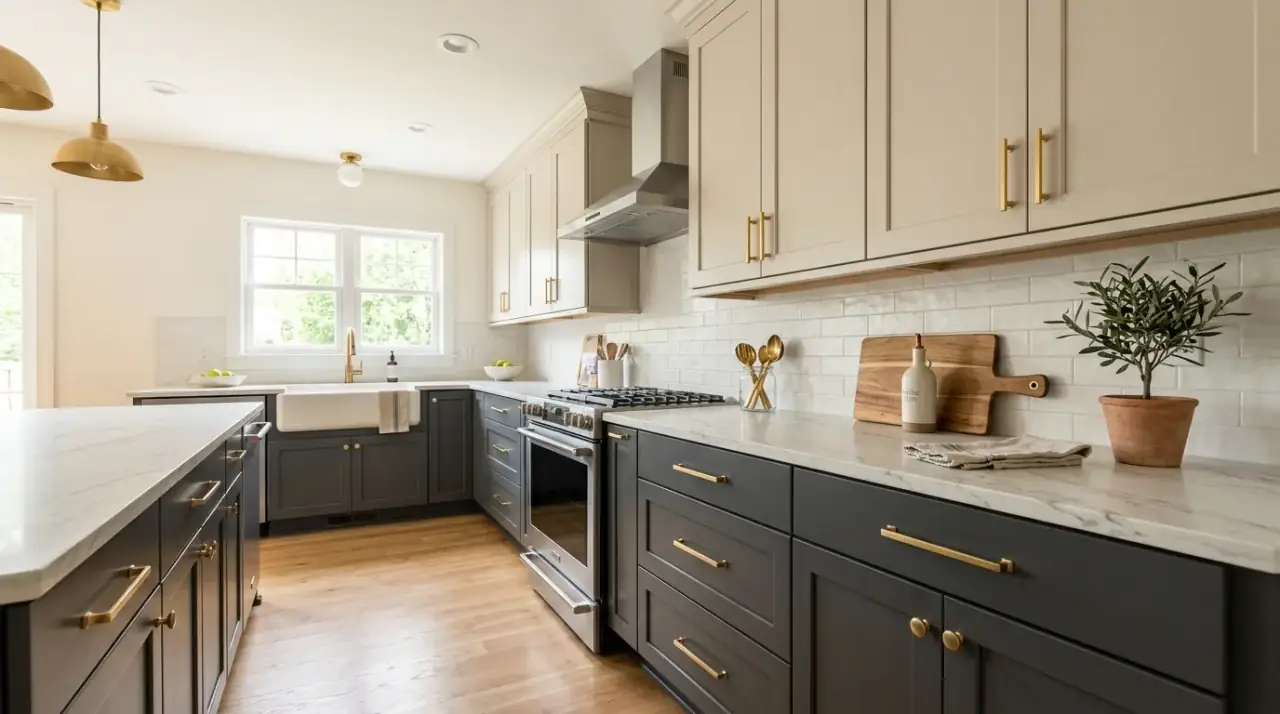
Black Island with Lighter Perimeter Cabinets
Using a darker island against lighter wall cabinetry is one of the easiest ways to introduce two tone contrast without committing every cabinet line to color. The island becomes a focal point while the rest of the kitchen stays airy.
Rooted in emphasis and guided by proportion, a darker island can help a kitchen feel more dynamic and more welcoming one thoughtful detail at a time. The contrast works because it gives the room a center without overwhelming the perimeter.
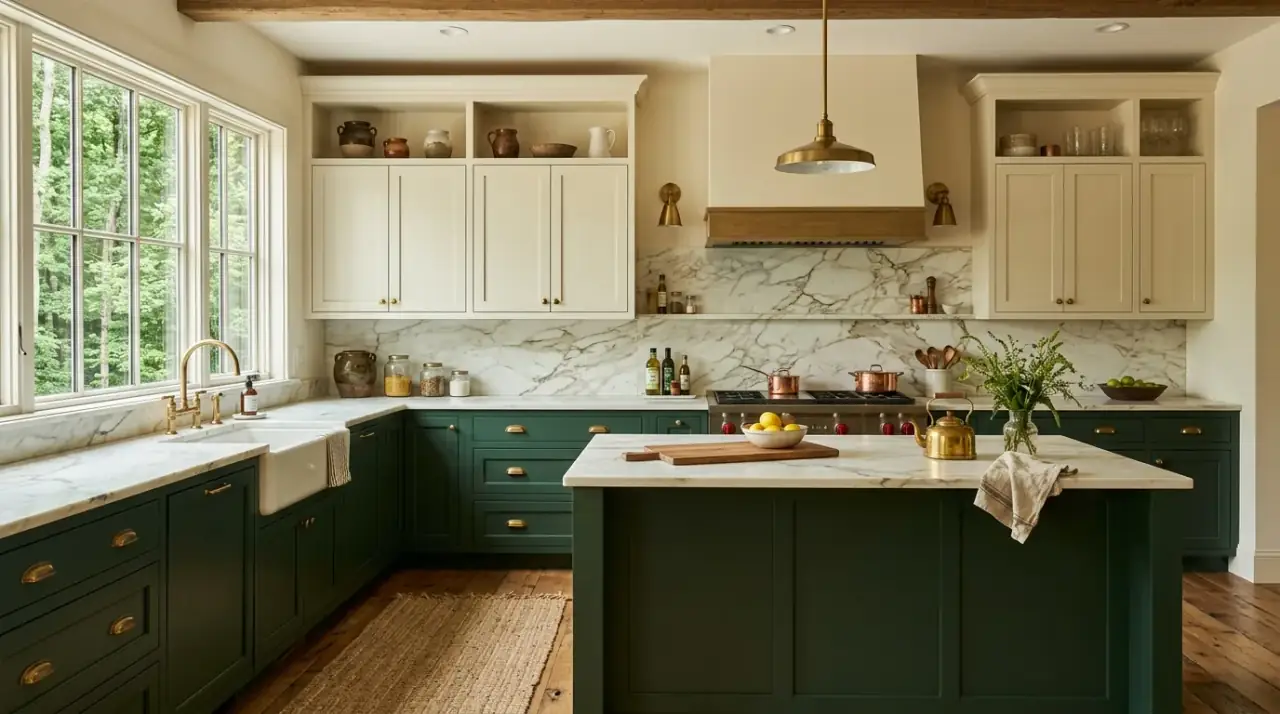
Sage Green and Cream for Quiet Freshness
Sage and cream offer a softer interpretation of two tone cabinetry because both colors feel gentle while still clearly distinct. The combination suits kitchens that want warmth, natural influence, and a calming atmosphere.
Rooted in softness and guided by natural color, sage and cream can help a kitchen feel fresher and more welcoming one thoughtful detail at a time. The mood stays peaceful because neither tone tries to overpower the other.
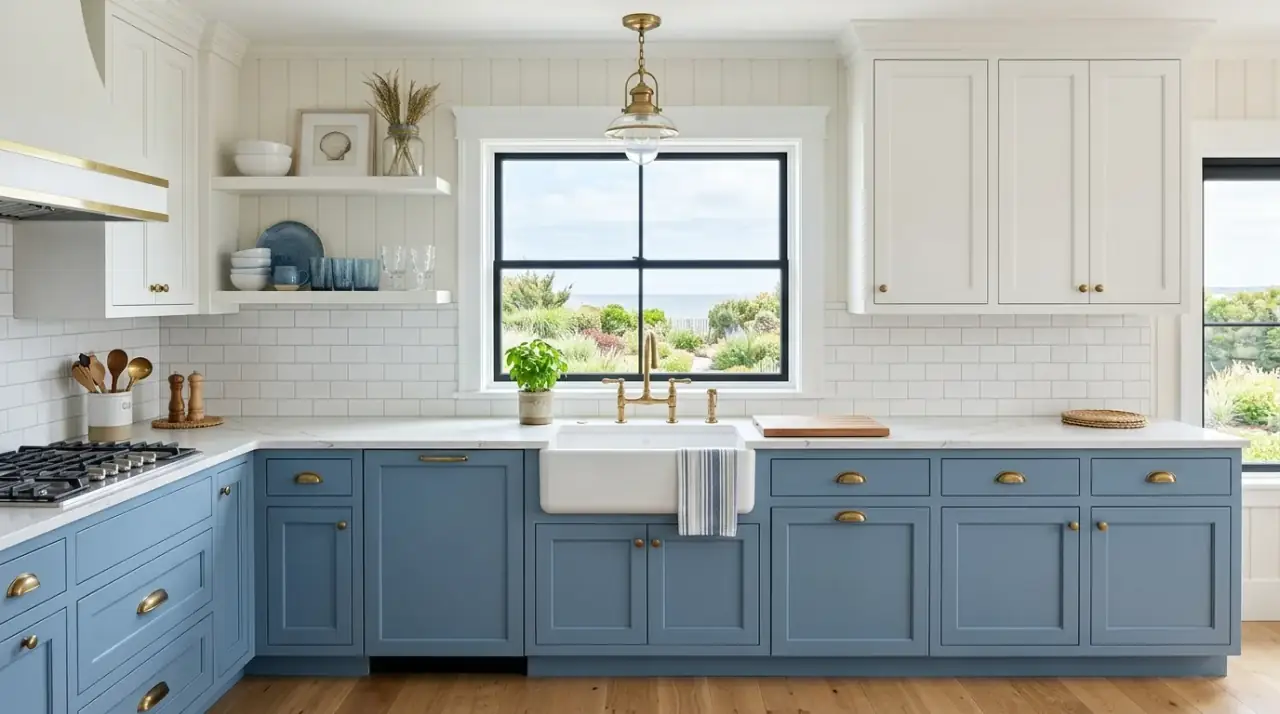
Navy and Walnut for Rich Sophistication
Navy painted cabinets paired with walnut bring a level of depth that feels especially refined. The cool richness of the blue and the warmer grain of the wood play against each other beautifully, creating a kitchen with a more tailored presence.
Rooted in richness and guided by refined contrast, navy and walnut can help a kitchen feel more luxurious and more welcoming one thoughtful detail at a time. This is the kind of pairing that carries color boldly while still reading mature.
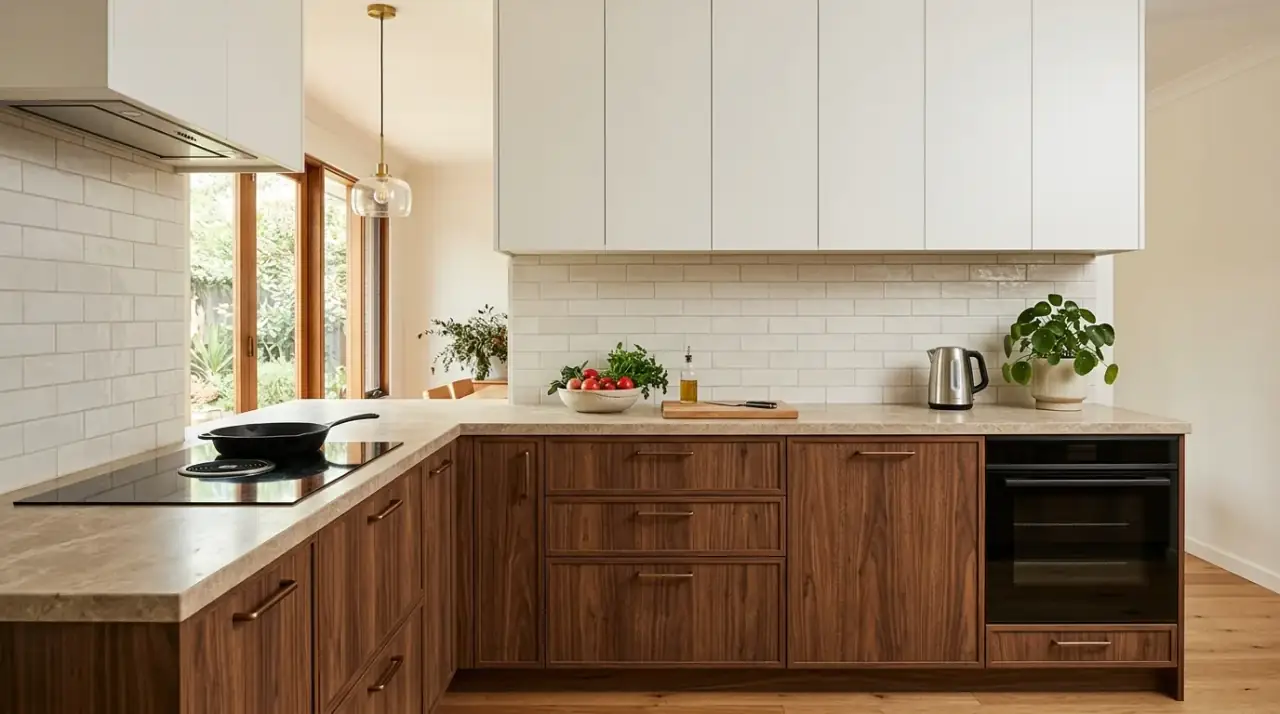
Dusty Blue and Light Oak for an Airy Modern Feel
A dusty blue cabinet color can feel especially fresh when paired with pale oak because both tones carry softness without fading into one another. The pairing is modern but gentle, which makes it appealing in kitchens that want color without heaviness.
Rooted in lightness and guided by soft contrast, dusty blue and light oak can help a kitchen feel more open and more welcoming one thoughtful detail at a time. The wood keeps the color human, while the color keeps the wood from disappearing.
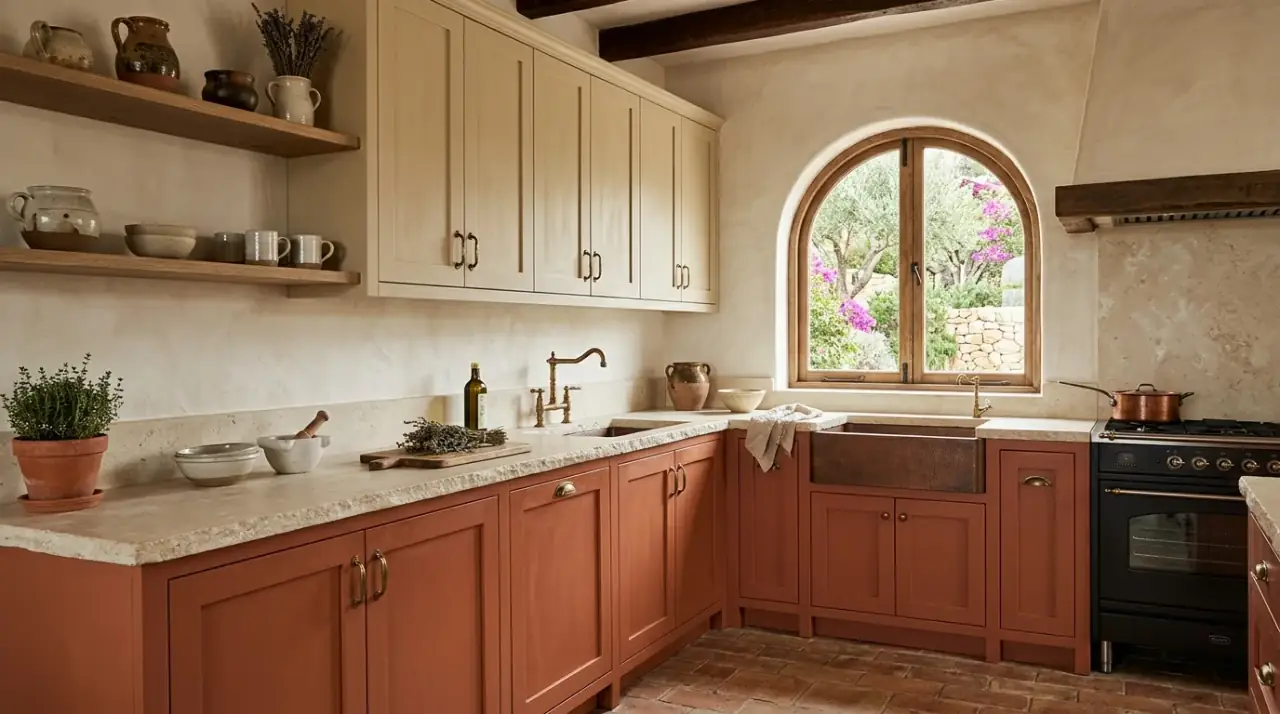
Taupe and Charcoal for an Elevated Neutral Palette
Two tone does not have to mean bright and pale against dark and bold. Taupe and charcoal create a deeper neutral conversation, bringing subtle distinction and strong mood to the kitchen without relying on obvious color statements.
Rooted in sophistication and guided by understated drama, taupe and charcoal can help a kitchen feel more composed and more welcoming one thoughtful detail at a time. Neutral palettes can still feel layered when the values are chosen thoughtfully.
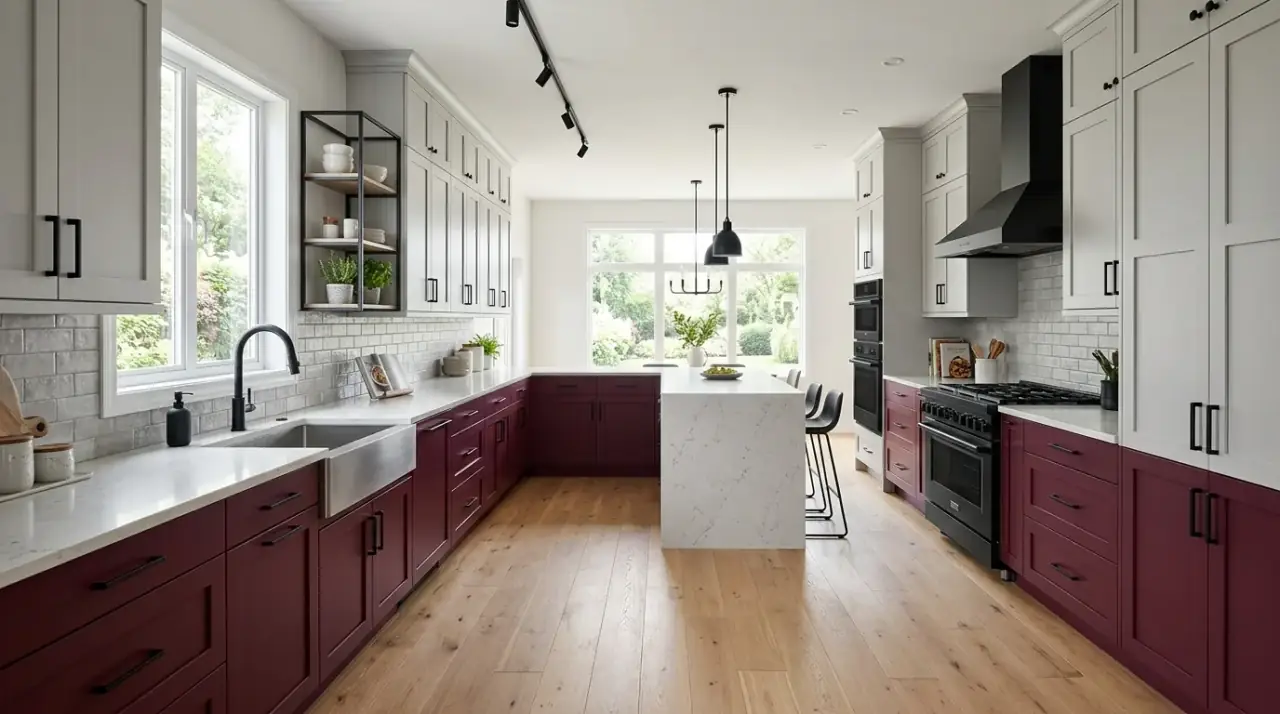
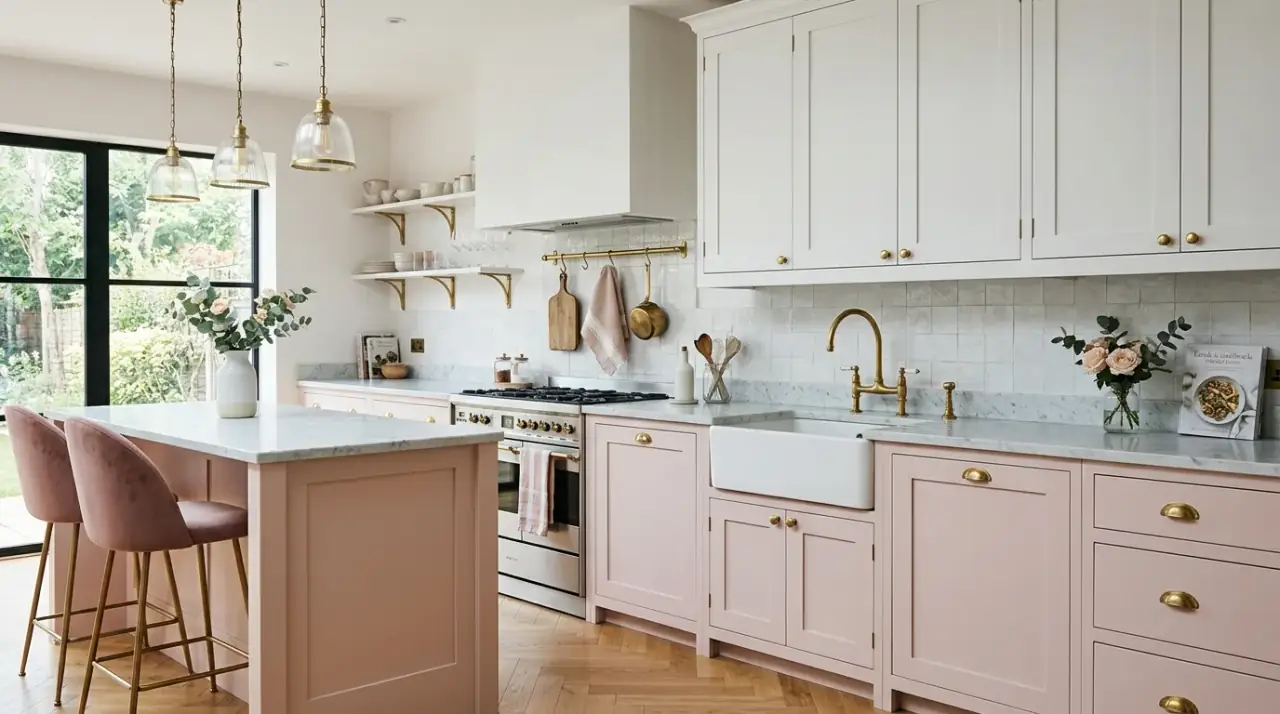
Blush and White for a Soft Unexpected Twist
A pale blush paired with white gives two tone cabinetry a lighter and less expected personality. The effect is warm, soft, and quietly distinctive, especially in kitchens that lean feminine, romantic, or gently modern.
Rooted in creativity and guided by delicate color, blush and white can help a kitchen feel more personal and more welcoming one thoughtful detail at a time. Unexpected pairings often work best when they stay gentle instead of trying to shock.
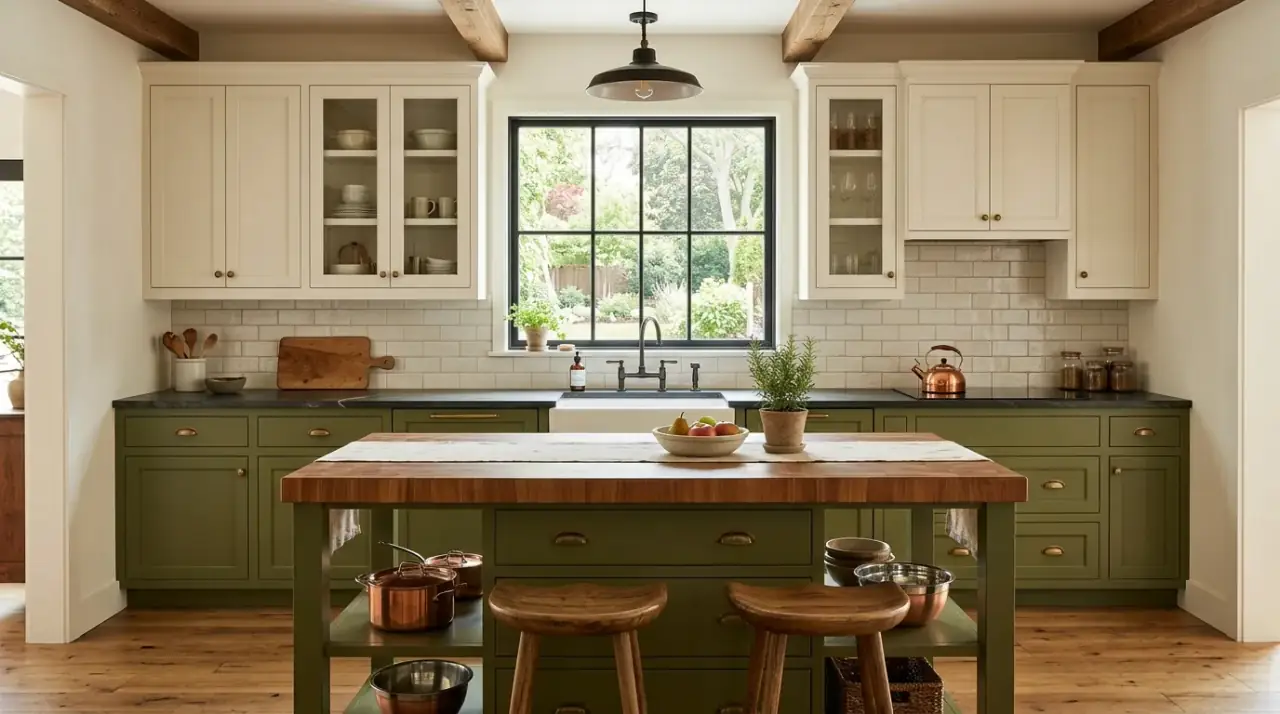
Forest Green and White Oak for Earthy Depth
Forest green carries enough weight to make white oak feel even lighter and more textured by comparison. Together they create a kitchen that feels connected to nature while still looking considered and contemporary.
Rooted in earthy color and guided by tactile contrast, forest green and white oak can help a kitchen feel more grounded and more welcoming one thoughtful detail at a time. The pairing succeeds because it feels strong without becoming harsh.
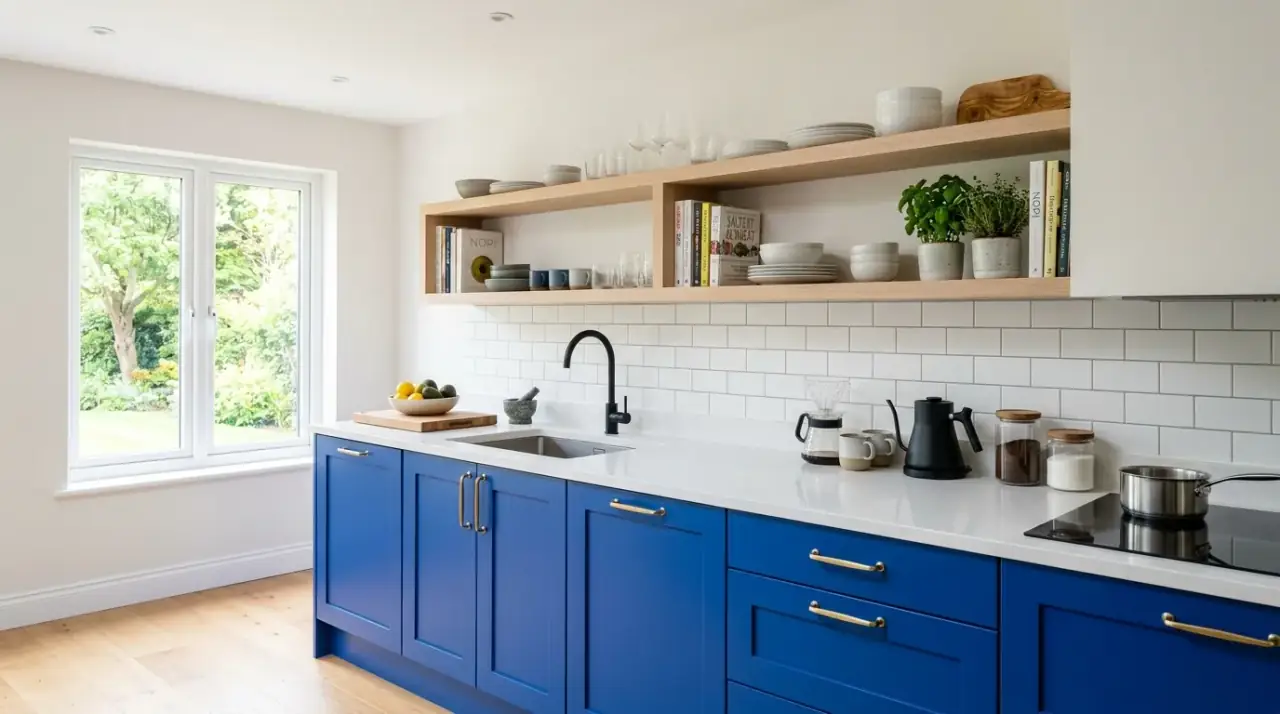
Soft Black and Mushroom for Modern Warmth
Soft black and mushroom create a modern palette that still feels residential because the darker tone is tempered by the gentle warmth of the lighter one. It is an effective way to add contrast without losing comfort.
Rooted in modern balance and guided by warmth, soft black and mushroom can help a kitchen feel more tailored and more welcoming one thoughtful detail at a time. Dark colors become easier to live with when they are softened by earthier companions.
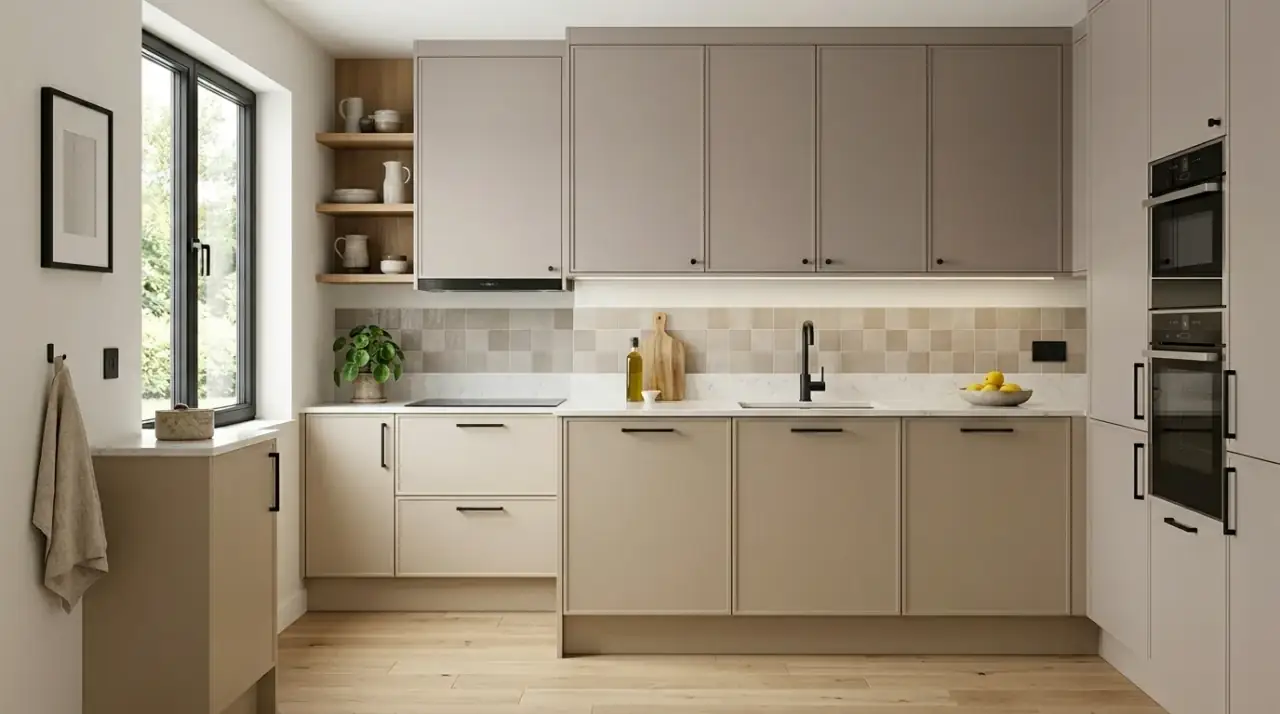
Use One Color for Tall Units and Another for Base Cabinets
Sometimes the smartest way to use two tones is not by separating uppers from lowers, but by assigning one color to tall storage and another to the working base line. This approach can shape the room more intentionally and make zones easier to read.
Rooted in planning and guided by visual structure, zoned cabinet colors can help a kitchen feel more organized and more welcoming one thoughtful detail at a time. Two tone becomes even stronger when it responds to layout rather than just decoration.
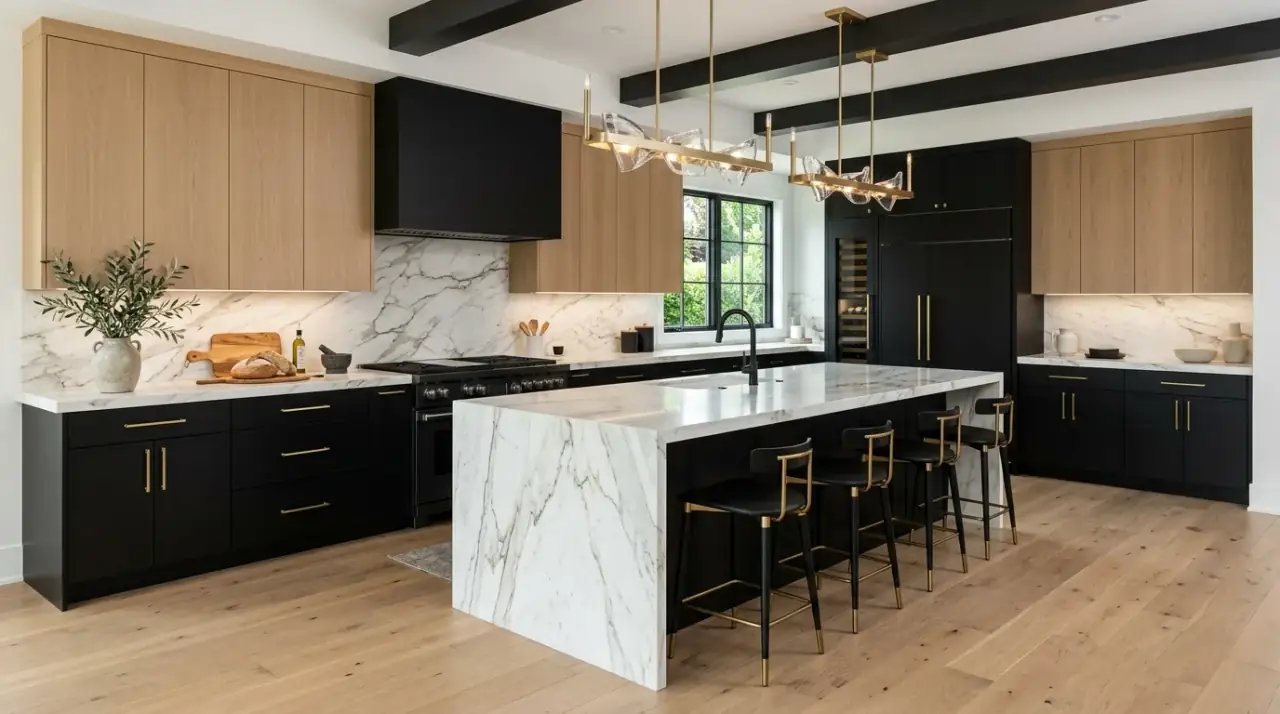
Keep the Countertop and Backsplash Working as the Bridge
In a two tone kitchen, the countertop and backsplash often determine whether the colors feel unified or disconnected. Choosing a surface that connects both cabinet tones helps the whole composition settle into one coherent room.
Rooted in continuity and guided by material balance, bridging surfaces can help a two tone kitchen feel smoother and more welcoming one thoughtful detail at a time. The supporting finishes are often what make bolder cabinet decisions truly successful.
Two Tone Cabinets Bring Depth Without Losing Flexibility
The appeal of two tone cabinetry lies in its ability to bring contrast, personality, and architectural emphasis into the kitchen while still leaving room for many different styles. It is a flexible approach that can feel dramatic, subtle, classic, or contemporary depending on the palette.
Rooted in creativity and guided by style, two tone kitchen cabinets can turn an ordinary cooking space into a warm and welcoming room one thoughtful detail at a time. The right combination gives the kitchen more depth without taking away its livability.