Corners are some of the hardest parts of a kitchen to use well because they often create deep blind spots, awkward circulation, or surfaces that never quite function naturally. The best solutions make these tricky areas more accessible instead of simply trying to hide them.
These ideas focus on storage, seating, shelving, and layout moves that help corners become assets instead of wasted inches. If your kitchen has a problem spot where the room seems to stop working properly, the corner is often the right place to rethink first.
Design ideas to borrow from this palette
Use the ideas below to compare hardware, countertop, flooring, and styling combinations that change how the cabinet color reads in a finished kitchen.
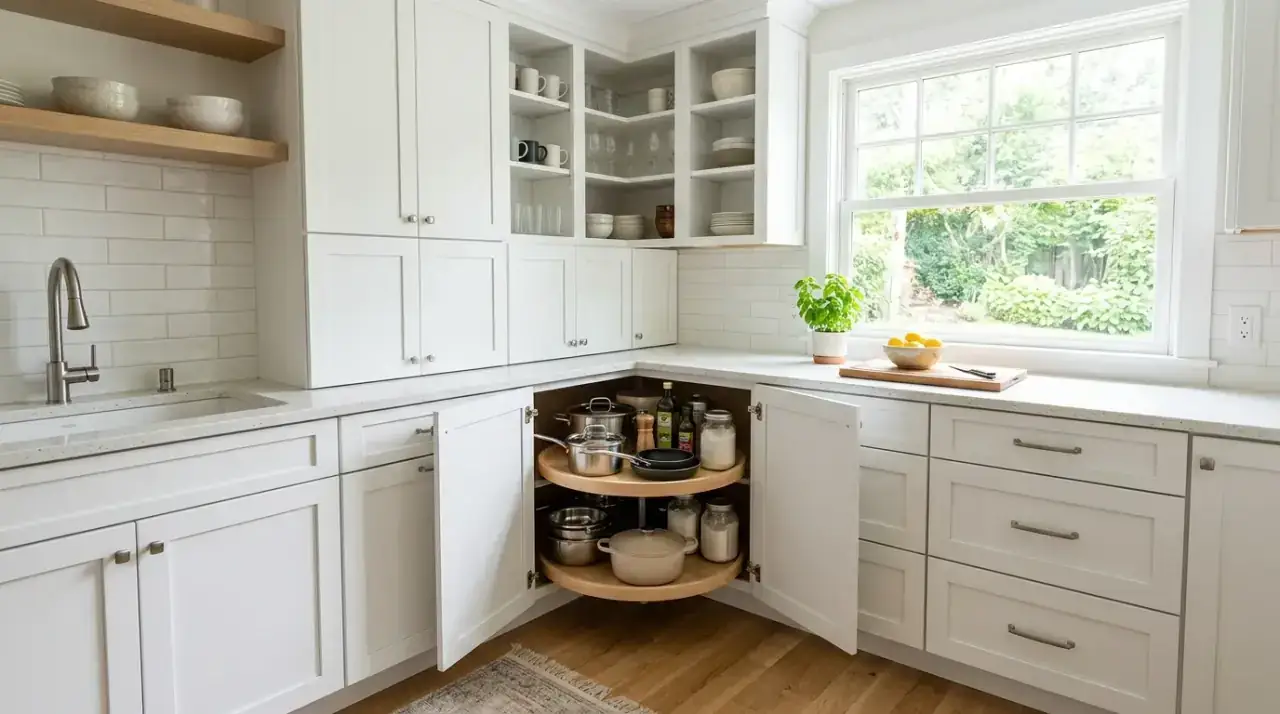
Use a Lazy Susan to Make Deep Storage Reachable
A rotating corner insert can rescue some of the most frustrating cabinet space in the kitchen by bringing dishes, oils, or pantry items forward instead of trapping them in the back. It is one of the simplest ways to make a blind corner actually usable.
Rooted in practicality and guided by smart access, a lazy Susan can turn an awkward kitchen corner into a warm and welcoming working zone one thoughtful detail at a time. The improvement feels immediate because the storage finally cooperates with daily life.
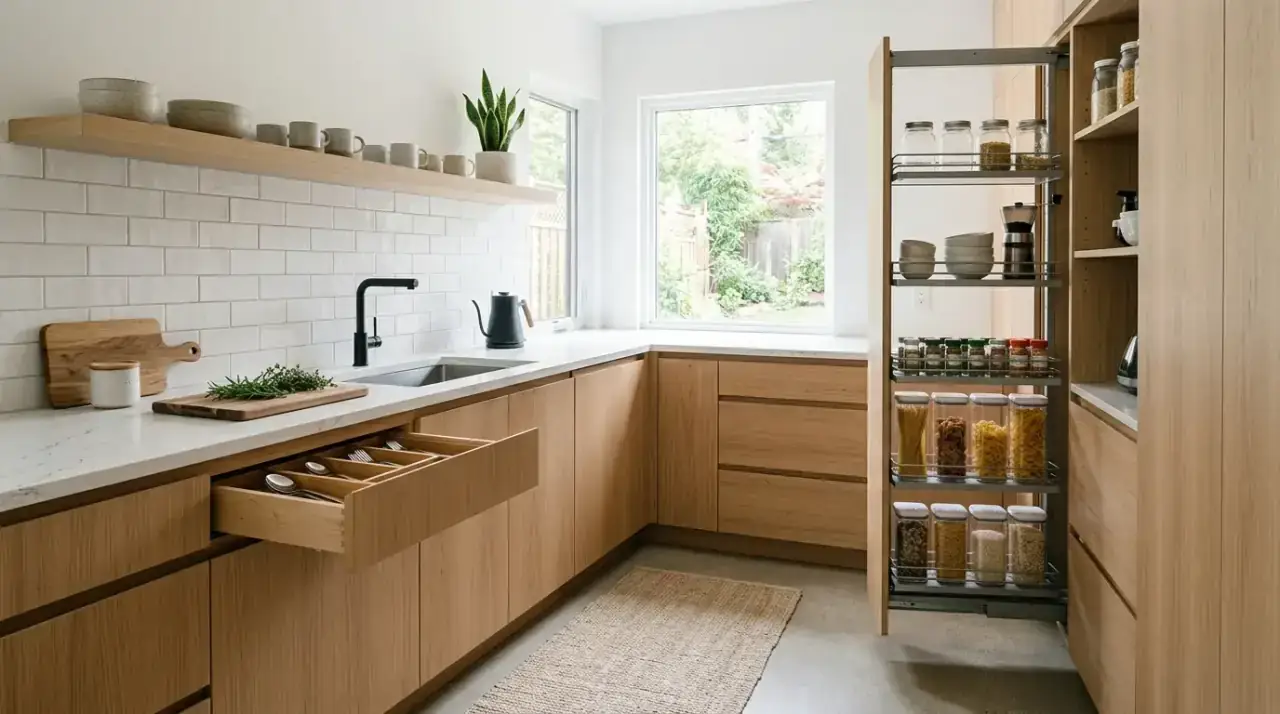
Install Pull-Out Shelves in a Blind Corner Cabinet
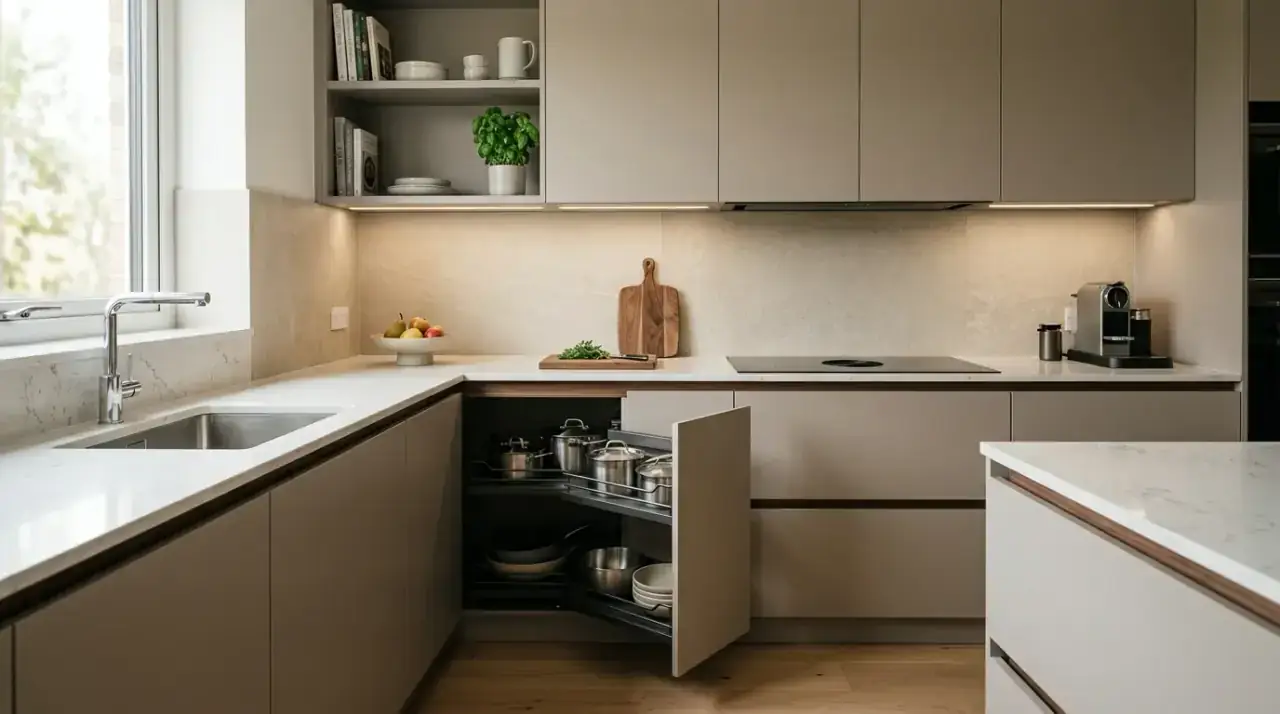
Blind corner cabinets often waste space because you cannot see or reach what sits behind the front opening. Pull-out mechanisms solve much of that problem by letting the storage move toward you instead of forcing you to dig into darkness.
Rooted in usability and guided by better movement, pull-out corner storage helps a kitchen feel more efficient and more welcoming one thoughtful detail at a time. Hidden space becomes much less frustrating when it can travel outward.
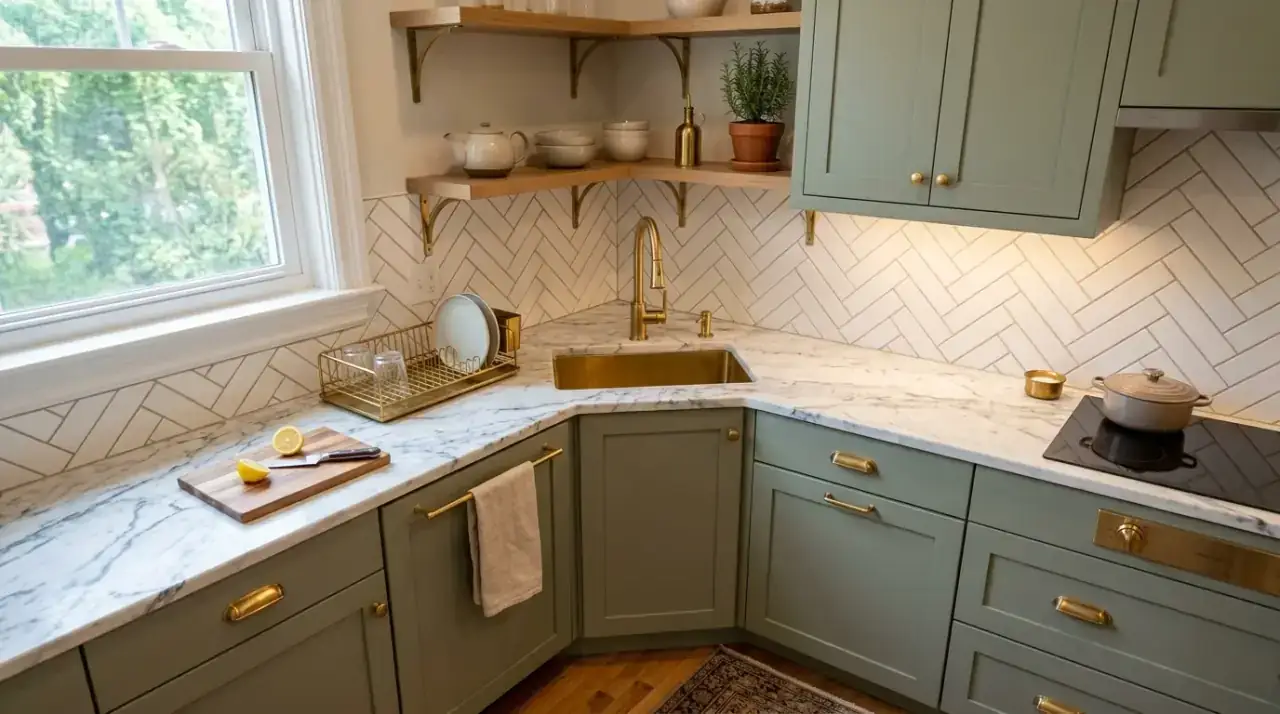
Turn the Corner into Open Shelving
Open corner shelves can work especially well when the kitchen needs visual lightness as much as storage. They keep the angle from feeling boxed in, and they offer a natural home for bowls, jars, or decorative pieces that deserve to stay visible.
Rooted in openness and guided by careful editing, corner shelving helps a kitchen feel lighter and more welcoming one thoughtful detail at a time. The room gains usefulness without thickening the wall line.
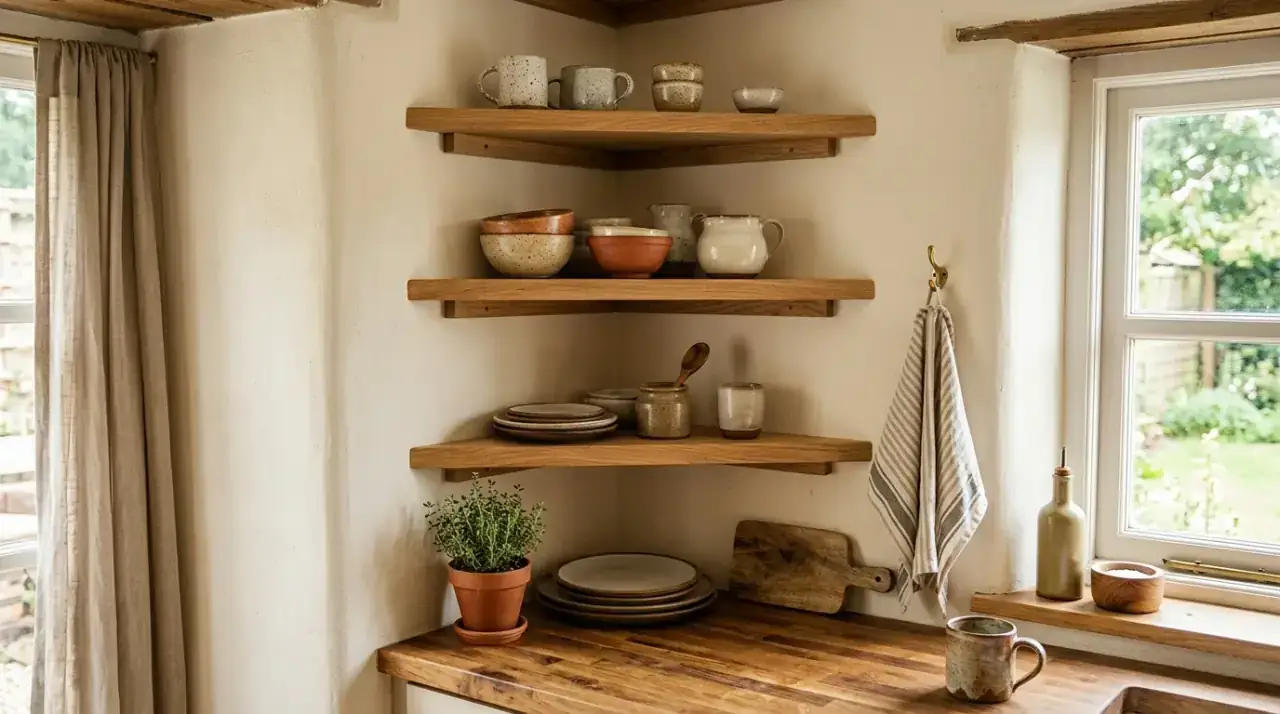
Create a Compact Coffee or Breakfast Station
A quieter corner can be ideal for a beverage station because it gives mugs, machines, and breakfast supplies their own identity without stealing the main prep area. This turns the angle into a purposeful routine-based zone instead of letting it drift into clutter.
Rooted in habit and guided by thoughtful zoning, a corner coffee station helps a kitchen feel more organized and more welcoming one thoughtful detail at a time. The best corner solutions often come from giving the space a clear everyday role.
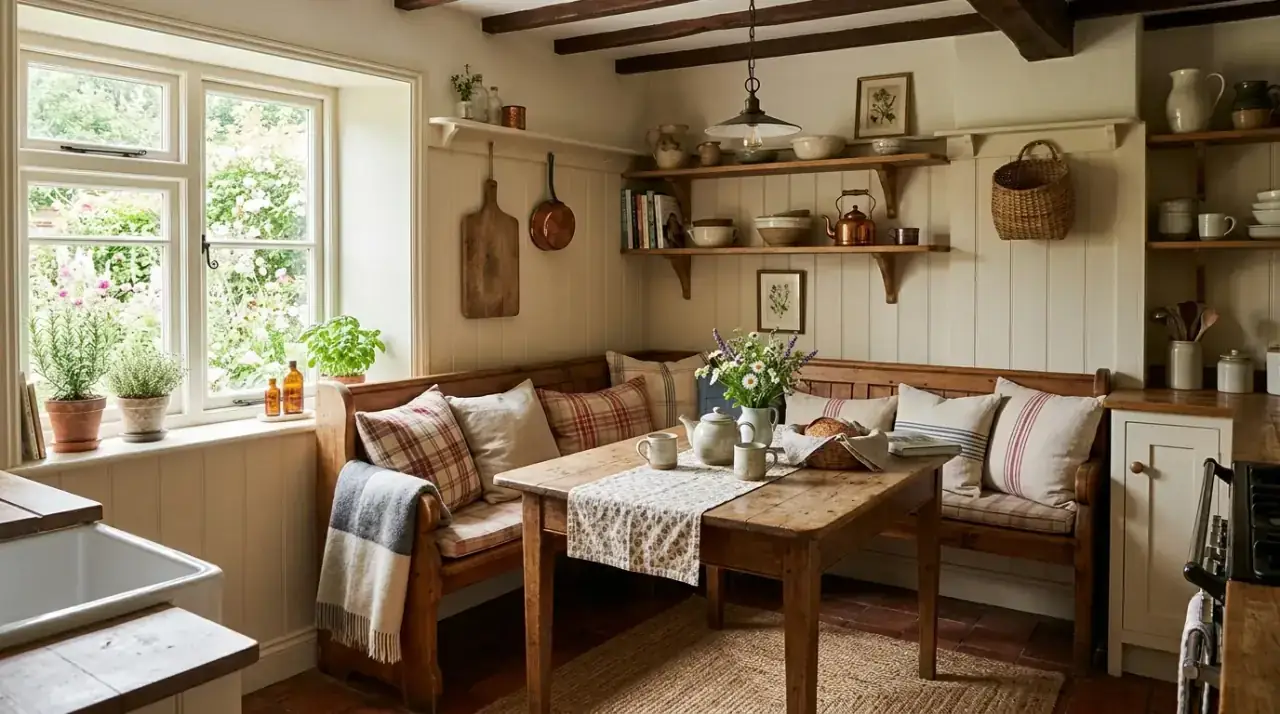
Use a Corner Bench for Built-In Seating
In kitchens with enough adjoining dining space, a corner bench can make excellent use of the room's edges while creating a cozy place to gather. The seating follows the architecture naturally and can often include extra storage underneath as well.
Rooted in comfort and guided by efficient planning, a corner bench helps a kitchen feel more useful and more welcoming one thoughtful detail at a time. The room gains both storage and sociability from the same footprint.
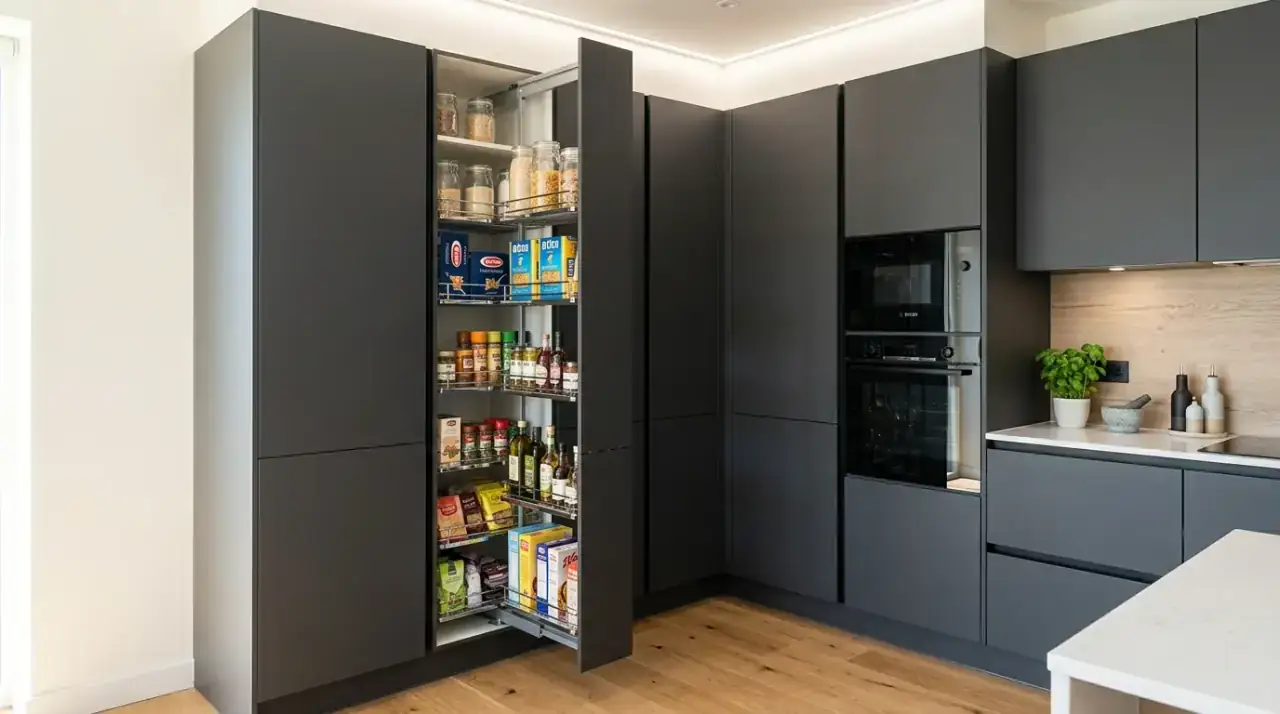
Add a Tall Corner Pantry for Vertical Use
A tall pantry unit can sometimes make better use of a corner than lower cabinets alone, especially when the kitchen lacks general food storage. Vertical organization helps the room work harder without taking more floor space.
Rooted in efficiency and guided by vertical thinking, a corner pantry helps a kitchen feel more capable and more welcoming one thoughtful detail at a time. Height often solves problems that width cannot.
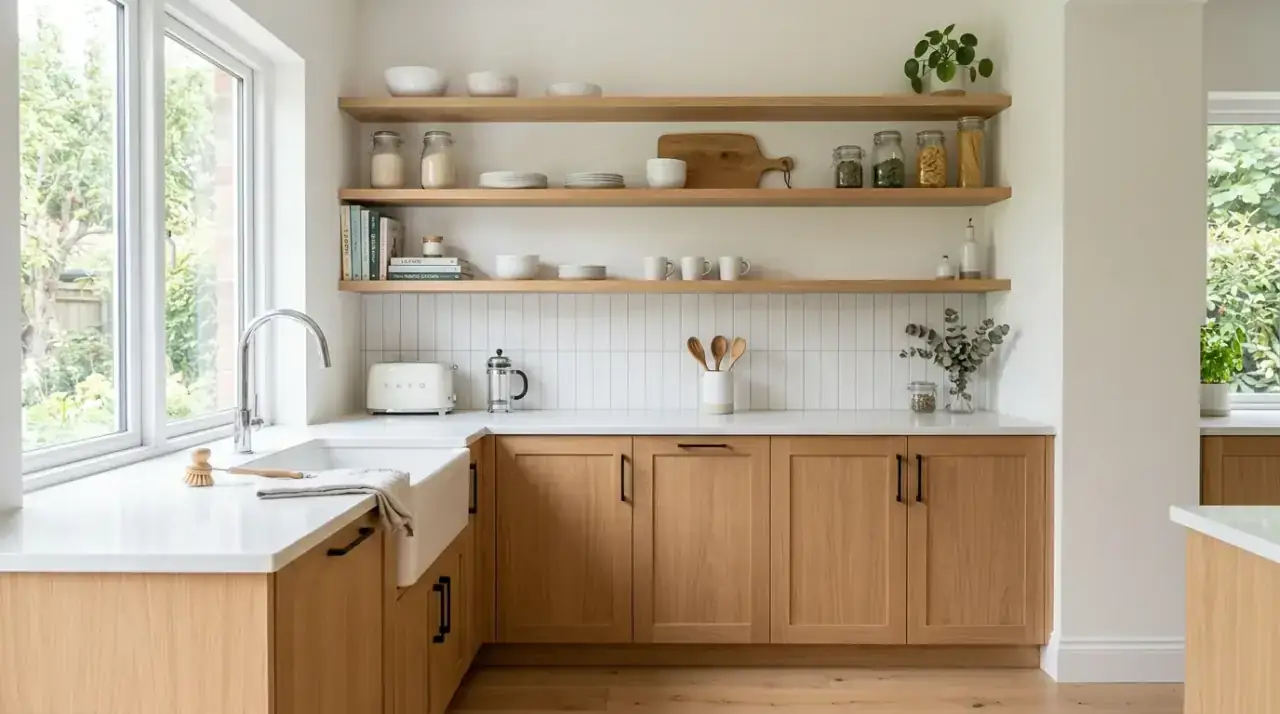
Use the Corner for a Window-Hugging Sink
A sink in the corner can be an unexpectedly strong move when the kitchen layout and windows support it, especially if that placement brings in more light or frees better prep surfaces elsewhere. The angle then becomes a pleasant task zone rather than a leftover gap.
Rooted in light and guided by workflow, a corner sink can turn a once awkward part of the kitchen into a more welcoming and more practical destination one thoughtful detail at a time. Good corner planning often depends on seeing opportunity where others see compromise.
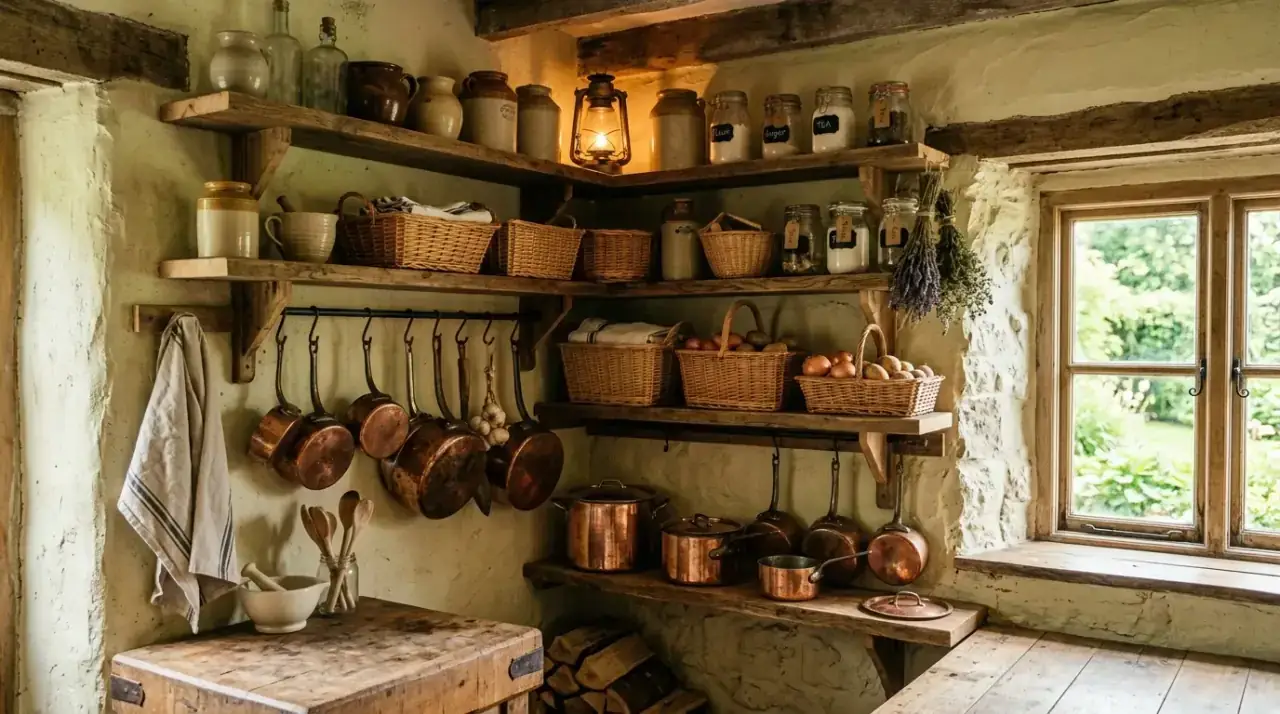
Display Decorative Storage on a Corner Counter
If a corner counter is too awkward for constant prep, it can still become useful through a more intentional display of jars, boards, or plants that do not interfere with daily work. The goal is to make the space look chosen rather than abandoned.
Rooted in styling and guided by purpose, a softly decorated corner helps a kitchen feel more finished and more welcoming one thoughtful detail at a time. Even lower-utility corners deserve a clear identity.
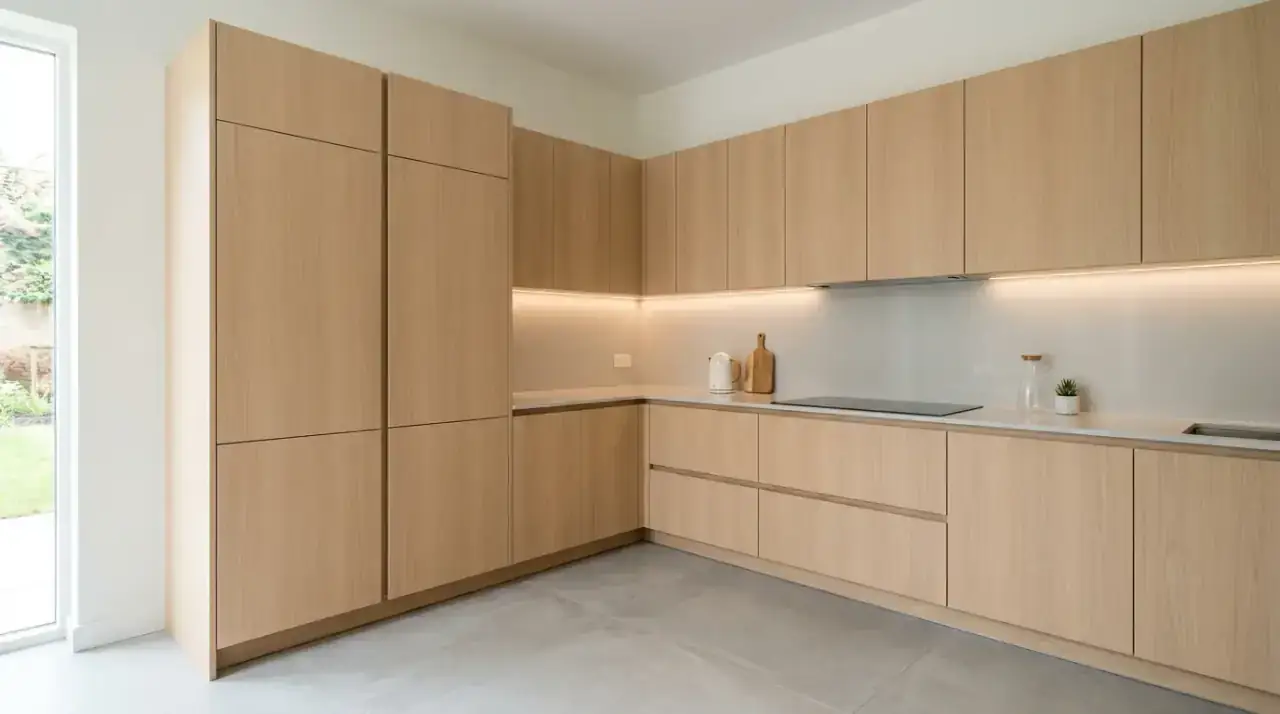
Use Diagonal Cabinetry to Soften the Angle
Diagonal corner cabinetry can help some kitchens feel more fluid because it removes the harsh stop of a ninety-degree turn. The result is often easier movement and a more natural cabinet face for storage access.
Rooted in flow and guided by functional geometry, diagonal cabinetry helps a kitchen feel smoother and more welcoming one thoughtful detail at a time. The corner becomes easier to approach because the room stops fighting its own shape.
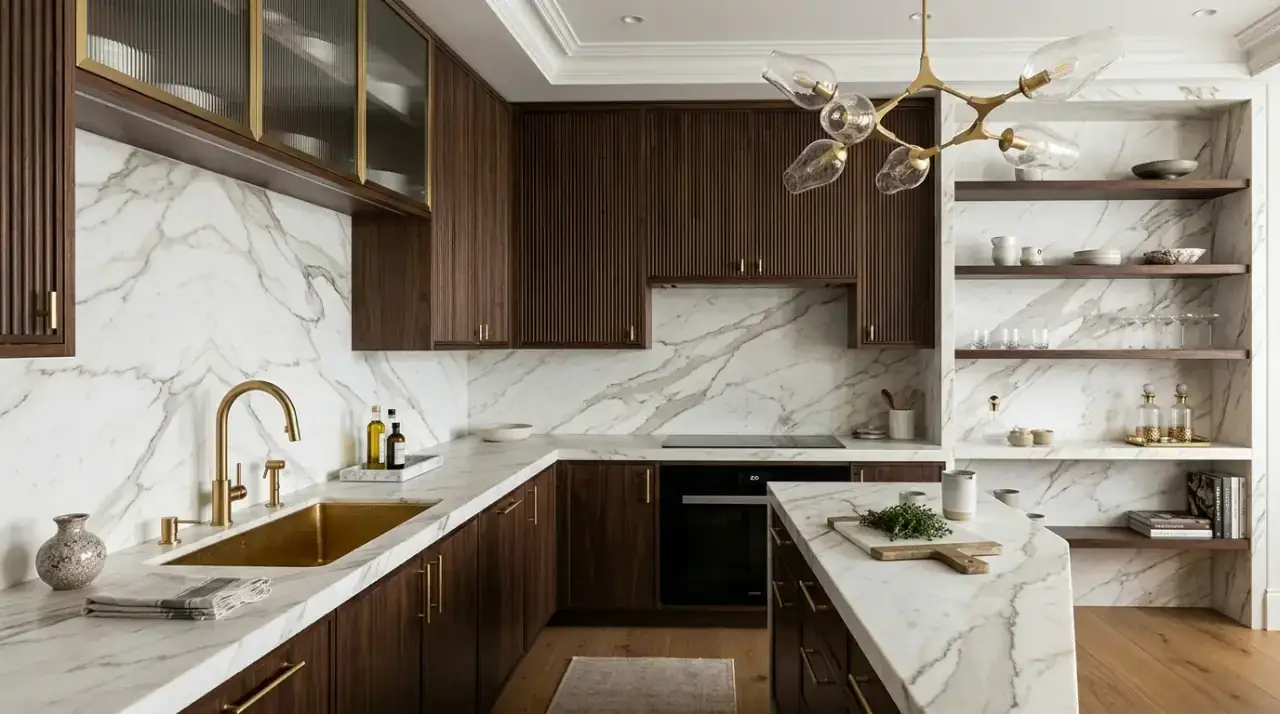
Make a Herb Nook Out of a Sunny Corner
A bright kitchen corner can become a lovely herb nook if the layout does not demand heavier storage in that area. Small pots, a ledge, and good light can make the space feel lively while still supporting real cooking routines.
Rooted in nature and guided by everyday use, a corner herb station helps a kitchen feel fresher and more welcoming one thoughtful detail at a time. Sometimes the best way to maximize a corner is to give it life instead of bulk.
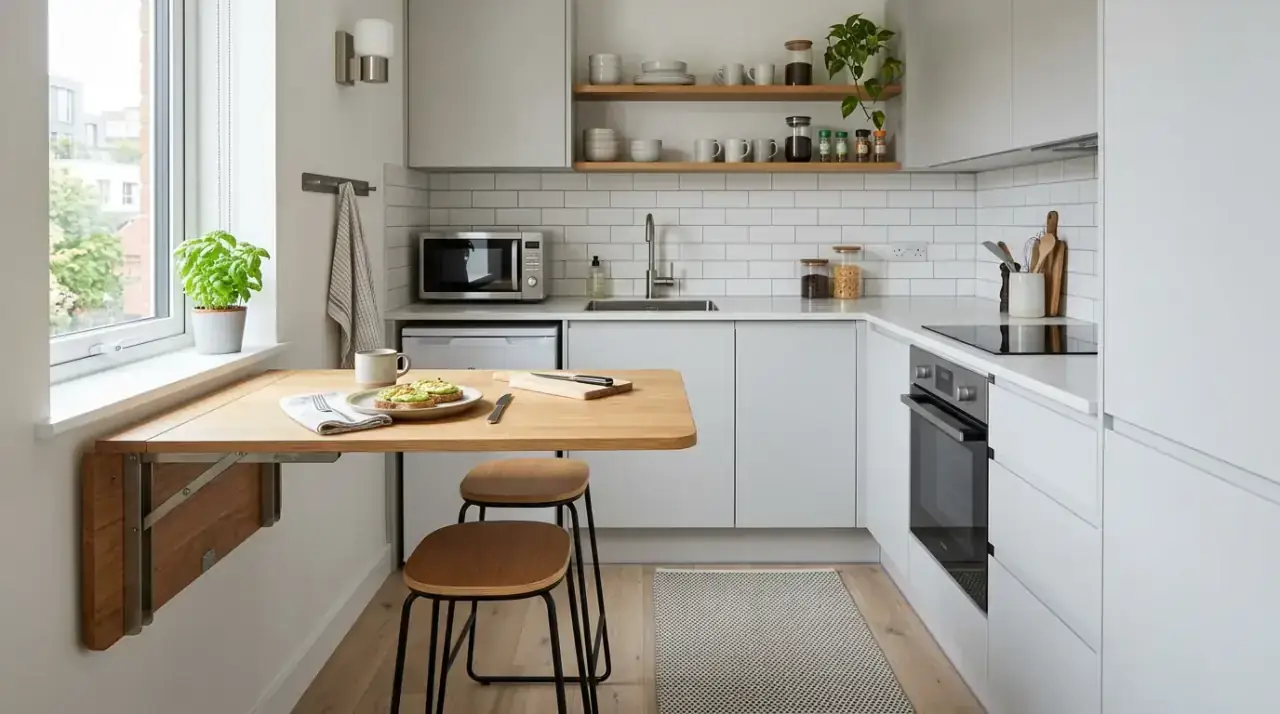
Use Hooks or Rails to Activate the Angle
Sometimes the wall side of a corner is more useful than the cabinet below it, especially in small kitchens short on easy-access storage. Hooks, rails, or hanging baskets can make that vertical seam work harder without taking extra floor space.
Rooted in resourcefulness and guided by compact design, wall-hung corner storage helps a kitchen feel more efficient and more welcoming one thoughtful detail at a time. The angle becomes active instead of dead.
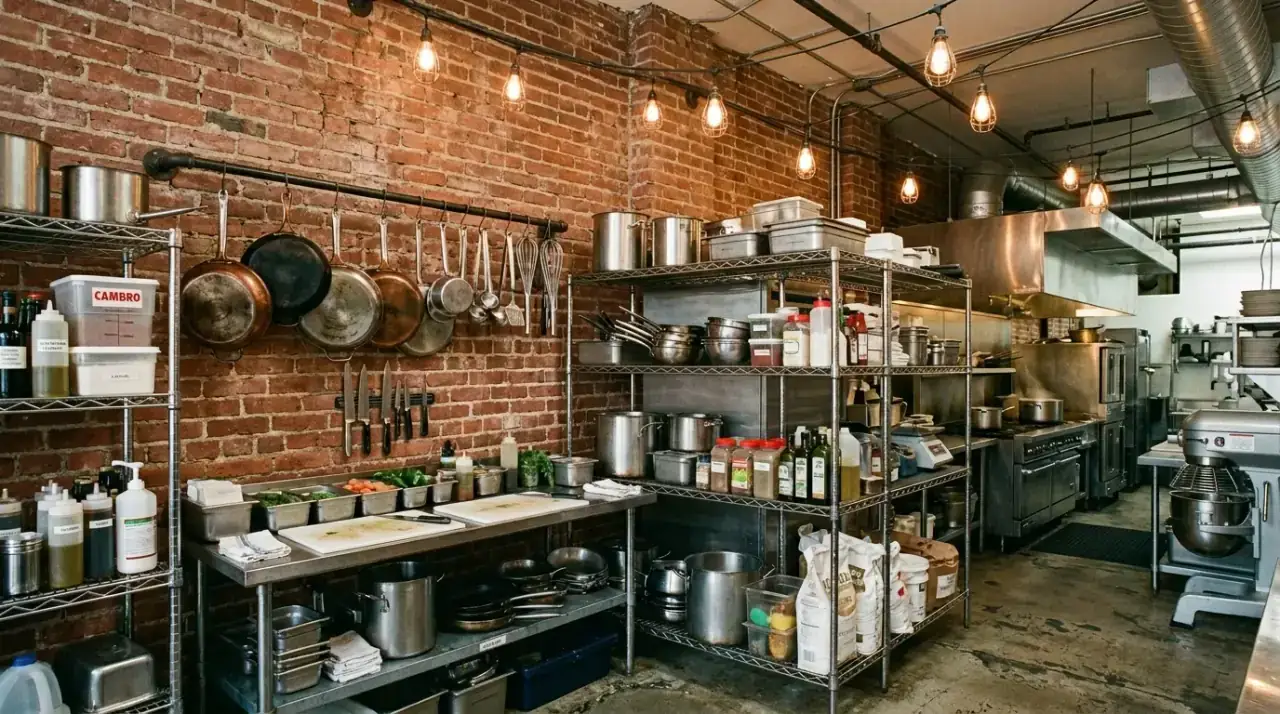
Let the Corner Hold Smaller Appliances Neatly
A corner can be the right place for a toaster, mixer, or coffee setup if the arrangement is contained and the cords stay controlled. That frees more central counter space and keeps the appliance zone from spreading through the whole room.
Rooted in order and guided by real-life routines, appliance zoning helps a kitchen feel calmer and more welcoming one thoughtful detail at a time. The corner starts earning its space instead of collecting disorder.
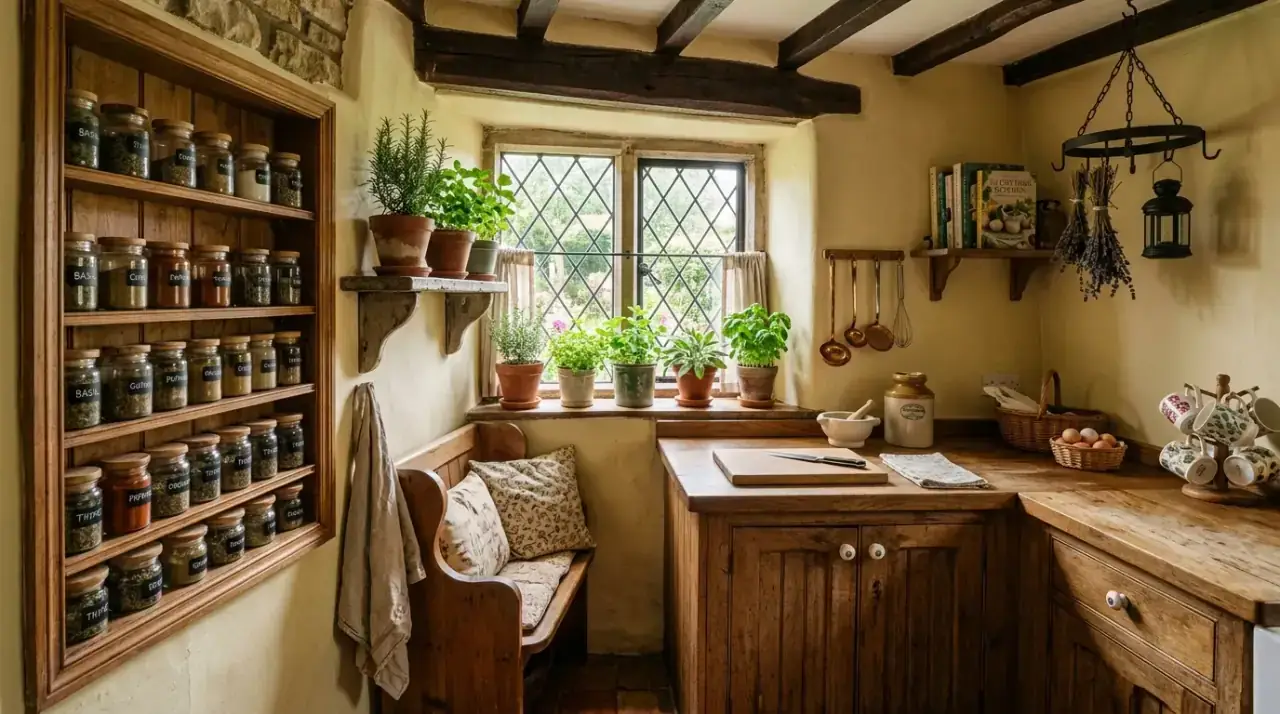
Match the Solution to the Kitchen's Real Problem
The smartest corner idea depends on whether the room needs more storage, more seating, more prep space, or simply better visual flow. Treating every corner the same usually misses the point, because each kitchen asks something different of that angle.
Rooted in practicality and guided by thoughtful design, the right corner solution can turn a neglected part of the kitchen into a warm and welcoming asset one thoughtful detail at a time. The best fix begins with understanding what the room is missing.
Every Inch Works Better When the Corner Does Too
Corners often determine whether a kitchen feels smoothly planned or awkwardly unfinished because they interrupt both storage and circulation if ignored. When they are handled well, the entire room starts to feel more capable and more complete.
Rooted in creativity and guided by style, a well-used kitchen corner can turn lost square footage into a warm and welcoming part of the home one thoughtful detail at a time. Small spatial decisions often change the room more than large decorative ones.