European kitchens often feel especially composed because they treat simplicity as something precise rather than empty. Clean cabinet lines, panel-ready appliances, stone surfaces, and careful lighting all work together to create rooms that feel highly considered without unnecessary noise.
These ideas look at how that sleek modern mood can still remain warm, livable, and deeply functional. If your goal is a kitchen that feels streamlined and architectural, European influence offers some of the strongest lessons in restraint.
Design ideas to borrow from this palette
Use the ideas below to compare hardware, countertop, flooring, and styling combinations that change how the cabinet color reads in a finished kitchen.
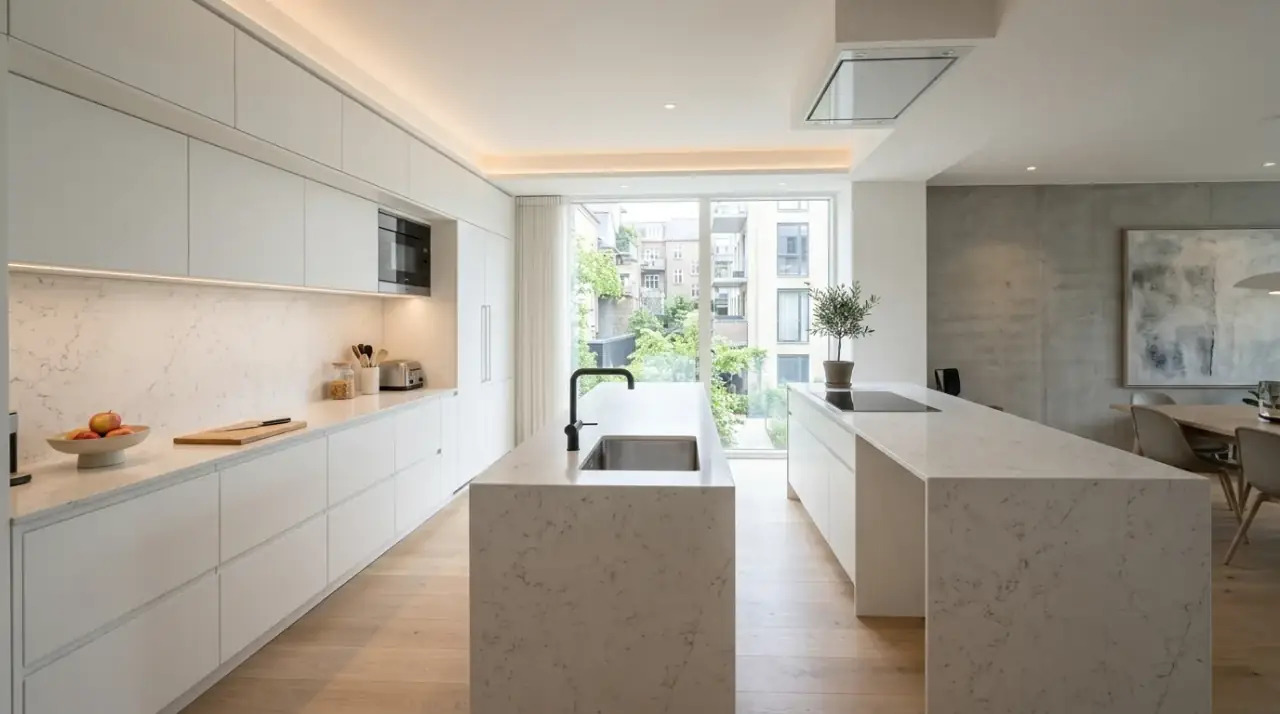
Handleless Cabinetry with Clean Shadow Lines
Handleless fronts are central to many European kitchens because they let the cabinetry read as large uninterrupted planes rather than collections of doors and pulls. The result feels quieter, more architectural, and much more deliberate.
Rooted in clarity and guided by style, handleless cabinetry can turn a kitchen into a warm and welcoming modern composition one thoughtful detail at a time. The absence of visual interruption is what makes the room feel so sleek.
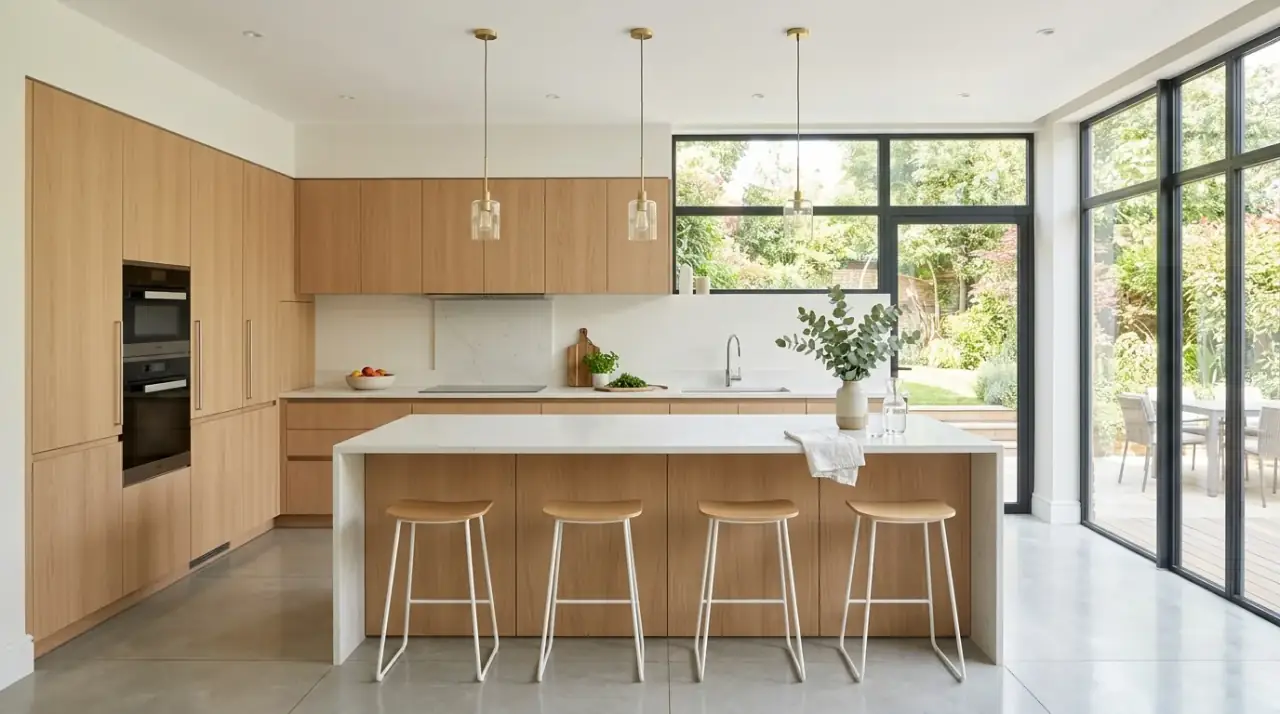
Integrated Appliances That Disappear into the Walls
Panel-ready appliances help the kitchen feel more unified because they remove one of the biggest sources of visual interruption. In a minimalist European-style room, that kind of continuity is often what keeps the space feeling calm rather than busy.
Rooted in discipline and guided by function, integrated appliances help a kitchen feel more refined and more welcoming one thoughtful detail at a time. The room breathes better when large machines stop announcing themselves.
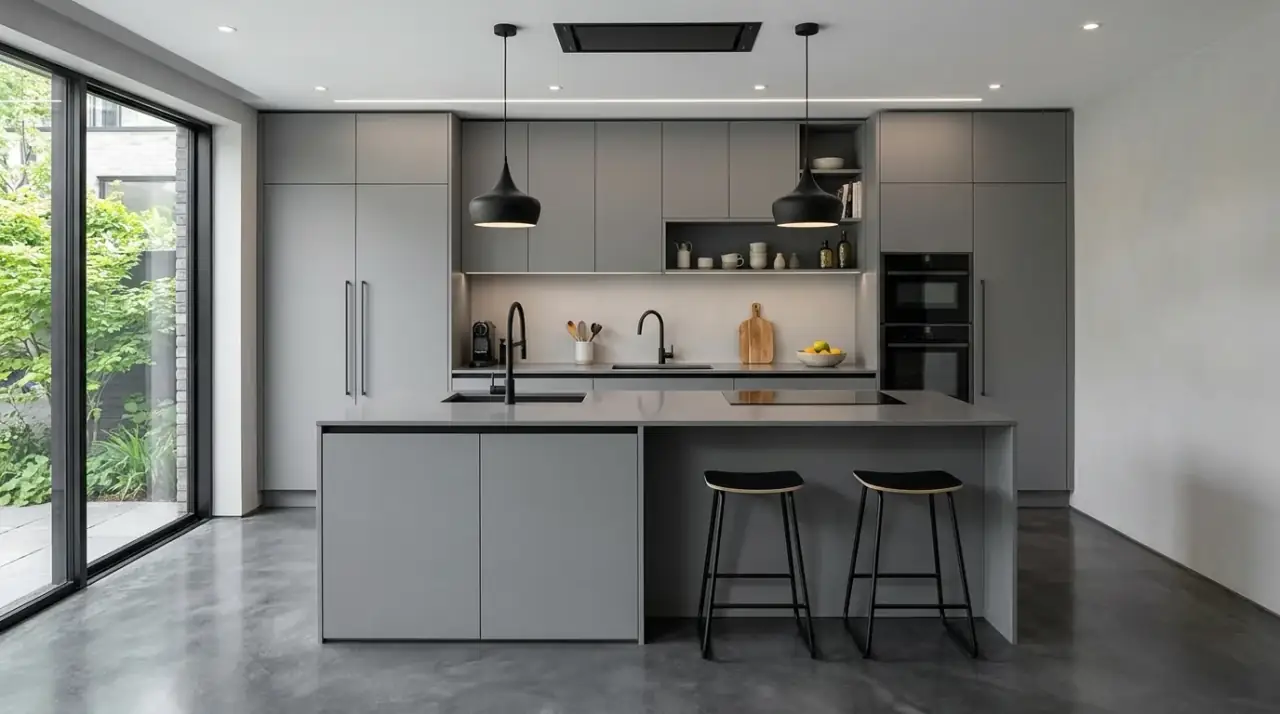
Use a Continuous Slab Backsplash for Calm
A slab backsplash works beautifully in European kitchens because it minimizes joints, pattern breaks, and maintenance-heavy lines. The surface reads as a single quiet plane, which supports the room's minimalist intent.
Rooted in continuity and guided by material simplicity, a slab wall helps a kitchen feel more elegant and more welcoming one thoughtful detail at a time. Clean expanses are often what give minimalist spaces their sense of control.
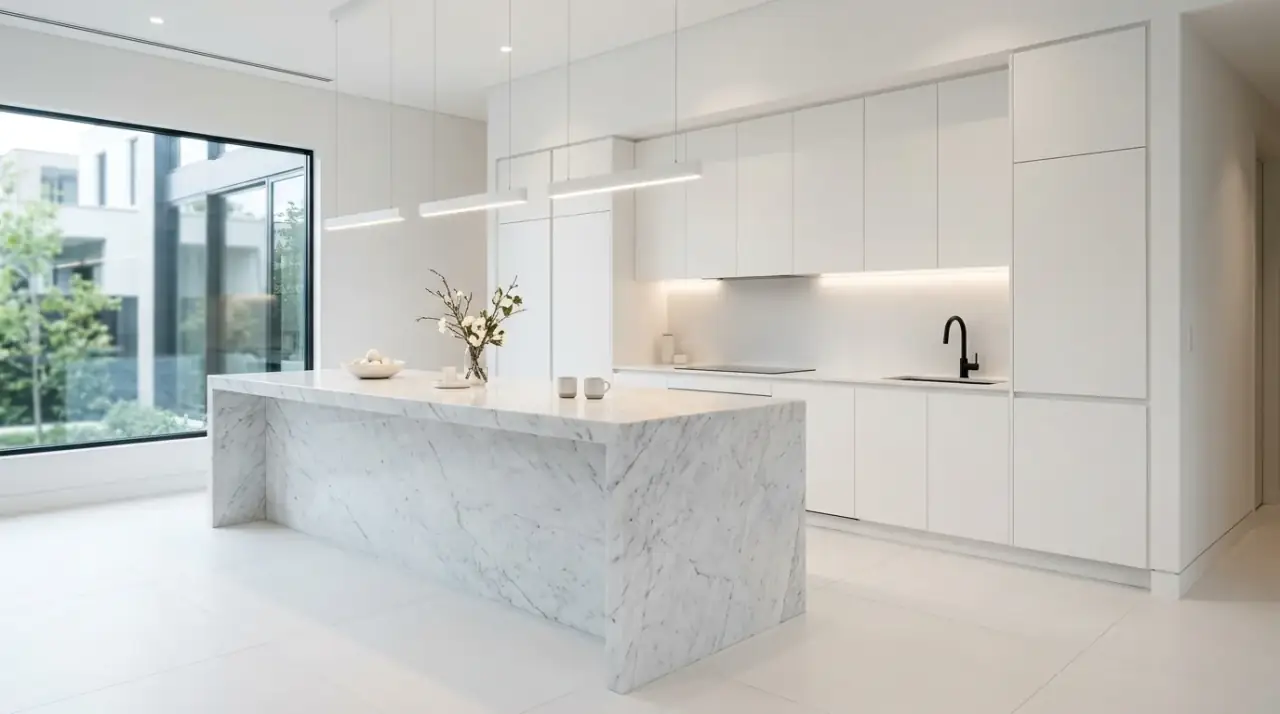
Choose Muted Tones Over High Contrast
Many sleek European kitchens stay away from stark contrast in favor of softer neutrals like mushroom, pale oak, matte white, and grey-beige. That restrained palette helps the room feel more sophisticated and easier to live with over time.
Rooted in restraint and guided by tonal harmony, muted colors help a kitchen feel more settled and more welcoming one thoughtful detail at a time. The simplicity works because the palette is controlled rather than dramatic.
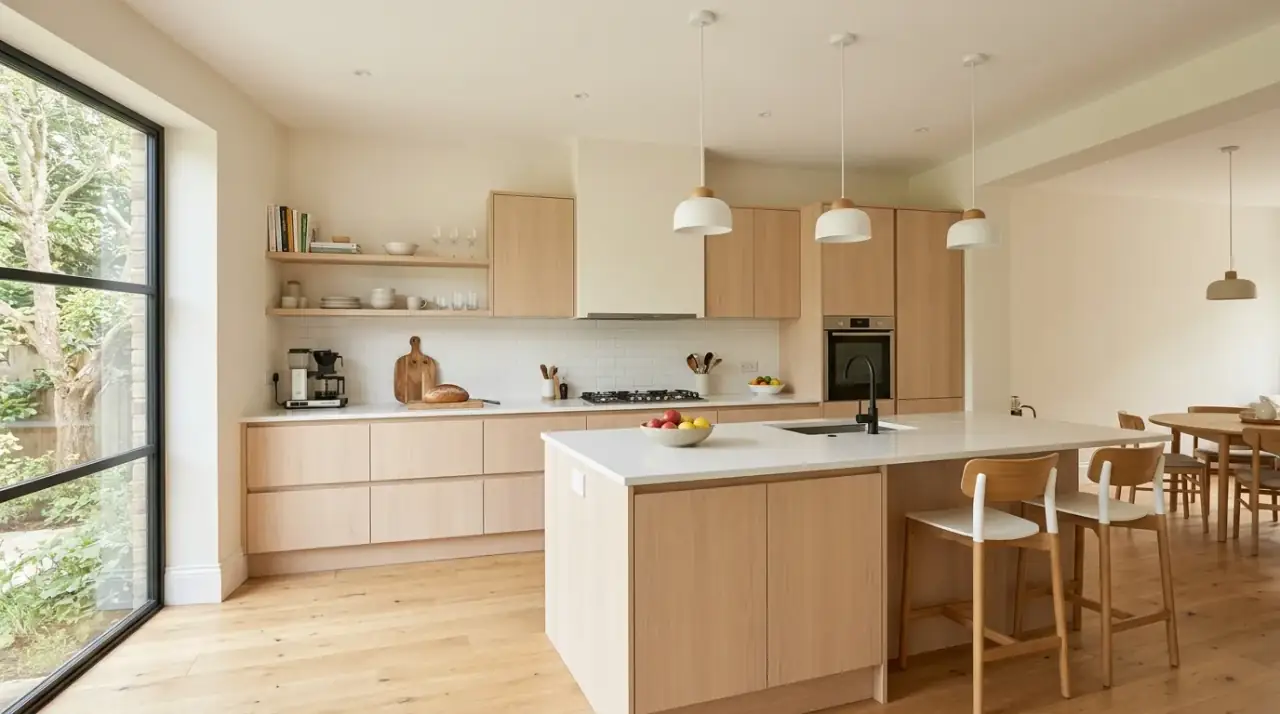
Let an Island Read Like One Solid Object
A well-proportioned island often becomes the visual anchor in a minimalist kitchen, especially when the material and edge detail are kept simple. It should feel sculptural, not bulky, and support the room without shouting for attention.
Rooted in proportion and guided by architectural thinking, a monolithic island helps a kitchen feel more composed and more welcoming one thoughtful detail at a time. The strength of the form gives the room its center of gravity.
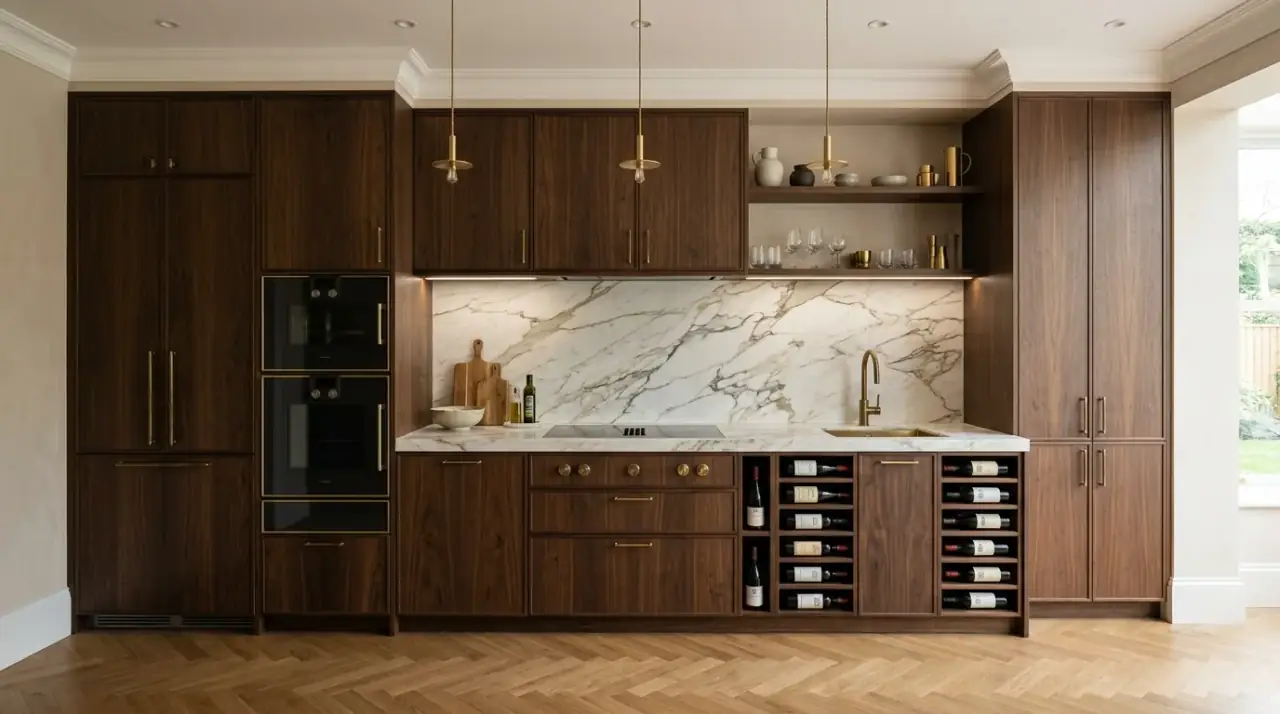
Hide Small Appliances Behind Pocket Doors
Pocket-door cabinets and concealed workstations help preserve the visual calm of a European-style kitchen by letting coffee machines, toasters, and pantry clutter disappear when not in use. This kind of hidden function is a major part of the appeal.
Rooted in order and guided by clever storage, concealed appliance zones help a kitchen feel more serene and more welcoming one thoughtful detail at a time. The room stays minimalist because the mess has somewhere proper to go.
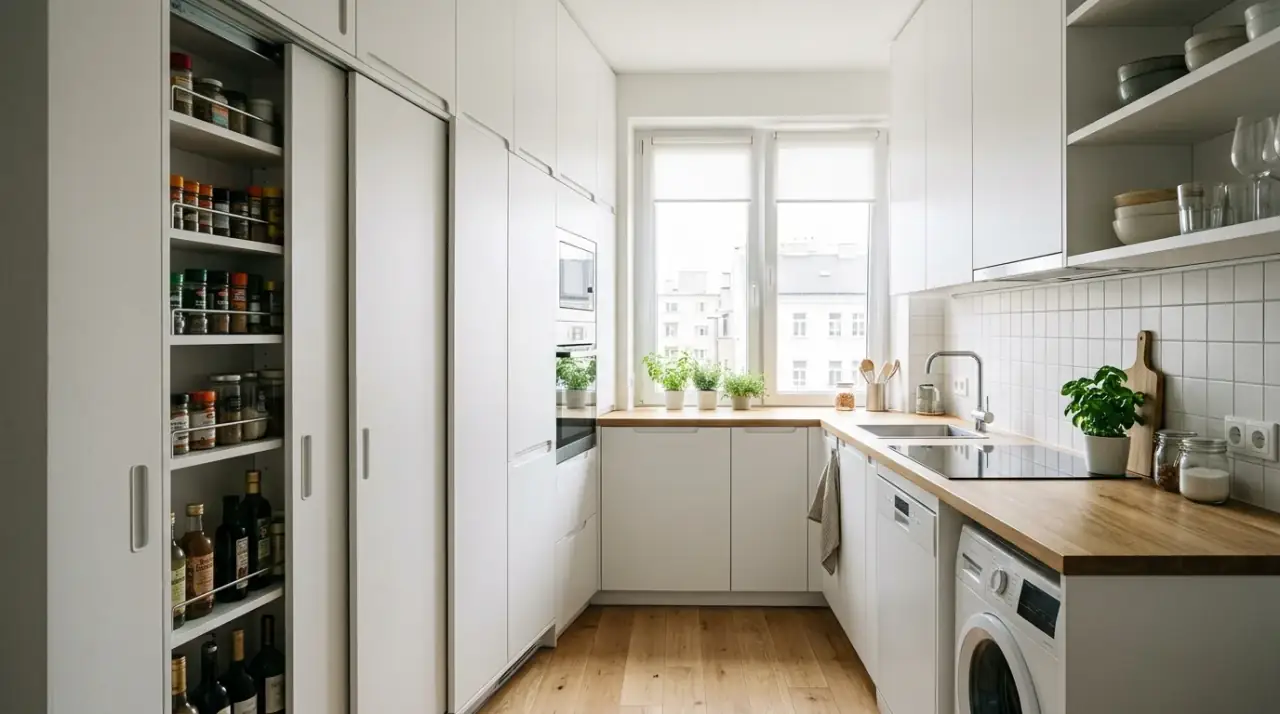
Use Warm Wood Sparingly for Human Softness
European minimalism often avoids feeling cold by bringing in just enough natural wood to soften stone and matte cabinetry. A timber island face, shelf, or floor can warm the room without breaking its disciplined visual language.
Rooted in balance and guided by material warmth, restrained wood accents help a kitchen feel more humane and more welcoming one thoughtful detail at a time. Warmth matters most when it is introduced carefully.
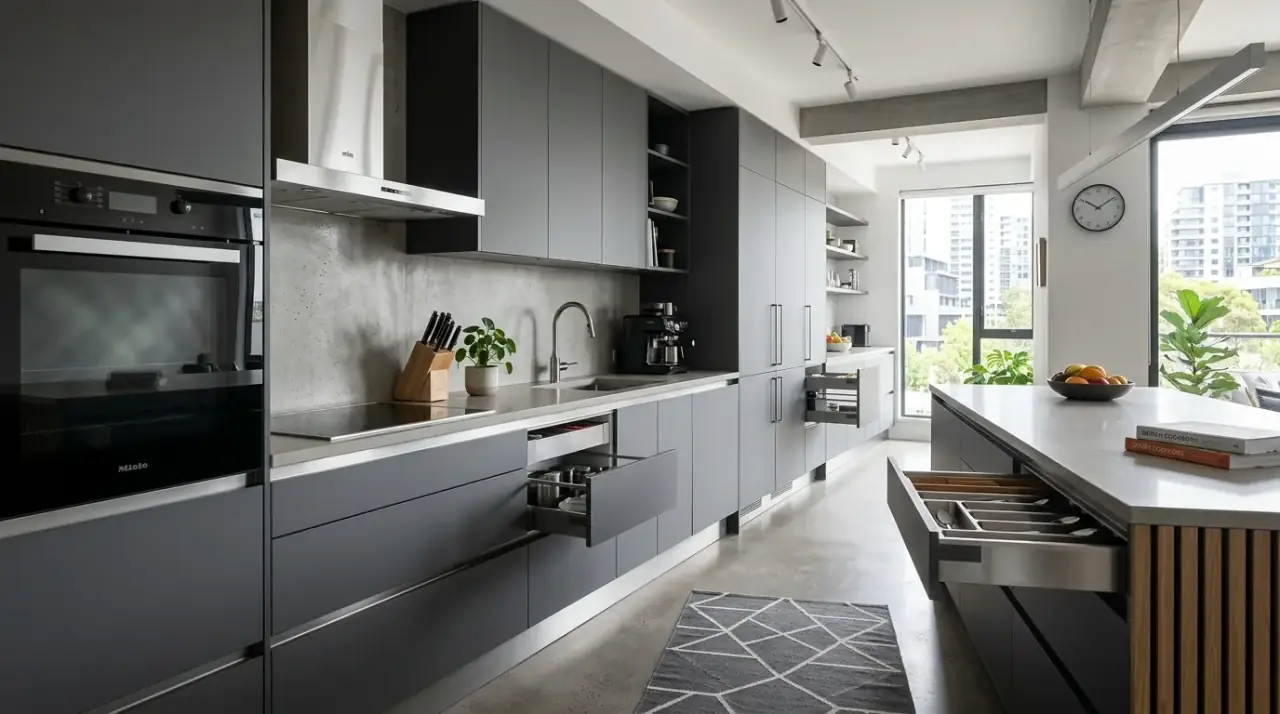
Prioritize Clean Geometry in the Layout
The sleekness of a European kitchen is often as much about planning as it is about finishes. Straight runs, aligned openings, and a clear relationship between island, storage, and cooking zones make the room feel composed before styling even begins.
Rooted in geometry and guided by precision, a clean layout helps a kitchen feel more efficient and more welcoming one thoughtful detail at a time. Good planning is what lets minimalist design feel calm instead of severe.
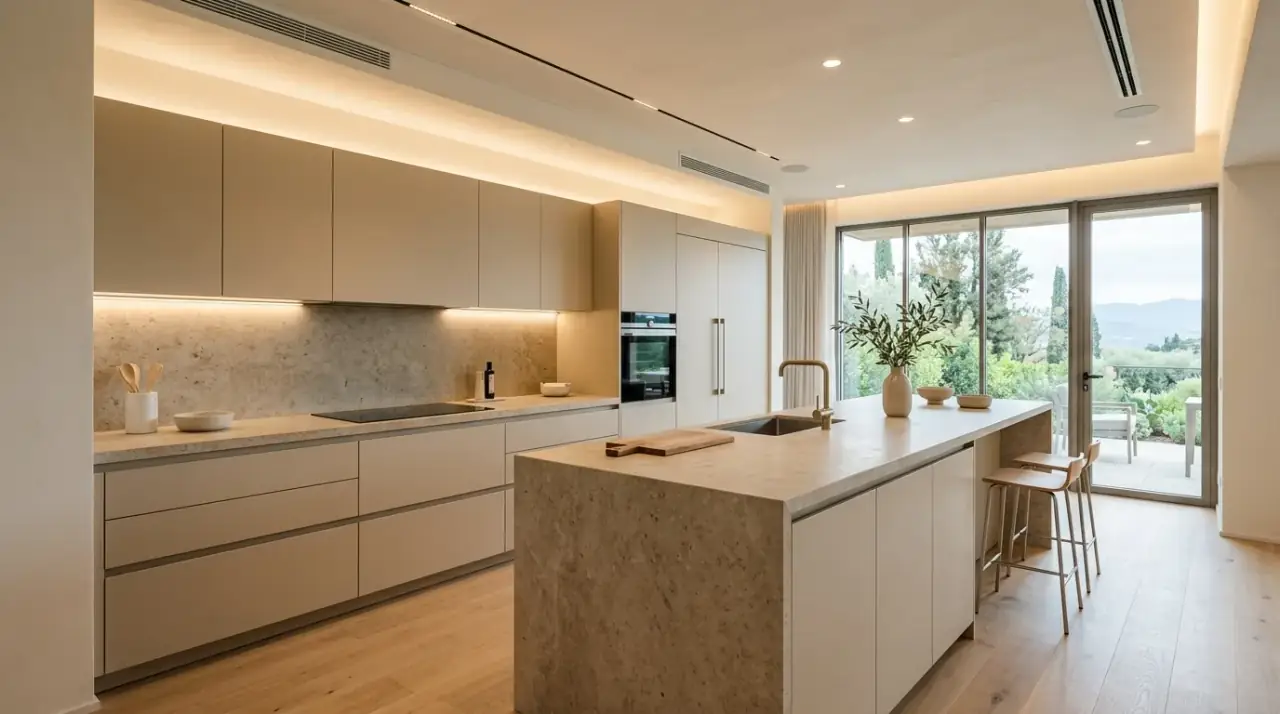
Choose Matte Finishes for a Softer Modernity
Matte cabinetry and stone can make a minimalist kitchen feel calmer because they absorb light rather than reflecting it sharply. This tends to create a more tactile and grounded version of modern design than higher-gloss alternatives.
Rooted in softness and guided by tactile simplicity, matte finishes help a kitchen feel more restful and more welcoming one thoughtful detail at a time. Sleek does not have to mean shiny to feel luxurious.
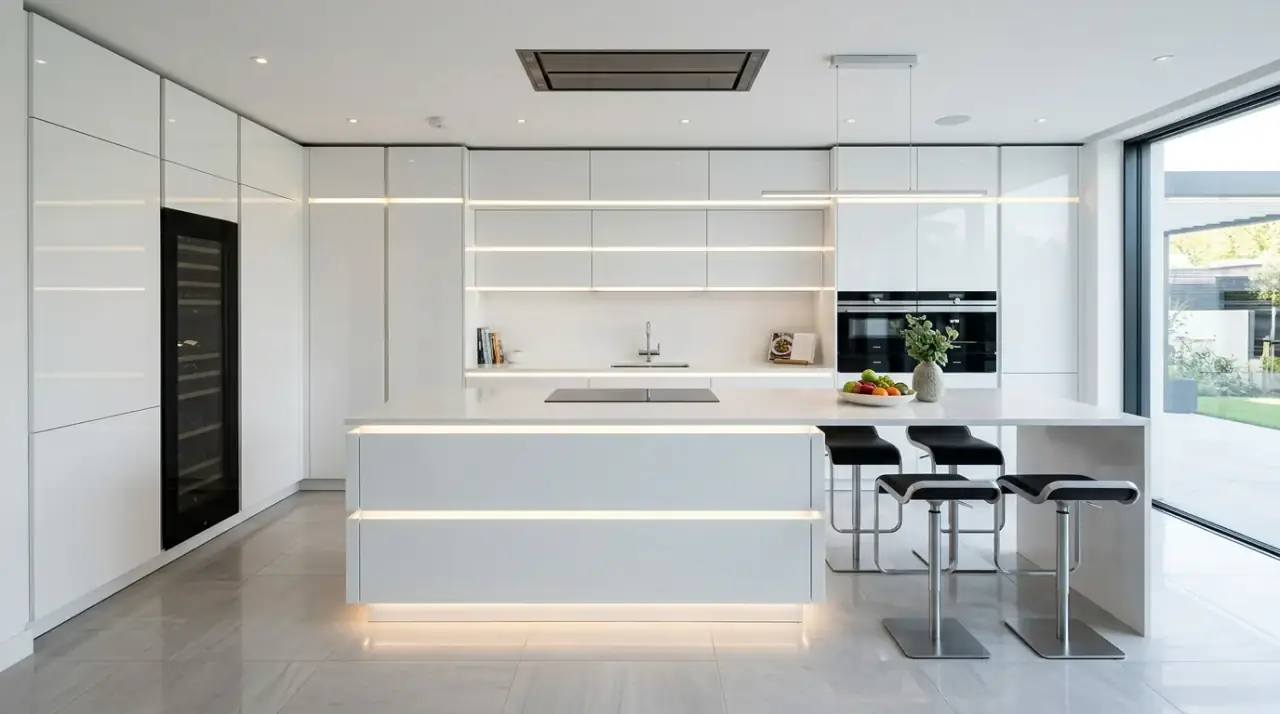
Use Lighting to Outline, Not Overdecorate
Subtle under-cabinet glow, linear lighting, and disciplined pendants can give a minimalist kitchen depth without cluttering the ceiling or countertops. The light should support the architecture rather than distracting from it.
Rooted in atmosphere and guided by restraint, precise lighting helps a kitchen feel more elegant and more welcoming one thoughtful detail at a time. The glow should reveal the simplicity of the room, not compete with it.
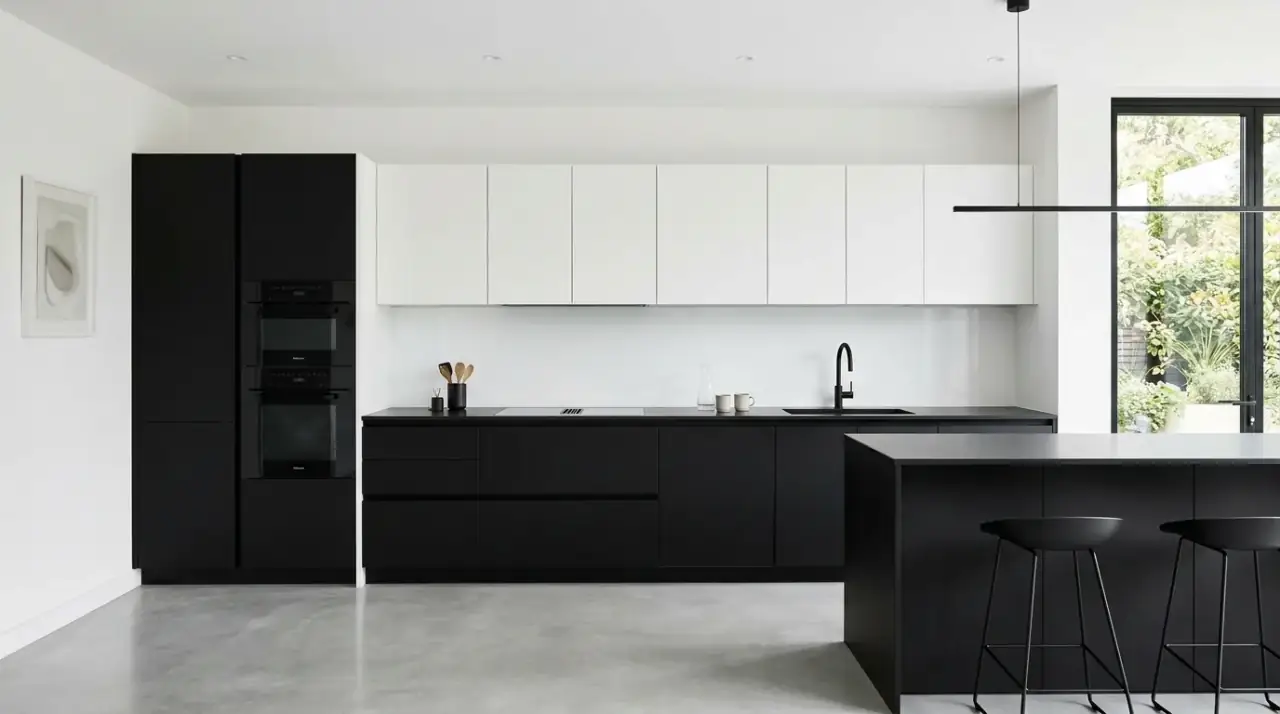
Keep Decor to a Minimum but Not to Zero
Minimalist kitchens still need a little life, but the visible objects should feel intentional and few. A bowl, a plant, a tray, or one ceramic piece can be enough to soften the room without breaking the visual discipline.
Rooted in editing and guided by warmth, limited decor helps a kitchen feel more personal and more welcoming one thoughtful detail at a time. The trick is to let each visible object justify its place clearly.
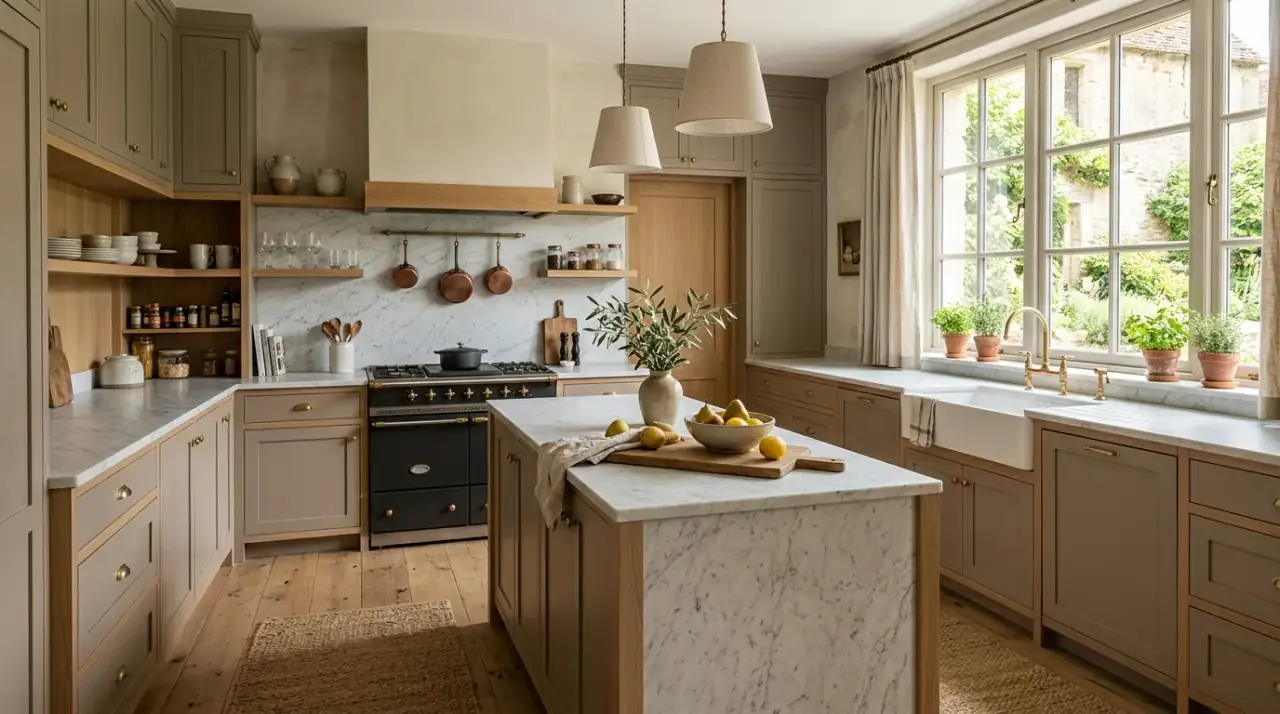
Build Storage All the Way Up for a Seamless Wall
Full-height cabinetry often suits European kitchens because it turns storage into a complete architectural plane rather than a series of separate boxes. The room feels cleaner and more efficient when the wall reads as one coherent element.
Rooted in efficiency and guided by a seamless visual approach, full-height storage helps a kitchen feel more capable and more welcoming one thoughtful detail at a time. Even the storage starts to feel sculptural.
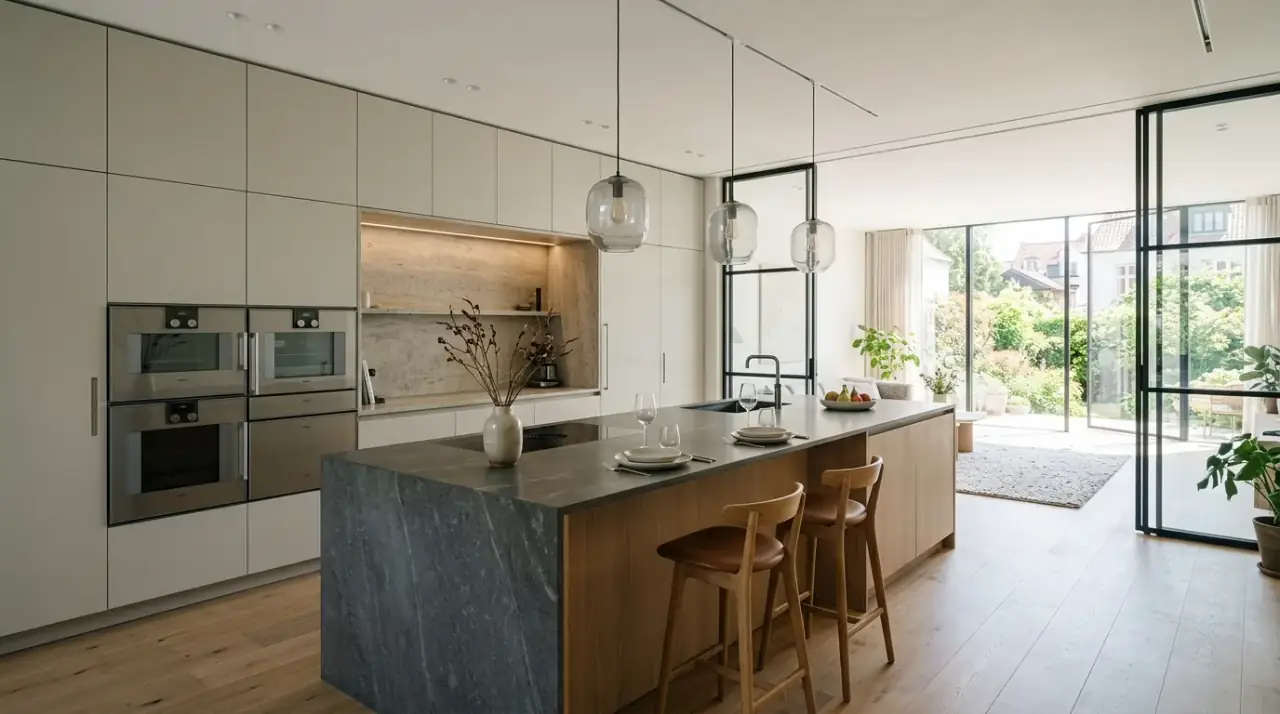
A Minimalist Kitchen That Still Feels Livable
The strongest European kitchens are not empty shells and instead rooms where discipline, storage, and beauty all support daily life quietly. When the design holds enough warmth, the minimalist look feels elevated rather than intimidating.
Rooted in creativity and guided by style, European minimalism can turn a kitchen into a warm and welcoming modern retreat one thoughtful detail at a time. Real success comes when sleekness and livability remain equally present.